


Understand what your peptides results really mean
See your biomarkers in context with a comprehensive panel.
- CLIA-certified labs
- HIPAA compliant
- Personalized health protocol
Key takeaways
- Regulatory Status: Not FDA-approved for human use. No regulatory classification as a bulk drug substance. As of April 2026, no IND or NDA has been filed for PTD-DBM in the United States.
- Research Stage: Preclinical only. All direct efficacy data comes from mouse models and in vitro dermal papilla cell studies. No completed human clinical trials as of April 2026.
- Availability: Not legally marketed for human use in the United States. Some cosmetic formulations exist internationally through the Choi lab spinout CosmeRNA/Epi Biotech, though these are not reviewed by the FDA. Superpower does not offer this substance.
- What it is: A synthetic peptide fusing a protein transduction domain with a Dishevelled-binding motif to disrupt the CXXC5-Dvl interaction and reactivate Wnt/beta-catenin signaling.
- What the evidence actually shows: In mouse models, PTD-DBM stimulated hair regrowth and follicle neogenesis; no completed, peer-reviewed human efficacy trials exist as of April 2026.
- Compound reference: No PubChem CID registered; primary foundational study: 2017 PTD-DBM mouse hair-regrowth study in Journal of Investigative Dermatology.
Where PTD-DBM comes from and how it works
Origin and discovery
PTD-DBM was developed by the Choi laboratory at Yonsei University in South Korea. The scientific groundwork began with a 2015 study published in Cell Death and Differentiation, in which Kim and colleagues in the Choi lab identified CXXC5 as a negative-feedback regulator of the Wnt/beta-catenin pathway. They showed that CXXC5 binds directly to Dishevelled (Dvl), a key scaffolding protein in canonical Wnt signaling, and that this interaction suppresses downstream Wnt activity. Separately, a 2015 Journal of Experimental Medicine study from the same group extended this finding to cutaneous wound healing, demonstrating that disrupting the CXXC5-Dvl interaction accelerated skin repair in mouse models. Those two observations provided the mechanistic rationale for designing a molecule that could selectively block the CXXC5-Dvl interaction in hair follicles. The resulting peptide, PTD-DBM, was reported publicly in a 2017 paper in the Journal of Investigative Dermatology. The compound's name encodes its structure: PTD refers to the protein transduction domain, which enables cellular entry across the stratum corneum; DBM refers to the Dishevelled-binding motif, the portion that physically competes with CXXC5 for the Dvl PDZ domain.
The wnt/beta-catenin pathway and hair follicle cycling
Wnt/beta-catenin signaling is the dominant molecular pathway governing hair follicle development, regeneration, and cycling. When Wnt ligands activate their receptors, beta-catenin accumulates in the nucleus and drives transcription of genes that push follicles into the anagen (growth) phase. A comprehensive 2022 review of Wnt signaling published in Signal Transduction and Targeted Therapy by Liu and colleagues summarizes the downstream biological functions the pathway controls across tissues, including folliculogenesis. In adult skin, Wnt activation also drives something more striking: de novo hair follicle formation, known as wound-induced hair neogenesis (WIHN). A foundational 2007 Nature paper by Ito, Cotsarelis, and colleagues demonstrated that Wnt signaling can produce entirely new follicles in adult mouse skin after wounding, not merely reactivate dormant ones. That distinction separates Wnt-targeted approaches from conventional therapies, which operate on existing follicles. A 2020 review of molecular signaling in follicle neogenesis, published in Seminars in Cell and Developmental Biology by Wier and Garza, identifies canonical Wnt as a regenerative signal in the follicle neogenesis literature.
PTD-DBM's proposed mechanism: Releasing the brake on wnt signaling
The central insight behind PTD-DBM is that CXXC5 functions as a negative-feedback brake on Wnt signaling. When Wnt activity rises, CXXC5 expression is induced; CXXC5 then binds Dvl and dampens the pathway. This self-limiting feedback loop keeps Wnt tightly regulated under normal conditions. PTD-DBM is designed to competitively block that brake. The DBM portion of the peptide occupies the same binding pocket on the Dvl PDZ domain that CXXC5 uses to suppress signaling. A 2017 structural biology paper by Lee, Choi, and colleagues published in Biochemical and Biophysical Research Communications resolved the crystal structure of the mouse Dvl-1 PDZ domain and used this structure alongside molecular modeling to characterize the binding pocket that the DBM motif targets. With CXXC5 displaced from that pocket, Wnt/beta-catenin signaling is disinhibited: not artificially overactivated, but released from suppression. An independent 2017 editorial commentary by Kim and Garza published in the Journal of Investigative Dermatology alongside the foundational PTD-DBM paper identified the CXXC5-inhibition strategy as a genuinely novel Wnt-activation approach, distinct from prior methods that acted on upstream Wnt ligands or receptor complexes. The PTD portion addresses a separate problem: how to get the peptide past the stratum corneum and into dermal papilla cells, where Wnt signaling controls follicle fate. Protein transduction domains are membrane-penetrating sequences that allow otherwise impermeable cargo to cross lipid bilayers. Using one as part of PTD-DBM's architecture is why topical delivery is the intended route.
CXXC5, DHT, and androgenetic alopecia
A 2023 study from the Choi group, published in Cells by Ryu, Park, and colleagues, connected the CXXC5 target directly to androgenetic alopecia (AGA) pathophysiology. The paper showed that dihydrotestosterone (DHT) upregulates CXXC5 expression in balding scalp dermal papilla cells and that this upregulation suppresses Wnt/beta-catenin signaling, in part through prostaglandin D2 (PGD2). This chain of events, DHT elevating CXXC5 which suppresses Wnt which impairs follicle cycling, provides a mechanistic explanation for why AGA involves a Wnt signaling deficit. It also frames PTD-DBM as potentially targeting a node in the AGA pathway rather than simply promoting nonspecific hair growth. These findings are in cell culture and have not been validated in human AGA trials. The connection is mechanistically plausible but remains preclinical.
What the preclinical evidence shows
The 2017 foundational mouse study
The primary preclinical evidence for PTD-DBM comes from a 2017 study in the Journal of Investigative Dermatology by Lee, Seo, Pi, and colleagues at Yonsei University, available at PubMed. Researchers applied PTD-DBM topically to C57BL/6N mouse dorsal skin and measured hair regrowth and wound-induced hair follicle neogenesis at multiple time points. The peptide stimulated visible hair regrowth and, in wound-induced hair neogenesis (WIHN) assays, produced de novo follicle formation. The study also reported that combining PTD-DBM with valproic acid (VPA), a GSK3beta inhibitor that activates Wnt through a separate upstream mechanism, produced enhanced effects compared to either agent alone. Mechanism was confirmed at the molecular level: PTD-DBM bound the PDZ domain of Dishevelled, displaced CXXC5 from Dvl in pull-down assays, increased nuclear beta-catenin accumulation, and transcriptionally upregulated downstream Wnt target genes. These findings established PTD-DBM as a proof-of-concept for the CXXC5-disruption strategy. Limitations include the species gap (mouse follicle biology differs from human AGA in important ways), the absence of any independent replication outside the Choi laboratory, and the preclinical study design, which does not model the chronic, multifactorial nature of human androgenetic alopecia.
The valproic acid combination and delivery research
Valproic acid has its own record as a Wnt activator through GSK3beta inhibition. A 2012 study in PLoS ONE by Lee, Yoon, and colleagues showed that VPA induces hair regeneration in C57BL/6 mice and activates alkaline phosphatase in human dermal papilla cells. A 2014 randomized, double-blind, placebo-controlled feasibility trial in the Journal of Dermatology by Jo, Shin, and colleagues, available at PubMed, randomized 27 men with androgenetic alopecia (15 VPA, 12 placebo) to topical 8.3% sodium valproate spray or placebo for 24 weeks; the mean change in total hair count measured by phototrichogram was significantly higher in the VPA group (p = 0.047), with mostly mild and self-limited adverse events comparable between groups (p = 0.72 for AE rate). This is the strongest human data in the adjacent Wnt-activation-via-GSK3beta-inhibition space, though the small sample limits the strength of the finding. The key distinction is that VPA has at least this early human dataset; PTD-DBM does not. A 2023 paper in Advanced Healthcare Materials by Lee, An, Ryu, and colleagues reported an adhesive hydrogel patch combining PTD-DBM and VPA for regenerative wound healing with reduced scarring in preclinical models, extending the PTD-DBM plus VPA combination platform beyond hair into wound repair. The delivery challenge both compounds share is penetration across the stratum corneum. A 2018 Biomaterials study by Lahiji and colleagues addressed this for VPA using valproic-acid-encapsulated dissolving microneedles, which induced hair regrowth in mice and illustrated the same barrier problem PTD-DBM's protein transduction domain is intended to solve. PTD-DBM's PTD architecture represents one engineering approach to that problem; whether it translates to efficient human dermal delivery at therapeutic concentrations has not been demonstrated.
Related Choi-lab compounds
The broader research program at Yonsei has extended to small-molecule Wnt activators targeting the same biology. A 2021 study in the British Journal of Pharmacology by Ryu, Lee, and colleagues, available at PubMed, reported that KY19382, an indirubin-3'-monoxime-derived Wnt/beta-catenin activator, promoted hair regrowth, follicle neogenesis, and hair shaft elongation in C57BL/6N mice, hairless mouse neogenesis assays, and ex-vivo human follicle cultures; topical KY19382 at 0.5 mM was compared against 100 microM minoxidil, in-vitro dermal papilla treatment used 5 microM, and key endpoints reached p < 0.05 across multiple comparisons. The parallel development of peptide-based (PTD-DBM) and small-molecule (KY19382) Wnt activators against the same CXXC5 target reflects the group's multi-chemotype approach. Neither compound has completed human clinical trials. A related 2023 study published in Experimental and Molecular Medicine by Kim, Seo, and colleagues showed that inhibiting CXXC5 accelerates diabetic wound healing through enhanced angiogenesis and skin repair, broadening the credibility of the CXXC5 target biology across tissue types. These studies strengthen confidence in CXXC5 as a biologically relevant target, but target validation in preclinical models is not equivalent to clinical efficacy in humans.
Human evidence: What exists and what does not
Human trial data as of april 2026
As of April 2026, no completed, peer-reviewed human clinical trials of PTD-DBM for androgenetic alopecia or any other indication have been published. A search of PubMed and ClinicalTrials.gov returns no registered clinical trials of PTD-DBM in humans. The Choi-lab spinout, CosmeRNA (later operating as Epi Biotech), has commercialized PTD-DBM into topical cosmetic formulations sold in South Korea and through some international channels. These products were brought to market on the basis of the preclinical data, not on reviewed human clinical trial data. Their commercial availability does not constitute evidence of clinical efficacy or safety in humans and does not reflect FDA oversight. A 2021 review of functional hair follicle regeneration published in Signal Transduction and Targeted Therapy by Ji, Zhu, Sun, and Fu surveyed bioengineering, signaling, and clinical translation approaches and situates Wnt-targeting compounds like PTD-DBM in the category of emerging research, distinguished from clinically validated therapies.
How PTD-DBM compares to established AGA therapies
The benchmark for androgenetic alopecia management is set by minoxidil and finasteride. A 2017 systematic review and meta-analysis in the Journal of the American Academy of Dermatology by Adil and Godwin, available at PubMed, pooled randomized controlled trials of 1 mg finasteride, 2% and 5% topical minoxidil, and low-level laser therapy and found that all five meta-analytic comparisons were superior to placebo (p < 0.00001) for measures including hair density, thickness, anagen-to-telogen ratio, and global assessment. A 2022 network meta-analysis in JAMA Dermatology by Gupta, Venkataraman, and colleagues, available at PubMed, pooled 23 randomized trials of minoxidil (0.25 mg/d oral, 5 mg/d oral, 2% and 5% topical), finasteride (1 mg/d and 5 mg/d), and dutasteride (0.5 mg/d) across participants aged 22.8 to 41.8 years and established the comparative efficacy benchmark at 24 and 48 weeks, with dutasteride 0.5 mg/d producing the greatest total hair count at 24 weeks and finasteride 5 mg/d and 1 mg/d outperforming topical minoxidil 2% at 48 weeks. Both analyses relied on randomized, controlled human trial data across hundreds of participants. Minoxidil works through vascular and potassium-channel mechanisms; a 1990 study by Buhl and colleagues in the Journal of Investigative Dermatology established that minoxidil sulfate, the active metabolite, stimulates follicles through a mechanism entirely distinct from Wnt signaling. Finasteride reduces scalp DHT by inhibiting 5-alpha-reductase. PTD-DBM's proposed mechanism, Wnt disinhibition through CXXC5 displacement, is genuinely different from both. Whether that mechanistic difference translates into human efficacy has not been tested in a controlled trial. This comparison is for scientific context only. These compounds have fundamentally different regulatory statuses and evidence bases: finasteride and minoxidil are FDA-approved; PTD-DBM is not.
Regulatory and legal status
FDA classification and approval status
As of April 2026, PTD-DBM has no FDA-approved indication for any use in humans. It is not classified by the FDA as a bulk drug substance under the 503A compounding framework, meaning it has not been evaluated for inclusion in the Category 1 list of peptides eligible for compounding. No investigational new drug (IND) application or new drug application (NDA) for PTD-DBM is publicly listed in FDA records. There is no DailyMed entry. The compound exists entirely within the preclinical and cosmetic research space. It is not a prescription compound available through US compounding pharmacies, and it is not available over the counter in any FDA-reviewed formulation.
What this means practically
Products labeled as PTD-DBM sold through online vendors are not regulated by the FDA for safety, efficacy, purity, or correct identity. The standard risks applicable to unregulated research peptide vendors apply: contamination, mislabeling, incorrect dosing, and unknown impurities. No US legal pathway exists for obtaining pharmaceutical-grade PTD-DBM for human therapeutic use. International cosmetic products containing PTD-DBM (from CosmeRNA/Epi Biotech) are formulated under South Korean cosmetic regulations, not US drug standards, and have not been reviewed by the FDA. The absence of a regulatory framework is not a commentary on the peptide's biological interest; it is a factual statement about its current development stage.
PTD-DBM vs. GHK-cu and other topical peptides: Key differences
PTD-DBM is sometimes grouped with topical hair and skin peptides like GHK-Cu because both are administered topically and both have been studied in hair follicle contexts. The mechanisms are fundamentally different. GHK-Cu is a copper-binding tripeptide that supports extracellular matrix remodeling and has anti-inflammatory and collagen-synthesis-related activities; its hair-relevant effects involve follicle maintenance and vascular support. PTD-DBM is a cell-penetrating peptide that specifically targets the CXXC5-Dvl molecular interaction to disinhibit Wnt signaling. The Wnt pathway drives follicle cycling and potentially de novo follicle formation, not simply matrix maintenance. The practical difference is in evidence maturity: GHK-Cu has small placebo-controlled human trials in dermatology; PTD-DBM has none. Neither is a substitute for established AGA therapies. This comparison is for scientific context only. These compounds have fundamentally different mechanisms, evidence bases, and regulatory statuses.
Safety: What is and is not known
Absence of clinical safety data
No Phase 1 human safety data for PTD-DBM has been published. The safety profile in humans, including tolerability, potential immunogenicity, systemic absorption following topical application, and effects on non-target tissues, is unknown. The preclinical mouse studies did not report adverse effects at the doses tested, but rodent tolerability data does not establish human safety. The protein transduction domain in PTD-DBM enhances cellular penetration; whether this increases the likelihood of systemic absorption or off-target effects in human tissue has not been studied.
Theoretical risks based on proposed mechanism
Wnt/beta-catenin signaling has known roles in cell proliferation and tissue growth. This pathway is upregulated in several cancers, and compounds that activate it carry a theoretical risk of promoting unregulated cell division in susceptible individuals. The CXXC5-disruption approach is more targeted than direct Wnt ligand supplementation, since it releases a brake rather than directly amplifying the signal, but the oncological implications of topical Wnt disinhibition in humans have not been evaluated. This risk remains theoretical based on pathway biology and is not documented in the PTD-DBM preclinical literature. Nonetheless, the mechanism warrants this caveat.
Risks from unregulated sources
PTD-DBM sold through online research peptide vendors carries all the risks associated with the unregulated gray market. There are no manufacturing standards, no purity guarantees, and no post-market surveillance. Independent testing of research peptide vendors has consistently found dosing inaccuracies, contamination with heavy metals or bacterial endotoxins, and misidentified compounds. These risks are specific to gray-market sourcing, not to PTD-DBM's mechanism.
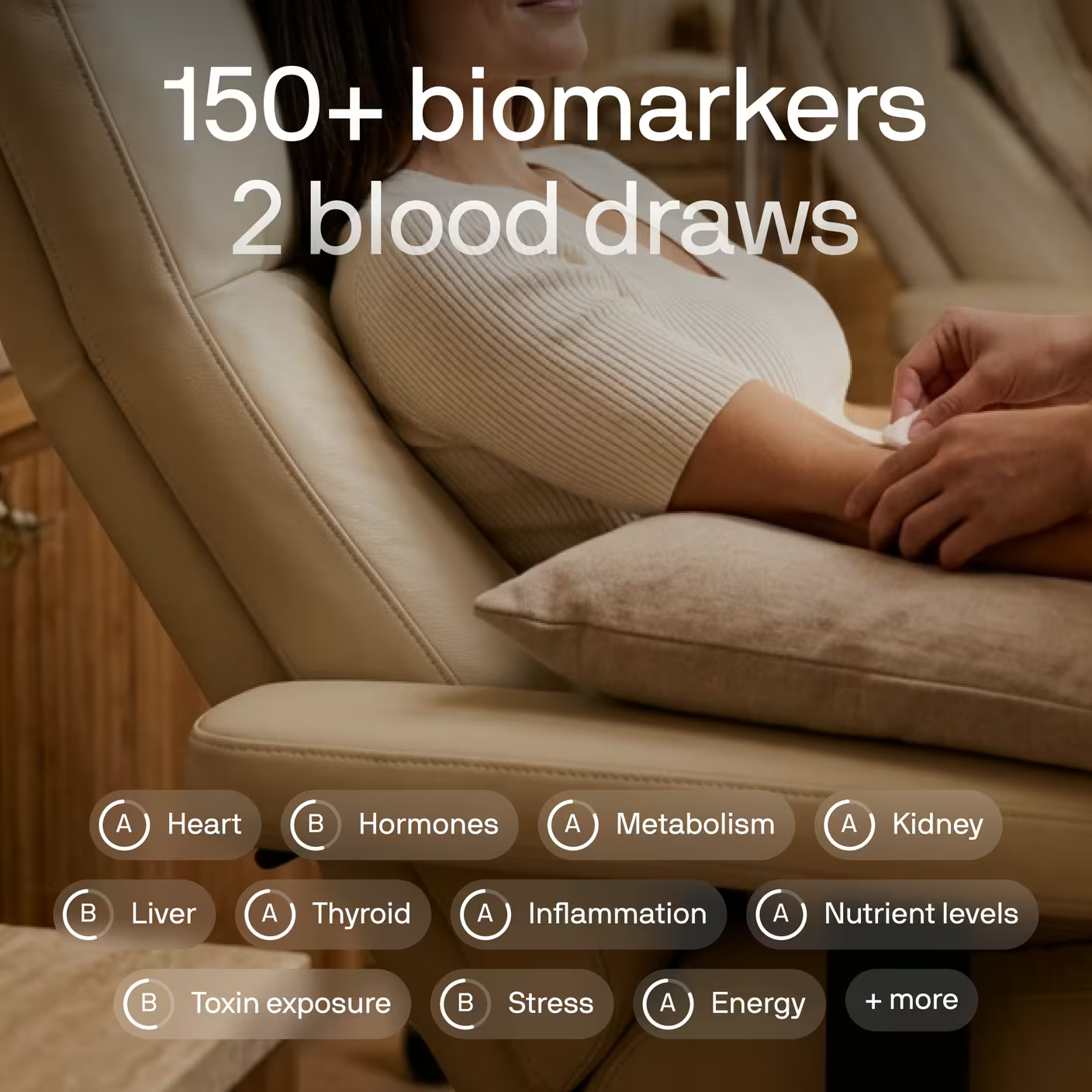
Test 150+ biomarkers
Two blood draws. A full picture of your health, explained in plain language.
Test 150+ biomarkers
Two blood draws. A full picture of your health, explained in plain language.
Who should not use PTD-DBM
The short answer: no one, outside an IRB-approved clinical research study. PTD-DBM has no FDA approval, no IND, no NDA, and no FDA bulk drug substance classification. No completed human clinical trials of PTD-DBM exist. There is no population for whom use of this compound is supported by evidence.
Several mechanistic considerations amplify that default position. These are illustrative, not a contraindication checklist — there is no approved indication:
- Active or prior cancer — Wnt/beta-catenin is a cancer-relevant pathway, particularly in skin and hair follicle tumors including basal cell carcinoma; compounds that disinhibit this pathway carry theoretical proliferative risk
- Personal or family history of Wnt-pathway-driven tumors (e.g., familial adenomatous polyposis with APC mutations) — baseline Wnt activity is already dysregulated in these conditions
- Pregnancy or breastfeeding — Wnt signaling plays critical roles in embryonic development and tissue patterning; no reproductive or developmental toxicology data in humans
- Known hypersensitivity to peptide compounds or complex protein formulations — no allergenicity data for PTD-DBM exists in human subjects
- Competitive athletes — unregulated research peptides fall under WADA's S0 category (Non-Approved Substances)
Which biomarkers are relevant if you are exploring peptide science?
PTD-DBM is not a prescription compound, and no provider-directed monitoring protocol exists for it. However, several biomarkers are directly relevant to understanding the biology that PTD-DBM targets, as well as the hormonal context underlying androgenetic alopecia more broadly.
- Dihydrotestosterone (DHT): The androgen that upregulates CXXC5 in balding scalp dermal papilla cells, according to the 2023 Choi lab mechanistic data. Understanding baseline DHT levels provides context for the hormonal contribution to follicle suppression in individuals experiencing AGA. A provider can order this alongside a standard hormone panel.
- Total and free testosterone: DHT is derived from testosterone through 5-alpha-reductase activity. Elevated total testosterone or increased androgenic sensitivity may contribute to the DHT-CXXC5 axis in AGA. Baseline hormonal context informs whether androgenic suppression is a likely contributor to hair loss.
- Sex hormone-binding globulin (SHBG): Low SHBG increases free androgen availability, which can amplify DHT-mediated follicle suppression. SHBG is relevant to understanding the bioactive androgen fraction beyond total testosterone.
- Thyroid-stimulating hormone (TSH): Thyroid dysfunction is one of the most common reversible causes of diffuse hair loss. Ruling out hypothyroidism before attributing hair loss to androgenic causes is clinically important. TSH is a standard biomarker available through comprehensive panels.
- Ferritin: Iron deficiency, even without overt anemia, is associated with diffuse hair thinning and shedding. Ferritin is the most sensitive available marker for iron depletion. A provider can evaluate whether iron status is contributing to hair loss independently of androgenic mechanisms.
- Complete blood count (CBC): Baseline CBC assesses for anemia and other hematologic abnormalities that can present as or contribute to hair shedding. It is a standard safety marker before initiating any investigational compound.
- Comprehensive metabolic panel (CMP): Liver and kidney function markers establish baseline safety context. Relevant for any investigational compound, particularly those with novel delivery mechanisms like PTD-DBM's protein transduction domain.
- Inflammatory markers (hs-CRP): Scalp inflammation contributes to follicle miniaturization in some forms of alopecia. Elevated systemic inflammation markers provide context for whether an inflammatory component is present alongside or independent of androgenic factors. Superpower's biomarker guides for hormonal balance provide further context on these interactions.
When to take this seriously
Hair loss is common and multifactorial. For individuals experiencing androgenetic alopecia, diffuse thinning, or shedding, established clinical pathways exist: dermatologists and primary care physicians can evaluate the hormonal, nutritional, and inflammatory contributors and discuss FDA-approved options. Understanding your own biology through bloodwork is the most direct starting point. Knowing whether DHT, thyroid function, iron status, or systemic inflammation is contributing to your specific pattern of hair loss is more actionable than any experimental compound. The research on hair growth interventions consistently shows that correcting underlying deficiencies produces more consistent results than adding compounds on top of unaddressed biology. Starting with a comprehensive hormone, iron, and thyroid panel gives you that foundation.
That commitment to data before decisions is what drives Superpower's approach to preventive health: the belief that understanding your biology precisely is the foundation for every health decision, whether you are evaluating established therapies or following emerging research. PTD-DBM is interesting science. The biology it targets is real. But no amount of mechanistic elegance substitutes for human clinical evidence, and for a compound at this stage of development, knowing your baseline biomarkers is the most useful thing you can do.
IMPORTANT SAFETY INFORMATION
PTD-DBM is not approved by the FDA for any medical use. Research on this compound has been limited primarily to laboratory and animal studies, with little to no human clinical trial data available. Its safety, efficacy, appropriate dosing, and long-term effects in humans have not been established. PTD-DBM is not prescribed, compounded, or dispensed through Superpower. This page is provided for educational purposes only and does not constitute medical advice.
No human clinical safety data exists for PTD-DBM. The complete side effect profile, systemic absorption characteristics, immunogenicity potential, and long-term safety in humans are unknown.
PTD-DBM should not be used by anyone outside an IRB-approved clinical research study; there is no approved indication and no contraindication table because there is no approved use. Populations of particular theoretical concern based on PTD-DBM's proposed mechanism include: active or prior cancer, particularly Wnt-pathway-driven tumors; pregnancy or breastfeeding (Wnt signaling plays critical roles in embryonic development).
Warnings: unknown systemic absorption from topical application; theoretical proliferative risk via Wnt pathway disinhibition; no Phase 1 tolerability data in humans; protein transduction domain may increase dermal penetration and systemic exposure beyond that of conventional topical peptides.
Products sold online as PTD-DBM are unregulated and have not been tested for purity, identity, potency, or safety by any regulatory authority. Contamination, mislabeling, and dosing inaccuracies are documented risks of the unregulated research peptide market.
No FDA-approved prescribing information exists for PTD-DBM. For questions about hair loss evaluation and evidence-based options, consult a licensed dermatologist or healthcare provider.
Frequently Asked Questions
References
- Lee SH, Seo SH, Lee DH, Pi LQ, Lee WS, Choi KY (2017). Targeting of CXXC5 by a Competing Peptide Stimulates Hair Regrowth and Wound-Induced Hair Neogenesis. *The Journal of investigative dermatology*, *137*(11), 2260-2269. https://doi.org/10.1016/j.jid.2017.04.038
- Kim HY, Yoon JY, Yun JH, Cho KW, Lee SH, Rhee YM, Jung HS, Lim HJ, Lee H, Choi J, Heo JN, Lee W, No KT, Min D, Choi KY (2015). CXXC5 is a negative-feedback regulator of the Wnt/β-catenin pathway involved in osteoblast differentiation. *Cell death and differentiation*, *22*(6), 912-20. https://doi.org/10.1038/cdd.2014.238
- Lee SH, Kim MY, Kim HY, Lee YM, Kim H, Nam KA, Roh MR, Min, d. o. S., Chung KY, Choi KY (2015). The Dishevelled-binding protein CXXC5 negatively regulates cutaneous wound healing. *The Journal of experimental medicine*, *212*(7), 1061-80. https://doi.org/10.1084/jem.20141601
- Liu J, Xiao Q, Xiao J, Niu C, Li Y, Zhang X, Zhou Z, Shu G, Yin G (2022). Wnt/β-catenin signalling: function, biological mechanisms, and therapeutic opportunities. *Signal transduction and targeted therapy*, *7*(1), 3. https://doi.org/10.1038/s41392-021-00762-6
- Ito M, Yang Z, Andl T, Cui C, Kim N, Millar SE, Cotsarelis G (2007). Wnt-dependent de novo hair follicle regeneration in adult mouse skin after wounding. *Nature*, *447*(7142), 316-20. https://doi.org/10.1038/nature05766
- Wier EM, Garza LA (2020). Through the lens of hair follicle neogenesis, a new focus on mechanisms of skin regeneration after wounding. *Seminars in cell & developmental biology*, *100*, 122-129. https://doi.org/10.1016/j.semcdb.2019.10.002
- Lee I, Choi S, Yun JH, Seo SH, Choi S, Choi KY, Lee W (2017). Crystal structure of the PDZ domain of mouse Dishevelled 1 and its interaction with CXXC5. *Biochemical and biophysical research communications*, *485*(3), 584-590. https://doi.org/10.1016/j.bbrc.2016.12.023
- Kim D, Garza LA (2017). The Negative Regulator CXXC5: Making WNT Look a Little Less Dishevelled. *The Journal of investigative dermatology*, *137*(11), 2248-2250. https://doi.org/10.1016/j.jid.2017.07.826
- Ryu YC, Park J, Kim YR, Choi S, Kim GU, Kim E, Hwang Y, Kim H, Han G, Lee SH, Choi KY (2023). CXXC5 Mediates DHT-Induced Androgenetic Alopecia via PGD. *Cells*, *12*(4). https://doi.org/10.3390/cells12040555
- Lee SH, Yoon J, Shin SH, Zahoor M, Kim HJ, Park PJ, Park WS, Min, d. o. S., Kim HY, Choi KY (2012). Valproic acid induces hair regeneration in murine model and activates alkaline phosphatase activity in human dermal papilla cells. *PloS one*, *7*(4), e34152. https://doi.org/10.1371/journal.pone.0034152
- Jo SJ, Shin H, Park YW, Paik SH, Park WS, Jeong YS, Shin HJ, Kwon O (2014). Topical valproic acid increases the hair count in male patients with androgenetic alopecia: a randomized, comparative, clinical feasibility study using phototrichogram analysis. *The Journal of dermatology*, *41*(4), 285-91. https://doi.org/10.1111/1346-8138.12422
- Lee SH, An S, Ryu YC, Seo SH, Park S, Lee MJ, Cho SW, Choi KY (2023). Adhesive Hydrogel Patch-Mediated Combination Drug Therapy Induces Regenerative Wound Healing through Reconstruction of Regenerative Microenvironment. *Advanced healthcare materials*, *12*(18), e2203094. https://doi.org/10.1002/adhm.202203094
- Fakhraei Lahiji S, Seo SH, Kim S, Dangol M, Shim J, Li CG, Ma Y, Lee C, Kang G, Yang H, Choi KY, Jung H (2018). Transcutaneous implantation of valproic acid-encapsulated dissolving microneedles induces hair regrowth. *Biomaterials*, *167*, 69-79. https://doi.org/10.1016/j.biomaterials.2018.03.019
- Ryu YC, Lee DH, Shim J, Park J, Kim YR, Choi S, Bak SS, Sung YK, Lee SH, Choi KY (2021). KY19382, a novel activator of Wnt/β-catenin signalling, promotes hair regrowth and hair follicle neogenesis. *British journal of pharmacology*, *178*(12), 2533-2546. https://doi.org/10.1111/bph.15438
- Kim E, Seo SH, Hwang Y, Ryu YC, Kim H, Lee KM, Lee JW, Park KH, Choi KY (2023). Inhibiting the cytosolic function of CXXC5 accelerates diabetic wound healing by enhancing angiogenesis and skin repair. *Experimental & molecular medicine*, *55*(8), 1770-1782. https://doi.org/10.1038/s12276-023-01064-3
- Ji S, Zhu Z, Sun X, Fu X (2021). Functional hair follicle regeneration: an updated review. *Signal transduction and targeted therapy*, *6*(1), 66. https://doi.org/10.1038/s41392-020-00441-y
- Adil A, Godwin M (2017). The effectiveness of treatments for androgenetic alopecia: A systematic review and meta-analysis. *Journal of the American Academy of Dermatology*, *77*(1), 136-141.e5. https://doi.org/10.1016/j.jaad.2017.02.054
- Gupta AK, Venkataraman M, Talukder M, Bamimore MA (2022). Relative Efficacy of Minoxidil and the 5-α Reductase Inhibitors in Androgenetic Alopecia Treatment of Male Patients: A Network Meta-analysis. *JAMA dermatology*, *158*(3), 266-274. https://doi.org/10.1001/jamadermatol.2021.5743
- Buhl AE, Waldon DJ, Baker CA, Johnson GA (1990). Minoxidil sulfate is the active metabolite that stimulates hair follicles. *The Journal of investigative dermatology*, *95*(5), 553-7. https://doi.org/10.1111/1523-1747.ep12504905


























 Heart & Vascular Health
 Metabolic Health
 Energy
 Liver Health
 Kidney
 Sex Hormones
 Thyroid Health
 Nutrients
 Immune System
 Inflammation