
Understand what your nutrition results really mean
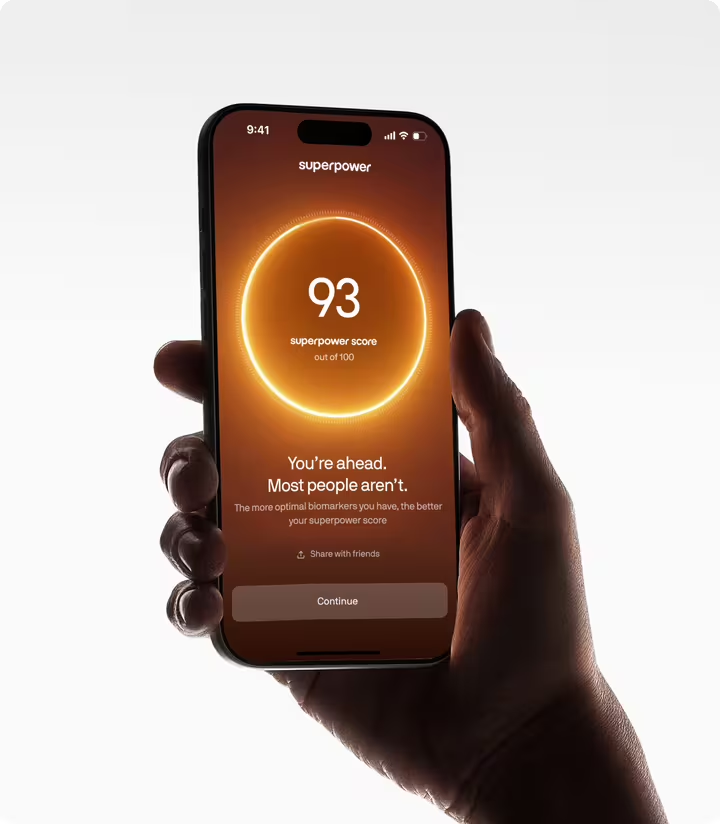
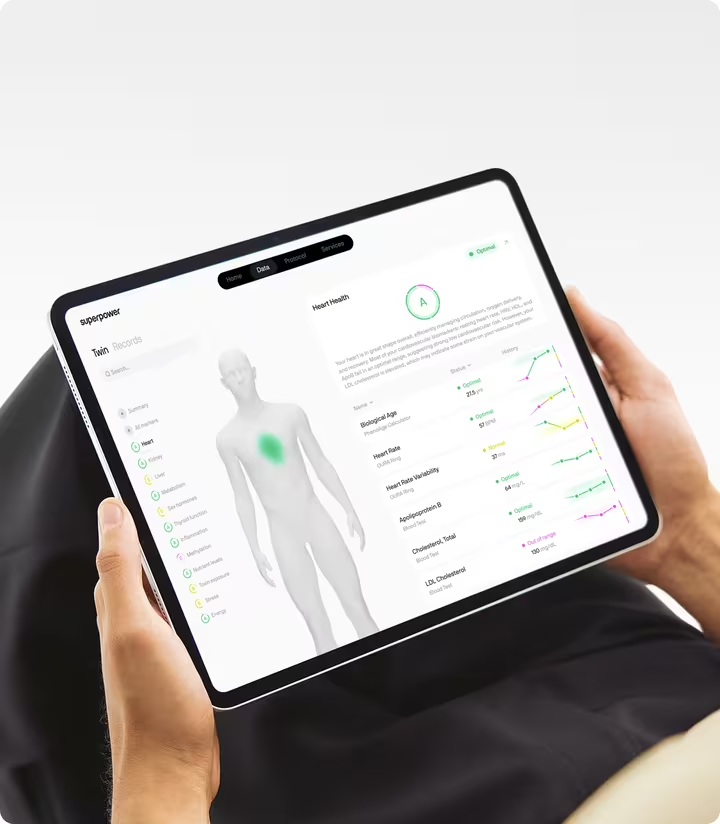
See your biomarkers in context with a comprehensive panel.
- CLIA-certified labs
- HIPAA compliant
- Personalized health protocol
Plasma PLP: The active form of vitamin B6
Plasma vitamin B6 testing measures pyridoxal 5′-phosphate, or PLP — the active coenzyme form of B6 circulating in the blood. PLP is the specialized tool cells use to run reactions that convert protein into usable parts, build neurotransmitters, synthesize heme, and unlock glycogen for fuel. In clinical terms, plasma PLP is the primary status marker for B6; other forms, such as pyridoxal or urinary 4‑pyridoxic acid, provide supporting context.
How vitamin B6 fuels neurotransmitters and amino acids
B6 is a coenzyme for more than a hundred enzymes. In muscle, PLP sits on glycogen phosphorylase to help liberate glucose from stored glycogen. In the brain, it enables the steps that convert amino acids into serotonin, dopamine, and GABA. In red blood cells, it helps build heme, the oxygen-carrying component of hemoglobin.
PLP in the bloodstream does not just reflect intake — it also responds to physiology. During inflammation or infection, PLP can drop as it is pulled into tissues and dephosphorylated, a pattern researchers call a "negative acute-phase" response. High alkaline phosphatase — seen in pregnancy or active bone turnover — can also dephosphorylate PLP, nudging levels down even when intake is steady. High protein turnover, hard training, or major calorie deficits can raise functional demand as well.
It is also worth noting what plasma PLP does not directly measure: it does not reflect B6 inside cells or intracellular enzyme activity. It reflects circulating availability, which inflammation can depress independent of dietary intake.
B6 status also threads through vascular biology via the one-carbon pathway. It supports the enzymes that keep homocysteine in check by driving the transsulfuration step that converts homocysteine to cysteine, working alongside folate and vitamin B12. Adequate PLP is linked to healthier metabolic pathways over the long arc, though it is worth noting that lowering homocysteine with B vitamins has not consistently reduced cardiovascular events in large trials — B6 is one cog in a broader metabolic wheel, not a standalone intervention.
Reading a plasma vitamin B6 result
Lab ranges are based on population data. Most labs flag plasma PLP below about 20 nmol/L as low, with a gray zone above that where adequacy is likely but not guaranteed. Some nutrition studies suggest better functional outcomes when PLP sits modestly higher, though "optimal" is not universally defined and depends on individual physiology and life stage. Ranges and methods vary by lab, so the reference interval on the report is the appropriate benchmark for that result.
Age, sex, pregnancy, oral contraceptives, alcohol use, and inflammation can all shift values at a given intake level, meaning two people eating the same diet can land in different spots on the report.
High PLP
High plasma PLP usually points to recent supplementation — a B-complex, a high-dose standalone B6, or a fortified product taken near the time of the blood draw. Some people absorb and circulate B6 briskly, so timing matters. Less commonly, unusual lab handling or assay differences can artifactually elevate values.
Very high B6 intake — especially as pyridoxine from supplements — has been linked to sensory nerve symptoms in case reports, so persistently elevated values warrant a thoughtful review of total intake. Reviewing the full supplement stack, diet, and medication list helps separate "well supplied" from "overshooting."
Low PLP
Low plasma PLP can reflect low intake, but that is not the only explanation. Inflammation, infections, high alkaline phosphatase states, and alcohol use can all drag PLP down independent of dietary intake. Certain medications — such as isoniazid and some chelating agents — bind or interfere with B6, lowering functional availability. Oral contraceptives are also associated with lower PLP in some studies.
Malabsorption, restrictive eating patterns, dialysis, and liver disease can alter handling and needs as well. Because B6 is water-soluble with limited storage, gaps in intake show up relatively quickly. Pairing a low PLP result with context — symptoms, diet history, and related labs such as homocysteine or alkaline phosphatase — builds a much clearer picture.
Normal vitamin B6
A result within the lab's reference range, in the absence of symptoms or confounding factors such as active inflammation or high ALP, generally reflects adequate circulating B6 availability. Tracking how the value trends alongside habits, training, and health changes over time adds more interpretive value than any single reading.
What shifts a plasma B6 level
Several factors can move a plasma PLP result up or down, independent of how much B6 a person consumes:
- Food processing and cooking: Processing and prolonged high-heat cooking reduce B6 content in foods. Poultry, fish, potatoes, chickpeas, and bananas are common dietary contributors; how they are prepared affects how much B6 reaches circulation.
- High protein intake and training: B6 is involved in protein metabolism, so patterns with very high protein turnover — from diet or hard training blocks — can push functional demand upward. Glycogen phosphorylase activity increases during exercise, transiently raising B6 requirements.
- Oral contraceptives: Associated with lower plasma PLP in some studies, likely through effects on B6 metabolism and distribution.
- Medications: Isoniazid and some chelating agents bind or interfere with B6, lowering functional availability. Clinicians often co-manage B6 levels in those settings.
- Alcohol: Chronic alcohol use impairs the activation of B6 and can lower circulating PLP independent of intake.
- Inflammation: PLP is a negative acute-phase reactant — active inflammation or infection pulls it into tissues, lowering plasma levels regardless of dietary status.
- Alkaline phosphatase: Elevated ALP, as seen in pregnancy or high bone turnover, dephosphorylates PLP in circulation, reducing measured plasma levels even when intake is adequate.
- Sleep and stress: Poor sleep amplifies cortisol rhythms and inflammatory signals, which may subtly affect B6 handling through the inflammation pathway described above.
- Sample handling: PLP is photosensitive — the blood sample must be protected from light immediately after collection for a valid result. Assay differences between labs can also affect values.

Test 100+ biomarkers from home
One blood draw. A full picture of your health, explained in plain language.
Test 100+ biomarkers from home
One blood draw. A full picture of your health, explained in plain language.
Companion markers for a vitamin B6 read
Plasma PLP is most informative when read alongside markers that share its metabolic pathways or that explain why a result may be shifted:
- Homocysteine — B6 drives the transsulfuration step that converts homocysteine to cysteine. Elevated homocysteine with low PLP identifies B6 as the bottleneck in that step, distinct from the B12/folate methylation bottleneck.
- hs-CRP — hs-CRP flags the acute-phase response that suppresses plasma PLP independent of intake. A low PLP with an elevated CRP may reflect physiological redistribution rather than true dietary deficiency.
- Folate — folate and B6 converge in the one-carbon pathway governing homocysteine metabolism. Low PLP and low folate together point to a combined methylation and transsulfuration bottleneck.
- Vitamin B12 — The B12/B6/folate triad collectively governs homocysteine levels. Testing all three reveals which deficiency is driving any elevation.
- Alkaline phosphatase (ALP) — elevated ALP from bone turnover or pregnancy dephosphorylates PLP in circulation, lowering plasma levels independent of intake. ALP context prevents misattributing a low PLP to dietary inadequacy.
A realistic retest window for plasma B6
Plasma PLP responds relatively quickly to change. After supplementation or correction of a deficiency driver — such as alcohol cessation or resolution of an inflammatory episode — circulating PLP typically begins to shift within 2–4 weeks. A retest at 8–12 weeks is a reasonable window to confirm a durable response rather than a transient one.
A few practical notes for a clean result:
- Because PLP is photosensitive, the blood sample should be protected from light immediately after collection. Confirm with the drawing lab that this step is in their protocol.
- Avoid drawing during acute illness or a high-inflammation period if the goal is a dietary-status baseline — inflammation suppresses PLP independent of intake and will make the result harder to interpret.
- Pairing the retest with a CRP provides inflammation context and helps distinguish a true intake-driven change from a physiological shift.
When a vitamin B6 result is worth flagging
A plasma B6 result is worth a closer look in a few situations: a PLP below the lab's reference range, particularly alongside symptoms such as low mood, fatigue, or peripheral tingling; a persistently elevated PLP in someone taking high-dose pyridoxine supplements; or a low PLP in the context of elevated homocysteine, where B6 may be the rate-limiting factor in the transsulfuration pathway.
Results that sit in the gray zone just above the deficiency cutoff are best interpreted with trend data — a single borderline number is less actionable than a value that has been drifting down over successive draws. Pairing the result with hs-CRP and ALP, as described above, resolves the most common sources of ambiguity before drawing conclusions about dietary adequacy.
Plasma B6 is a small draw with outsized interpretive value when placed in context. It shows how intake, stress load, training, and supplements land in real biology — and it gets more powerful when viewed alongside homocysteine, folate, B12, hs-CRP, and alkaline phosphatase. That combination supports decisions that fit individual biology, life stage, and goals. Superpower is built around that approach to preventive health — measure, learn, adjust, and repeat.
Frequently Asked Questions
References
- Sakakeeny L, Roubenoff R, Obin M, Fontes JD, Benjamin EJ, Bujanover Y, Jacques PF, Selhub J (2012). Plasma pyridoxal-5-phosphate is inversely associated with systemic markers of inflammation in a population of U.S. adults. *The Journal of nutrition*, *142*(7), 1280-5. https://doi.org/10.3945/jn.111.153056
- Paul L, Ueland PM, Selhub J (2013). Mechanistic perspective on the relationship between pyridoxal 5'-phosphate and inflammation. *Nutrition reviews*, *71*(4), 239-44. https://doi.org/10.1111/nure.12014
- Hadtstein F, Vrolijk M (2021). Vitamin B-6-Induced Neuropathy: Exploring the Mechanisms of Pyridoxine Toxicity. *Advances in nutrition*, *12*(5), 1911-1929. https://doi.org/10.1093/advances/nmab033
- Huang T, Chen Y, Yang B, Yang J, Wahlqvist ML, Li D (2012). Meta-analysis of B vitamin supplementation on plasma homocysteine, cardiovascular and all-cause mortality. *Clinical nutrition*, *31*(4), 448-54. https://doi.org/10.1016/j.clnu.2011.01.003
- Wilson SM, Bivins BN, Russell KA, Bailey LB (2011). Oral contraceptive use: impact on folate, vitamin B₆, and vitamin B₁₂ status. *Nutrition reviews*, *69*(10), 572-83. https://doi.org/10.1111/j.1753-4887.2011.00419.x