


Understand what your emerging health topics results really mean
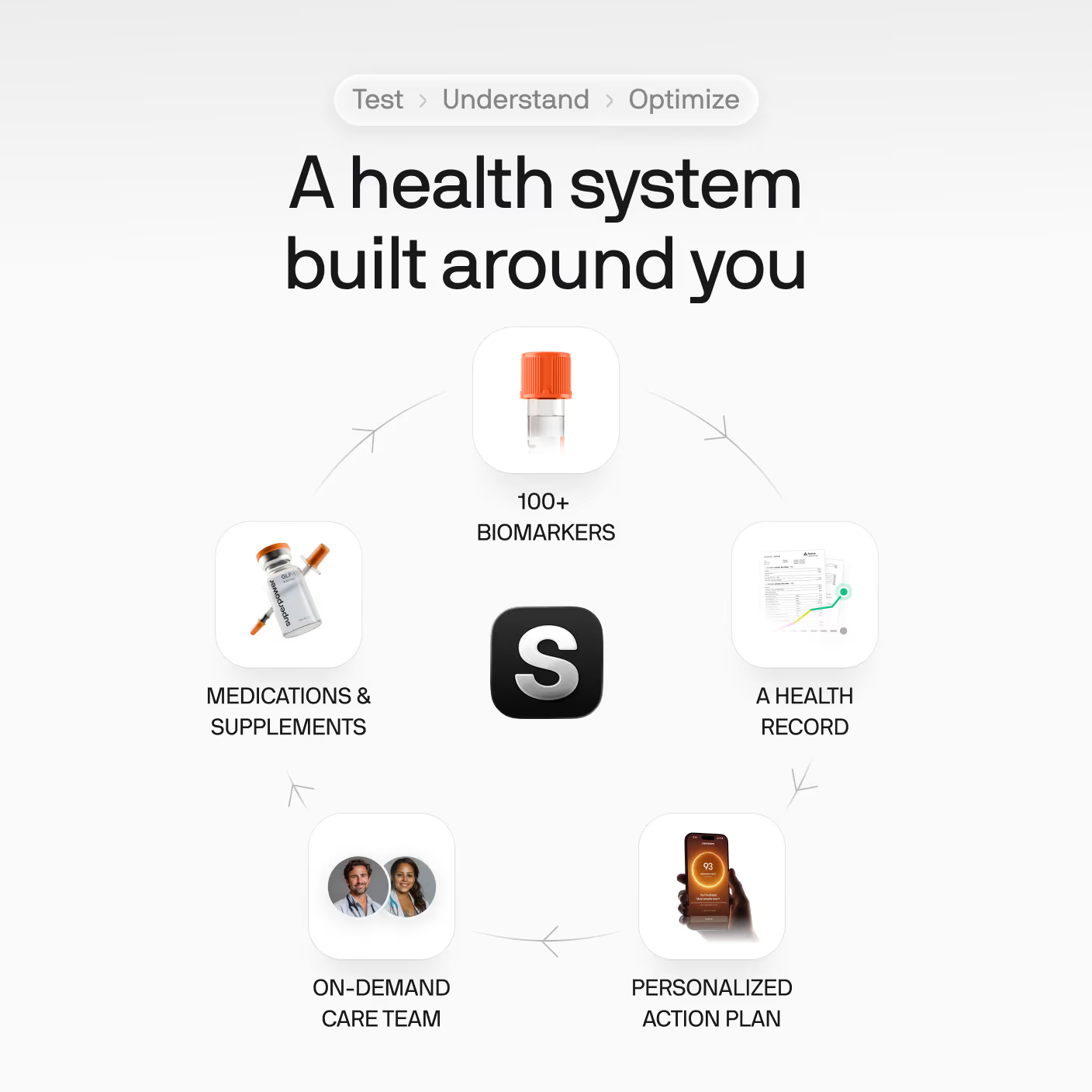
See your biomarkers in context with a comprehensive panel.
- CLIA-certified labs
- HIPAA compliant
- Personalized health protocol
Ox Bile: What's in the Capsule
An ox bile supplement is a desiccated extract of bovine bile, sold in capsule or tablet form. It belongs to the dietary supplement category and is not FDA-approved for any medical indication. It is most commonly used by people who have had their gallbladder removed and experience difficulty digesting fat as a result. Post-cholecystectomy digestive symptoms belong in a clinician workup before any supplement decision; this content does not replace that evaluation.
Bile acids are the active components in ox bile. The primary bile acids, cholic acid and chenodeoxycholic acid, are synthesized by liver cells (hepatocytes) and concentrated in the gallbladder. Secondary bile acids, including deoxycholic and lithocholic acid, are formed by gut bacteria. Together, they enable dietary-fat emulsification and the absorption of fat-soluble vitamins A, D, E, and K.
Chemistry and structure
Bile acids share a steroidal-acid core with both water-attracting and fat-attracting regions. This amphipathic structure is what gives bile its detergent-like function in the gut. In the body, primary bile acids are conjugated with glycine or taurine before secretion, which increases their solubility and effectiveness at physiological pH. Ox bile supplements typically contain a mixed bile-salt extract rather than a single purified compound. Composition varies meaningfully by manufacturer. Bile acid diarrhea management literature underscores that the specific bile-acid profile matters clinically, which is one reason standardization across OTC products remains a concern.
Source and history of use
Bile-extract therapeutics have a long history in clinical hepatology. Pharmaceutical bile acids like ursodeoxycholic acid are FDA-approved for cholestasis and primary biliary cholangitis. Ox bile as an over-the-counter supplement is a more recent wellness-market product. GI function following cholecystectomy has been studied for decades, establishing the clinical rationale for bile-acid support after gallbladder removal. More recently, post-cholecystectomy syndrome has been reframed as a heterogeneous condition with multiple contributing mechanisms, not simply a bile-acid-volume problem.
How Ox Bile Works in Your Digestive System
Bile acids are your gut's built-in emulsifiers. Without adequate meal-coordinated bile delivery, fat digestion becomes inefficient. After gallbladder removal, the timing of bile release changes fundamentally, and that shift is the core rationale for an ox bile supplement.
Mechanism of action
When fat enters the small intestine, bile salts arrange themselves around triglyceride droplets to form micelles, tiny spherical structures with fat at the center and water-compatible surfaces facing outward. This micellar packaging is what allows pancreatic lipase to access and hydrolyze triglycerides into fatty acids and monoglycerides. The same micellar phase carries fat-soluble vitamins A, D, E, and K to the intestinal wall for absorption. Without adequate bile, fat passes through incompletely digested, and fat-soluble vitamin absorption drops accordingly.
Bile acids also act as signaling molecules. They bind to nuclear receptor FXR and membrane receptor TGR5, triggering downstream metabolic effects. Fibroblast growth factor 19 (FGF19) in post-cholecystectomy bile acid diarrhea is one such downstream signal. FGF19 normally suppresses hepatic bile-acid synthesis as part of a feedback loop, and disruption of this axis after cholecystectomy is proposed to contribute to bile-acid diarrhea. Bile-acid malabsorption as a mechanism of post-cholecystectomy diarrhea was established using SeHCAT testing, a radiolabeled bile-acid retention test. Current bile acid diarrhea diagnosis and treatment literature continues to build on that foundation.
Pharmacokinetics
Mechanistically, bile salts function in the presence of dietary fat in the small intestine; ox bile products are therefore typically formulated for use with meals. The bile salts act locally in the small intestinal lumen, mixing with the fat bolus to support emulsification. This is not a systemic supplement in the way vitamin D is; the desired effect is luminal, not plasma-level. Specific timing and dose decisions belong with a clinician familiar with your GI history.
After performing their luminal function, bile acids are reabsorbed in the terminal ileum and returned to the liver via portal circulation, a process called enterohepatic recirculation. This loop is efficient under normal conditions. After cholecystectomy, the continuous drip of bile into the small intestine (rather than a meal-coordinated bolus) disrupts this timing. Ox bile supplementation is proposed to partially restore that meal-synchronized delivery, though formal pharmacokinetic studies of OTC ox bile products are limited.
Where the Evidence Lands, Claim by Claim
The claims behind ox bile supplements cover fat digestion after gallbladder removal, exocrine pancreatic insufficiency, SIBO, and general digestion. The strength of evidence varies considerably across these use cases.
Ox bile supports fat digestion after gallbladder removal: Limited
The mechanistic plausibility here is real. Biliary-related complications after cholecystectomy include fat malabsorption and bile-acid diarrhea, and post-cholecystectomy syndrome prevalence in real-world cohorts is meaningful. Post-cholecystectomy syndrome in gallstone disease affects a significant subset of patients who undergo the procedure. However, formal randomized controlled trials of OTC ox bile supplements specifically for post-cholecystectomy fat malabsorption are sparse. The clinical-management literature addresses bile-acid diarrhea with prescription bile-acid sequestrants and dietary fat modification, not OTC ox bile. Functional plausibility is good; trial-level evidence for ox bile as a treatment is weak.
Ox bile helps EPI (exocrine pancreatic insufficiency): Animal-only
EPI is a pancreatic-enzyme deficiency problem, not a bile-acid problem. The appropriate treatment is pancreatic enzyme replacement therapy (PERT). Pancreatic enzyme replacement therapy for EPI has a well-established evidence base. Current AGA clinical practice guidelines on EPI and European guidelines for pancreatic exocrine insufficiency both center PERT as the standard of care. Ox bile is not a substitute for PERT. The mechanisms are adjacent, both involve fat digestion, but conflating them is a category error common in wellness marketing.
Ox bile helps SIBO (small intestinal bacterial overgrowth): Anecdotal
The overlap between SIBO and bile-acid malabsorption is documented. Small intestinal bacterial overgrowth, bile acid malabsorption, and gluten intolerance can all present with chronic watery diarrhea and fat-malabsorption symptoms. SIBO and IBS share overlapping mechanisms that complicate clinical attribution. However, ox bile as a SIBO intervention has no controlled-trial support. SIBO therapy and microbiome considerations center on antibiotics and dietary interventions, not bile-acid supplementation.
Ox bile improves general digestion: Anecdotal
No RCTs support ox bile as a general digestive aid in people with intact gallbladders and normal bile flow. In a person with normal bile-acid physiology, adding exogenous bile salts has no established benefit. The marketed claim significantly outpaces the available data.
What ox bile is NOT shown to do: Treat gallstones or bile-duct conditions; substitute for medical management of cholestasis; replace PERT in EPI; serve as a general digestive aid in people with normal bile-flow physiology; or cure SIBO or IBS. These are not fringe caveats. They reflect the actual boundaries of the evidence.
Forms, Quality, and What to Look For When You Shop
Ox bile is sold as a single-form bile-extract capsule or tablet. Product-level variation is mostly in milligram strength, bovine sourcing, and excipients rather than meaningful chemical-form differences. There is no pharmaceutical-grade standardization across OTC products.
Third-party testing programs such as USP, NSF International, and ConsumerLab cover relatively few ox-bile products. Given the bovine source, a certificate of analysis (COA) with heavy-metal testing is a reasonable quality floor. Look for clear documentation of bovine sourcing, batch-level COA availability, and third-party verification where possible.
Avoid products that claim FDA approval. None exists for OTC ox bile. Be cautious with products that bundle ox bile with digestive enzymes and market the combination as a treatment for EPI. That framing misrepresents both the regulatory status and the clinical evidence. Clinical dosing for pancreatic enzyme replacement therapy requires medical guidance and prescription-strength formulations, not OTC combinations.
Regulatory Status (as of May 2026)
Ox bile is sold in the United States as a dietary supplement under the Dietary Supplement Health and Education Act (DSHEA) of 1994. As of May 2026, it is not FDA-approved for any indication. Because ox bile was on the market before 1994, no New Dietary Ingredient (NDI) notification is required for its sale. No FDA warning letters specifically targeting ox-bile-only products are publicly documented, though enforcement actions have targeted products that market bile-acid supplements as treatments for specific GI conditions, a regulatory red flag for consumers.
Prescription bile-acid products occupy a separate and clinically distinct category. Ursodeoxycholic acid is FDA-approved for primary biliary cholangitis and for select gallstone-dissolution indications. Bile-acid sequestrants, such as cholestyramine, colestipol, and colesevelam, are used off-label for bile-acid diarrhea. These are not interchangeable with OTC ox bile. Managing bile acid diarrhea with prescription agents involves clinical diagnosis, not supplement selection.
Test 150+ biomarkers
Two blood draws. A full picture of your health, explained in plain language.
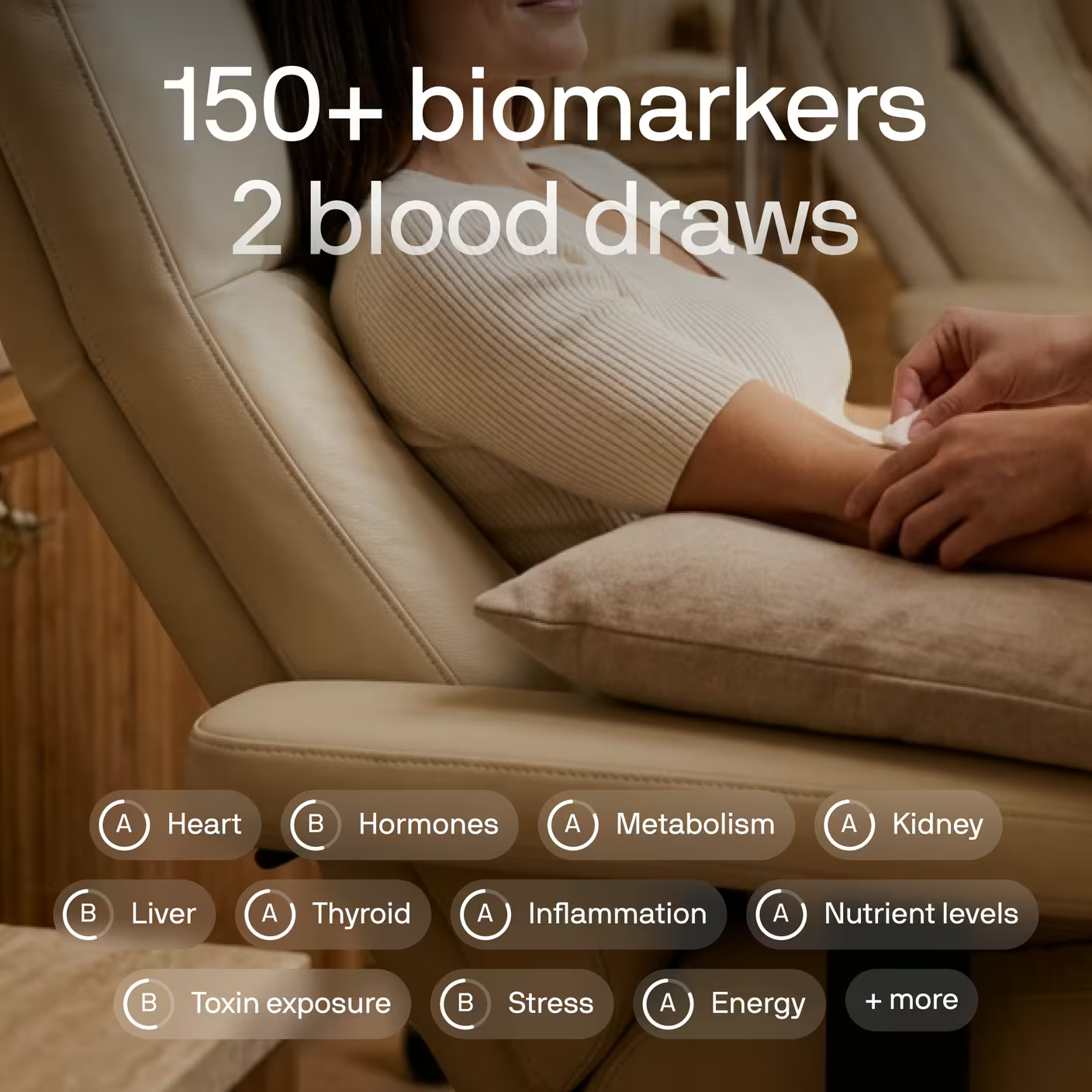
Test 150+ biomarkers
Two blood draws. A full picture of your health, explained in plain language.
Safety: The Counterintuitive Diarrhea Risk First
Large-scale safety data on ox bile supplements is absent from the literature. The relevant safety signals come from clinical hepatology and bile-acid-diarrhea management research, not from supplement-specific trials.
Reported side effects
Important: Ox bile can worsen — not improve — diarrhea in patients whose underlying issue is excess bile-acid load. Proper diagnosis (typically a gastroenterology workup) is the prerequisite for this supplement; self-treating chronic diarrhea with ox bile risks making it worse. The most clinically relevant adverse effect is counterintuitive: ox bile can worsen diarrhea in patients whose underlying problem is excess bile-acid load rather than insufficient delivery. Chronic noninfectious diarrhea including bile-acid diarrhea is a recognized clinical entity treated by bile-acid sequestrants that BIND bile salts to reduce luminal load — the inverse of what ox bile supplementation delivers. A case of post-cholecystectomy bile acid diarrhea in a teenager illustrates that this condition can affect younger patients and requires proper diagnosis. Bile acid quantification via 72-hour stool collection is how bile-acid disorders are actually diagnosed, not by self-assessment or symptom pattern alone. Other reported adverse effects include GI cramping, nausea, and headache.
Drug interactions
- Bile-acid sequestrants (cholestyramine, colesevelam): Moderate. Antagonistic mechanism; ox bile delivers bile salts, sequestrants bind them. Pair only under clinician guidance.
- Fat-soluble vitamin supplements (A, D, E, K): Minor. Ox bile improves micellar formation; absorption of fat-soluble vitamins taken concurrently may be enhanced.
- Oral fat-soluble medications: Minor. Similar absorption-enhancement mechanism; clinically relevant for medications with narrow therapeutic windows.
- Anticoagulants (warfarin): Minor. Indirect via vitamin K absorption; monitor INR if intake is variable.
Pregnancy, breastfeeding, and organ-function callouts
No controlled human data exists for ox bile supplementation during pregnancy or breastfeeding; it is generally avoided at supplemental doses without obstetric guidance. Active liver disease or biliary obstruction represents a contraindication. Bile-acid supplementation in cholestasis is a clinical decision, and prescription ursodeoxycholic acid is the appropriate intervention, not OTC ox bile. For patients with hepatic disease, bile-acid recirculation involves hepatic clearance, and existing liver dysfunction warrants clinician guidance before any bile-acid product is used. In oncology settings, pancreatic exocrine insufficiency and enzyme replacement in pancreatic cancer is managed under clinical supervision, a model that applies equally to any bile-acid supplementation in medically complex patients.
Who Should Avoid Ox Bile (and Why)
Several populations face meaningful risk from unsupervised ox bile use. These are honest contraindications, not boilerplate cautions.
- Pregnant or breastfeeding individuals: no controlled human safety data at supplemental doses.
- Active liver disease (hepatitis, cirrhosis, cholestasis): bile-acid supplementation in these conditions is a clinical decision, not an OTC one.
- Active biliary obstruction or gallstones: adding bile salts where outflow is blocked can worsen symptoms.
- Undiagnosed chronic diarrhea: could be bile-acid diarrhea (which sequestrants treat) or EPI (which PERT treats); diagnostic workup belongs first.
- EPI managed without medical supervision: PERT is the appropriate intervention; ox bile is not a substitute.
- Known bile-acid sensitivity or allergy to bovine products.
- Children: supplemental doses are not characterized in pediatric populations.
If any of the above apply, do not start this supplement without speaking to a clinician familiar with your full medication list and biomarkers.
The Bile-Function and Fat-Absorption Markers Worth Tracking
The post-cholecystectomy and fat-malabsorption questions have specific measurable readouts. Baseline-and-retest is the only way to know objectively whether anything is changing.
- ALT: Hepatocellular liver-function marker; the baseline liver-panel reference point for anyone using a bile-acid product.
- AST: Paired with ALT; together they characterize the hepatocellular pattern.
- GGT: Biliary-system marker; particularly relevant in the post-cholecystectomy context.
- Bilirubin: Direct readout of bile-pigment metabolism.
- Vitamin D (25-OH): Fat-soluble vitamin status, the absorption channel ox bile is proposed to support.
- Vitamin A, E, K status: The full fat-soluble vitamin panel where indicated; deficiency in any of these is the actual measurable signal of fat malabsorption.
- Lipid panel (LDL-C, HDL-C, triglycerides): Shifts in lipid absorption show here over a 12-week window.
Establishing these baselines before starting ox bile provides the objective reference points that make any subsequent change interpretable. Without a baseline, a response is indistinguishable from regression to the mean, or from a symptom that was resolving on its own.
When Your Symptoms Warrant a Workup, Not a Supplement
Persistent diarrhea, chronic fat malabsorption, post-cholecystectomy symptoms that have never been formally evaluated, or suspected EPI all deserve clinical workup before any supplement is introduced. The relevant pathways are hepatology or gastroenterology evaluation for suspected bile insufficiency, whether post-cholecystectomy or cholestatic in pattern. For suspected EPI, AGA clinical practice guidelines on exocrine pancreatic insufficiency outline the appropriate diagnostic and treatment pathway, which centers on PERT under medical supervision. Recognizing EPI in patients with diabetes is one example of how fat-malabsorption symptoms can be missed without targeted testing. Bloodwork is the objective starting point for any of these questions.
Measuring biology before acting on it is the foundation of Superpower's approach to preventive health. A baseline liver panel and fat-soluble vitamin status is the right starting point whether or not an ox bile supplement turns out to be the appropriate tool.
Frequently Asked Questions
References
- Walters JRF, Sikafi R (2024). Managing bile acid diarrhea: aspects of contention. *Expert review of gastroenterology & hepatology*, *18*(9), 521-528. https://doi.org/10.1080/17474124.2024.2402353
- Rumessen JJ (2005). [Gastrointestinal function following cholecystectomy]. *Ugeskrift for laeger*, *167*(24), 2623-4. https://pubmed.ncbi.nlm.nih.gov/16014213/
- Nam C, Lee JS, Kim JS, Lee TY, Yoon YC (2025). Clinical perspectives on post-cholecystectomy syndrome: a narrative review. *Annals of medicine*, *57*(1), 2496408. https://doi.org/10.1080/07853890.2025.2496408
- Indeykina, L. К., Sabelnikova, Е. А., Varvanina GG, Silvestrova SU, Smirnova, А. V., Krums, L. М., Viaznikova AA, Parfenov, А. I. (2021). [The role of fibroblast growth factor 19 in pathogenesis of bile acid diarrhea of the patients who underwent cholecystectomy]. *Terapevticheskii arkhiv*, *93*(2), 174-178. https://doi.org/10.26442/00403660.2021.02.200621
- Sciarretta G, Furno A, Mazzoni M, Malaguti P (1992). Post-cholecystectomy diarrhea: evidence of bile acid malabsorption assessed by SeHCAT test. *The American journal of gastroenterology*, *87*(12), 1852-4. https://pubmed.ncbi.nlm.nih.gov/1449156/
- Sangiorgio G, Zanghì M, Dionigi G, Zanghì G (2023). Postcholecystectomy syndrome: biliary-related complications. *Minerva surgery*, *78*(6), 684-691. https://doi.org/10.23736/S2724-5691.23.09942-2
- Alotaibi AM (2023). Post-cholecystectomy syndrome: A cohort study from a single private tertiary center. *Journal of Taibah University Medical Sciences*, *18*(2), 383-389. https://doi.org/10.1016/j.jtumed.2022.10.004
- Rahman KR, Fatima R, Zeenat M, Williams C, Khatun A, Yangibaev O (2025). Evaluation of Post-cholecystectomy Syndrome in Patients With Gallstone Disease: A Critical Appraisal. *Cureus*, *17*(8), e90965. https://doi.org/10.7759/cureus.90965
- Ahmad DS, Faulx A (2020). Management of Postcholecystectomy Biliary Complications: A Narrative Review. *The American journal of gastroenterology*, *115*(8), 1191-1198. https://doi.org/10.14309/ajg.0000000000000704
- Trang T, Chan J, Graham DY (2014). Pancreatic enzyme replacement therapy for pancreatic exocrine insufficiency in the 21(st) century. *World journal of gastroenterology*, *20*(33), 11467-85. https://doi.org/10.3748/wjg.v20.i33.11467
- Whitcomb DC, Buchner AM, Forsmark CE (2023). AGA Clinical Practice Update on the Epidemiology, Evaluation, and Management of Exocrine Pancreatic Insufficiency: Expert Review. *Gastroenterology*, *165*(5), 1292-1301. https://doi.org/10.1053/j.gastro.2023.07.007
- Dominguez-Muñoz JE, Vujasinovic M, de la Iglesia D, Cahen D, Capurso G, Gubergrits N, Hegyi P, Hungin P, Ockenga J, Paiella S, Perkhofer L, Rebours V, Rosendahl J, Salvia R, Scheers I, Szentesi A, Bonovas S, Piovani D, Löhr JM, European PEI Multidisciplinary Group (2025). European guidelines for the diagnosis and treatment of pancreatic exocrine insufficiency: UEG, EPC, EDS, ESPEN, ESPGHAN, ESDO, and ESPCG evidence-based recommendations. *United European gastroenterology journal*, *13*(1), 125-172. https://doi.org/10.1002/ueg2.12674
- Fan X, Sellin JH (2009). Review article: Small intestinal bacterial overgrowth, bile acid malabsorption and gluten intolerance as possible causes of chronic watery diarrhoea. *Alimentary pharmacology & therapeutics*, *29*(10), 1069-77. https://doi.org/10.1111/j.1365-2036.2009.03970.x
- Takakura W, Pimentel M (2020). Small Intestinal Bacterial Overgrowth and Irritable Bowel Syndrome - An Update. *Frontiers in psychiatry*, *11*, 664. https://doi.org/10.3389/fpsyt.2020.00664
- Sellge G, Ockenga J (2024). [Small intestinal bacterial overgrowth (SIBO) - Therapy, nutrition, microbiome]. *Deutsche medizinische Wochenschrift (1946)*, *149*(18), 1071-1079. https://doi.org/10.1055/a-2205-5794
- Lewis DM, Rieke JG, Almusaylim K, Kanchibhatla A, Blanchette JE, Lewis C (2024). Exocrine Pancreatic Insufficiency Dosing Guidelines for Pancreatic Enzyme Replacement Therapy Vary Widely Across Disease Types. *Digestive diseases and sciences*, *69*(2), 615-633. https://doi.org/10.1007/s10620-023-08184-w
- Singh P, Lee A, Sheth NM, Chey WD (2026). Chronic, Noninfectious Diarrhea: A Review. *JAMA*, *335*(14), 1250-1262. https://doi.org/10.1001/jama.2026.0872
- Sumbizi CE, Hassan O, Mbuma R, Kifaluka J, Ali A, Nyamuryekung'e MK (2025). Post-cholecystectomy bile acid diarrhea in a teenager with sickle cell disease: Case report. *International journal of surgery case reports*, *136*, 112018. https://doi.org/10.1016/j.ijscr.2025.112018
- Gelders F, Tack J, Vanuytsel T (2025). Diagnostic and therapeutic yield of 72h stool collection combined with bile acid quantification: a retrospective analysis. *Acta gastro-enterologica Belgica*, *88*(3), 245-252. https://doi.org/10.51821/88.3.13758
- Powell-Brett S, de Liguori Carino N, Roberts K (2021). Understanding pancreatic exocrine insufficiency and replacement therapy in pancreatic cancer. *European journal of surgical oncology : the journal of the European Society of Surgical Oncology and the British Association of Surgical Oncology*, *47*(3 Pt A), 539-544. https://doi.org/10.1016/j.ejso.2020.03.006
- Kusztos V, Pogorelova M (2025). Recognizing Exocrine Pancreatic Insufficiency in Patients with Diabetes: A Case Study. *The American journal of case reports*, *26*, e948283. https://doi.org/10.12659/AJCR.948283





















 Heart & Vascular Health
 Metabolic Health
 Energy
 Liver Health
 Kidney
 Sex Hormones
 Thyroid Health
 Nutrients
 Immune System
 Inflammation