


Understand what your emerging health topics results really mean
See your biomarkers in context with a comprehensive panel.
- CLIA-certified labs
- HIPAA compliant
- Personalized health protocol
Cycle Syncing, Defined
Cycle syncing means adjusting diet, exercise, and daily habits to the four phases of your menstrual cycle: follicular, ovulatory, luteal, and menstrual. The goal is to work with the hormonal pattern of each phase rather than against it. Proponents argue this supports energy, mood, and physical performance across the month.
The framework was popularized through Alisa Vitti's FLO protocol, developed in her books and the FLO Living platform. The underlying physiology it draws on is real: estrogen and progesterone rise and fall in measurable, predictable patterns across a typical cycle. The practice's claim is that diet and exercise should be timed to those fluctuations. Cycle syncing is not clinical hormone replacement, a PCOS management protocol, or a fertility treatment, though it is frequently confused with all three.
Cycle-syncing proponents associate the practice with four outcomes:
- Phase-specific energy and mood support. Matching activity and rest to hormonal highs and lows
- Phase-specific exercise programming producing better performance and strength gains
- Phase-specific nutrition (the "cycle syncing diet") supporting weight management and hormone balance
- Phase-specific lifestyle and social scheduling reducing PMS symptoms and improving productivity
Grading the Cycle-Syncing Claims
Evidence quality across these claims ranges from anecdotal to strong.
Phase-timed strength and power training: Limited
Some trials have observed a small follicular-phase advantage for strength outcomes. A review in Sports Medicine found weak and inconclusive evidence on whether follicular-phase resistance training favors strength and mass, with high methodological heterogeneity across trials. A smaller randomized study similarly suggested possible differences in strength gains between follicular- and luteal-phase training in a within-subject design of 20 young women. However, a rigorous 2025 study found menstrual cycle phase does not influence muscle protein synthesis or whole-body proteolysis after resistance exercise. Newer methodology is actively challenging older claims.
Phase-timed endurance performance: Limited
The FENDURA project found menstrual cycle phase had no influence on performance-determining variables in endurance-trained athletes. Earlier reviews established the field's historical framing, but methodologic concerns about how cycle research is conducted limit confidence in both directions. The honest bottom line: cycle-phase effects on endurance are smaller and more variable than popular cycle-syncing claims suggest.
Phase-timed nutrition and the "cycle syncing diet" for weight management: Limited
The physiologic foundation is real: dietary energy intake rises during the luteal phase, a pattern reinforced by retrospective analyses of food intake across the menstrual cycle and observed changes in eating habits during the cycle. But the broader "cycle syncing diet" claims are less evidence-supported than the exercise claims. The only RCT directly testing cycle-tailored weight-loss programming. The Menstralean trial. Found a per-protocol advantage but no significant effect in the intention-to-treat analysis. That gap matters.
Phase-timed mood and cognition: Anecdotal
Cyclical changes in mood and cognition are physiologically real, but no RCTs have validated cycle syncing as an intervention that reliably improves them. Importantly, aggressive dietary restriction in the name of cycle syncing carries its own risk: research shows energy restriction can disrupt LH secretion and cause menstrual irregularities in otherwise healthy women. For those exploring the luteal phase through a recovery and parasympathetic lens, a 2025 meta-analysis of Yoga Nidra found improvements in blood pressure and heart-rate variability, though this has not been tested specifically within a cycle-syncing framework.
A Reasonable Way to Run a Cycle-Syncing Trial
For those who want to try cycle syncing after weighing the evidence, a structured approach maximizes the supported mechanisms and respects the cycle's actual hormonal pattern.
- Set your baseline. Cycle-phase-timed bloodwork (E2, progesterone, FSH, LH, SHBG. Drawn at the correct phase per the Biomarkers section) and a 7-day subjective log covering energy, sleep, training load, and appetite.
- Choose your rules. The framework's typical structure calls for heavier strength work in the follicular and ovulatory phases, lower-intensity movement and higher carbohydrate intake in the luteal phase, and restorative practices during menstruation.
- Pick your duration. A minimum of 2 full cycles (roughly 60 days) is required. The framework cannot be meaningfully evaluated on less than 2 cycles of phase-aligned data.
- Track daily, review weekly. Adherence checkboxes, one subjective rating per day, and one wearable metric (HRV, sleep score, or training load) provide the minimum useful signal.
- Retest at the end. Same hormone markers, same lab, same cycle phase as Day 0, so the comparison is valid.
Where Cycle Syncing Goes Wrong
Treating limited evidence as prescriptive. The exercise data are small-scale and the diet data are mixed. Applying the framework as though it were a validated clinical protocol overstates what the research supports. Treat it as a structured self-experiment, not a prescription.
Applying phase math when the cycle is not regular. PCOS, perimenopause, hormonal contraceptive use, and amenorrhea all alter or eliminate the predictable hormonal pattern the framework depends on. In these cases, the four-phase model does not map cleanly onto actual physiology. A clinician evaluation and cycle-phase-timed hormone testing come first.
Using cycle-syncing rigidity to mask disordered eating. Strict phase-based food rules can provide a socially acceptable structure for restriction. If cycle syncing is producing anxiety around food, rigid avoidance, or distress when the rules are broken, that warrants a conversation with a clinician. Not a stricter protocol. The 988 Suicide and Crisis Lifeline and SAMHSA's National Helpline (1-800-662-4357) are available for mental health and eating-disorder support.
Interpreting wrong-phase hormone draws as evidence the protocol is or is not working. A progesterone level drawn in the follicular phase tells you almost nothing useful. Hormone markers must be drawn at the same cycle phase at baseline and at retest. Timing errors produce misleading data and false conclusions.
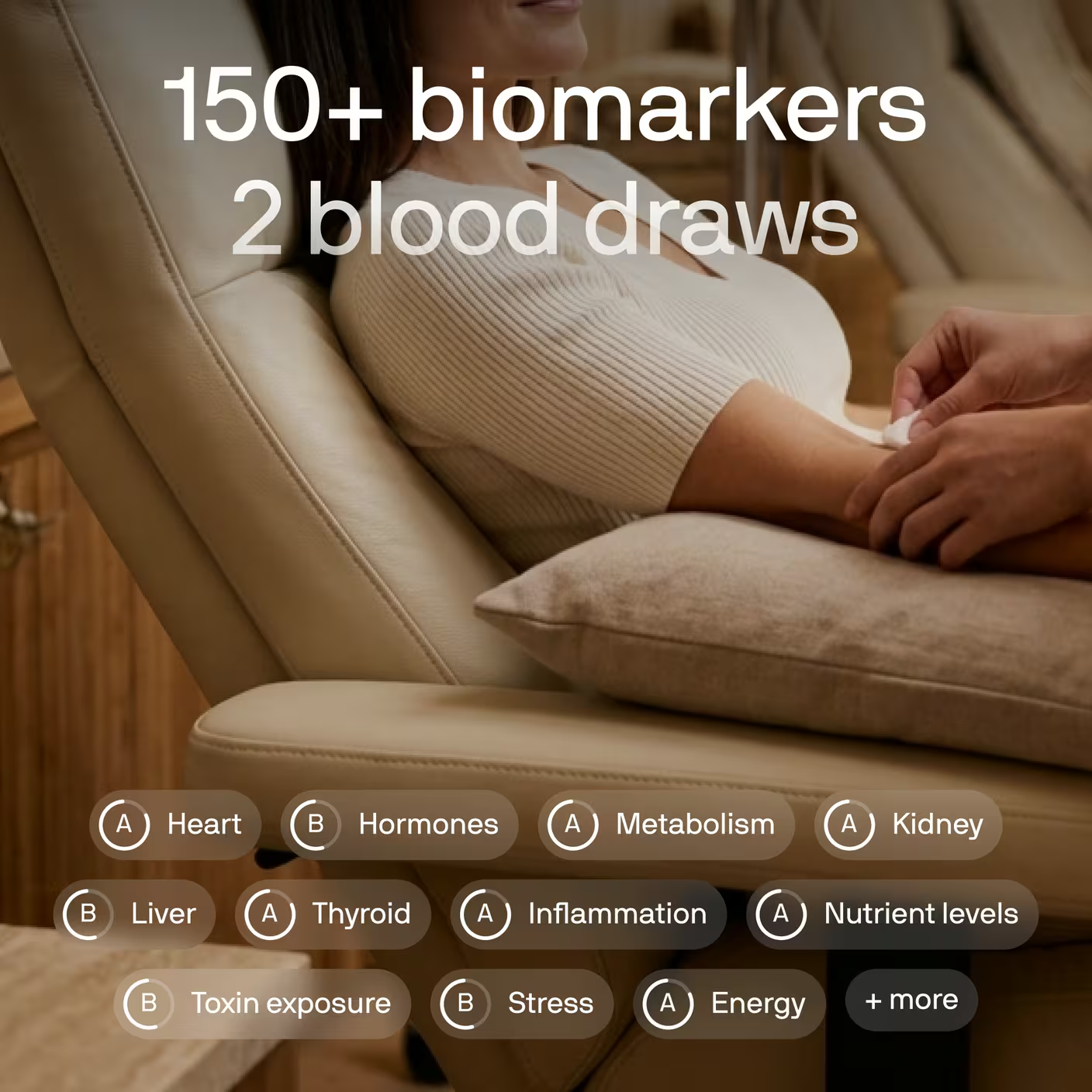
Test 150+ biomarkers
Two blood draws. A full picture of your health, explained in plain language.
Test 150+ biomarkers
Two blood draws. A full picture of your health, explained in plain language.
Who Cycle Syncing Suits, and Who Should Skip It
Cycle syncing may suit eumenorrheic adults (those with regular ovulatory cycles) with regular, predictable cycles who are interested in matching training and nutrition to a measurable hormonal pattern over 2 to 3 cycles. It is also reasonable for those who have noticed consistent phase-linked energy or performance patterns and want a structured framework to test that observation.
The contraindications are real and worth naming directly:
- Pregnancy or trying to conceive. Clinician sign-off before any cycle-timed nutrition or exercise protocol.
- Active mental-health treatment or eating-disorder history. Cycle-syncing rigidity can mask disordered eating.
- PCOS, endometriosis, or any diagnosed menstrual disorder. Cycle syncing is not a treatment; route to hormone testing and clinician evaluation.
- Hormonal contraceptive use, perimenopause, or amenorrhea. The phase framework does not apply the same way.
If any of this applies, the right next step is a clinician. Not a different TikTok protocol.
Biomarkers to Track. Timed to Your Cycle
You can't tell if a phase-based practice is working from how you feel across a 28-day cycle. You can track how you feel from cycle-phase-timed hormone markers measured at Day 0 and at the end of 2 to 3 cycles.
- Estradiol (E2): The primary ovarian estrogen; it rises across the follicular phase, peaks just before ovulation, then drops in the early luteal phase. The curve that cycle syncing's "follicular energy" claim is built on.
- Progesterone: Rises after ovulation and is drawn in the mid-luteal phase; this is the marker that confirms ovulation occurred and anchors the luteal-phase nutrition recommendations. Endogenous progesterone also drives the 0.3 to 0.5°C rise in basal body temperature characteristic of the luteal phase.
- FSH: Drawn in the early follicular phase; provides a baseline ovarian-reserve and cycle-regularity signal before applying any phase-based framework.
- LH: The pre-ovulatory surge marker; relevant for confirming that ovulatory cycles are actually occurring before phase-based programming is applied.
- SHBG: Modulates bioavailable estradiol and androgens; shifts meaningfully with carbohydrate intake and hormonal-contraceptive use. Context that matters when interpreting E2 values.
- AM cortisol: Optional when the HPA-axis framing is relevant; the cycle-syncing-as-stress-management claim depends on this marker for any objective signal.
- Ferritin / CBC: Relevant for the menstruating-population subset; iron status can shift with menstrual blood loss and affects energy and training capacity independently of hormone levels.
If the markers move in the direction the cycle-syncing framework predicts at the same cycle phase, the practice did something. If they don't, that's information too.
When Cycle Syncing Isn't the Answer
If the reason for reaching for cycle syncing is a symptom. Irregular cycles, suspected PCOS, perimenopausal changes, infertility, severe PMS or PMDD, or suspected endometriosis. That is a clinical evaluation, not a lifestyle framework. The right pathway is a cycle-phase-timed hormone panel combined with provider evaluation by a gynecologist or reproductive endocrinologist.
Measuring before changing the framework, then measuring again at the same cycle phase, is the foundation of Superpower's approach to preventive health.
Frequently Asked Questions
References
- Kissow J, Jacobsen KJ, Gunnarsson TP, Jessen S, Hostrup M (2022). Effects of Follicular and Luteal Phase-Based Menstrual Cycle Resistance Training on Muscle Strength and Mass. *Sports medicine (Auckland, N.Z.)*, *52*(12), 2813-2819. https://doi.org/10.1007/s40279-022-01679-y
- Sung E, Han A, Hinrichs T, Vorgerd M, Manchado C, Platen P (2014). Effects of follicular versus luteal phase-based strength training in young women. *SpringerPlus*, *3*, 668. https://doi.org/10.1186/2193-1801-3-668
- Colenso-Semple LM, McKendry J, Lim C, Atherton PJ, Wilkinson DJ, Smith K, Phillips SM (2025). Menstrual cycle phase does not influence muscle protein synthesis or whole-body myofibrillar proteolysis in response to resistance exercise. *The Journal of physiology*, *603*(5), 1109-1121. https://doi.org/10.1113/JP287342
- Taylor MY, Osborne JO, Topranin VM, Engseth TP, Solli GS, Valsdottir D, Andersson E, Øistuen GF, Flatby I, Welde B, Morseth B, Haugen T, Sandbakk, Ø., Noordhof DA (2024). Menstrual Cycle Phase Has No Influence on Performance-Determining Variables in Endurance-Trained Athletes: The FENDURA Project. *Medicine and science in sports and exercise*, *56*(9), 1595-1605. https://doi.org/10.1249/MSS.0000000000003447
- Lei TH, Zheng H, Badenhorst CE, Müindel T (2021). Comment on: 'The Effects of Menstrual Cycle Phase on Exercise Performance in Eumenorrheic Women: A Systematic Review and Meta-Analysis' and 'The Effects of Oral Contraceptives on Exercise Performance in Women: A Systematic Review and Meta-analysis'. *Sports medicine (Auckland, N.Z.)*, *51*(5), 1107-1109. https://doi.org/10.1007/s40279-020-01384-8
- Rogan MM, Black KE (2023). Dietary energy intake across the menstrual cycle: a narrative review. *Nutrition reviews*, *81*(7), 869-886. https://doi.org/10.1093/nutrit/nuac094
- Buffenstein R, Poppitt SD, McDevitt RM, Prentice AM (1995). Food intake and the menstrual cycle: a retrospective analysis, with implications for appetite research. *Physiology & behavior*, *58*(6), 1067-77. https://doi.org/10.1016/0031-9384(95)02003-9
- Kammoun I, Ben Saâda W, Sifaou A, Haouat E, Kandara H, Ben Salem L, Ben Slama C (2017). Change in women's eating habits during the menstrual cycle. *Annales d'endocrinologie*, *78*(1), 33-37. https://doi.org/10.1016/j.ando.2016.07.001
- Geiker NR, Ritz C, Pedersen SD, Larsen TM, Hill JO, Astrup A (2016). A weight-loss program adapted to the menstrual cycle increases weight loss in healthy, overweight, premenopausal women: a 6-mo randomized controlled trial. *The American journal of clinical nutrition*, *104*(1), 15-20. https://doi.org/10.3945/ajcn.115.126565
- Pirke KM, Schweiger U, Strowitzki T, Tuschl RJ, Laessle RG, Broocks A, Huber B, Middendorf R (1989). Dieting causes menstrual irregularities in normal weight young women through impairment of episodic luteinizing hormone secretion. *Fertility and sterility*, *51*(2), 263-8. https://doi.org/10.1016/s0015-0282(16)60488-0
- Ghai S, Ghai I (2025). Yoga Nidra for cardiovascular health: a systematic review and meta-analysis of between- and within-group effects. *Complementary therapies in medicine*, *93*, 103231. https://doi.org/10.1016/j.ctim.2025.103231
- Forman RG, Chapman MC, Steptoe PC (1987). The effect of endogenous progesterone on basal body temperature in stimulated ovarian cycles. *Human reproduction (Oxford, England)*, *2*(8), 631-4. https://doi.org/10.1093/oxfordjournals.humrep.a136605
- McNulty KL, Elliott-Sale KJ, Dolan E, Swinton PA, Ansdell P, Goodall S, Thomas K, Hicks KM (2020). The Effects of Menstrual Cycle Phase on Exercise Performance in Eumenorrheic Women: A Systematic Review and Meta-Analysis. *Sports medicine (Auckland, N.Z.)*, *50*(10), 1813-1827. https://doi.org/10.1007/s40279-020-01319-3




















 Heart & Vascular Health
 Metabolic Health
 Energy
 Liver Health
 Kidney
 Sex Hormones
 Thyroid Health
 Nutrients
 Immune System
 Inflammation