


Understand what your pcos results really mean
See your biomarkers in context with a comprehensive panel.
- CLIA-certified labs
- HIPAA compliant
- Personalized health protocol
PCOS and the hormone-insulin network behind it
PCOS biomarkers are blood signals that capture how the ovarian–brain–metabolic network is behaving. They translate symptoms into measurable patterns, showing whether the ovaries are making too much androgen (androgens: testosterone, androstenedione, DHEA-S), how the brain is cueing the ovaries to ovulate (gonadotropins: LH, FSH), whether ovulation is occurring (progesterone), and how the body handles sugar and fat (insulin, glucose, lipids). They also reflect ovarian follicle activity (AMH), hormone transport (SHBG), and background inflammation (CRP). Together these markers help distinguish PCOS from look-alike conditions, map a person’s PCOS “type,” and highlight future risks so care can be tailored—whether the goal is regular cycles, skin and hair concerns, metabolic health, or fertility planning. Because PCOS lives at the crossroads of reproduction and metabolism, no single test defines it; biomarkers work as a coordinated set drawn from the ovaries, pituitary and adrenal glands, pancreas, liver, and fat tissue. Blood testing turns this complex biology into actionable insight for diagnosis, counseling, and follow-up.
Why an androgen-insulin readout earns its keep
PCOS blood testing maps how the ovary, pituitary, liver, and insulin system talk to each other. Androgen markers (testosterone and the free androgen index), binding proteins (SHBG), pituitary signals (LH and FSH), and insulin together explain why cycles become irregular, ovulation stalls, hair and skin change, and metabolic risk rises. On most adult female reference ranges, total testosterone sits toward the lower end, SHBG in the middle-to-higher end, and the free androgen index (FAI) low. LH and FSH are usually similar, without a marked LH excess. Fasting insulin tends to be toward the lower end when insulin sensitivity is good. In many with PCOS, testosterone and FAI drift high, SHBG falls, LH can exceed FSH, and insulin rises—patterning ovarian androgen excess and insulin resistance. When these markers fall below typical ranges, they point to different biology. Very low testosterone or FAI reduces androgen features and may steer away from PCOS as the cause of irregular periods; very high SHBG can “hide” free androgens and often reflects high estrogen states, thyroid effects, or liver influences. Suppressed LH and FSH suggest hypothalamic or pituitary under‑drive rather than PCOS. Low fasting insulin usually reflects healthy insulin sensitivity. In adolescents, normal puberty can transiently elevate androgens and LH, so age context matters. During pregnancy, SHBG rises and free androgens usually fall despite higher totals. Big picture, these labs connect reproductive function with metabolism, weight, cardiovascular and liver health. They help stratify risks for anovulation, endometrial overgrowth, diabetes, dyslipidemia, and sleep apnea, and distinguish PCOS from thyroid, adrenal, or hypothalamic disorders—guiding monitoring over a lifetime.
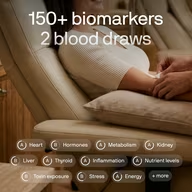
Test 150+ biomarkers
Two blood draws. A full picture of your health, explained in plain language.
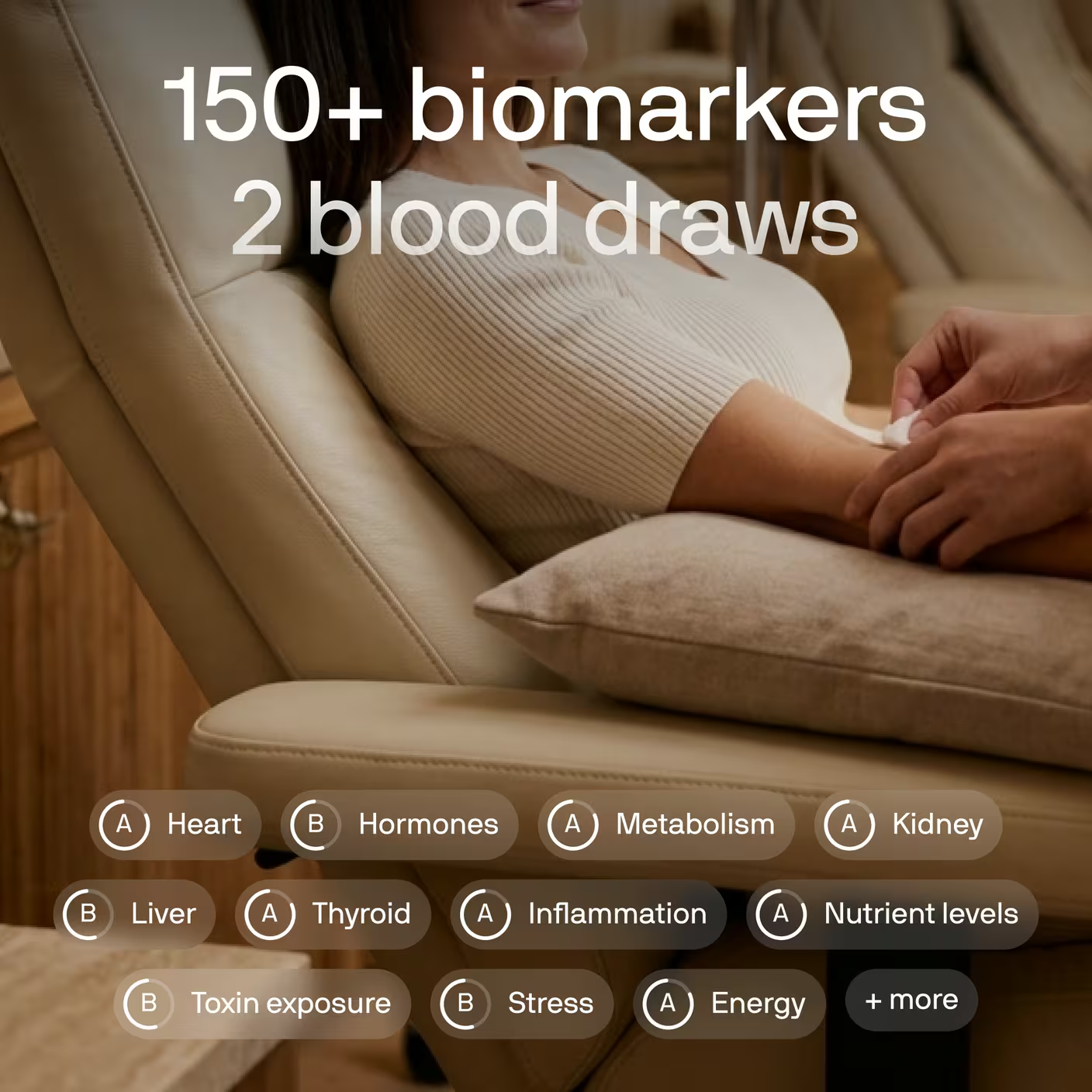
Test 150+ biomarkers
Two blood draws. A full picture of your health, explained in plain language.
The limits of a PCOS blood panel
Polycystic ovary syndrome (PCOS) blood testing provides a window into how your body manages hormones that influence energy, metabolism, reproductive health, and even long-term cardiovascular and cognitive function. At Superpower, we focus on six key biomarkers: Testosterone, sex hormone binding globulin (SHBG), free androgen index (FAI), luteinizing hormone (LH), follicle stimulating hormone (FSH), and insulin. Together, these markers help us understand the hormonal and metabolic patterns that underlie PCOS.Testosterone is an androgen, or “male-type” hormone, that is naturally present in all women but often elevated in PCOS. SHBG is a protein that binds testosterone, making it inactive; low SHBG means more active testosterone is available. The free androgen index (FAI) calculates the proportion of active testosterone, offering a clearer picture of androgen status. LH and FSH are pituitary hormones that regulate ovarian function; in PCOS, their balance is often disrupted, with LH commonly higher relative to FSH. Insulin is a hormone that controls blood sugar and energy storage; many people with PCOS have higher insulin levels or insulin resistance. Balanced levels of these biomarkers support stable cycles, ovulation, and metabolic health. Disruptions—such as high testosterone, low SHBG, elevated FAI, an altered LH:FSH ratio, or high insulin—signal the hormonal and metabolic imbalances characteristic of PCOS, which can affect fertility, energy, and long-term health. Interpretation of these results depends on factors like age, pregnancy, recent illness, medications (especially hormonal contraceptives), and laboratory methods. These variables can influence hormone levels and should be considered when understanding your results.
Frequently Asked Questions
References
- Joham AE, Norman RJ, Stener-Victorin E, Legro RS, Franks S, Moran LJ, Boyle J, Teede HJ (2022). Polycystic ovary syndrome. *The Lancet Diabetes & Endocrinology*, *10*(9), 668-680. https://doi.org/10.1016/S2213-8587(22)00163-2
- Greenberg AS, Obin MS (2006). Obesity and the role of adipose tissue in inflammation and metabolism. *The American Journal of Clinical Nutrition*, *83*(2), 461S-465S. https://doi.org/10.1093/ajcn/83.2.461S
- Sherwani SI, Khan HA, Ekhzaimy A, Masood A, Sakharkar MK (2016). Significance of HbA1c test in diagnosis and prognosis of diabetic patients. *Biomarker Insights*, *11*, 95-104. https://doi.org/10.4137/BMI.S38440
- National Institute of Child Health and Human Development. (n.d.). *Polycystic ovary syndrome (PCOS)*. https://www.nichd.nih.gov/health/topics/pcos
- Tabák AG, Herder C, Rathmann W, Brunner EJ, Kivimäki M (2012). Prediabetes: A high-risk state for diabetes development. *Lancet*, *379*(9833), 2279-2290. https://doi.org/10.1016/S0140-6736(12)60283-9


















 Heart & Vascular Health
 Metabolic Health
 Energy
 Liver Health
 Kidney
 Sex Hormones
 Thyroid Health
 Nutrients
 Immune System
 Inflammation