

Understand what your emerging health topics results really mean
See your biomarkers in context with a comprehensive panel.
- CLIA-certified labs
- HIPAA compliant
- Personalized health protocol
The Chamomile Flavone Behind the Sleep Hype
Apigenin is a flavone, a subclass of flavonoids, found in highest concentrations in German chamomile (Matricaria chamomilla) and also present in parsley, celery, and several other plants. Pharmacologically, it acts as a partial agonist at the benzodiazepine binding site of the GABA-A (the brain receptor that benzodiazepines bind to) receptor. It is sold as an isolated dietary supplement, though most of the human clinical data comes from chamomile preparations rather than isolated apigenin capsules.
Flavones differ from flavonols (like quercetin) and flavanones (like hesperidin) in their hydroxylation pattern and degree of saturation at the C2-C3 bond. That structural distinction matters because GABA-A binding affinity is shape-dependent. Closely related flavones (including vitexin, an apigenin glycoside) share some of the same GABAergic activity, which reinforces that the sedative signal is a class effect, not a coincidence.
The flavone scaffold
Apigenin's chemical name is 4',5,7-trihydroxyflavone. It carries three hydroxyl groups at the 4', 5, and 7 positions. The 5,7-dihydroxylation pattern is what supports benzodiazepine-binding-site affinity. In chamomile, apigenin exists primarily as apigenin-7-glucoside, the principal sedative-active flavonoid in the plant. Gut beta-glucosidases cleave that sugar moiety, releasing free apigenin for absorption.
Oral bioavailability is intrinsically poor. Free apigenin is heavily conjugated, glucuronidated and sulfated, in the gut wall and liver before reaching systemic circulation. This is the pharmacological rationale behind L-lysine conjugate research: L-lysine conjugation improves apigenin's blood-brain-barrier penetration, which would be necessary for a more potent CNS effect. The intersection of apigenin's structure and its CNS pharmacology is an active area of research, though most of it remains preclinical.
From chamomile tea to a wellness-podcast moment
Chamomile has been used as a sedative and anxiolytic in European and Mediterranean traditional medicine for centuries. Medicinal plant surveys document chamomile among the most widely used traditional remedies for sleep and nervous complaints. That long track record belongs to chamomile preparations (teas, tinctures, and standardized extracts), not to isolated apigenin.
The wellness-market pivot toward isolated apigenin supplementation accelerated around 2021-2022, largely after a widely followed sleep-protocol recommendation popularized it. The distinction matters: chamomile's safety and efficacy record in clinical settings spans decades and multiple populations. The record for isolated apigenin supplements is considerably thinner. The clinical-trial record for oral chamomile shows consistent sleep and anxiety benefits, and that is what gives the apigenin story its credibility — a distinction that should not get lost in the supplement marketing.
The Mechanism: Benzodiazepine-Site Partial Agonism at GABA-A
Apigenin's primary proposed mechanism is partial agonism at the benzodiazepine binding site on the GABA-A receptor, the same site targeted by prescription benzodiazepines, but with substantially weaker affinity. A secondary mechanism, CD38 inhibition and downstream effects on cellular NAD+ metabolism, has generated significant longevity-market interest. That second angle is preclinical only.
How apigenin binds
GABA-A receptors are ligand-gated chloride channels. When GABA binds, the channel opens and chloride flows in, hyperpolarizing the neuron and reducing excitability. Benzodiazepines amplify this effect by binding an allosteric site, the benzodiazepine binding site, and increasing the frequency of channel opening. Apigenin binds the same site. Apigenin modulates GABA-A receptor expression and reduces seizure susceptibility in animal models, consistent with partial agonist activity. The affinity is measurable but weaker than clinical benzodiazepines, which is why the sedation is mild rather than anesthetic. Apigenin's GABA-A activity has been characterized as a comparator to valerian's anxiolytic mechanism, another flavonoid-rich botanical with overlapping pharmacology.
The CD38 angle is separate. CD38 is an NAD+ase, an enzyme that degrades NAD+. Apigenin inhibits CD38 and raises intracellular NAD+ levels in preclinical models. Since NAD+ declines with age and is central to mitochondrial function and sirtuin activity, this is the mechanistic hook behind longevity-positioned apigenin marketing. CD38 is a central regulator of inflammation and a legitimate druggable target, and CD38 inhibition combined with NAD+ precursors reduces neuroinflammation in animal models. Whether oral apigenin, with its poor bioavailability, meaningfully shifts human NAD+ levels is unproven. Improving apigenin's blood-brain-barrier penetration via L-lysine conjugation is proposed as one path toward more potent CNS and longevity effects, but this remains investigational.
Pharmacokinetics: absorption, half-life, metabolism
Oral apigenin bioavailability is poor by design of its chemistry. In chamomile, it arrives primarily as apigenin-7-glucoside. Gut beta-glucosidases hydrolyze the glucoside to free apigenin, which is then absorbed, but heavily glucuronidated and sulfated in the intestinal wall and liver before reaching systemic circulation. The "free apigenin in plasma" implied by a simple oral-dose calculation overstates what actually arrives at target tissues. Tmax in typical pharmacokinetic reports is approximately 1-2 hours; half-life is short, generally under 12 hours.
This matters for dosing timing. If the goal is sleep onset, the 1-2 hour Tmax suggests taking an apigenin supplement 1-2 hours before bed, but the short half-life means it is largely cleared by morning, which is actually a feature rather than a bug compared to longer-acting sedatives. L-lysine conjugation has been shown to improve apigenin's blood-brain-barrier traversal, which is the formulation direction that would be needed to make oral apigenin a more pharmacologically potent CNS agent. Standard capsule formulations have not yet demonstrated that level of CNS delivery in human trials.
Grading the Apigenin Claims
The evidence base for apigenin is best understood claim by claim. Most human data comes from chamomile preparations, where apigenin and apigenin-7-glucoside are the principal sedative-active flavonoids, not from isolated apigenin supplements. The longevity and NAD+ angle has no completed human RCTs. Grading reflects that distinction throughout.
Evidence grades used below:
- Strong: >=2 well-designed RCTs in humans on a clinically meaningful endpoint, ideally with a meta-analysis showing a consistent direction of effect. Or a single very large RCT (N>1,000) with replicable methodology.
- Moderate: >=1 RCT in humans with a clinically meaningful endpoint, OR multiple smaller RCTs with mixed results, OR a single high-quality RCT on a surrogate endpoint.
- Limited: Only small (N<50), short (<8 weeks), or methodologically weak human trials; or only observational evidence in humans.
- Animal-only / Preclinical: No completed human trials. In-vitro, animal-model, or Phase 1 safety data only.
- Anecdotal: No controlled evidence of any kind, case reports, testimonials, mechanistic plausibility, or marketing claims unsupported by published data.
Apigenin (via chamomile preparations) supports sleep quality: Moderate
Two placebo-controlled RCTs anchor this claim. A standardized chamomile extract produced modest improvements in sleep quality in adults with chronic primary insomnia. Oral chamomile improved sleep quality in elderly participants in a separate RCT, with the strongest effects documented in older adults. The limits are real: most trials are small (N under 100), the active intervention is chamomile extract rather than isolated apigenin, and the effect sizes are modest. A systematic review of oral chamomile clinical trials confirms a consistent direction of effect for sleep and anxiety, but notes heterogeneity across studies. Isolated apigenin supplement data remains sparser than the chamomile literature implies.
Apigenin/chamomile supports anxiety reduction: Moderate
A systematic review of clinical trials on oral chamomile for anxiety found consistent anxiolytic signals across multiple studies, primarily in mild-to-moderate generalized anxiety. The benzodiazepine-binding-site mechanism makes the effect pharmacologically plausible: apigenin's receptor-level GABAergic activity provides a credible substrate for anxiolysis. The limits: outcome measures are heterogeneous across trials, most studies involve chamomile preparations rather than isolated apigenin, and this evidence does not position apigenin as a substitute for first-line anxiety treatment. Apigenin's activity at the GABA-A benzodiazepine binding site is well-characterized mechanistically, but the clinical translation to isolated supplement form requires more direct study.
Apigenin supports longevity via CD38 inhibition and NAD+ preservation: Animal-only / Preclinical
Apigenin inhibits the NAD+ase CD38 and raises intracellular NAD+ levels in preclinical models, this is the foundational paper behind the longevity claim. CD38 is a validated druggable target in inflammation and aging biology, so the mechanism is scientifically coherent. The problem is translation: no human RCTs have tested isolated apigenin against any longevity endpoint, and the poor oral bioavailability of apigenin raises real questions about whether supplemental doses meaningfully shift NAD+ in human tissue. This is the marketing angle with the thinnest human evidence.
Apigenin supports metabolic health: Animal-only / Preclinical
Oral apigenin prevented obesity-related muscle atrophy in middle-aged rats in a recent preclinical study, a metabolically interesting finding, but not yet replicated in humans. Chamomile and apigenin have been reviewed for activity in obesity and metabolic syndrome, with plausible mechanisms involving antioxidant and anti-inflammatory pathways. Both citations are preclinical. No human RCTs have tested isolated apigenin for body composition, insulin sensitivity, or other metabolic endpoints.
What apigenin is NOT shown to do: reverse aging in humans; extend lifespan in humans; substitute for first-line treatment of insomnia or generalized anxiety disorder; demonstrate clinically meaningful NAD+ shifts in human trials; treat any FDA-recognized condition.
Isolated Apigenin vs. Chamomile Extract
Form matters more than usual here because oral bioavailability is intrinsically poor. Most consumer products are either isolated apigenin (typically 50 mg or 100 mg capsules) or standardized chamomile extract, often standardized to a declared percentage of apigenin or apigenin-7-glucoside content. The choice between them involves a real pharmacological trade-off.
Standardized chamomile extract retains the full Matricaria chamomilla pharmacological matrix. That includes bisabolol and chamazulene alongside apigenin, compounds with their own anti-inflammatory and spasmolytic activity. Isolated apigenin captures a single mechanism. Neither form has been directly compared in a head-to-head human RCT for sleep or anxiety outcomes, so the "which is better" question is genuinely unanswered. When evaluating any product, look for third-party testing certification (USP, NSF International, or ConsumerLab verification), a certificate of analysis (COA) documenting the standardization marker (percentage apigenin or apigenin-7-glucoside), and an Asteraceae-allergen disclosure. Chamomile is in the daisy family, and cross-reactivity with ragweed is a real consideration for sensitive individuals. German chamomile dry extracts vary meaningfully in apigenin content depending on extraction method, which is exactly why COA documentation matters.
Apigenin's Regulatory Status: As of May 2026
Apigenin is sold in the United States as a dietary supplement under the Dietary Supplement Health and Education Act (DSHEA). It is not FDA-approved as a drug, and no efficacy claims have been evaluated by the FDA. There is no specific New Dietary Ingredient (NDI) notification history for isolated apigenin that has generated public FDA action as of this writing. Chamomile, the primary natural source, holds GRAS (Generally Recognized As Safe) status for food use, but GRAS for food use does not extend to supplemental doses of isolated apigenin.
Apigenin is not on the World Anti-Doping Agency (WADA) prohibited list as of the most recent update. No FDA warning letters specific to apigenin as a standalone ingredient have been identified as of May 2026. As with all dietary supplements, structure/function claims on product labels are not FDA-evaluated. Anyone managing a chronic condition or taking prescription medications should review any apigenin supplement with a clinician before starting.
If sleep or anxiety concerns are significant, the appropriate first step is a clinical evaluation, not a supplement. The 988 Suicide and Crisis Lifeline (call or text 988) and SAMHSA's National Helpline (1-800-662-4357) are available 24/7 for anyone experiencing a mental health crisis.
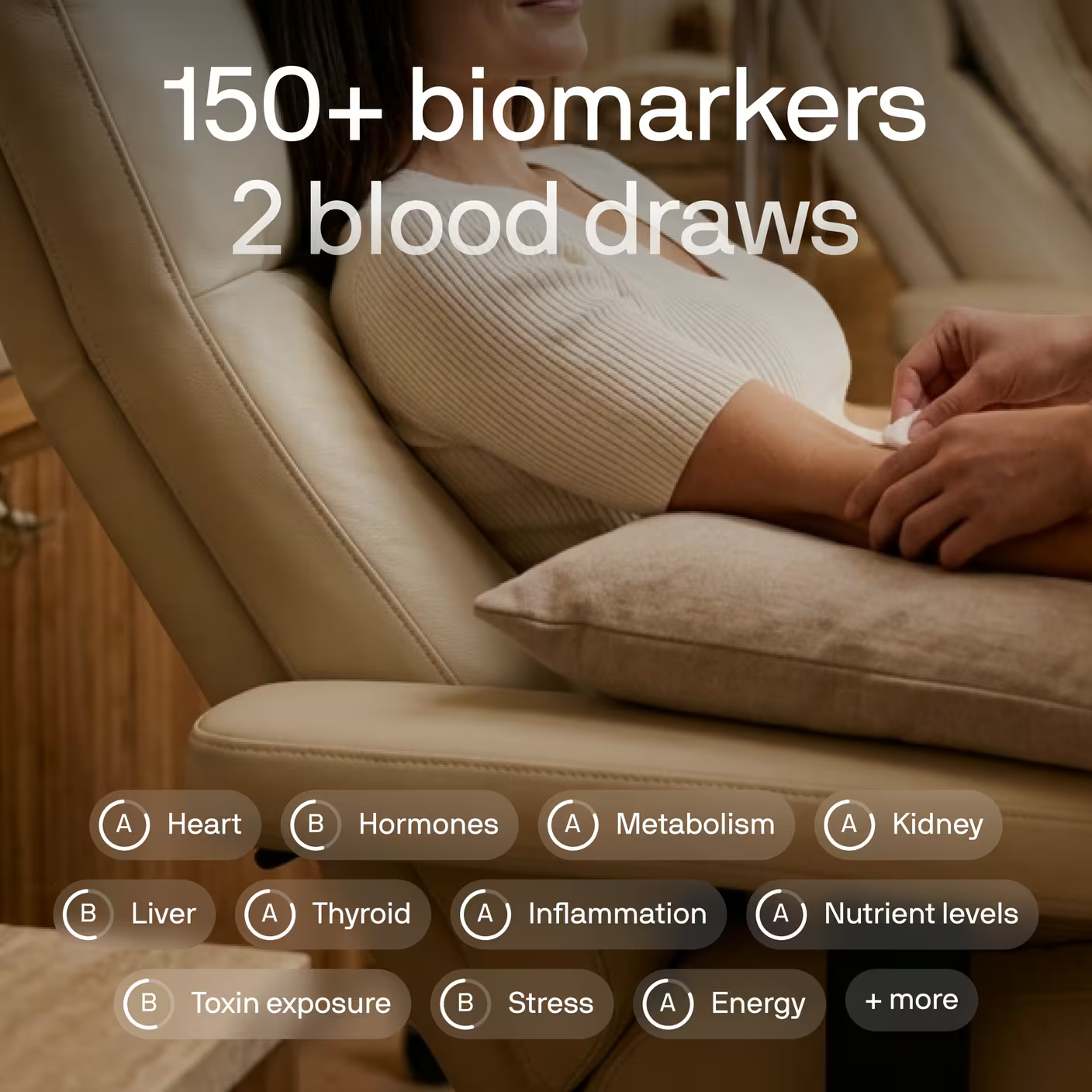
Test 150+ biomarkers
Two blood draws. A full picture of your health, explained in plain language.
Test 150+ biomarkers
Two blood draws. A full picture of your health, explained in plain language.
Safety, Side Effects, and Drug Interactions
Apigenin's safety record is dominated by the chamomile-preparation literature, which spans decades and multiple clinical populations. Isolated apigenin supplement safety data is thinner but consistent in scope with what chamomile trials have documented. The most clinically relevant concerns are additive CNS depression and CYP3A4 (the liver enzyme that metabolizes roughly half of all prescription drugs) interactions.
Reported side effects
Across chamomile RCTs and case reports, the most commonly documented adverse effect is mild sedation and drowsiness, which is, in the sleep context, partly the intended effect. GI upset has been reported at higher doses. Allergic reactions are rare but real: chamomile is in the Asteraceae family, and individuals with ragweed, marigold, or daisy-family sensitivities carry cross-reactivity risk. Allergic contact dermatitis has been documented in topical chamomile use and, rarely, with oral preparations. A historical safety review of herbal sedatives including chamomile in cancer care found a mild overall adverse-event profile. Contemporary anxiety trial safety data for oral chamomile is consistent with that characterization. Studies and case reports have documented these effects. That is not the same as a clean safety bill for all populations at all doses.
The CYP3A4 interaction profile
- CYP3A4 substrates (statins, immunosuppressants, many psychotropics), Moderate. Apigenin inhibits CYP3A4 in vitro; clinically relevant when stacked with narrow-therapeutic-index CYP3A4 substrates.
- Benzodiazepines and other CNS depressants, Moderate. Additive sedation via the benzodiazepine-site partial agonism is pharmacologically expected.
- Alcohol, Moderate. Additive CNS depression; stacking with daily evening alcohol while using apigenin for sleep compounds sedative load.
- Sedating antihistamines and opioids, Minor to Moderate. Additive sedation; not contraindicated but worth flagging in any polypharmacy review.
The clinical-pharmacology evidence for apigenin specifically is thinner than for grapefruit juice on CYP3A4, these interactions are theoretical-mechanism flags rather than confirmed clinical case series. Any clinician managing a polypharmacy patient should be aware of the CYP3A4 inhibition signal from in vitro flavonoid-CYP3A4 interaction data before adding an apigenin supplement to the regimen.
Pregnancy, lactation, and organ-function callouts
Apigenin supplementation is generally avoided in pregnancy and breastfeeding due to the absence of controlled human safety data at supplemental doses. Chamomile tea consumed in normal culinary amounts has a longer track record in these populations, but that does not extend to isolated apigenin capsules at 50-100 mg. Hepatic impairment warrants caution given the CYP3A4 modulation signal. No specific renal-impairment data exists for apigenin. In children, chamomile preparations carry a longer pediatric tradition in folk medicine, but isolated apigenin supplementation in pediatric populations lacks controlled data. Individuals with known Asteraceae allergy should avoid chamomile-derived products entirely.
Who Should Avoid Apigenin
Several populations face a risk-benefit calculation that shifts unfavorably with apigenin supplementation. The list is not exhaustive, but covers the categories where caution is most warranted.
- Pregnant or breastfeeding individuals, no controlled human safety data at supplemental doses.
- Asteraceae allergy (ragweed, marigold, daisy, chamomile-family allergens), risk of allergic reaction.
- Concurrent benzodiazepine, opioid, or daily-alcohol use, additive CNS depression.
- Concurrent narrow-therapeutic-index CYP3A4 substrates (certain statins, immunosuppressants, antiarrhythmics), interaction risk.
- Active suicidal ideation, severe insomnia, or treatment-resistant anxiety, clinical evaluation, not a supplement.
- Children, supplemental doses are not characterized in pediatric populations.
If any of the above apply, do not start this supplement without speaking to a clinician familiar with your full medication list and biomarkers.
The Markers That Tell You If Sleep or Anxiety Is Actually Shifting
Sleep quality is not a blood biomarker. The bridge between apigenin's GABAergic and anxiolytic mechanisms and measurable physiology runs through validated subjective instruments, primarily the Pittsburgh Sleep Quality Index (PSQI) and actigraphy, alongside blood markers that reflect the downstream biology the supplement is proposed to influence.
- AM cortisol: tracks HPA-axis load; apigenin's anxiolytic mechanism may suggest a modest downward shift in elevated baselines over 4-8 weeks if the GABAergic lever is working. A persistently elevated AM cortisol after 8 weeks may be informative in its own right.
- hs-CRP: systemic inflammation marker; the apigenin anti-inflammatory and anxiolytic frameworks overlap mechanistically, and persistently elevated hs-CRP signals a burden that a flavonoid supplement is unlikely to resolve on its own.
- Subjective sleep quality (PSQI, actigraphy, or wearable sleep duration): not bloodwork, but the primary outcome measure the chamomile RCTs use. Recording a Day 0 and Day 56 score with the same instrument is the minimum for interpreting any response.
- Estradiol: for the female-population subset, postmenopausal and postpartum women, where the chamomile sleep evidence is strongest. Estradiol provides hormonal context for sleep architecture changes; it is not a direct apigenin readout.
- (Optional) NAD+ panel: exploratory only. The CD38/NAD+ longevity mechanism is preclinical, so an NAD+ panel in this context is hypothesis-generating rather than a validated apigenin response marker.
Establishing AM cortisol, hs-CRP, and a baseline sleep-quality score before starting apigenin or a standardized chamomile extract provides the objective reference points that make any subsequent change interpretable. Without a baseline, a perceived improvement is indistinguishable from regression to the mean or placebo effect. Tracking these markers over 8 weeks, the minimum duration used in most chamomile RCTs, is the standard that separates informed supplementation from guesswork.
When Apigenin Is the Wrong Tool
If the reason for reaching for an apigenin supplement is chronic insomnia, defined as difficulty sleeping more than three nights per week for more than three months, that experience warrants a primary-care or sleep-medicine workup, not a supplement. Cognitive behavioral therapy for insomnia (CBT-I) has substantially stronger evidence than any flavonoid for chronic insomnia and is the first-line recommendation in current clinical guidelines. Persistent anxiety that is interfering with daily function belongs in a primary-care or psychiatry evaluation, not a supplement protocol. Chamomile's anxiolytic evidence is in mild-to-moderate anxiety, not treatment-resistant or severe presentations.
Measuring AM cortisol and a validated sleep-quality score before starting apigenin, then again at 8 weeks, is the foundation of Superpower's approach to preventive health: objective baselines first, then interpretation of any change against that reference point.
Frequently Asked Questions
References
- Viola H, Wasowski C, Levi de Stein M, Wolfman C, Silveira R, Dajas F, Medina JH, Paladini AC (1995). Apigenin, a component of Matricaria recutita flowers, is a central benzodiazepine receptors-ligand with anxiolytic effects. Planta Medica, 61(3), 213–216. https://doi.org/10.1055/s-2006-958058
- De Oliveira DD, Prinholato da Silva C, Falconi-Sobrinho LL, Oliveira Beleboni R (2024). Long‑term effects of vitexin against development of pentylenetetrazole‑induced kindling in rats. *Acta neurobiologiae experimentalis*, *84*(3), 266-274. https://doi.org/10.55782/ane-2024-2575
- Sepp J, Koshovyi O, Jakstas V, Žvikas V, Botsula I, Kireyev I, Tsemenko K, Kukhtenko O, Kogermann K, Heinämäki J, Raal A (2024). Phytochemical, Technological, and Pharmacological Study on the Galenic Dry Extracts Prepared from German Chamomile (. *Plants (Basel, Switzerland)*, *13*(3). https://doi.org/10.3390/plants13030350
- Wong TY, Tsai MS, Hsu LC, Lin SW, Liang PH (2018). Traversal of the Blood-Brain Barrier by Cleavable l-Lysine Conjugates of Apigenin. *Journal of agricultural and food chemistry*, *66*(30), 8124-8131. https://doi.org/10.1021/acs.jafc.8b01187
- Kramer DJ, Johnson AA (2024). Apigenin: a natural molecule at the intersection of sleep and aging. *Frontiers in nutrition*, *11*, 1359176. https://doi.org/10.3389/fnut.2024.1359176
- Sánchez M, González-Burgos E, Iglesias I, Lozano R, Gómez-Serranillos MP (2020). Current uses and knowledge of medicinal plants in the Autonomous Community of Madrid (Spain): a descriptive cross-sectional study. *BMC complementary medicine and therapies*, *20*(1), 306. https://doi.org/10.1186/s12906-020-03089-x
- Block KI, Gyllenhaal C, Mead MN (2004). Safety and efficacy of herbal sedatives in cancer care. *Integrative cancer therapies*, *3*(2), 128-48. https://doi.org/10.1177/1534735404265003
- Saadatmand S, Zohroudi F, Tangestani H (2024). The Effect of Oral Chamomile on Anxiety: A Systematic Review of Clinical Trials. *Clinical nutrition research*, *13*(2), 139-147. https://doi.org/10.7762/cnr.2024.13.2.139
- Socała K, Kowalczuk-Vasilev E, Komar M, Szalak R, Wyska E, Wlaź P (2025). Effect of apigenin on seizure susceptibility, parvalbumin immunoreactivity, and GABA. *European journal of pharmacology*, *996*, 177548. https://doi.org/10.1016/j.ejphar.2025.177548
- Orhan IE (2021). A Review Focused on Molecular Mechanisms of Anxiolytic Effect of Valerina officinalis L. in Connection with Its Phytochemistry through in vitro/in vivo Studies. *Current pharmaceutical design*, *27*(28), 3084-3090. https://doi.org/10.2174/1381612827666210119105254
- Escande C, Nin V, Price NL, Capellini V, Gomes AP, Barbosa MT, O'Neil L, White TA, Sinclair DA, Chini EN (2013). Flavonoid apigenin is an inhibitor of the NAD+ ase CD38: implications for cellular NAD+ metabolism, protein acetylation, and treatment of metabolic syndrome. *Diabetes*, *62*(4), 1084-93. https://doi.org/10.2337/db12-1139
- Alabarse PG, Oliveira P, Qin H, Yan T, Migaud M, Terkeltaub R, Liu-Bryan R (2024). The NADase CD38 is a central regulator in gouty inflammation and a novel druggable therapeutic target. *Inflammation research : official journal of the European Histamine Research Society ... [et al.]*, *73*(5), 739-751. https://doi.org/10.1007/s00011-024-01863-y
- Roboon J, Hattori T, Ishii H, Takarada-Iemata M, Nguyen DT, Heer CD, O'Meally D, Brenner C, Yamamoto Y, Okamoto H, Higashida H, Hori O (2021). Inhibition of CD38 and supplementation of nicotinamide riboside ameliorate lipopolysaccharide-induced microglial and astrocytic neuroinflammation by increasing NAD. *Journal of neurochemistry*, *158*(2), 311-327. https://doi.org/10.1111/jnc.15367
- Zick SM, Wright BD, Sen A, Arnedt JT (2011). Preliminary examination of the efficacy and safety of a standardized chamomile extract for chronic primary insomnia: a randomized placebo-controlled pilot study. *BMC complementary and alternative medicine*, *11*, 78. https://doi.org/10.1186/1472-6882-11-78
- Abdullahzadeh M, Matourypour P, Naji SA (2017). Investigation effect of oral chamomilla on sleep quality in elderly people in Isfahan: A randomized control trial. *Journal of education and health promotion*, *6*, 53. https://doi.org/10.4103/jehp.jehp_109_15
- de Castro JM, da Silva Melo A, Silveira BL, Martins IAS, Marçal MM, Bosco TD, Keingeski MB, Oliveira ECL, Alvares-da-Silva MR, Türck P, Araujo ASDR, Ayres LR, Kowalewski LS, Russo MKB, Krause M, Stein DJ, Torres ILS (2025). Oral apigenin prevents obesity-related muscular atrophy, but not obesity itself, in middle-aged rats fed a high-calorie diet. *Biomedicine & pharmacotherapy = Biomedecine & pharmacotherapie*, *189*, 118342. https://doi.org/10.1016/j.biopha.2025.118342
- Bayliak MM, Dmytriv TR, Melnychuk AV, Strilets NV, Storey KB, Lushchak VI (2021). Chamomile as a potential remedy for obesity and metabolic syndrome. *EXCLI journal*, *20*, 1261-1286. https://doi.org/10.17179/excli2021-4013
- Li Y, Ning J, Wang Y, Wang C, Sun C, Huo X, Yu Z, Feng L, Zhang B, Tian X, Ma X (2018). Drug interaction study of flavonoids toward CYP3A4 and their quantitative structure activity relationship (QSAR) analysis for predicting potential effects. *Toxicology letters*, *294*, 27-36. https://doi.org/10.1016/j.toxlet.2018.05.008




















 Heart & Vascular Health
 Metabolic Health
 Energy
 Liver Health
 Kidney
 Sex Hormones
 Thyroid Health
 Nutrients
 Immune System
 Inflammation