


Understand what your emerging health topics results really mean
See your biomarkers in context with a comprehensive panel.
- CLIA-certified labs
- HIPAA compliant
- Personalized health protocol
How Raspberry Leaf Tea Got Its Pregnancy Reputation
If you have seen raspberry leaf tea promoted as a third-trimester labor hack, here is where the tradition comes from and what the modern clinical record actually documents.
Raspberry leaf tea is an herbal infusion made from the dried leaves of Rubus idaeus, the red raspberry plant. It is marketed primarily to pregnant people in the third trimester. The proposed action is uterotonic, meaning it is thought to "tone" or prepare uterine smooth muscle for labor. Preparation is straightforward: steep dried leaf or a commercial tea bag in boiling water for 5 to 10 minutes.
Traditional midwifery use of raspberry leaf stretches back centuries across European and North American herbal practice. The modern clinical literature on it is thin but traceable. The named origin studies are a 1999 retrospective and a 2001 RCT, both small and limited in scope. It is commonly confused with generic "pregnancy tea" blends, which often pair raspberry leaf with nettle, alfalfa, or peppermint.
Proponents of raspberry leaf tea associate the drink with four outcomes:
- "Tones the uterus": supports uterine muscle preparation for labor.
- Shortens labor or reduces second-stage duration.
- Reduces the likelihood of labor augmentation or instrumental delivery.
- Provides non-pregnancy antioxidant and micronutrient benefit, including vitamin C and polyphenols.
What's In a Cup of Raspberry Leaf Tea
If you are buying a commercial preparation, the leaf is the unit of biological analysis. The chemistry varies meaningfully between brands.
The leaf is the unit of biological analysis here, not the fruit, not the stem. The chemistry varies meaningfully between commercial products. A 2010 in-vitro study found that different commercial raspberry leaf preparations produced significantly different rat-uterine contractility effects, a finding with direct implications for anyone assuming one brand is interchangeable with another.
Red raspberry leaf (Rubus idaeus)
These are the dried leaves of Rubus idaeus, the cultivated red raspberry plant. Distinct from the fruit and from other Rubus species. The active-compound classes most cited in the literature include fragarine (the alkaloid most often implicated in the uterotonic hypothesis), tannins (responsible for the astringent mouthfeel and most of the antioxidant claims), and polyphenols. A 2022 analysis found that stem extracts display both antioxidant and prooxidant activity depending on conditions. Trial protocols typically use 1 tablespoon of loose dried leaf or 1 commercial tea bag per 8 oz cup, steeped 5 to 10 minutes.
The Proposed Uterotonic Mechanism
The mechanism story behind raspberry leaf tea centers on a single proposed action: modulation of uterine smooth-muscle contractility. Fragarine and related alkaloids in the leaf are proposed to act on uterine smooth muscle, though the supporting evidence is largely in vitro and animal-model data.
Fragarine and related compounds in the leaf are proposed to act on uterine smooth muscle. A 2023 mechanistic review linked raspberry leaf constituents to cervical ripening pathways. A 2010 study provided in-vitro biological plausibility using rat-uterine tissue. But the same study flagged that different commercial preparations produced meaningfully different contractility effects. That variability matters: it means "raspberry leaf tea" is not a single, standardized pharmacological input. Mechanistic plausibility in cell and animal models has not translated into consistent, measurable clinical outcomes in humans drinking brewed tea at commercial doses.
What the Small Trials Do and Don't Support
The two trials behind the claim are small, old, and unreplicated. The 1999 retrospective and the 2001 RCT together enrolled 300 participants, used different outcome measures, and have not been followed by larger replication studies in the 25 years since.
The claims behind raspberry leaf tea cover uterine "toning," shortened labor duration, reduced augmentation or instrumental delivery, and non-pregnancy antioxidant effects.
Tones the uterus and prepares uterine muscle for labor: Anecdotal
The phrase "uterine toning" is traditional midwifery language. No validated clinical-endpoint trial has tested it as a defined outcome. In-vitro mechanistic work from a 2010 contractility study and a 2023 mechanistic review supports biological plausibility. But plausibility is not a clinical claim. The phrase functions in midwifery practice, not in the controlled-trial literature.
Shortens labor and reduces second-stage duration: Limited
The strongest supporting evidence comes from a small 1999 retrospective study and a small 2001 RCT, both suggesting possible modest effects on labor-stage duration, neither replicated at scale. A 2021 systematic integrative review concluded the evidence is insufficient for clinical recommendations. Raspberry leaf tea is not among the evidence-based induction methods in current AJOG reviews. It should not be framed or used as a labor-induction protocol.
Reduces likelihood of augmentation or instrumental delivery: Limited
The original 1999 and 2001 cohorts suggested a possible effect on some labor outcomes, including second-stage duration and forceps delivery, but did not establish a causal reduction in augmentation. A 2024 prospective study added observational data on real-world use patterns. But neither established a causal effect on delivery outcomes. A 2009 clinical review asked whether raspberry leaf should be recommended in pregnancy and arrived at a cautious answer: not without larger, better-designed RCTs. The evidence base is too thin to drive obstetric decision-making.
Non-pregnancy antioxidant benefit: Limited
Raspberry leaf and stem extracts contain polyphenols and tannins with measurable in-vitro antioxidant activity. A 2022 analysis found the same extracts can display prooxidant activity depending on conditions, a nuance that complicates blanket antioxidant claims. No controlled human trials have demonstrated clinically meaningful antioxidant outcomes from raspberry leaf tea at typical brewed-tea doses. The antioxidant claim is mechanistically plausible, not clinically validated.
How Raspberry Leaf Tea Is Brewed
The standard preparation circulating in midwifery and herbalist texts is roughly as follows. The amounts describe what the trend looks like in practice, not a Superpower recommendation, and not a labor-induction protocol.
Ingredients
- Dried red raspberry leaf (Rubus idaeus)
- Hot water
Preparation
Do not follow any home preparation of raspberry leaf tea during pregnancy without explicit obstetric or midwife sign-off. Commercial preparations vary in concentration; brewing time and leaf quantity meaningfully change the uterotonic potency, and product-to-product variability means no single recipe is safely generalizable.
Common variations blend raspberry leaf with nettle, alfalfa, or peppermint in "pregnancy tea" formulations.
Brewing time and concentration matter more for raspberry leaf tea than for most herbal teas in pregnancy — the stronger and longer the steep, the higher the uterotonic potency. Longer steeps and stronger brews push the preparation toward uterotonic relevance. Decisions about timing in pregnancy (which trimester, when to introduce it, daily volume) should be made with a midwife or obstetrician, not based on this recipe or any online variant.
Where Raspberry Leaf Tea Carries Real Risk
If you are in the first or second trimester, this is the section that matters most. First- and second-trimester pregnancy is the named contraindication. The uterotonic mechanism marketed as a benefit in the third trimester is precisely the basis of the risk earlier in pregnancy. Stimulating uterine contractility before term is not a theoretical concern. Both a 2009 clinical review and a 2021 systematic integrative review flag this directly. No self-administration without obstetric or midwife sign-off.
Specific drug-interaction data for raspberry leaf is limited. The broader caution applies: A 2020 review documents that herbal supplement safety in pregnancy is systematically under-studied, and the absence of a documented interaction signal is not the same as a confirmed safety signal.
The most directly relevant adverse-signal context is product variability. A 2010 in-vitro study found that commercial preparations produced meaningfully different uterotonic effects: "natural" does not mean predictable dose-response. A 1999 survey of US nurse-midwives found cautious, conditional guidance on herbal labor stimulation, not blanket endorsement.
Lab-test interaction warning. Daily raspberry leaf tea consumption should be disclosed to the obstetric team before any prenatal labs, particularly liver-function panels and any assays relevant to uterotonic compounds. Outside pregnancy, the relevance is lower, but disclosure to the ordering clinician remains the right convention.
The named contraindications, summarized:
- First- and second-trimester pregnancy. Any use in this window requires explicit clearance from your obstetric provider.
- Active pregnancy at any trimester without a provider conversation. The trimester convention is herbalist and midwifery practice, not validated obstetric guidance.
- Active labor or pre-labor without an obstetric plan. Raspberry leaf tea is not among current evidence-based induction methods.
- Product-to-product variability: commercial preparations are not interchangeable in potency.
- Lab-test interaction. Disclose daily use to the obstetric team prior to prenatal labs.
If any of this applies, the right next step is a clinician, not the next online recipe.
Biomarkers, Pregnancy, and the Honest Tracking Frame
You cannot tell if a brewed herbal preparation worked from how you feel. In pregnancy, the relevant tracking is OB-managed: the routine prenatal panel is the baseline, and the obstetric team is the right partner for interpreting any change.
- Ferritin: Iron stores are the most common nutritional deficiency in pregnancy. Ferritin status is independent of raspberry leaf tea use and warrants its own baseline.
- Vitamin D: Pregnancy is a high-leverage window for vitamin D status. Routine OB labs typically cover it, and deficiency is common enough to warrant active tracking.
- Glucose / HbA1c: Pregnancy glucose tolerance is OB-managed through standard gestational diabetes screening. Raspberry leaf tea is unlikely to influence these markers, but the baseline matters independently.
- Non-pregnancy context: For readers whose interest is the antioxidant or micronutrient framing rather than pregnancy, the relevant baseline panel is general. Ferritin, vitamin D, hs-CRP, not a raspberry-leaf-specific scoreboard.
In pregnancy, the right tracking partner is the obstetric team. The brewed tea is not a clinical-decision tool; the OB labs are.
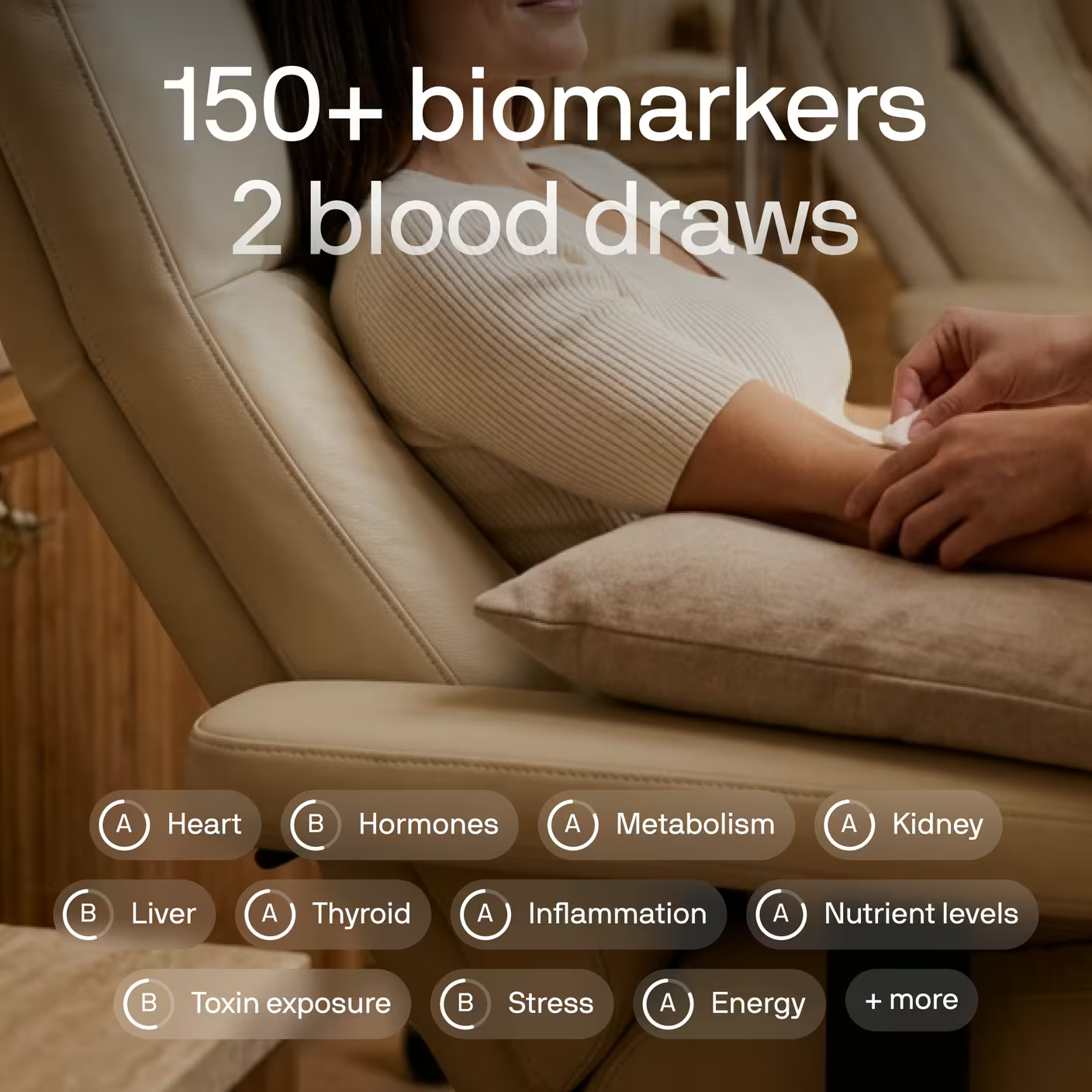
Test 150+ biomarkers
Two blood draws. A full picture of your health, explained in plain language.
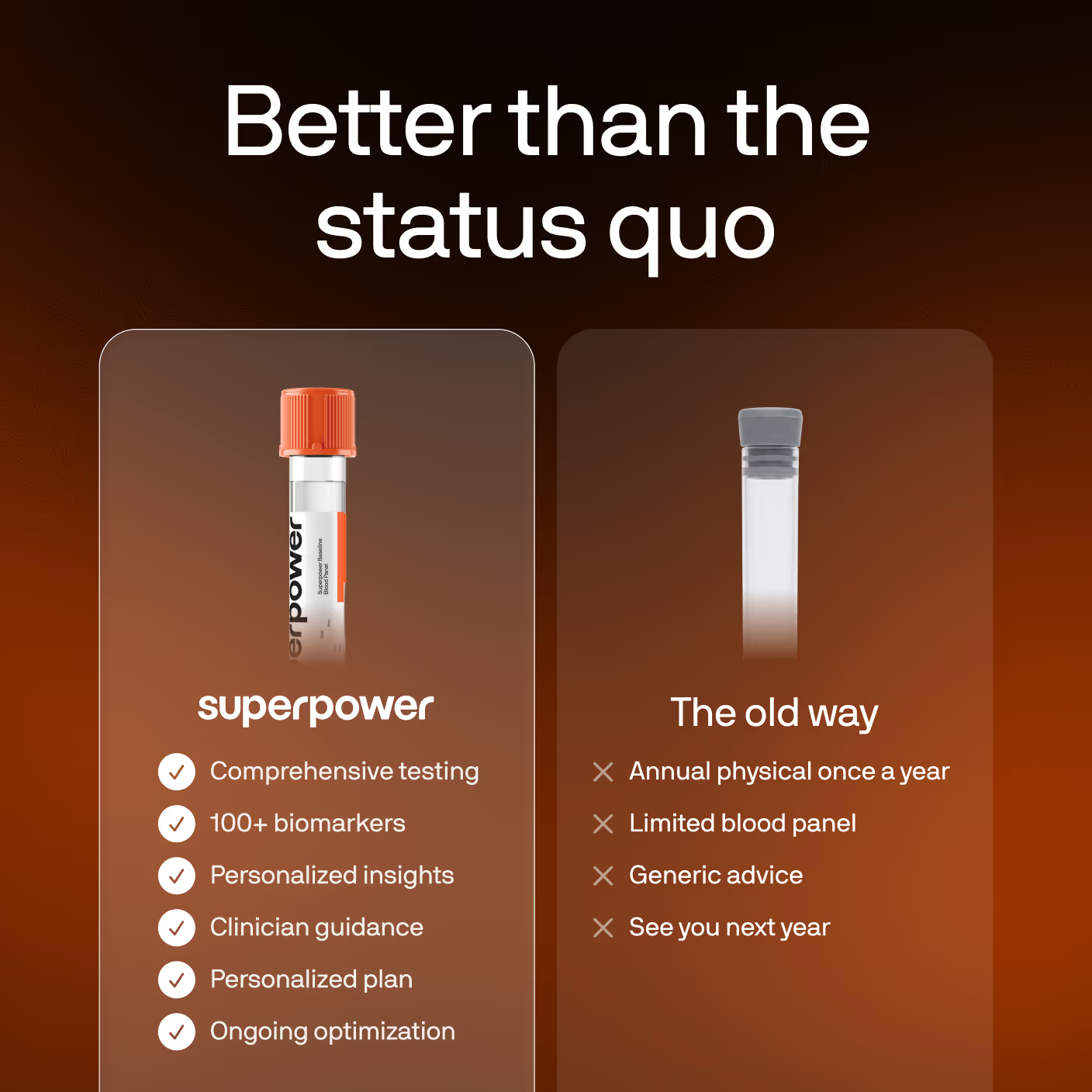
Test 150+ biomarkers
Two blood draws. A full picture of your health, explained in plain language.
Who This Is Likely to Suit, and Who Should Skip
If you fit the profile of someone in the third trimester, in active OB or midwifery care, with explicit provider sign-off, this preparation may sit reasonably within a traditional-herbal frame. The reader profile most likely to reasonably consider raspberry leaf tea is someone in the third trimester, in active OB or midwifery care, with explicit provider sign-off, approaching it as a traditional preparation rather than a clinical intervention. A 2022 survey documented widespread self-directed use in pregnancy without provider guidance, a pattern that underscores the need for the conversation, not a reason to skip it. A 2022 analysis found complementary medicine use in pregnancy is common across demographic groups, often driven by health-focused intent rather than clinical recommendation.
Anyone in the first or second trimester should not self-administer raspberry leaf tea. Anyone whose goal is labor induction should work with their obstetric team. Evidence-based induction methods are well-established, and raspberry leaf is not among them. Anyone reaching for raspberry leaf tea as an antioxidant supplement without a baseline picture of their actual micronutrient status is using the wrong tool for that question.
What the Evidence Actually Backs
If you are reaching for raspberry leaf with a specific goal in mind, the more useful frame is outcome-first.
The more useful frame is outcome-targeted: what does the evidence support for the underlying goal?
Evidence-based induction methods, when clinically indicated. A 2024 AJOG overview reviewed the full landscape of evidence-based labor induction methods. A 2023 meta-analysis provided comparative data on elective induction at 39 weeks versus expectant management. If the underlying goal is labor management, the obstetric team has tools with substantial evidence. Raspberry leaf tea is not in that toolkit.
OB-managed prenatal support. Routine prenatal labs combined with targeted supplementation (folate, iron, vitamin D, and omega-3 where indicated) represent the evidence-based standard. A 2018 Cochrane review on omega-3 supplementation in pregnancy illustrates what high-quality pregnancy supplement evidence actually looks like. The contrast with the raspberry leaf evidence base is informative.
If the antioxidant angle is the actual interest. Food-based polyphenol intake from berries and leafy greens has a broader and more replicated evidence base than any single brewed-leaf product. A 2024 review examined antioxidant intake and fertility outcomes. The evidence points toward dietary patterns, not isolated herbal preparations.
Why a Baseline Beats a Brew
If you are pregnant, the OB panel is your baseline. Outside pregnancy, baseline ferritin and vitamin D matter independently of any tea you drink.
For the pregnancy context, the OB lab panel is the baseline that actually matters. For the non-pregnancy or antioxidant-focused reader, the relevant question is whether underlying micronutrient and inflammatory markers are where they should be, and that is a baseline-and-retest question, not a tea question.
If the reach for raspberry leaf tea is driven by pregnancy labor anxiety or unexplained reproductive symptoms, that is an obstetric or OB-GYN consult. The midwifery and obstetric clinical pathway exists precisely for this. It is the right place to have the conversation about timing, trimester, and whether the preparation fits the individual clinical picture.
Measuring the biology that matters in pregnancy and beyond, with a provider as the interpretation partner, is foundational to Superpower's approach to preventive health.
The Honest Verdict on Raspberry Leaf Tea
If you take one thing from this page: the decision is your obstetric provider's, not the internet's.
Raspberry leaf tea is a traditional herbal infusion made from dried Rubus idaeus leaves, marketed primarily in the third-trimester pregnancy context. The small body of evidence (including a 1999 retrospective study, a 2001 RCT, and a 2021 systematic integrative review) suggests possible modest effects on labor-stage duration and augmentation rates, but the evidence is insufficient for clinical recommendations. The uterotonic mechanism that drives the third-trimester interest is also the basis of real risk in the first and second trimester. Whether to use it, when to introduce it, and how much is a conversation for an obstetric provider, not a decision to make based on this page or any online recipe.
Frequently Asked Questions
References
- Parsons M, Simpson M, Ponton T (1999). Raspberry leaf and its effect on labour: safety and efficacy. *Australian College of Midwives Incorporated journal*, *12*(3), 20-5. https://doi.org/10.1016/s1031-170x(99)80008-7
- Simpson M, Parsons M, Greenwood J, Wade K (2001). Raspberry leaf in pregnancy: its safety and efficacy in labor. *Journal of midwifery & women's health*, *46*(2), 51-9. https://doi.org/10.1016/s1526-9523(01)00095-2
- Jing Zheng, Pistilli MJ, Holloway AC, Crankshaw DJ (2010). The effects of commercial preparations of red raspberry leaf on the contractility of the rat's uterus in vitro. *Reproductive sciences (Thousand Oaks, Calif.)*, *17*(5), 494-501. https://doi.org/10.1177/1933719109359703
- Garjonyte R, Budiene J, Labanauskas L, Judzentiene A (2022). In Vitro Antioxidant and Prooxidant Activities of Red Raspberry (. *Molecules (Basel, Switzerland)*, *27*(13). https://doi.org/10.3390/molecules27134073
- Socha MW, Flis W, Wartęga M, Szambelan M, Pietrus M, Kazdepka-Ziemińska A (2023). Raspberry Leaves and Extracts-Molecular Mechanism of Action and Its Effectiveness on Human Cervical Ripening and the Induction of Labor. *Nutrients*, *15*(14). https://doi.org/10.3390/nu15143206
- Bowman R, Taylor J, Muggleton S, Davis D (2021). Biophysical effects, safety and efficacy of raspberry leaf use in pregnancy: a systematic integrative review. *BMC complementary medicine and therapies*, *21*(1), 56. https://doi.org/10.1186/s12906-021-03230-4
- Sanchez-Ramos L, Levine LD, Sciscione AC, Mozurkewich EL, Ramsey PS, Adair CD, Kaunitz AM, McKinney JA (2024). Methods for the induction of labor: efficacy and safety. *American journal of obstetrics and gynecology*, *230*(3S), S669-S695. https://doi.org/10.1016/j.ajog.2023.02.009
- Bowman RL, Taylor J, Davis DL (2024). Raspberry leaf (Rubus idaeus) use in pregnancy: a prospective observational study. *BMC complementary medicine and therapies*, *24*(1), 169. https://doi.org/10.1186/s12906-024-04465-7
- Holst L, Haavik S, Nordeng H (2009). Raspberry leaf--should it be recommended to pregnant women?. *Complementary therapies in clinical practice*, *15*(4), 204-8. https://doi.org/10.1016/j.ctcp.2009.05.003
- Brown B, Wright C (2020). Safety and efficacy of supplements in pregnancy. *Nutrition reviews*, *78*(10), 813-826. https://doi.org/10.1093/nutrit/nuz101
- McFarlin BL, Gibson MH, O'Rear J, Harman P (1999). A national survey of herbal preparation use by nurse-midwives for labor stimulation. Review of the literature and recommendations for practice. *Journal of nurse-midwifery*, *44*(3), 205-16. https://doi.org/10.1016/s0091-2182(99)00037-3
- Farnaghi S, Braniff K (2022). Survey of Raspberry Leaf Tea in pregnancy. *The Australian & New Zealand journal of obstetrics & gynaecology*, *62*(4), 506-510. https://doi.org/10.1111/ajo.13496
- Barnes LAJ, Rolfe MI, Barclay L, McCaffery K, Aslani P (2022). Demographics, health literacy and health locus of control beliefs of Australian women who take complementary medicine products during pregnancy and breastfeeding: A cross-sectional, online, national survey. *Health expectations : an international journal of public participation in health care and health policy*, *25*(2), 667-683. https://doi.org/10.1111/hex.13414
- Hong J, Atkinson J, Roddy Mitchell A, Tong S, Walker SP, Middleton A, Lindquist A, Hastie R (2023). Comparison of Maternal Labor-Related Complications and Neonatal Outcomes Following Elective Induction of Labor at 39 Weeks of Gestation vs Expectant Management: A Systematic Review and Meta-analysis. *JAMA network open*, *6*(5), e2313162. https://doi.org/10.1001/jamanetworkopen.2023.13162
- Middleton P, Gomersall JC, Gould JF, Shepherd E, Olsen SF, Makrides M (2018). Omega-3 fatty acid addition during pregnancy. *The Cochrane database of systematic reviews*, *11*(11), CD003402. https://doi.org/10.1002/14651858.CD003402.pub3
- Shang Y, Song N, He R, Wu M (2024). Antioxidants and Fertility in Women with Ovarian Aging: A Systematic Review and Meta-Analysis. *Advances in nutrition (Bethesda, Md.)*, *15*(8), 100273. https://doi.org/10.1016/j.advnut.2024.100273



















 Heart & Vascular Health
 Metabolic Health
 Energy
 Liver Health
 Kidney
 Sex Hormones
 Thyroid Health
 Nutrients
 Immune System
 Inflammation