


Understand what your emerging health topics results really mean
See your biomarkers in context with a comprehensive panel.
- CLIA-certified labs
- HIPAA compliant
- Personalized health protocol
What Is Sleep Divorce?
Sleep divorce is the colloquial term for couples choosing to sleep in separate beds or rooms to improve sleep quality. It is a lifestyle arrangement, not a clinical diagnosis, and is distinct from a clinical sleep study, which is the evaluation tool for a suspected sleep disorder.
The phrase emerged in popular media as awareness of how partners affect each other's sleep grew into a legitimate research field. Research into how partners influence each other's sleep biology has been building since the early 2000s, with foundational work establishing bidirectional links between the marital bed and health. The development of the Couples' Sleep Conflict Scale in 2024 signals the field is now taking couple-level sleep conflict seriously as a measurable phenomenon. Common drivers include partner snoring, schedule mismatch, restlessness, temperature preference differences, and new baby disruption. It is often confused with a sign of relationship-quality decline. Sleep quality effects of sleeping apart are real when partner disruption is substantial; relationship-quality effects are more mixed.
Proponents associate sleep divorce with three outcomes:
- Improved sleep quality when partner disruption is significant
- Better daytime relationship quality through better-rested partners
- A stigma-free arrangement that does not signal relationship problems
What the Research Shows
Sleep-quality benefits of sleeping apart are real when partner disruption is real, and modest when it is not. Relationship-quality effects are mixed across studies. The most important framing — and the one most often missed — is that when snoring is the driver, the arrangement treats a symptom while leaving the underlying airway problem unaddressed.
Sleeping apart improves sleep quality when partner disruption is significant: Moderate
The effect is real when the disruption is real. Partners of snorers had measurably worse sleep that improved when the snoring was treated. Partner snoring measurably worsens bed-partner sleep, and treating the underlying snoring improves it. That said, actigraphy data show significant variability. Some couples are far more vulnerable to partner disruption than others. For couples without meaningful disruption, co-sleeping carries its own neurobiological signal: bed-sharing associates with increased and stabilized REM sleep.
Separate sleeping improves daytime relationship quality: Limited
Nightly sleep-wake concordance is associated with daily marital interactions: when partners sleep similarly, they tend to interact better the next day. The relationship is bidirectional: a trial showed that improving marital quality improved sleep, not just the reverse. Relationship-quality effects of sleeping apart are mixed across studies; sleep quality often improves when disruption is high, but emotional intimacy effects depend heavily on context and how the arrangement is communicated.
Separate sleeping signals relationship problems: Limited (stigma claim, not evidence)
This is the required debunk: the stigma is not well-supported by the evidence. When partner disruption is high, sleep quality effects of sleeping apart are often positive, and relationship-quality effects are mixed rather than uniformly negative. The arrangement itself is not a reliable marker of relationship problems. The conversation about the arrangement, whether it happens honestly or gets avoided, may be the more meaningful signal.
Sleeping apart is the right solution when one partner snores: Limited (workaround, not solution)
This is the most clinically important framing in this entire topic. Snoring is not benign. It is associated with obstructive sleep apnea (OSA), which carries documented cardiovascular and metabolic consequences for the snorer. Untreated OSA carries documented cardiovascular and metabolic risk. Treating the underlying OSA improves the bed partner's emotional state, and CPAP adherence improves the intimate relationship, not just the snorer's oxygen levels. Separate rooms treats the symptom. OSA evaluation addresses the actual health problem.
How to Approach It Practically
If separate sleeping is under consideration, the evidence-grounded pathway starts with the most critical step: screening the snoring partner for obstructive sleep apnea before changing any sleeping arrangements.
- Screen for OSA first. If partner snoring is the primary driver, run the STOP-Bang questionnaire on the snorer. It screens across snoring, daytime tiredness, observed apneas, blood pressure, BMI, age, neck circumference, and sex. A positive screen routes to a sleep study, not separate rooms.
- Communicate before rearranging. The conversation matters more than the arrangement. Frame separate sleeping as a sleep-quality experiment with a defined evaluation window, not a relationship-quality verdict. The research supports this framing.
- Pick the lightest-touch arrangement. Separate beds in the same room, then separate duvets in one bed ("Scandinavian sleeping"), then separate rooms. Try the least-disruptive option first and evaluate after one to two weeks before escalating.
- Address root causes before committing. Temperature mismatch is often solvable. A cooler room benefits both partners' sleep quality. Schedule mismatch, pet disruption, and new baby disruption are often transient. A root-cause fix changes the arrangement decision entirely.
Where This Goes Wrong
Treating separate rooms as the answer when snoring is the driver. Separate rooms resolve the partner-sleep complaint while leaving undiagnosed OSA in the snorer untreated, where it carries real cardiovascular and metabolic risk. STOP-Bang the snorer first; a positive screen routes to a sleep study, not a guest-room move.
Skipping the conversation. Unilateral arrangement changes can be read as relationship-quality signals when the actual driver is sleep disruption. Framing the change as a measurable sleep-quality experiment with a defined evaluation window keeps the meaning of the arrangement clear. The research supports this approach.
Letting the arrangement mask unprocessed conflict. If the underlying issue is relationship-quality decline rather than sleep disruption, the arrangement becomes a workaround that defers the real conversation. Interpartner psychological conflict intersects with sleep in measurable ways. When the real driver is interpersonal rather than airway-anatomical, couples or individual therapy is the upstream intervention.
Defaulting to permanent separation when a smaller fix would work. Temperature mismatch, pet disruption, and new baby disruption are often solvable with smaller changes (a cooler room, separate duvets, or moving the dog off the bed) without committing to separate rooms. Try the lightest-touch version first; evaluate after one to two weeks; escalate only if needed.
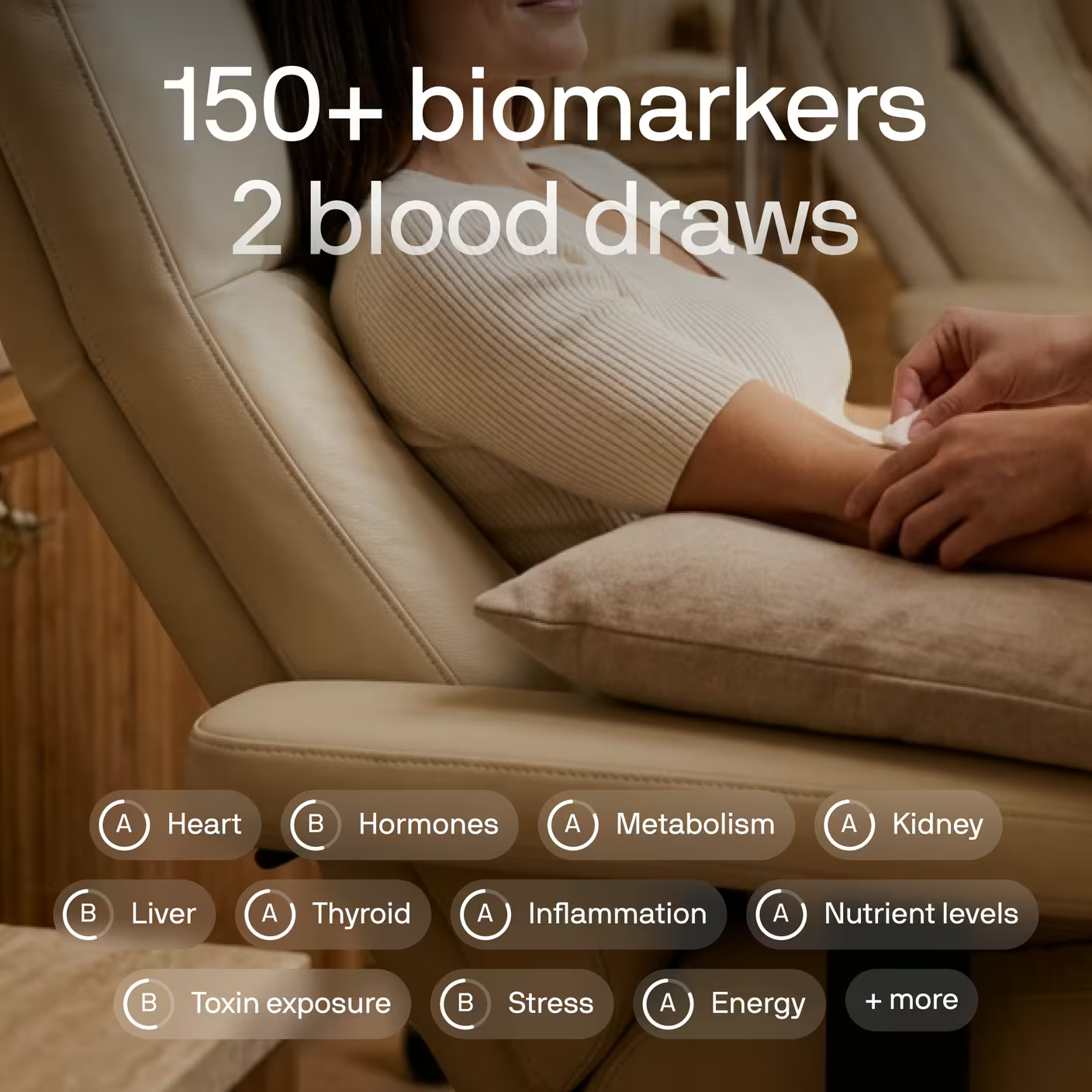
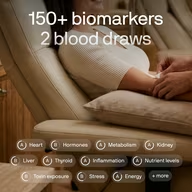
Test 150+ biomarkers
Two blood draws. A full picture of your health, explained in plain language.
Test 150+ biomarkers
Two blood draws. A full picture of your health, explained in plain language.
Who This Is and Isn't For
The reader most likely to benefit from a sleep divorce is one whose partner's documented sleep-disrupting behavior (snoring, restless legs, incompatible schedule) cannot be resolved with lighter-touch fixes. Couples navigating infant care or shift-work schedules are also reasonable candidates for a temporary arrangement. This is a sleep-quality decision, not a relationship-quality verdict.
The contraindications are real and worth naming directly:
- Partner snoring is the primary driver. STOP-Bang and a sleep study come first.
- Active relationship conflict that the arrangement may mask. Couples or individual therapy is upstream of the bedroom.
- Recent loss, postpartum mental-health change, or other transient drivers. Re-evaluate after two to three months rather than committing.
- Avoidance of intimacy as the underlying motive. Clinician or couples-therapy evaluation, not a permanent arrangement.
If any of this applies, the right next step is a clinician, not a different TikTok protocol.
How to Measure Whether It's Working
Subjective metrics drift with novelty after a week. The relevant readouts are dyadic and clinical, not blood-biomarker-based.
- AHI (apnea-hypopnea index), from a sleep study, not bloodwork: If partner snoring is the driver, AHI is the relevant metric. A positive STOP-Bang screen routes to a sleep study per AASM clinical practice guidelines.
- Oxygen desaturation index, from a sleep study: The snorer's nocturnal oxygen drops are the cardiovascular risk signal; a sleep study quantifies this and determines whether OSA treatment is indicated.
- Subjective sleep quality (PSQI or 7-day sleep log), both partners: Track for two weeks at baseline and again at the two-week mark after any arrangement change; consistent improvement in the disrupted partner is the signal the arrangement is doing something real.
- Relationship-quality conversation (not a metric, a check-in): Schedule a two-week and eight-week check-in; frame it as the kind of structured experiment the dyadic-sleep research supports.
If sleep quality improves and the relationship-quality check-ins are honest and positive, the arrangement did something. If sleep quality improves but the relationship-quality conversation is being avoided, the arrangement may be a workaround for a different problem.
When to Bring in a Clinician
If the primary driver of sleeping apart is a partner's snoring, the right next step is a sleep study evaluation for the snorer. Untreated OSA is a serious cardiovascular and metabolic risk per AASM diagnostic guidelines, and treating it improves both partners' sleep and the relationship. Other clinical routing flags include persistent insomnia in either partner (CBT-I is first-line), postpartum mental-health changes, and active relationship conflict the arrangement may be masking.
Superpower's approach to preventive health starts with measuring what is actually happening, including AHI when snoring is involved, rather than rearranging the furniture around an undiagnosed problem.
Frequently Asked Questions
References
- Troxel WM (2010). It's more than sex: exploring the dyadic nature of sleep and implications for health. *Psychosomatic medicine*, *72*(6), 578-86. https://doi.org/10.1097/PSY.0b013e3181de7ff8
- Troxel WM, Robles TF, Hall M, Buysse DJ (2007). Marital quality and the marital bed: examining the covariation between relationship quality and sleep. *Sleep medicine reviews*, *11*(5), 389-404. https://doi.org/10.1016/j.smrv.2007.05.002
- Novak JR, Miller K, Gunn HE, Troxel WM (2024). Development of the Couples' Sleep Conflict Scale: A new tool to assess conflict around sleep in romantic relationships. *Sleep health*, *10*(3), 308-315. https://doi.org/10.1016/j.sleh.2024.01.009
- Beninati W, Harris CD, Herold DL, Shepard JW (1999). The effect of snoring and obstructive sleep apnea on the sleep quality of bed partners. *Mayo Clinic proceedings*, *74*(10), 955-8. https://doi.org/10.4065/74.10.955
- Walters EM, Phillips AJK, Boardman JM, Norton PJ, Drummond SPA (2020). Vulnerability and resistance to sleep disruption by a partner: A study of bed-sharing couples. *Sleep health*, *6*(4), 506-512. https://doi.org/10.1016/j.sleh.2019.12.005
- Drews HJ, Wallot S, Brysch P, Berger-Johannsen H, Weinhold SL, Mitkidis P, Baier PC, Lechinger J, Roepstorff A, Göder R (2020). Bed-Sharing in Couples Is Associated With Increased and Stabilized REM Sleep and Sleep-Stage Synchronization. *Frontiers in psychiatry*, *11*, 583. https://doi.org/10.3389/fpsyt.2020.00583
- Gunn HE, Lee S, Eberhardt KR, Buxton OM, Troxel WM (2021). Nightly sleep-wake concordance and daily marital interactions. *Sleep health*, *7*(2), 266-272. https://doi.org/10.1016/j.sleh.2020.11.003
- Troxel WM, Braithwaite SR, Sandberg JG, Holt-Lunstad J (2017). Does Improving Marital Quality Improve Sleep? Results From a Marital Therapy Trial. *Behavioral sleep medicine*, *15*(4), 330-343. https://doi.org/10.1080/15402002.2015.1133420
- Elsey T, Keller PS, El-Sheikh M (2019). The role of couple sleep concordance in sleep quality: Attachment as a moderator of associations. *Journal of sleep research*, *28*(5), e12825. https://doi.org/10.1111/jsr.12825
- Sowho M, Sgambati F, Guzman M, Schneider H, Schwartz A (2020). Snoring: a source of noise pollution and sleep apnea predictor. *Sleep*, *43*(6). https://doi.org/10.1093/sleep/zsz305
- Jordan AS, McSharry DG, Malhotra A (2014). Adult obstructive sleep apnoea. *Lancet (London, England)*, *383*(9918), 736-47. 60734-5). https://doi.org/10.1016/S0140-6736(13)60734-5
- Uloza V, Balsevicius T, Sakalauskas R, Miliauskas S, Zemaitiene N (2010). Changes in emotional state of bed partners of snoring and obstructive sleep apnea patients following radiofrequency tissue ablation: a pilot study. *Sleep & breathing = Schlaf & Atmung*, *14*(2), 125-30. https://doi.org/10.1007/s11325-009-0293-z
- Lai AY, Ip MS, Lam JC, Weaver TE, Fong DY (2016). A pathway underlying the impact of CPAP adherence on intimate relationship with bed partner in men with obstructive sleep apnea. *Sleep & breathing = Schlaf & Atmung*, *20*(2), 543-51. https://doi.org/10.1007/s11325-015-1235-6
- Chung F, Abdullah HR, Liao P (2016). STOP-Bang Questionnaire: A Practical Approach to Screen for Obstructive Sleep Apnea. *Chest*, *149*(3), 631-8. https://doi.org/10.1378/chest.15-0903
- Valham F, Sahlin C, Stenlund H, Franklin KA (2012). Ambient temperature and obstructive sleep apnea: effects on sleep, sleep apnea, and morning alertness. *Sleep*, *35*(4), 513-7. https://doi.org/10.5665/sleep.1736
- El-Sheikh M, Kelly R, Rauer A (2013). Quick to berate, slow to sleep: interpartner psychological conflict, mental health, and sleep. *Health psychology : official journal of the Division of Health Psychology, American Psychological Association*, *32*(10), 1057-66. https://doi.org/10.1037/a0031786
- Kapur VK, Auckley DH, Chowdhuri S, Kuhlmann DC, Mehra R, Ramar K, Harrod CG (2017). Clinical Practice Guideline for Diagnostic Testing for Adult Obstructive Sleep Apnea: An American Academy of Sleep Medicine Clinical Practice Guideline. *Journal of clinical sleep medicine : JCSM : official publication of the American Academy of Sleep Medicine*, *13*(3), 479-504. https://doi.org/10.5664/jcsm.6506

















 Heart & Vascular Health
 Metabolic Health
 Energy
 Liver Health
 Kidney
 Sex Hormones
 Thyroid Health
 Nutrients
 Immune System
 Inflammation