

Understand what your emerging health topics results really mean
See your biomarkers in context with a comprehensive panel.
- CLIA-certified labs
- HIPAA compliant
- Personalized health protocol
Sea Moss Gel: What's in the Jar
Sea moss gel is a blended, hydrated preparation of Chondrus crispus (Irish moss) or related red seaweeds. It has a thick, gelatinous texture and is sold raw, pre-prepared, or in capsule form. Marketed claims include "92 essential minerals," immunity support, gut health, skin improvement, and thyroid function.
Chondrus crispus is a red marine alga with roots in Caribbean and Irish coastal food traditions. The modern wellness wave was largely driven by Dr. Sebi's "92 minerals" teaching, then amplified on TikTok from 2020 onward. Sea moss is frequently confused with kelp, kombu, spirulina, and other algal supplements, each with meaningfully different iodine and mineral profiles.
The claims most commonly attached to sea moss gel include:
- Provides "92 essential minerals" the body needs.
- Boosts immunity and supports gut health.
- Improves thyroid function via natural iodine.
- Supports skin, hair, and weight goals.
Inside the Gel: Minerals, Iodine, and the "92" Question
Sea moss is a single-ingredient preparation. The unit of biological analysis is the seaweed itself. Mineral and iodine content vary sharply by species, origin, and preparation.
Chondrus crispus (Irish moss) and related red seaweeds
Chondrus crispus is a red marine alga (Rhodophyta) containing carrageenan-type sulfated polysaccharides, carbohydrates, protein, and a variable mineral profile. That profile includes iodine, calcium, magnesium, potassium, and iron in commercially analyzed red seaweed, with additional trace elements confirmed in recent compositional analyses of Chondrus crispus and across edible seaweeds more broadly. Iodine content is the load-bearing variable. Iodine content varies significantly by source across commercial seaweed products, and this variability is intrinsic to seaweed biology, not a labeling problem. The "92 minerals" figure is not supported by any compositional analysis of sea moss.
How Sea Moss Gel Works in Your Body
The "92 minerals" and "thyroid support" claims circulate widely. The actual biology is narrower, and in one important direction, it runs opposite to the marketing.
Iodine is the only sea moss component with an established physiological mechanism. It is the direct substrate for thyroid hormone synthesis, and the thyroid gland depends on adequate iodine to produce T3 and T4. At low intake, iodine supports that process; at high or highly variable intake, excess iodine can precipitate thyroid dysfunction through the Wolff-Chaikoff effect, a phenomenon also documented in recent high-impact endocrine literature and in the clinical medicine literature on thyroid dysfunction. Carrageenan-type polysaccharides in sea moss show preclinical immunomodulatory and prebiotic activity in C. elegans models, activity in rodent gut microbiota, and mechanisms attributed to red seaweed polysaccharides, none of this has been confirmed at human supplemental doses of sea moss gel.
Where the Evidence Lands on Each Claim
The claims behind sea moss gel span the "92 minerals" marketing line, immunity, gut health, and thyroid support via iodine, plus a comparator to actual thyroid care.
Sea moss provides 92 essential minerals: Anecdotal
The "92 minerals" claim originates from Dr. Sebi's teaching. It is not supported by compositional analyses of Chondrus crispus or related red seaweeds. Physicochemical profiling of Chondrus crispus, recent nutritional analyses, and broader seaweed composition data confirm a real but unremarkable mineral profile. Context matters: human nutrition recognizes roughly 15–20 essential trace minerals, not 92. The 92-figure does not appear in any compositional analysis of red seaweed or in dietary-trace-mineral reviews. Sea moss does contain real minerals. The count is not 92.
Sea moss boosts immunity: Animal-only
Preclinical evidence shows that components of cultivated Chondrus crispus enhance immune response in C. elegans. Rodent models show similar signals, with carrageenan-type polysaccharides demonstrating immunomodulatory activity in preclinical settings. No human trials have tested sea moss gel on immune endpoints. "Preclinical immunomodulation" is the accurate framing; "boosts immunity" is not.
Sea moss supports gut health: Animal-only
Prebiotic effects of cultivated red seaweed on colonic microbiota have been observed in animal models. No human randomized controlled trials have tested sea moss gel on gut endpoints. The fiber content is real; the clinical translation is not yet established.
Sea moss supports thyroid function via iodine: Limited
The underlying mechanism is established: iodine is essential for thyroid hormone synthesis, and the thyroid gland's dependence on iodine is well-characterized. The application, sea moss gel as a thyroid intervention, is unstudied. More importantly, it carries inverse risk. Excess iodine intake precipitates thyroid dysfunction, a risk confirmed in recent endocrine literature, in the clinical medicine record, and through case reports of seaweed-induced thyroid dysfunction. In iodine-sufficient American adults, the "supports thyroid" claim is technically backwards.
Sea moss gel is comparable to actual thyroid care: Anecdotal
Many people searching looking to support their thyroid with sea moss are interpreting fatigue, weight changes, or sluggishness through a wellness frame rather than a clinical one. The recognized thyroid-care pathway is TSH, free T4, and where indicated free T3, anti-TPO, and anti-Tg antibodies, interpreted by a clinician. Sea moss gel provides variable, often very high iodine doses; commercially available kelp and seaweed products can deliver iodine far in excess of the WHO/IOM adult upper limit of 1,100 mcg/day, a risk also quantified in direct iodine-intake risk assessments of red seaweed including Chondrus crispus. In hyperthyroid, Hashimoto's, or nodular-thyroid contexts, that excess can precipitate clinical deterioration. If the question driving interest in sea moss is a thyroid symptom, sea moss is the wrong tool, TSH plus a clinician is the right one.
Safety First: Iodine, Thyroid Risk, and Heavy Metals
Sea moss is iodine-dense, and the dominant safety axis is excess iodine intake, particularly in people with pre-existing thyroid disease. Commercially available seaweed products can deliver iodine well above the 1,100 mcg/day adult upper limit, and risk assessments of red seaweed consumption confirm meaningful excess-intake potential from typical serving sizes.
Warning: Daily sea moss consumption carries real risk for people with hyperthyroidism, Hashimoto's autoimmune thyroid disease, thyroid nodules, or anyone on thyroid medication. The iodine content is highly variable and can precipitate clinical thyroid dysfunction. Do not start without clinician guidance. Iodine excess is a recognized trigger for autoimmune thyroid disease, and recent immunology reviews confirm the iodine-Hashimoto's risk axis. Population-level data further support the thyroid-risk framing for high iodine intake.
Documented adverse events exist. A case-report-driven review of OTC-supplement-induced thyroid disorders includes iodine-rich seaweed as a confirmed cause of thyroid dysfunction, this is not theoretical risk.
Heavy metal contamination is a second documented safety concern, distinct from the iodine axis. Edible seaweeds carry measurable concentrations of arsenic, cadmium, and lead, a finding replicated in market-available seaweed products in Europe, wild and farmed kelp in the United States, tropical coastal sources where much commercial sea moss originates, and across current heavy-metal accumulation in edible algae. Source verification matters.
Lab-test interaction warning. Daily sea moss consumption shifts iodine status and can confound TSH and thyroid-antibody interpretation. Check with your clinician if pausing intake for at least two weeks before any thyroid panel is advisable; or longer if intake has been high or prolonged.
As of May 2026, sea moss is sold as a dietary supplement, and these statements have not been evaluated by the FDA.
The named contraindications, summarized:
- Hyperthyroidism, autoimmune thyroid disease, or thyroid nodules, avoid daily consumption without provider guidance.
- Pregnancy or trying to conceive: Do not consume daily sea moss gel without obstetric guidance. iodine requirements shift during pregnancy, and the highly variable iodine content in sea moss can deliver doses that harm thyroid function in both parent and fetus.
- On thyroid medication (levothyroxine, methimazole, propylthiouracil), iodine fluctuations alter dose requirements.
- Lab-test interaction, pause for at least 2 weeks before any TSH or thyroid panel.
- Heavy-metal exposure concern, source verification matters; coastal-industrial sources carry documented arsenic, cadmium, and lead variability.
If any of this applies, the right next step is a clinician, not the next TikTok recipe.
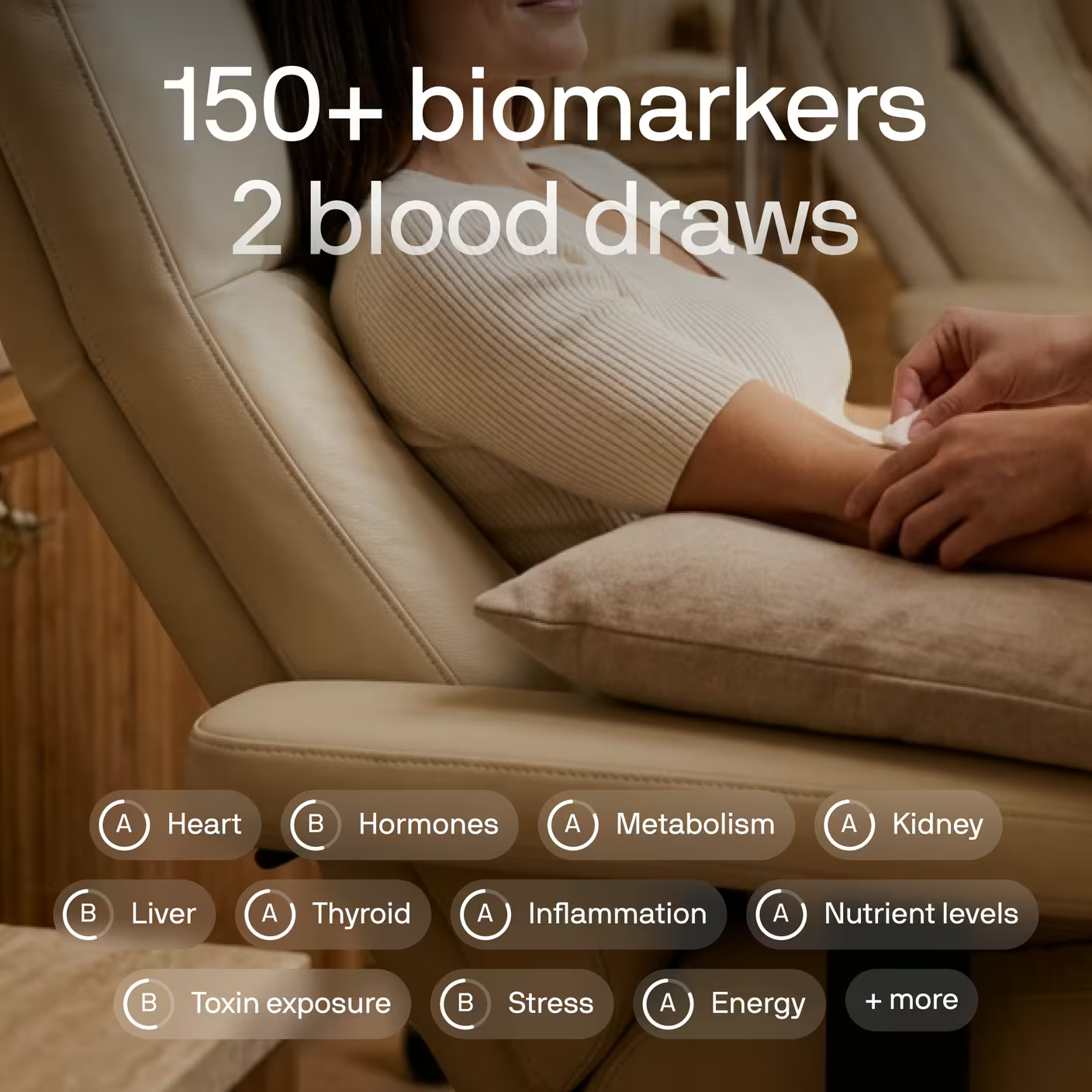
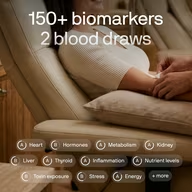
Test 150+ biomarkers
Two blood draws. A full picture of your health, explained in plain language.
Test 150+ biomarkers
Two blood draws. A full picture of your health, explained in plain language.
The Thyroid Panel Worth Pulling Before (and During) Sea Moss Use
You can't tell if sea moss gel is doing anything for the marketed outcomes from how you feel. You can tell from a comparable Day 0 / Day N thyroid panel, interpreted by a clinician.
- TSH: First-line thyroid marker; the readout that flags whether iodine intake (high or low) is shifting thyroid function.
- Free T4: The thyroid hormone whose level moves when TSH-axis homeostasis breaks down, paired with TSH for full thyroid context.
- Free T3: Where indicated; relevant when symptoms suggest peripheral conversion issues.
- Anti-TPO antibodies: helpful in identifying Hashimoto's; the iodine-intake question is most clinically consequential in this population.
- Iodine status (urine iodine concentration where available): Direct short-term readout of the variable sea moss is most likely to shift.
If the markers move adversely, the experiment has answered itself. If they don't, that's information too, and a thyroid panel is information worth having regardless of whether sea moss is in the picture.
Who Sea Moss Gel Is and Isn't For You
There is no narrow reader profile for whom sea moss gel is the clearly right tool. Adults with documented iodine deficiency on a clinician-supervised plan might use a known-dose iodine supplement. Sea moss gel is not a known-dose preparation, the iodine content is too variable to function as a reliable therapeutic source.
Anyone reaching for sea moss because of fatigue, hair loss, feeling slow, or weight concerns interpreted as thyroid-coded is reaching for the wrong tool. Those symptoms warrant a TSH and a clinician. The marketed claims are broad enough to feel relevant to almost any symptom cluster, that breadth is a marketing feature, not a clinical one.
Better-Evidenced Alternatives for the Goals You're Reaching For
Each alternative below targets the same outcome the sea moss claim is pointing at, with a more reliable mechanism behind it.
Standard thyroid workup. TSH, free T4, free T3, anti-TPO, and anti-Tg interpreted by a clinician represent the actual evidence-based pathway for thyroid-symptom evaluation. Thyroid physiology is well-characterized, the diagnostic tools exist precisely because symptoms alone are unreliable.
Known-dose iodine supplementation when indicated. For documented iodine deficiency, a known-dose supplement under clinician guidance avoids the variability problem entirely. Commercially available seaweed products are unreliable iodine sources by definition; iodine deficiency and thyroid disorders have a well-established clinical management pathway that does not involve sea moss.
Whole-food iodine sources in moderate amounts. Iodized salt, dairy, and seafood provide moderate, predictable iodine intake. They do not carry the order-of-magnitude variability that makes seaweed products a poor choice for anyone trying to manage iodine intake deliberately.
Test Your Biology Before You Follow the Trend
Sea moss is inexpensive and tempting because the marketed claims touch almost every wellness concern simultaneously. The problem is structural: the one testable mechanism (iodine and thyroid function) carries known-direction risk at high doses, and the remaining claims (immunity, gut, skin) sit at preclinical evidence with no human trial data to anchor them.
If the underlying driver is a suspected thyroid symptom, fatigue, weight changes, cold intolerance, hair loss, irregular cycles, that is a clinical evaluation with a thyroid panel, not a supplement decision. The symptom cluster that sea moss marketing targets is the same one that warrants a TSH.
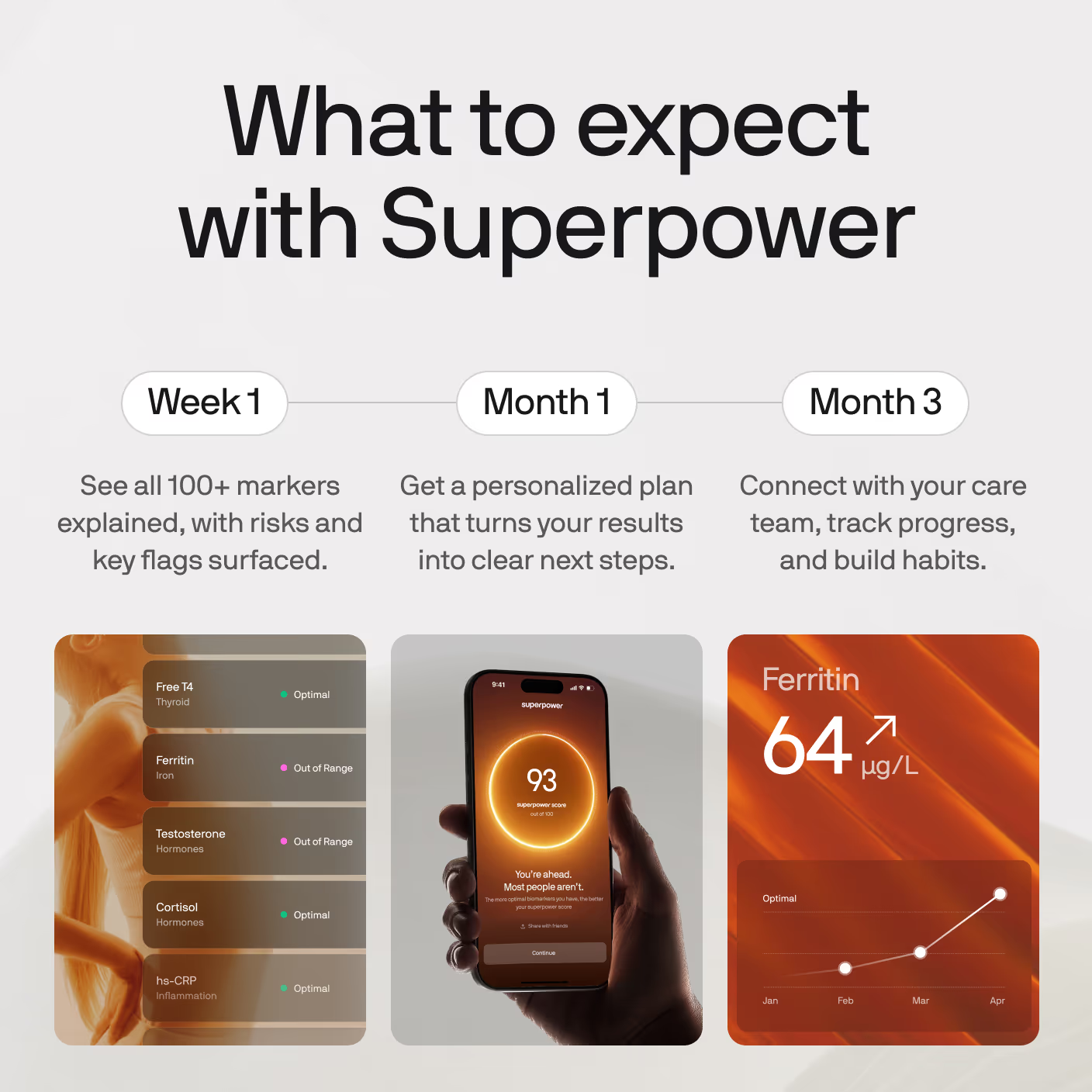
Measuring the lever before pulling it, then measuring again, is foundational to Superpower's approach to preventive health.
Bottom Line on Sea Moss Gel
Sea moss gel is a single-ingredient seaweed preparation marketed with an unsupported "92 minerals" claim and a thyroid-support claim that runs inverse to the actual biology in iodine-sufficient adults. Compositional analyses confirm a real but unremarkable mineral profile. Iodine variability is the dominant safety axis, with documented cases of supplement-induced thyroid dysfunction and a clear contraindication in hyperthyroid, Hashimoto's, and nodular-thyroid populations. Immunity and gut claims sit at preclinical evidence only. If a thyroid symptom is driving the search, TSH and a clinician are the right tools.
Frequently Asked Questions
References
- López-Hortas L, Caleja C, Pinela J, Petrović J, Soković M, Ferreira ICFR, Torres MD, Domínguez H, Pereira E, Barros L (2022). Comparative evaluation of physicochemical profile and bioactive properties of red edible seaweed Chondrus crispus subjected to different drying methods. *Food chemistry*, *383*, 132450. https://doi.org/10.1016/j.foodchem.2022.132450
- Čmiková N, Kowalczewski, P. Ł., Kmiecik D, Tomczak A, Drożdżyńska A, Ślachciński M, Szala, Ł., Matić S, Marković T, Popović S, Baskic D, Kačániová M (2024). Seaweed Nutritional Value and Bioactive Properties: Insights from Ascophyllum nodosum, Palmaria palmata, and Chondrus crispus. *Life (Basel, Switzerland)*, *14*(11). https://doi.org/10.3390/life14111522
- Campos BM, Ramalho E, Marmelo I, Noronha JP, Malfeito-Ferreira M, Mata P, Diniz MS (2022). Proximate Composition, Physicochemical and Microbiological Characterization of Edible Seaweeds Available in the Portuguese Market. *Frontiers in bioscience (Elite edition)*, *14*(4), 26. https://doi.org/10.31083/j.fbe1404026
- Teas J, Pino S, Critchley A, Braverman LE (2004). Variability of iodine content in common commercially available edible seaweeds. *Thyroid : official journal of the American Thyroid Association*, *14*(10), 836-41. https://doi.org/10.1089/thy.2004.14.836
- Nitschke U, Walsh P, McDaid J, Stengel DB (2018). Variability in iodine in temperate seaweeds and iodine accumulation kinetics of Fucus vesiculosus and Laminaria digitata (Phaeophyceae, Ochrophyta). *Journal of phycology*, *54*(1), 114-125. https://doi.org/10.1111/jpy.12606
- Bílek R, Dvořáková M, Grimmichová T, Jiskra J (2020). Iodine, thyroglobulin and thyroid gland. *Physiological research*, *69*(Suppl 2), S225-S236. https://doi.org/10.33549/physiolres.934514
- Farebrother J, Zimmermann MB, Andersson M (2019). Excess iodine intake: sources, assessment, and effects on thyroid function. *Annals of the New York Academy of Sciences*, *1446*(1), 44-65. https://doi.org/10.1111/nyas.14041
- Sohn SY, Inoue K, Rhee CM, Leung AM (2024). Risks of Iodine Excess. *Endocrine reviews*, *45*(6), 858-879. https://doi.org/10.1210/endrev/bnae019
- Koukkou EG, Roupas ND, Markou KB (2017). Effect of excess iodine intake on thyroid on human health. *Minerva medica*, *108*(2), 136-146. https://doi.org/10.23736/S0026-4806.17.04923-0
- Liu J, Hafting J, Critchley AT, Banskota AH, Prithiviraj B (2013). Components of the cultivated red seaweed Chondrus crispus enhance the immune response of Caenorhabditis elegans to Pseudomonas aeruginosa through the pmk-1, daf-2/daf-16, and skn-1 pathways. *Applied and environmental microbiology*, *79*(23), 7343-50. https://doi.org/10.1128/AEM.01927-13
- Liu J, Kandasamy S, Zhang J, Kirby CW, Karakach T, Hafting J, Critchley AT, Evans F, Prithiviraj B (2015). Prebiotic effects of diet supplemented with the cultivated red seaweed Chondrus crispus or with fructo-oligo-saccharide on host immunity, colonic microbiota and gut microbial metabolites. *BMC complementary and alternative medicine*, *15*, 279. https://doi.org/10.1186/s12906-015-0802-5
- Premarathna AD, Ahmed TAE, Rjabovs V, Hammami R, Critchley AT, Tuvikene R, Hincke MT (2024). Immunomodulation by xylan and carrageenan-type polysaccharides from red seaweeds: Anti-inflammatory, wound healing, cytoprotective, and anticoagulant activities. *International journal of biological macromolecules*, *260*(Pt 1), 129433. https://doi.org/10.1016/j.ijbiomac.2024.129433
- Tako E (2019). Dietary Trace Minerals. *Nutrients*, *11*(11). https://doi.org/10.3390/nu11112823
- Zimmermann MB (2009). Iodine deficiency. *Endocrine reviews*, *30*(4), 376-408. https://doi.org/10.1210/er.2009-0011
- Hoang TD, Mai VQ, Clyde PW, Shakir MK (2013). Over-the-counter-drug-induced thyroid disorders. *Endocrine practice : official journal of the American College of Endocrinology and the American Association of Clinical Endocrinologists*, *19*(2), 268-74. https://doi.org/10.4158/EP12298.OR
- Aakre I, Solli DD, Markhus MW, Mæhre HK, Dahl L, Henjum S, Alexander J, Korneliussen PA, Madsen L, Kjellevold M (2021). Commercially available kelp and seaweed products - valuable iodine source or risk of excess intake?. *Food & nutrition research*, *65*. https://doi.org/10.29219/fnr.v65.7584
- Darias-Rosales J, Rubio C, Gutiérrez, Á. J., Paz S, Hardisson A (2020). Risk assessment of iodine intake from the consumption of red seaweeds (Palmaria palmata and Chondrus crispus). *Environmental science and pollution research international*, *27*(36), 45737-45741. https://doi.org/10.1007/s11356-020-10478-9
- Rayman MP (2019). Multiple nutritional factors and thyroid disease, with particular reference to autoimmune thyroid disease. *The Proceedings of the Nutrition Society*, *78*(1), 34-44. https://doi.org/10.1017/S0029665118001192
- Li S, Xu Q, Wang S, Peng H, Liu Y (2025). Recent advances of trace elements in autoimmune thyroid disease. *Frontiers in immunology*, *16*, 1662521. https://doi.org/10.3389/fimmu.2025.1662521
- Tang Møllehave L, Knudsen N, Linneberg A, Bülow Pedersen I, Ravn-Haren G, Madsen AL, Carlé A, Cerqueira C, Krejbjerg A, Rasmussen LB, Ovesen L, Perrild H, Sigurd LB, Thuesen BH, Vejbjerg P, Jørgensen T (2024). The Danish investigation on iodine intake and thyroid disease (DanThyr): history and implications. *European thyroid journal*, *13*(3). https://doi.org/10.1530/ETJ-23-0230
- Rubio C, Napoleone G, Luis-González G, Gutiérrez AJ, González-Weller D, Hardisson A, Revert C (2017). Metals in edible seaweed. *Chemosphere*, *173*, 572-579. https://doi.org/10.1016/j.chemosphere.2017.01.064
- Filippini M, Baldisserotto A, Menotta S, Fedrizzi G, Rubini S, Gigliotti D, Valpiani G, Buzzi R, Manfredini S, Vertuani S (2021). Heavy metals and potential risks in edible seaweed on the market in Italy. *Chemosphere*, *263*, 127983. https://doi.org/10.1016/j.chemosphere.2020.127983
- Shaughnessy BK, Jackson BP, Byrnes JEK (2023). Evidence of elevated heavy metals concentrations in wild and farmed sugar kelp (Saccharina latissima) in New England. *Scientific reports*, *13*(1), 17644. https://doi.org/10.1038/s41598-023-44685-4
- Arisekar U, Jeya Shakila R, Shalini R, Jeyasekaran G, Sivaraman B, Surya T (2021). Heavy metal concentrations in the macroalgae, seagrasses, mangroves, and crabs collected from the Tuticorin coast (Hare Island), Gulf of Mannar, South India. *Marine pollution bulletin*, *163*, 111971. https://doi.org/10.1016/j.marpolbul.2021.111971
- Mishra D, Patra S, Kumar SD, Kumar M, Sathish R, Dhal NK (2025). A mini-review on heavy metals accumulation in seaweed of India: prospects for phyco-remediation. *Environmental monitoring and assessment*, *197*(6), 692. https://doi.org/10.1007/s10661-025-14142-y
- Zimmermann M, Delange F (2004). Iodine supplementation of pregnant women in Europe: a review and recommendations. *European journal of clinical nutrition*, *58*(7), 979-84. https://doi.org/10.1038/sj.ejcn.1601933
- Croker EE, McGrath SA, Rowe CW (2021). Thyroid disease: Using diagnostic tools effectively. Australian Journal ofGeneral Practice, 50(1–2), 16–21. https://doi.org/10.31128/AJGP-10-20-5693
- Zimmermann MB, Boelaert K (2015). Iodine deficiency and thyroid disorders. *The lancet. Diabetes & endocrinology*, *3*(4), 286-95. https://doi.org/10.1016/S2213-8587(14)70225-6

















 Heart & Vascular Health
 Metabolic Health
 Energy
 Liver Health
 Kidney
 Sex Hormones
 Thyroid Health
 Nutrients
 Immune System
 Inflammation