


Understand what your nutrition results really mean
See your biomarkers in context with a comprehensive panel.
- CLIA-certified labs
- HIPAA compliant
- Personalized health protocol
Vitamin B12, defined in plain terms
When you see "B12" on a lab report, it reflects the amount of cobalamin circulating in your blood. Most of it is bound to transport proteins, with only a smaller fraction riding on transcobalamin as the "active" form that tissues can use. The test is a snapshot of supply, not a full picture of how well your cells are using it.
B12 is produced by microbes rather than by plants or animals, so humans obtain it from animal foods or fortified products. It comes from diet, gets absorbed in the small intestine, then travels to the liver and beyond. A low value hints at problems with intake, stomach or gut absorption, or increased cellular demand. A high value can mean plentiful intake, but it can also signal altered binding proteins or liver and kidney conditions.
How vitamin B12 powers nerves and red blood cells
Think of B12 like a VIP guest with a fussy travel itinerary. Step one: food hits the stomach, acid frees B12, and it hops onto a chaperone protein. Step two: pancreatic enzymes release it so it can bind intrinsic factor, a special pass issued by the stomach's parietal cells. Step three: the B12–intrinsic factor duo checks in at the terminal ileum, where it's absorbed into the bloodstream and handed to transcobalamin for delivery to tissues. Final stop is the liver for storage and redistribution.
Inside cells, B12 works in two main jobs. One supports myelin maintenance and neurotransmitter chemistry by helping convert homocysteine back to methionine. The other keeps mitochondrial metabolism tidy by converting methylmalonyl-CoA into succinyl-CoA. When B12 runs low, homocysteine and methylmalonic acid rise — biochemical breadcrumbs that point to functional deficiency even if the serum B12 number looks acceptable. It is worth noting what the serum test does not measure: it does not show how much B12 is actually reaching your cells, because it includes inactive bound forms that can mask functional deficiency.
Stressors can tug on this system. Low stomach acid, autoimmune attack on intrinsic factor, or inflammation in the ileum derails absorption. Metformin and acid-suppressing drugs change the intestinal handshake. Nitrous oxide inactivates B12's cobalt core, which is why heavy or repeated exposure can cause sudden neurologic trouble. Acute illness can shift binding proteins, nudging levels up or down for reasons unrelated to intake. Chronically low B12 can lead to macrocytic anemia, which compromises oxygen delivery, and can quietly affect nerve health, showing up as numbness, burning feet, or slowed processing speed. Several observational studies also link elevated homocysteine — which rises when B12 is insufficient — to cardiovascular and cognitive risk, though outcome trials show mixed results when lowering homocysteine alone. That's why single values tell you far less than trends, symptoms, and context.
What your vitamin B12 number means
Reference intervals describe the middle of the bell curve for the lab's local population, not a personal guarantee of health. Most labs flag deficiency below 200 pg/mL (about 148 pmol/L) and call 200–400 pg/mL borderline, though ranges vary by lab and assay. Some people develop neurologic symptoms at values others tolerate, especially if methylmalonic acid is elevated. A practical approach uses a layered read: a clearly adequate B12 level paired with normal methylmalonic acid and homocysteine usually signals good cellular sufficiency. Age, pregnancy, and conditions like kidney disease can nudge these markers, so context counts.
High vitamin B12
Elevated B12 often reflects supplements or fortified foods. But sometimes it's the transport system talking. Liver disease can release stored B12 and its binding proteins, inflating the serum number. Kidney disease and some blood or inflammatory disorders raise haptocorrin, the carrier that holds most circulating B12, which can make levels look rich even when delivery to cells isn't perfect. Rarely, malignancy or severe inflammation pushes values up as a byproduct of altered protein turnover. Elevated serum B12 sometimes tracks with hidden illness, especially liver or inflammatory disease — that's correlation, not causation.
Cross-checking with methylmalonic acid and homocysteine helps clarify the picture. If those are steady, tissues are likely getting what they need. If they're elevated, you may be seeing a functional deficiency where the delivery or utilization step lags behind the supply signal. Persistent elevation, especially without supplements, deserves clinical context.
Low vitamin B12
Low B12 usually traces back to one of three themes. Intake is insufficient, common with vegan or near-vegan patterns that rely on fortification. Absorption is impaired, as with autoimmune pernicious anemia, atrophic gastritis, celiac disease, Crohn's disease affecting the terminal ileum, pancreatic insufficiency, or after bariatric surgery. Or utilization demand rises and outpaces supply, which can show up in pregnancy or rapid growth. Pregnancy can also lower measured B12 through dilution, and many people on oral contraceptives show lower total B12 despite adequate active B12.
Medications add another layer. Long-term metformin use can hinder uptake at the ileum. Proton pump inhibitors and H2 blockers reduce stomach acid, making it harder to liberate B12 from food proteins. Heavy or repeated nitrous oxide exposure inactivates B12 chemically, which can precipitate numbness, gait changes, and cognitive symptoms even if the serum number hasn't plunged yet. Assay issues can also mislead: high-dose biotin taken near the time of blood draw can skew certain immunoassays, and intrinsic factor antibodies can interfere with methods that use intrinsic factor as the binder.
Low doesn't always mean dangerous, and a single low read during acute illness may rebound. Repeating the test, pairing it with methylmalonic acid and homocysteine, and reading it alongside a complete blood count and symptoms adds signal and trims noise.
Normal vitamin B12
A result in the lab's reference range is reassuring but not the end of the story. If symptoms are present or risk factors exist — older age, metformin use, restricted diet, prior gut surgery — pairing a normal serum B12 with methylmalonic acid and homocysteine can confirm whether cellular sufficiency matches the serum number. Steady B12 with normal methylmalonic acid and homocysteine usually signals that your mitochondria and myelin have what they need.
Factors that move a vitamin B12 result
Several dietary, physiological, and pharmacological factors can shift a B12 result independently of true cellular status.
- Dietary pattern and food form. B12 concentrates in animal-derived foods and fortified products. In animal sources it is protein-bound, so stomach acid is the first unlock. Fortified foods deliver free B12, which is easier to absorb when stomach acid is low. Some seaweed and fermented foods contain B12 analogs that are inactive — they can make labels look reassuring but do not support cellular function.
- Stomach acid and intrinsic factor. Low stomach acid (including from atrophic gastritis, common in older adults) and autoimmune destruction of parietal cells reduce both acid-mediated B12 release and intrinsic factor production, impairing absorption at the ileum.
- Medications. Metformin hinders B12 uptake at the ileum. Proton pump inhibitors and H2 blockers suppress stomach acid, reducing liberation of B12 from food proteins. These effects are dose- and duration-dependent.
- Nitrous oxide exposure. Nitrous oxide irreversibly inactivates B12's cobalt core. Heavy or repeated exposure — recreational or procedural — can precipitate functional deficiency and neurologic symptoms even when serum B12 appears normal.
- Biotin supplementation. High-dose biotin taken close to the time of blood draw can falsely elevate results on certain immunoassays, producing a spuriously high serum B12 reading.
- Intrinsic factor antibodies. These can interfere with assay methods that use intrinsic factor as the binder, distorting results in people with pernicious anemia.
- Pregnancy and dilution. Plasma volume expansion during pregnancy lowers measured B12 through dilution. Demand also rises, so a borderline result in pregnancy warrants closer attention.
- Bariatric surgery and ileal disease. Procedures that bypass or reduce the stomach alter acid and intrinsic factor availability; diseases affecting the terminal ileum (Crohn's, celiac) remove the absorption checkpoint entirely.
- Liver and kidney disease. Liver disease can release stored B12 and binding proteins, inflating the serum number. Kidney disease raises haptocorrin and can also elevate methylmalonic acid independently of B12 status — pairing eGFR with MMA helps disentangle these effects.
- Acute illness and binding-protein shifts. Inflammation can shift binding proteins, nudging B12 levels up or down for reasons unrelated to intake or cellular sufficiency.
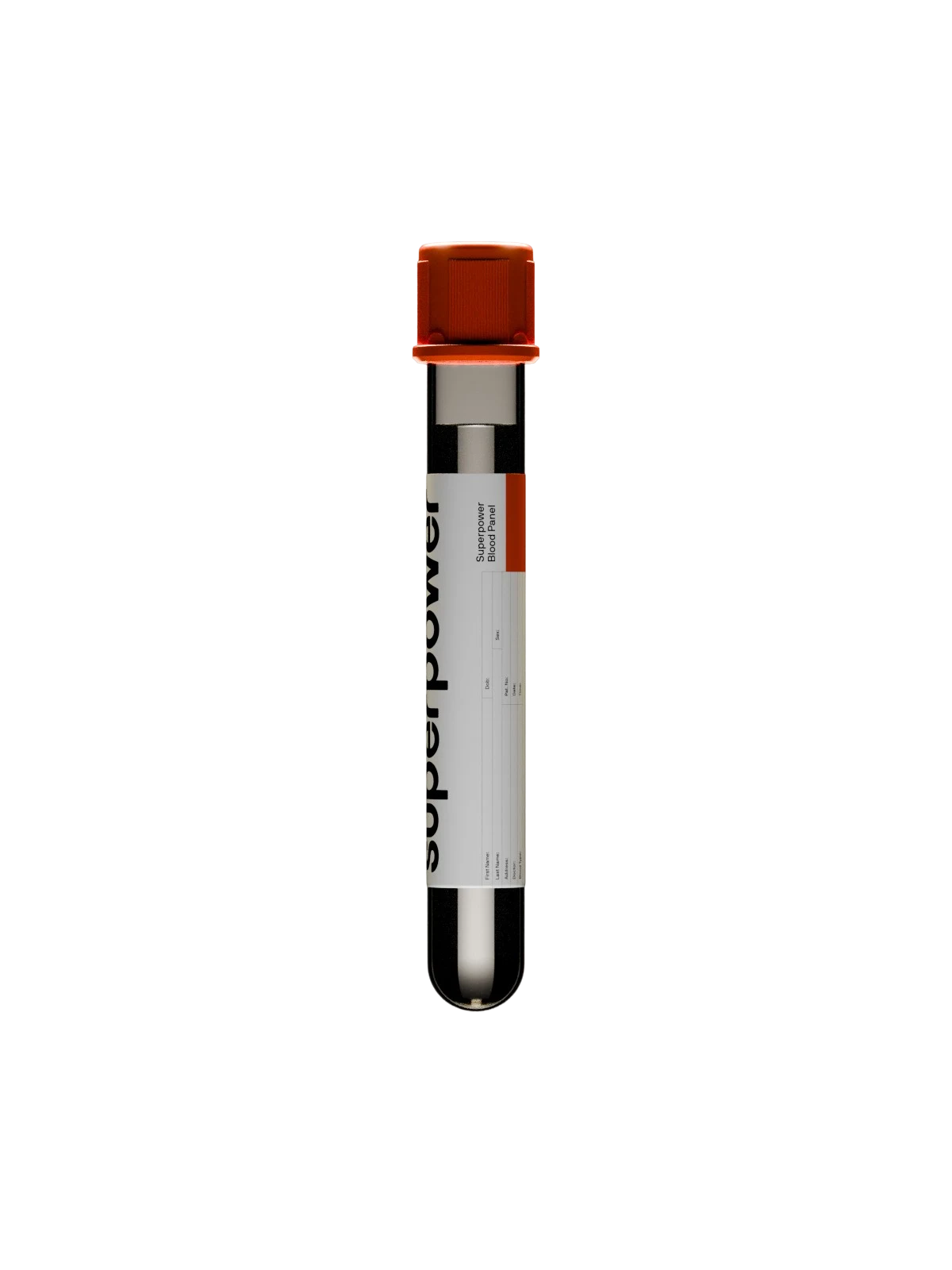
Test 100+ biomarkers from home
One blood draw. A full picture of your health, explained in plain language.
Test 100+ biomarkers from home
One blood draw. A full picture of your health, explained in plain language.
Vitamin B12 plus its companion markers
Serum B12 alone captures supply, not delivery. The markers below complete the picture by probing the two metabolic pathways B12 drives and the blood-cell consequences of deficiency.
- Methylmalonic acid (MMA) — MMA rises specifically when cells lack functional B12 on the mitochondrial pathway. Elevated MMA with borderline serum B12 confirms functional deficiency that the serum number misses. Note: chronic kidney disease also raises MMA, so pairing eGFR is useful when renal function is in question.
- Folate — folate and B12 share the methylation pathway; both can raise homocysteine when low, and combined deficiency creates a mixed macrocytosis picture that serum B12 alone cannot disentangle.
- Homocysteine — homocysteine reflects the methylation side of the B12/folate pathway. Elevated homocysteine with borderline B12 and folate identifies which upstream deficiency is driving the conversion bottleneck.
- Red cell distribution width (RDW) — RDW rises with macrocytic anemia from B12 deficiency. Combined with MCV it confirms impaired DNA synthesis in red cell precursors before frank anemia sets in.
- Hemoglobin — hemoglobin shows whether impaired red cell production has progressed to anemia. Declining hemoglobin alongside elevated MMA confirms functional B12 deficiency affecting erythropoiesis.
When to retest your vitamin B12
Serum B12 responds to oral or parenteral supplementation within roughly 4–12 weeks in deficiency trials, making that window the practical basis for follow-up timing.
- After starting supplementation: retest at 8–12 weeks to confirm levels are responding.
- Longer-term maintenance: once levels are stable, a recheck every 3–6 months is reasonable, or aligned with any change in dose, medication, or clinical status.
- Include functional markers: retest MMA and homocysteine alongside serum B12 to confirm functional response, not just serum normalization. A serum B12 that rises while MMA remains elevated suggests absorption or utilization is still impaired.
- Same-lab preferred: assay methods vary between laboratories; using the same lab across draws reduces result-to-result noise.
- Biotin pause: high-dose biotin can falsely elevate certain B12 immunoassays — pause supplementation for at least 48 hours before the draw.
When a vitamin B12 result deserves a conversation
B12 deficiency can be subtle at first — a little fatigue, a little brain fog, a little numbness that's easy to brush off. A result below 200 pg/mL, or a borderline result paired with elevated MMA or homocysteine, is worth discussing with a clinician. So is a persistently high result without a clear supplement explanation, particularly if liver or kidney function hasn't been checked recently. Symptoms — numbness, gait changes, cognitive slowing — that don't match the serum number are also a prompt to dig deeper with functional markers.
Trendlines matter more than any single value. Checking B12 alongside MMA and homocysteine, then linking the numbers to how you feel and perform, turns a static lab result into a feedback loop. That's the approach to preventive health that Superpower is built around — comprehensive testing paired with careful interpretation, so you can see where your energy and nerve health stand today, how your gut and medications shape absorption, and where small course corrections could pay off. Learn more about that approach to preventive health.
Frequently Asked Questions
References
- Azzini E, Raguzzini A, Polito A (2021). A Brief Review on Vitamin B(12) Deficiency Looking at Some Case Study Reports in Adults. *International journal of molecular sciences*, *22*(18). https://doi.org/10.3390/ijms22189694
- Sobczyńska-Malefora A, Delvin E, McCaddon A, Ahmadi KR, Harrington DJ (2021). Vitamin B(12) status in health and disease: a critical review. Diagnosis of deficiency and insufficiency - clinical and laboratory pitfalls. *Critical reviews in clinical laboratory sciences*, *58*(6), 399-429. https://doi.org/10.1080/10408363.2021.1885339
- Obeid R, Andrès E, Češka R, Hooshmand B, Guéant-Rodriguez RM, Prada GI, Sławek J, Traykov L, Ta Van B, Várkonyi T, Reiners K, The Vitamin B Consensus Panelists Group (2024). Diagnosis, Treatment and Long-Term Management of Vitamin B12 Deficiency in Adults: A Delphi Expert Consensus. *Journal of clinical medicine*, *13*(8). https://doi.org/10.3390/jcm13082176
- Liu Q, Li S, Quan H, Li J (2014). Vitamin B12 status in metformin treated patients: systematic review. *PloS one*, *9*(6), e100379. https://doi.org/10.1371/journal.pone.0100379
- Miller JW (2018). Proton Pump Inhibitors, H2-Receptor Antagonists, Metformin, and Vitamin B-12 Deficiency: Clinical Implications. *Advances in nutrition*, *9*(4), 511S-518S. https://doi.org/10.1093/advances/nmy023