.svg)

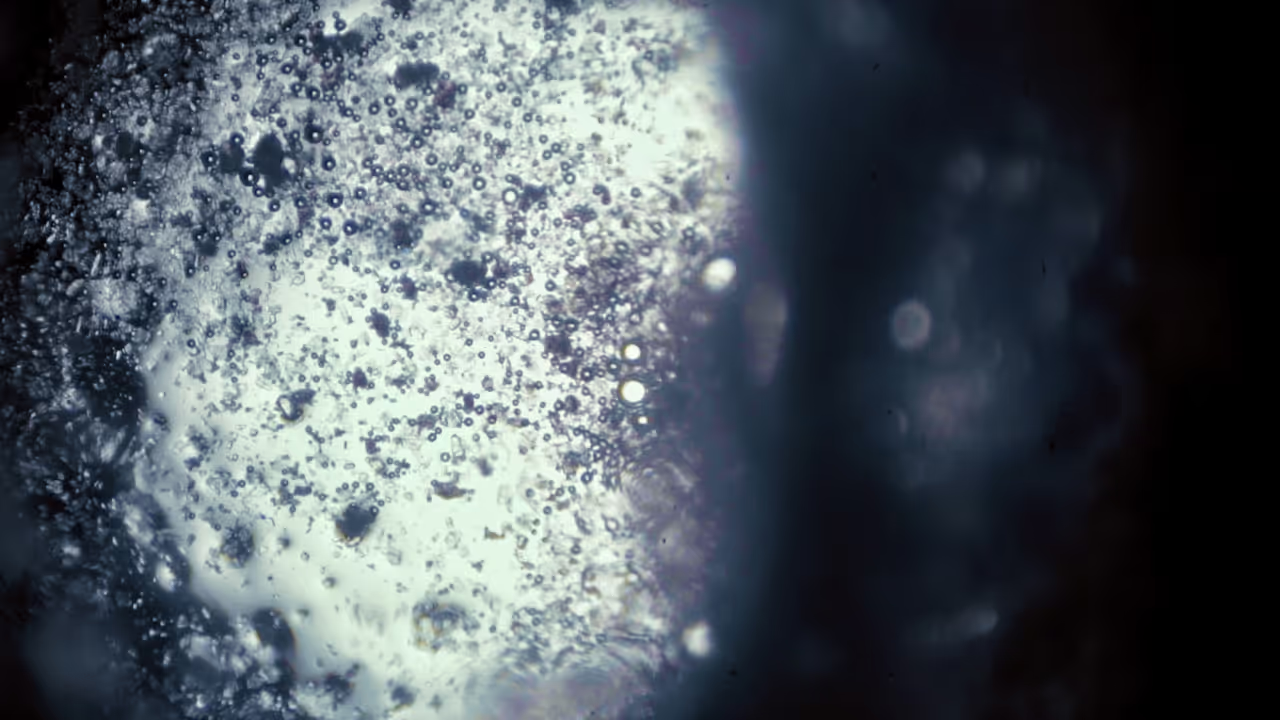



Sepsis and the immune storm visible in a CBC
Sepsis biomarkers are blood signals that show how the body is reacting to a dangerous infection and whether that reaction is tipping into organ‑threatening trouble. They capture both the presence of infection and the body’s overactive defense response. Clinically, these markers enable earlier recognition, help estimate severity, guide antibiotic and supportive therapies, and track whether treatment is working. Some point toward bacterial infection itself (procalcitonin), others reflect the heat of inflammation (C‑reactive protein, interleukin‑6), strain on the blood vessel lining that affects leakage and clotting (endothelial injury and coagulation markers such as D‑dimer), a shift to emergency energy use when oxygen delivery falters (lactate), and emerging stress in vital organs like the kidneys and liver. Taken together, they translate complex immune, vascular, and metabolic changes into practical information—helping differentiate sepsis from milder illness, flag patients at higher risk, and monitor recovery over time.
Reading WBC, neutrophils, CRP, NLR, and SII
Sepsis blood biomarkers reveal how the innate immune system is fighting infection and how much collateral damage organs are sustaining. They track the balance between neutrophil-driven inflammation, lymphocyte reserve, and liver-made acute‑phase responses, which together predict progression to shock, respiratory failure, or recovery. In steady health, total white blood cells usually sit in the mid range, with neutrophils comprising roughly half to two‑thirds of the count. C‑reactive protein is very low at baseline. The neutrophil‑to‑lymphocyte ratio typically clusters around the low to middle single digits, and the systemic immune‑inflammation index remains low in health and lacks a universal cut‑off. Optimal physiology tends to show mid‑range WBC and neutrophils, very low CRP, low‑to‑mid NLR, and a low SII. In sepsis, WBC, neutrophils, CRP, NLR, and SII commonly climb as inflammation accelerates. When these values fall below expected—for example, neutropenia or a low total WBC—the physiology points to bone marrow suppression, immune exhaustion, or viral‑predominant sepsis, which can impair bacterial clearance and blunt classic signs. Fever may be absent, with hypothermia, confusion, weakness, or rapid breathing instead. A low CRP or NLR in the face of suspected infection can reflect early timing or an inadequate acute‑phase response. Older adults and newborns often mount muted rises; pregnancy has a physiologic neutrophilia, so “low” is uncommon and more concerning. Big picture, these markers integrate immunity with vascular and organ function. Persistently high inflammatory indices signal ongoing tissue injury and complications; profoundly low cell counts signal immune paralysis. Used together, they frame sepsis severity, guide urgency, and relate to long‑term risks like post‑sepsis fatigue, cognitive decline, and cardiovascular vulnerability.
The honest reach of blood markers in sepsis
Sepsis blood testing provides a window into how the body’s immune and inflammatory systems are responding to severe infection. Sepsis is a life-threatening condition where the body’s response to infection causes widespread inflammation, affecting energy production, cardiovascular stability, cognition, and organ function. At Superpower, we test these specific biomarkers: white blood cell count (WBC), neutrophils, C-reactive protein (CRP), neutrophil-to-lymphocyte ratio (NLR), and systemic immune-inflammation index (SII).WBC measures the total number of white blood cells, which are key defenders against infection. Neutrophils are a type of white blood cell that rapidly increase during bacterial infections. CRP is a protein produced by the liver in response to inflammation. NLR compares the number of neutrophils to lymphocytes, providing insight into the balance of immune cell types. SII combines neutrophil, lymphocyte, and platelet counts to reflect the overall intensity of immune and inflammatory activity. In sepsis, these markers often rise sharply, signaling an activated immune response and systemic inflammation. Healthy function is reflected by stable, balanced levels of these biomarkers. When WBC, neutrophils, CRP, NLR, and SII are within typical ranges, it suggests the immune system is responding appropriately and the body’s systems are stable. Marked elevations or imbalances can indicate overwhelming infection, immune dysregulation, or risk of organ dysfunction. Interpretation of these biomarkers can be influenced by factors such as age, pregnancy, chronic illness, recent surgery, medications (like steroids), and laboratory assay differences. These should always be considered when evaluating results.


FAQs
It’s a fast check of how strongly your immune system is reacting to a suspected body‑wide infection. Superpower tests your blood for WBC, neutrophils, CRP, NLR (neutrophil‑to‑lymphocyte ratio), and SII (systemic immune‑inflammation index). Together, these markers show the scale and direction of inflammation and immune activation. Sepsis is a clinical diagnosis; these labs support assessment of severity and trajectory.
To quickly gauge if a serious infection is driving systemic inflammation and to track how it’s evolving. High WBC, neutrophils, CRP, NLR, and SII indicate a strong inflammatory response; falling values often signal recovery. Very low WBC in the setting of infection suggests immune exhaustion and higher risk. This panel helps risk‑stratify and monitor response to care.
Yes. With Superpower, our team can organize a professional blood draw in your home.
During suspected or confirmed sepsis, these markers are repeated to track change—commonly every 6–24 hours in acute care. Outside an illness, routine sepsis testing isn’t useful. The right cadence depends on symptoms, vital signs, cultures, and organ function monitoring.
Infection type and timing; recent surgery, trauma, or burns; autoimmune flares; cancer; pregnancy; vigorous exercise; dehydration; time of day; and medications (steroids, immunosuppressants, growth factors). Bacterial infections typically raise WBC, neutrophils, CRP, NLR, and SII; some viral illnesses can lower WBC. Sampling time and lab handling also influence results.
No fasting is needed. Hydrate as usual. Avoid strenuous exercise and heavy alcohol in the prior 24 hours if possible. Share recent infections, vaccines, procedures, or medicines (especially steroids or immunosuppressants), which can shift results. If you’re acutely unwell, timely testing takes priority over preparation.
References
- Singer, M., Deutschman, C. S., Seymour, C. W., Shankar-Hari, M., Annane, D., Bauer, M., ... Angus, D. C. (2016). The Third International Consensus Definitions for Sepsis and Septic Shock (Sepsis-3). JAMA, 315(8), 801-810. https://doi.org/10.1001/jama.2016.0287
- Evans, L., Rhodes, A., Alhazzani, W., Antonelli, M., Coopersmith, C. M., French, C., ... Levy, M. (2021). Surviving Sepsis Campaign: International guidelines for management of sepsis and septic shock 2021. Intensive Care Medicine, 47(11), 1181-1247. https://doi.org/10.1007/s00134-021-06506-y
- Tan, M., Lu, Y., Jiang, H., & Zhang, L. (2019). The diagnostic accuracy of procalcitonin and C-reactive protein for sepsis: A systematic review and meta-analysis. Journal of Cellular Biochemistry, 120(4), 5852-5859. https://doi.org/10.1002/jcb.27870
- Wu, H., Cao, T., Ji, T., Luo, Y., Huang, J., & Ma, K. (2024). Predictive value of the neutrophil-to-lymphocyte ratio in the prognosis and risk of death for adult sepsis patients: A meta-analysis. Frontiers in Immunology, 15, 1336456. https://doi.org/10.3389/fimmu.2024.1336456
- Liang, L., & Su, Q. (2025). Systemic immune-inflammation index and the short-term mortality of patients with sepsis: A meta-analysis. Biomolecules and Biomedicine, 25(4), 798-809. https://doi.org/10.17305/bb.2024.11494


























.avif)
.svg)
.svg)


