


Understand what your sleep health results really mean
See your biomarkers in context with a comprehensive panel.
- CLIA-certified labs
- HIPAA compliant
- Personalized health protocol
What is deep sleep and why does it matter?
The body's repair mode
Deep sleep is the most physically restorative sleep stage. Your brain produces large, slow delta waves (0.5 to 2 Hz), your heart rate drops to its lowest point, and your blood pressure decreases. This is when your body releases the majority of its daily growth hormone, which drives muscle repair, bone growth, and tissue regeneration.
Think of deep sleep as scheduled maintenance for your hardware. While REM sleep processes software (memories, emotions, cognitive function), deep sleep repairs the physical machinery. Skip maintenance, and the machinery starts breaking down.
Immune function and brain cleaning
Your immune system is most active during deep sleep. Cytokines (immune signaling proteins) increase, and natural killer cells become more aggressive toward pathogens. A study in Sleep found that restricting sleep reduced immune cell activity by up to 70% after just one night.
Deep sleep also drives the glymphatic system, which flushes beta-amyloid and tau proteins from the brain. These are the same proteins implicated in Alzheimer's disease. Research suggests that chronic deep sleep deprivation may accelerate their accumulation.
Why can't I get deep sleep?
Age is the biggest factor
Deep sleep declines with age. A study in Neurobiology of Aging showed that adults lose roughly 2% of their deep sleep per decade starting in their late 20s. By age 60, some people get less than 30 minutes of deep sleep per night compared to nearly 2 hours in their 20s. This decline is natural but can be slowed with the right interventions.
Alcohol fragments deep sleep
Alcohol is deceptive. It pushes you into deep sleep faster during the first half of the night, creating the illusion of good rest. But as your body metabolizes the alcohol, a rebound arousal effect fragments sleep in the second half. The net result is less total deep sleep and poorer sleep quality overall. Even two drinks in the evening reduce slow-wave sleep by up to 20%.
Stress and elevated cortisol
Cortisol is supposed to be low at night and high in the morning. Chronic stress, anxiety, and evening hyperarousal can keep cortisol elevated past bedtime, suppressing the transition into deep sleep. Your brain needs a calm neurochemical environment to produce the slow delta waves that define this stage. If cortisol is still running high, your brain stays in lighter stages.
Sleep disorders
Sleep apnea causes micro-arousals that pull you out of deep sleep repeatedly, sometimes dozens of times per hour. You may not remember waking, but your brain never completes the deep sleep cycles it needs. Restless legs syndrome and periodic limb movement disorder have similar fragmenting effects. If you consistently cannot get deep sleep despite good sleep habits, a sleep disorder may be the underlying cause.
Is core sleep better than deep sleep?
Different concepts, not competitors
This is a common question driven by confusion between tracker terminology and sleep science. Core sleep refers to the essential sleep cycles your body needs for basic restoration, typically the first 3 to 4 cycles of the night. Deep sleep is a specific stage (NREM stage 3) within those cycles.
On Apple Watch, "core sleep" labels NREM stage 2 specifically, which creates additional confusion. In that framework, core sleep and deep sleep are separate categories. In sleep science, deep sleep is part of core sleep. Neither is "better" because they serve different functions within the same system.
You need both
Core sleep cycles contain a mix of light sleep, deep sleep, and REM sleep. The early cycles are weighted toward deep sleep, while the later cycles favor REM. Asking whether core sleep is better than deep sleep is like asking whether a car's engine is better than its transmission. They are components of the same system, and both are essential.
How to get better deep sleep
Anchor your sleep schedule
Consistency is the foundation. Go to bed and wake up at the same time every day, including weekends. Your circadian rhythm programs deep sleep to occur primarily in the first half of the night. When your bedtime shifts, the deep-sleep window shifts with it, and your body may not fully adapt, resulting in lighter, less restorative early cycles.
Keep your bedroom cool
Your core body temperature needs to drop by 1 to 2 degrees Fahrenheit to initiate and sustain deep sleep. A bedroom temperature of 65 to 68 degrees Fahrenheit supports this thermoregulation. A study in the Journal of Physiological Anthropology found that even small increases in ambient temperature reduced deep sleep duration. If you run warm at night, lightweight bedding and breathable sleepwear can help.
Limit alcohol and caffeine
Cut alcohol at least 3 to 4 hours before bed. Eliminate caffeine after 2 p.m. (or earlier if you are a slow metabolizer). A study in the Journal of Clinical Sleep Medicine found that caffeine consumed 6 hours before bed reduced total sleep time by over an hour and significantly decreased deep sleep. These are the two most impactful substances to manage for better deep sleep.
Create a dark, quiet environment
Light exposure during sleep suppresses melatonin production and shifts the brain toward lighter stages. Even small amounts of ambient light (from a phone charger, streetlight, or alarm clock) can reduce deep sleep. Use blackout curtains and remove light sources. White noise or or earplugs can block environmental sounds that cause micro-arousals.
Exercise and deep sleep
The most powerful deep sleep enhancer
Exercise is the single most consistently supported intervention for increasing deep sleep. A meta-analysis in Sports Medicine found that regular moderate-to-vigorous exercise increased deep sleep duration by 10 to 15% and improved overall sleep quality. The effect is dose-dependent: more consistent exercise produces greater gains in deep sleep.
Timing and type matter
Aerobic exercise (walking, cycling, swimming) has the strongest evidence for boosting deep sleep. Resistance training also helps, particularly for older adults who have lost the most deep sleep. Time your workouts at least 2 to 3 hours before bed. Intense exercise too close to bedtime raises core temperature and cortisol, which can delay the onset of deep sleep.
Even a 30-minute walk has measurable effects. A study in Sleep Medicine found that moderate aerobic exercise 4 to 5 times per week increased slow-wave sleep by 10 minutes per night in sedentary adults within 4 months. That may sound modest, but 10 minutes of additional deep sleep translates to meaningful improvements in physical recovery and cognitive function.
Test 150+ biomarkers
Two blood draws. A full picture of your health, explained in plain language.
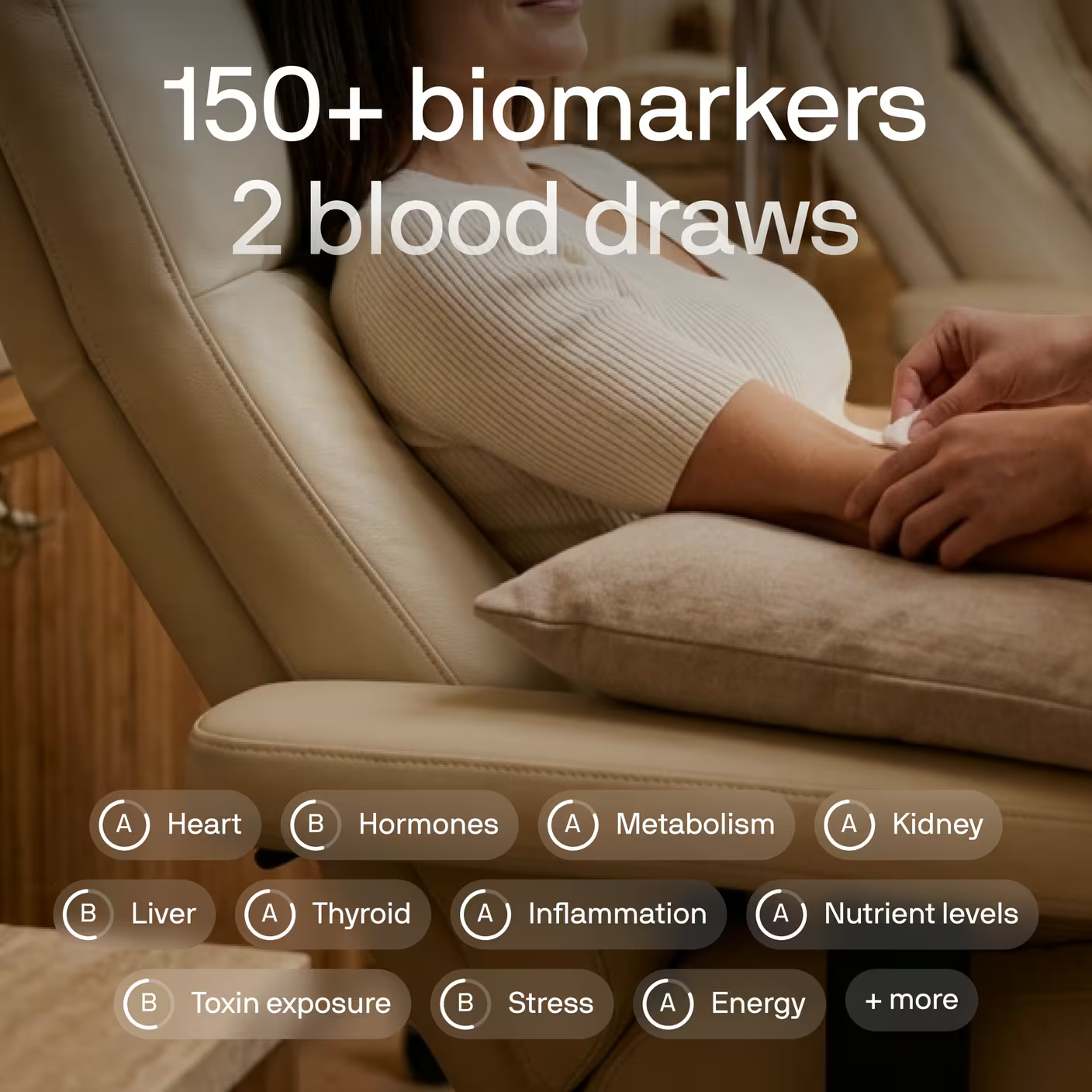
Test 150+ biomarkers
Two blood draws. A full picture of your health, explained in plain language.
Nutrition and supplements for deep sleep
Magnesium
Magnesium supports GABA receptor function, the brain's primary inhibitory neurotransmitter. GABA calms neural activity and facilitates the transition into slow-wave sleep. A double-blind study in older adults found that 500 mg of magnesium supplementation improved sleep quality scores, increased sleep time, and raised melatonin levels. If your blood levels of magnesium are low, supplementation may directly increase deep sleep.
Avoid heavy meals before bed
Digestion raises core body temperature, which opposes the cooling your body needs for deep sleep. Eating a large meal within 2 to 3 hours of bedtime can reduce deep sleep and increase the time spent in lighter stages. A lighter evening meal, eaten earlier, gives your body time to begin cooling before sleep.
Tryptophan and sleep-supporting foods
Foods rich in tryptophan (warm milk, bananas, tart cherry juice) support the serotonin-to-melatonin conversion that helps initiate sleep. While the direct effect on deep sleep specifically is modest, improving sleep onset and reducing sleep latency gives your brain more time in the deep-sleep-heavy early cycles.
When to see a sleep specialist
Signs that deep sleep deprivation needs clinical attention
If you consistently get 7 or more hours of sleep but experience persistent fatigue, waking unrefreshed, difficulty recovering from exercise, or frequent illness, your deep sleep may be compromised by an underlying condition. A sleep study (polysomnography) can measure your exact sleep architecture and identify disruptions invisible to consumer wearables.
Red flags include loud snoring, gasping during sleep, morning headaches, and excessive daytime sleepiness despite adequate sleep hours. These symptoms suggest sleep-disordered breathing, which directly suppresses deep sleep. Treatment (such as CPAP for sleep apnea) often produces dramatic improvements in deep sleep time and daytime energy.
See what is driving your deep sleep
Beyond the tracker dashboard
Understanding how to get better deep sleep means looking beyond what your wearable shows. Cortisol patterns, magnesium levels, thyroid function, and inflammatory markers all shape whether your brain can reach and sustain deep sleep. A wearable tells you the "what." Blood data tells you the "why."
Superpower's at-home panel tests over 150 biomarkers connected to sleep quality, physical recovery, and hormonal balance. When you pair your sleep tracker trends with real biochemistry, you stop guessing and start making targeted changes. Start with Superpower and discover what your deep sleep actually needs.
Frequently Asked Questions
References
- Van Cauter E, Plat L (1996). Physiology of growth hormone secretion during sleep. *The Journal of pediatrics*, *128*(5 Pt 2), S32-7. https://doi.org/10.1016/s0022-3476(96)70008-2
- Besedovsky L, Lange T, Born J (2012). Sleep and immune function. *Pflugers Archiv : European journal of physiology*, *463*(1), 121-37. https://doi.org/10.1007/s00424-011-1044-0
- Xie L, Kang H, Xu Q, Chen MJ, Liao Y, Thiyagarajan M, O'Donnell J, Christensen DJ, Nicholson C, Iliff JJ, Takano T, Deane R, Nedergaard M (2013). Sleep drives metabolite clearance from the adult brain. *Science (New York, N.Y.)*, *342*(6156), 373-7. https://doi.org/10.1126/science.1241224
- Scullin MK (2013). Sleep, memory, and aging: the link between slow-wave sleep and episodic memory changes from younger to older adults. *Psychology and aging*, *28*(1), 105-14. https://doi.org/10.1037/a0028830
- Okamoto-Mizuno K, Mizuno K (2012). Effects of thermal environment on sleep and circadian rhythm. *Journal of physiological anthropology*, *31*(1), 14. https://doi.org/10.1186/1880-6805-31-14
- Drake C, Roehrs T, Shambroom J, Roth T (2013). Caffeine effects on sleep taken 0, 3, or 6 hours before going to bed. *Journal of clinical sleep medicine : JCSM : official publication of the American Academy of Sleep Medicine*, *9*(11), 1195-200. https://doi.org/10.5664/jcsm.3170
- Kovacevic A, Mavros Y, Heisz JJ, Fiatarone Singh MA (2018). The effect of resistance exercise on sleep: A systematic review of randomized controlled trials. *Sleep medicine reviews*, *39*, 52-68. https://doi.org/10.1016/j.smrv.2017.07.002
- Reid KJ, Baron KG, Lu B, Naylor E, Wolfe L, Zee PC (2010). Aerobic exercise improves self-reported sleep and quality of life in older adults with insomnia. *Sleep medicine*, *11*(9), 934-40. https://doi.org/10.1016/j.sleep.2010.04.014
- Abbasi B, Kimiagar M, Sadeghniiat K, Shirazi MM, Hedayati M, Rashidkhani B (2012). The effect of magnesium supplementation on primary insomnia in elderly: A double-blind placebo-controlled clinical trial. *Journal of research in medical sciences : the official journal of Isfahan University of Medical Sciences*, *17*(12), 1161-9. https://pubmed.ncbi.nlm.nih.gov/23853635/
- Zhang Y, Chen C, Lu L, Knutson KL, Carnethon MR, Fly AD, Luo J, Haas DM, Shikany JM, Kahe K (2022). Association of magnesium intake with sleep duration and sleep quality: findings from the CARDIA study. *Sleep*, *45*(4). https://doi.org/10.1093/sleep/zsab276
- Zisapel N (2018). New perspectives on the role of melatonin in human sleep, circadian rhythms and their regulation. *British journal of pharmacology*, *175*(16), 3190-3199. https://doi.org/10.1111/bph.14116


















 Heart & Vascular Health
 Metabolic Health
 Energy
 Liver Health
 Kidney
 Sex Hormones
 Thyroid Health
 Nutrients
 Immune System
 Inflammation