

Understand what your iron blood health results really mean
See your biomarkers in context with a comprehensive panel.
- CLIA-certified labs
- HIPAA compliant
- Personalized protocols
What ferritin actually is, in plain terms
Ferritin is the body's iron storage protein, a shell of H and L subunits that locks iron away as ferric mineral in its core until it is needed for hemoglobin, muscle, and enzymes. Most ferritin lives inside cells, particularly in the liver, spleen, bone marrow, and macrophages. A small fraction circulates in blood, and that circulating fraction usually mirrors how full your iron stores are. Low ferritin often signals depleted stores; high ferritin can mean stores are loaded, but it can also reflect inflammation, liver injury, or metabolic stress.
What ferritin reflects about your iron stores
Iron is your body's battery metal. It helps red cells move oxygen, muscles contract, mitochondria make ATP, and thyroid enzymes do their job. Because free iron is reactive, the body tucks it into ferritin until called upon. The handoff is coordinated by hepcidin, a hormone made in the liver. When hepcidin is high, it locks the iron exit door on cells and the gut, pushing iron into storage. When hepcidin drops, iron flows to where it's needed.
Critically, serum ferritin does not measure circulating iron. It reflects stored iron. And because ferritin is an acute-phase reactant, it does not always reflect iron stores cleanly. Interleukin-6 (IL-6) and other inflammatory signals prompt the liver to synthesize more ferritin independent of how much iron is actually present. During infection or chronic inflammation, ferritin can climb while circulating iron falls, a defense mechanism that starves microbes of iron but can mislead interpretation. A high ferritin in the presence of elevated hs-CRP may say more about inflammation than about iron load.
Training stress, sleep debt, and illness can nudge this axis. A hard race weekend may transiently lift ferritin through inflammation and hemolysis. Sustained endurance training, especially in menstruating athletes, commonly leaves iron stores depleted over months. One number on one day is a snapshot; the trend across time tells the story.
Ferritin versus iron: what each one measures
Ferritin measures the iron your body has banked; serum iron and transferrin saturation measure the iron moving through your blood right now. The two answer different questions. Serum ferritin, sometimes just called your iron stores, reflects the reserve held inside cells in the liver, spleen, and bone marrow. Serum iron shifts with recent meals and time of day, so any single reading moves far more than ferritin does. That is why a full iron panel reads them together: stored iron sets the baseline, circulating iron shows the daily flux, and inflammation can inflate the stored-iron signal.
Reading your ferritin number against the range
Normal versus optimal
Reference intervals are built from the lab's tested population, so "normal" describes where most people landed, not the level at which you feel or function your best. That gap matters with ferritin: a result inside the lower end of the normal band can still leave stores too thin for how you train, sleep, or recover. Units may appear as ng/mL or µg/L, which are equivalent. "Optimal" depends on your physiology and goals, so a distance runner and a person with fatty liver will not share the same target. Read the range as a map, not a verdict, and interpret it with your clinician.
Ferritin ranges by age and sex
Reference ranges vary by lab and method, and the lower limit differs sharply by sex, so what counts as normal ferritin depends on who you are as much as on the assay. Premenopausal women typically run lower than men and often see ferritin rise after menopause toward the male range. Pregnancy shifts the picture again as iron demand climbs and blood volume expands, so trimester-specific interpretation applies.
| Group | What published reference intervals show (ng/mL = µg/L) |
|---|---|
| Men (adult) | median lower limit near 25 µg/L |
| Women (adult) | median lower limit near 8 µg/L |
| Women, postmenopausal | trends toward the male range |
| Pregnancy | trimester-specific interpretation |
Thresholds matter as much as the range. These are the cutoffs that anchor most clinical reads of low ferritin.
| Interpretation | Ferritin threshold |
|---|---|
| Depleted iron stores, healthy adults | below 15 µg/L |
| Iron deficiency likely in adults | below 30 µg/L |
| Incipient deficiency in young women | below ~50 µg/L |
| Deficiency cutoff when CRP is elevated | a higher threshold applies |
No single value settles the question. The pattern across ferritin, transferrin saturation, and hs-CRP tells you what the number actually means.
| Pattern | Most likely meaning |
|---|---|
| Low ferritin, low transferrin saturation | true iron deficiency |
| High ferritin, high transferrin saturation | iron overload, consider hemochromatosis |
| High ferritin, normal saturation, high hs-CRP | inflammation, not overload |
| Normal or high ferritin, low saturation | functional iron deficiency (e.g. CKD, heart failure) |
When levels run high
A single elevated result rarely settles anything on its own, because lab variation and the acute-phase effect both distort it. The first question is whether a high ferritin reflects iron storage, inflammation, or both. Elevated ferritin alongside a raised hs-CRP suggests the result may be "inflamed high" rather than "iron high," and liver enzymes (ALT, AST, and GGT) can reveal whether hepatic injury is part of the story. Metabolic syndrome, alcohol overuse, and nonalcoholic fatty liver frequently push ferritin up through overlapping inflammatory and metabolic pathways.
Iron overload follows a different pattern: when ferritin is high and transferrin saturation is also high, iron excess becomes the leading explanation. Hereditary hemochromatosis, most commonly from HFE variants, can gradually raise iron stores and ferritin, later affecting joints, liver, pancreas, and heart if unrecognized. Short-term spikes also happen: viral infections, a tough interval session, or a recent vaccine can nudge ferritin higher for a week or two. Recheck before drawing conclusions, and read the number alongside symptoms and related labs.
When levels run low
Low ferritin usually means the iron vault is getting empty, and the reasons cluster into three buckets: losing more iron than you bring in, not absorbing well, or needing more than usual. Heavy menstrual bleeding, frequent blood donation, and gastrointestinal blood loss are classic drivers of ongoing loss. Absorption falters with celiac disease, inflammatory bowel disease, H. pylori infection, bariatric surgery, or acid-suppressing medications that reduce the stomach acidity non-heme iron needs to dissolve. Endurance training and pregnancy raise demand beyond what intake covers. Each of these causes of low ferritin is investigated differently, which is why the reason behind the number matters more than the number itself.
The result is a slow drift down in ferritin that may precede any change in hemoglobin or mean corpuscular volume, which is why people can feel off even with a "normal" blood count. Low ferritin can sap exercise capacity, show up as restless legs symptoms in some patients, and contribute to hair shedding in susceptible individuals, though responses vary and more research is needed. If you see a low number, think "why" before "what to do," then confirm with a repeat and a look at the rest of the iron panel.
What can move ferritin independent of iron
Several factors shift ferritin in ways that have nothing to do with how full your iron stores actually are.
Inflammation and infection. Whatever the trigger, chronic low-grade inflammation raises IL-6 and other cytokines that raise ferritin independent of iron stores. In these settings, ferritin reflects inflammatory tone as much as iron status.
Sleep and circadian rhythm. Short sleep and circadian disruption raise inflammatory cytokines, and those cytokines drive hepcidin up, nudging ferritin higher independent of actual iron stores. Regular sleep timing and adequate duration help reduce that noise so ferritin more cleanly reflects storage.
Diet composition. Ultra-processed, high-sugar diets correlate with the metabolic pattern of elevated ferritin and triglycerides. Absorption pulls the other way: vitamin C improves non-heme iron uptake, while coffee, tea, calcium, and phytates blunt it, which is the main dietary lever for rebuilding low iron stores.
Exercise load and recovery. Consistent moderate exercise generally lowers chronic inflammatory signaling, which can normalize ferritin that is "inflamed high." Intense training blocks can transiently bump ferritin via hemolysis and microinflammation, while months of high-volume endurance work (especially combined with menstrual losses) can leave stores depleted across a season as iron turnover outpaces absorption.
Medications and health conditions. Proton pump inhibitors and other acid suppressors lower the stomach acidity non-heme iron needs, and long-term use carries a higher risk of iron-deficiency anemia. NSAIDs can contribute to microscopic gut bleeding. Oral contraceptives often reduce menstrual blood loss, while a copper IUD may increase it. Chronic kidney disease and heart failure can produce functional iron deficiency where ferritin is normal or high but transferrin saturation is low. Pregnancy increases iron requirements and changes interpretation across trimesters.
Assay interference. High-dose biotin can interfere with certain ferritin immunoassays, producing inaccurate results. Heterophile antibodies and rheumatoid factor can also cause spurious readings. If a number does not fit the clinical picture, it is reasonable to confirm with a repeat, possibly using a different assay platform.
The iron panel that reads ferritin in context
Ferritin is clearest when read alongside the tests that reveal what it cannot show on its own.
- hs-CRP: flags the inflammation that can falsely elevate ferritin independent of iron stores; check before reading a high ferritin as overload.
- Iron saturation: transferrin saturation distinguishes true iron overload from inflammation-driven ferritin elevation.
- Total iron-binding capacity (TIBC): rises in deficiency and falls in overload, making it the directional partner to ferritin.
- Total iron: serum iron is the fluctuating counterpart to stored iron; it varies day to day but helps complete the panel picture.
- Hemoglobin: shows whether depleted stores have begun to limit red-cell production; it lags behind ferritin, which is why early deficiency can hide behind a normal CBC.
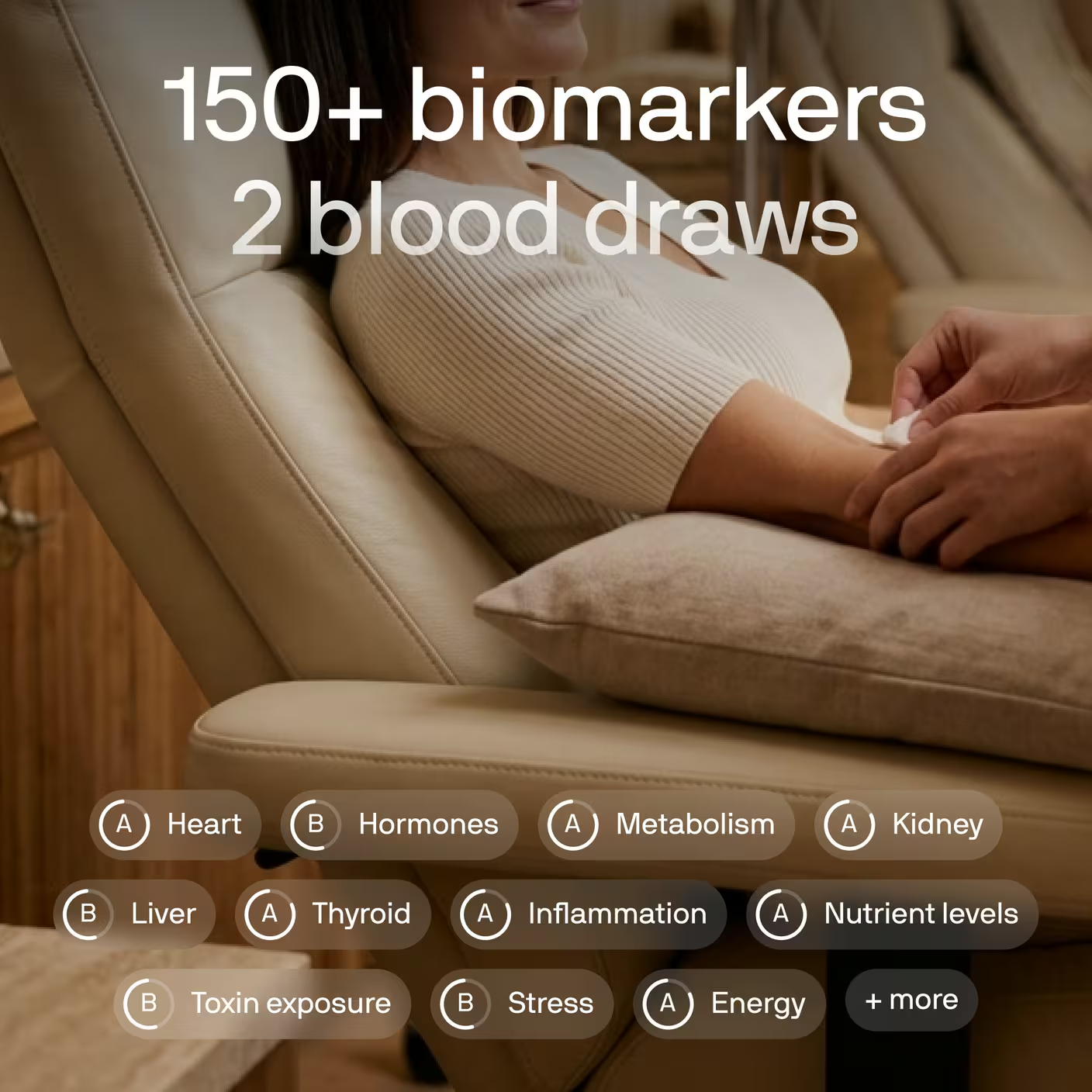
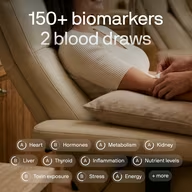
Test 150+ biomarkers
Two blood draws. A full picture of your health, explained in plain language.
Test 150+ biomarkers
Two blood draws. A full picture of your health, explained in plain language.
What a ferritin test measures and why it's ordered
A ferritin blood test measures your stored iron, and it is often among the first biomarkers to signal that reserves are running low. Ferritin falls before hemoglobin does, which is why the test catches iron depletion while a routine blood count still reads normal. Clinicians commonly order it to work up fatigue, unexplained hair shedding, or restless legs, to investigate heavy menstrual bleeding or suspected gut blood loss, and to check for iron overload when a result or family history raises that question. The test answers one focused question: are your iron reserves full, thinning, or overloaded?
How the ferritin test works and how to prepare
Ferritin is measured from a standard venous blood draw, the same tube used for the rest of an iron panel. A morning, fasted sample keeps conditions consistent from one test to the next, which matters most when you are tracking a trend. Two preparation points protect accuracy: hold high-dose biotin supplements beforehand, since biotin can interfere with some ferritin immunoassays, and avoid testing during an active infection or flare, because ferritin climbs with inflammation regardless of iron status. When either factor is unavoidable, pairing the draw with an hs-CRP result helps flag a reading that inflammation may have skewed.
Testing ferritin at home
Ferritin can be measured through an at-home finger-prick kit or a mobile phlebotomy draw, which makes tracking iron stores easier between clinic visits. A stored-iron number is most useful alongside context, so pair ferritin with hs-CRP and a full iron panel rather than reading it alone. Bring the results to a clinician who can weigh them against your symptoms, history, and any medications that shift the picture. At-home testing widens access to the number; interpretation still belongs in a clinical conversation.
When to retest your ferritin after iron repletion
Ferritin responds gradually to iron repletion or therapeutic phlebotomy, typically over several weeks to a few months. When managing deficiency with supplemental iron, stores take time to rebuild after hemoglobin normalizes; rechecking after the body has had enough time to respond gives a more meaningful picture than testing too soon. The same window applies when monitoring the effect of therapeutic phlebotomy in iron overload, where ferritin trends downward across successive draws.
Outside of an active repletion or phlebotomy period, annual retesting is a reasonable baseline for most adults. Those with ongoing risk factors (heavy menstrual bleeding, endurance training, a history of hemochromatosis, or chronic inflammatory conditions) may benefit from more frequent checks.
For consistency, use the same laboratory and the same morning, fasted protocol each time. Because ferritin is an acute-phase reactant, always pair the retest with an hs-CRP result. A ferritin that appears unchanged or higher after iron repletion may simply reflect a concurrent inflammatory episode rather than a true failure to respond, and hs-CRP helps you tell the difference.
Track your ferritin with a Superpower blood panel
Reading ferritin is like checking your savings account rather than today's paycheck. It shows whether you have reserves to meet the next training block, pregnancy, surgery, or season of stress. A result outside the reference range, or one that is trending in the wrong direction across repeated tests, is worth discussing with a clinician rather than acting on alone.
Specific patterns that warrant prompt evaluation include: ferritin persistently above the upper reference limit, especially when paired with elevated transferrin saturation (which raises the question of hereditary hemochromatosis); ferritin that remains low despite dietary changes, suggesting malabsorption from celiac disease, H. pylori, or another cause; and unexplained high ferritin with normal transferrin saturation, which calls for a closer look at inflammatory and metabolic drivers.
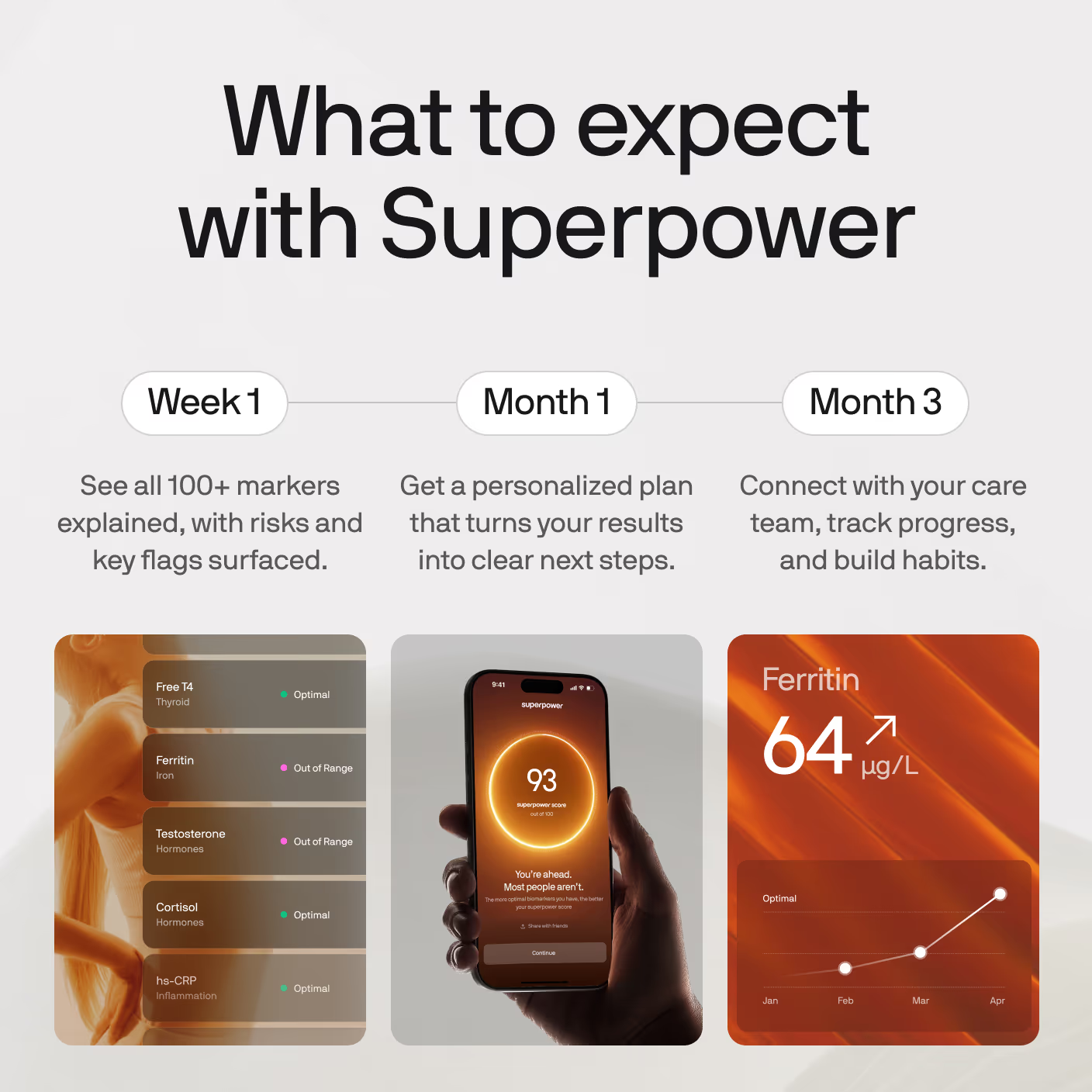
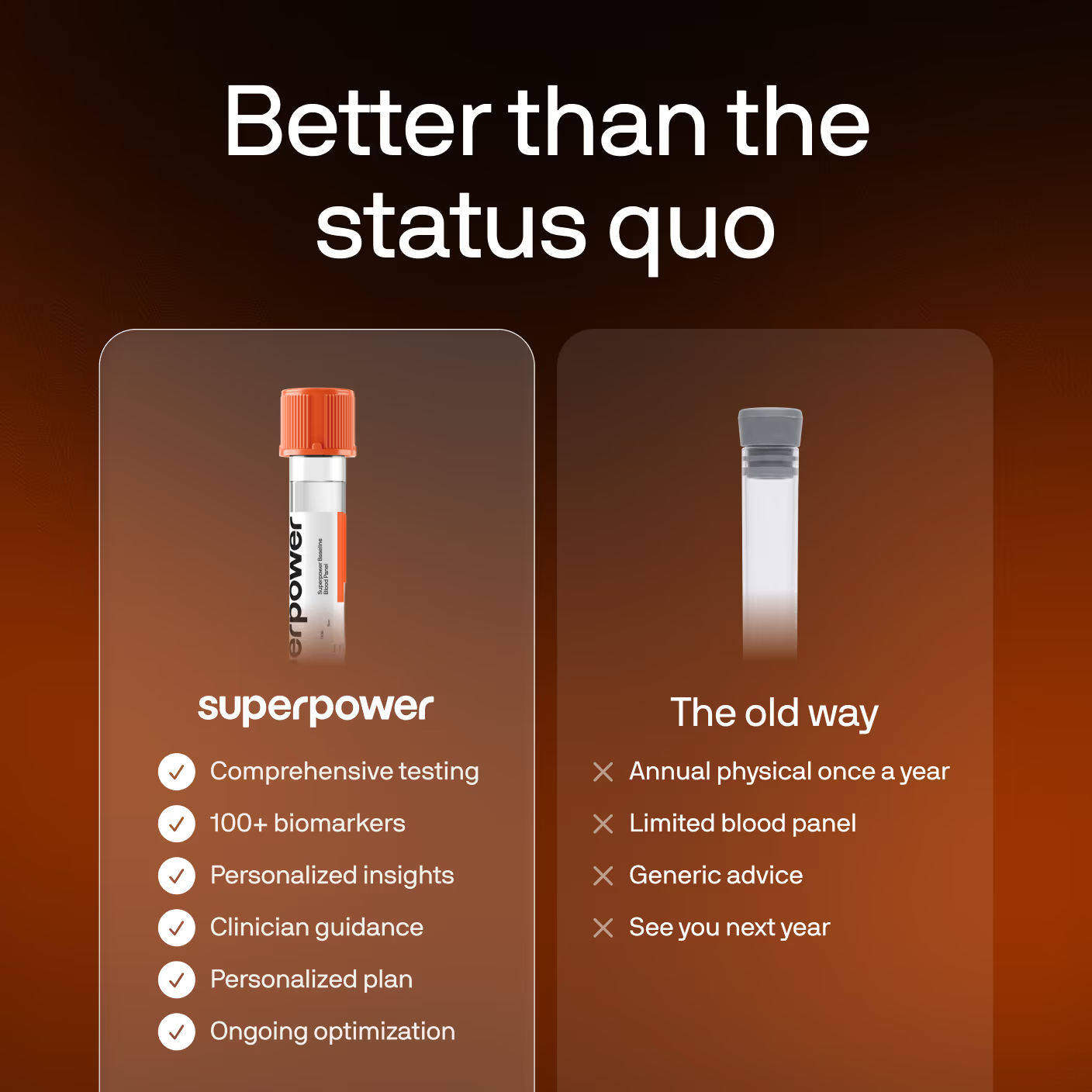
Early course correction beats late repair. A comprehensive biomarker panel puts ferritin in its rightful place, alongside inflammation markers, liver health, blood counts, and metabolism, turning a single number into a coherent pattern you can act on with your clinician. The Superpower Baseline Panel measures ferritin next to iron saturation, TIBC, total iron, and hs-CRP, as part of over 150 biomarkers read together. Book a panel with Superpower and turn one ferritin result into a trend you can follow.
Frequently Asked Questions
References
- Nemeth E, Ganz T (2021). Hepcidin-Ferroportin Interaction Controls Systemic Iron Homeostasis. *International journal of molecular sciences*, *22*(12), 6493. https://doi.org/10.3390/ijms22126493
- Tobiasch AK, Dünnwald T, Adami PE, Garrandes F, Bermon S, Brunelli L, Griesmacher A, Irsara C, Koeck A, Seifert M, Bösch J, Fries D, Schobersberger W, Weiss G (2026). Long-distance trail running induces functional iron deficiency driven by inflammation. *Blood advances*. https://doi.org/10.1182/bloodadvances.2025019105
- Goodrich JA, Frisco DJ, Kim S, VanBaak K, Holliday M, Rueda M, Poddar S, Byrnes WC (2022). Iron Status and Homeostasis Across 2 Competitive Seasons in NCAA Division I Collegiate Cross-Country Runners Residing at Low Altitude. *International journal of sports physiology and performance*, *17*(12), 1716-1724. https://doi.org/10.1123/ijspp.2021-0546
- Namaste SM, Rohner F, Huang J, Bhushan NL, Flores-Ayala R, Kupka R, Mei Z, Rawat R, Williams AM, Raiten DJ, Northrop-Clewes CA, Suchdev PS (2017). Adjusting ferritin concentrations for inflammation: Biomarkers Reflecting Inflammation and Nutritional Determinants of Anemia (BRINDA) project. *The American journal of clinical nutrition*, *106*(Suppl 1), 359S-371S. https://doi.org/10.3945/ajcn.116.141762
- Truong J, Naveed K, Beriault D, Lightfoot D, Fralick M, Sholzberg M (2024). The origin of ferritin reference intervals: a systematic review. *The Lancet. Haematology*, *11*(7), e530-e539. https://doi.org/10.1016/S2352-3026(24)00103-0
- World Health Organization (2020). *WHO guideline on use of ferritin concentrations to assess iron status in individuals and populations*. Geneva: World Health Organization.
- Galetti V, Stoffel NU, Sieber C, Zeder C, Moretti D, Zimmermann MB (2021). Threshold ferritin and hepcidin concentrations indicating early iron deficiency in young women based on upregulation of iron absorption. *EClinicalMedicine*, *39*, 101052. https://doi.org/10.1016/j.eclinm.2021.101052
- Cullis JO, Fitzsimons EJ, Griffiths WJ, Tsochatzis E, Thomas DW; British Society for Haematology (2018). Investigation and management of a raised serum ferritin. *British journal of haematology*, *181*(3), 331-340. https://doi.org/10.1111/bjh.15166
- Yu L, Que T, Zhou Y, Liu Z (2024). Dose-response relationship of serum ferritin and dietary iron intake with metabolic syndrome and non-alcoholic fatty liver disease incidence: a systematic review and meta-analysis. *Frontiers in nutrition*, *11*, 1437681. https://doi.org/10.3389/fnut.2024.1437681
- Benitez-Navarro J, Sanhueza-Andrade C, Figueroa C, Sepulveda JA, Sandoval-Borquez A, Pino-Reyes J (2026). PRISMA-based systematic review on iron stores in repeat blood donors. *Blood reviews*, 101411. https://doi.org/10.1016/j.blre.2026.101411
- Phan DM, Lam MY, Trang MN (2026). Iron therapy & restless legs syndrome: a narrative review. *Sleep & breathing*, *30*, 202. https://doi.org/10.1007/s11325-026-03738-4
- Zhang D, LaSenna C, Shields BE (2023). Serum Ferritin Levels: A Clinical Guide in Patients With Hair Loss. *Cutis*, *112*(2), 62-67. https://doi.org/10.12788/cutis.0837
- Piskin E, Cianciosi D, Gulec S, Tomas M, Capanoglu E (2022). Iron Absorption: Factors, Limitations, and Improvement Methods. *ACS omega*, *7*(24), 20441-20456. https://doi.org/10.1021/acsomega.2c01833
- Wu YT, Lu YT, Chu CY, Chao HJ, Kuo LN, Cheng KJ, Chen HY (2025). Is use of a long-term proton pump inhibitor or histamine-2 receptor antagonist a risk factor for iron-deficiency anaemia in Taiwan? A neglected clinical drug-drug interaction. *Family practice*, *42*(2), cmad090. https://doi.org/10.1093/fampra/cmad090
- Samarasinghe S, Meah F, Singh V, Basit A, Emanuele N, Emanuele MA, Mazhari A, Holmes EW (2017). Biotin interference with routine clinical immunoassays: understand the causes and mitigate the risks. *Endocrine practice*, *23*(8), 989-998. https://doi.org/10.4158/EP171761.RA
- National Institutes of Health, Office of Dietary Supplements (2025). *Iron: Fact Sheet for Health Professionals*. Bethesda, MD: National Institutes of Health. https://ods.od.nih.gov/factsheets/Iron-HealthProfessional/
- Ong SY, Gurrin LC, Dolling L, Dixon J, Nicoll AJ, Wolthuizen M, Wood EM, Anderson GJ, Ramm GA, Allen KJ, Olynyk JK, Crawford D, Ramm LE, Gow P, Durrant S, Powell LW, Delatycki MB (2017). Reduction of body iron in HFE-related haemochromatosis and moderate iron overload (Mi-Iron): a multicentre, participant-blinded, randomised controlled trial. *The Lancet. Haematology*, *4*(12), e607-e614. https://doi.org/10.1016/S2352-3026(17)30214-4
- Pengelly M, Pumpa K, Pyne DB, Etxebarria N (2025). Iron deficiency, supplementation, and sports performance in female athletes: A systematic review. *Journal of sport and health science*, *14*, 101009. https://doi.org/10.1016/j.jshs.2024.101009















 Heart & Vascular Health
 Metabolic Health
 Energy
 Liver Health
 Kidney
 Sex Hormones
 Thyroid Health
 Nutrients
 Immune System
 Inflammation