.svg)

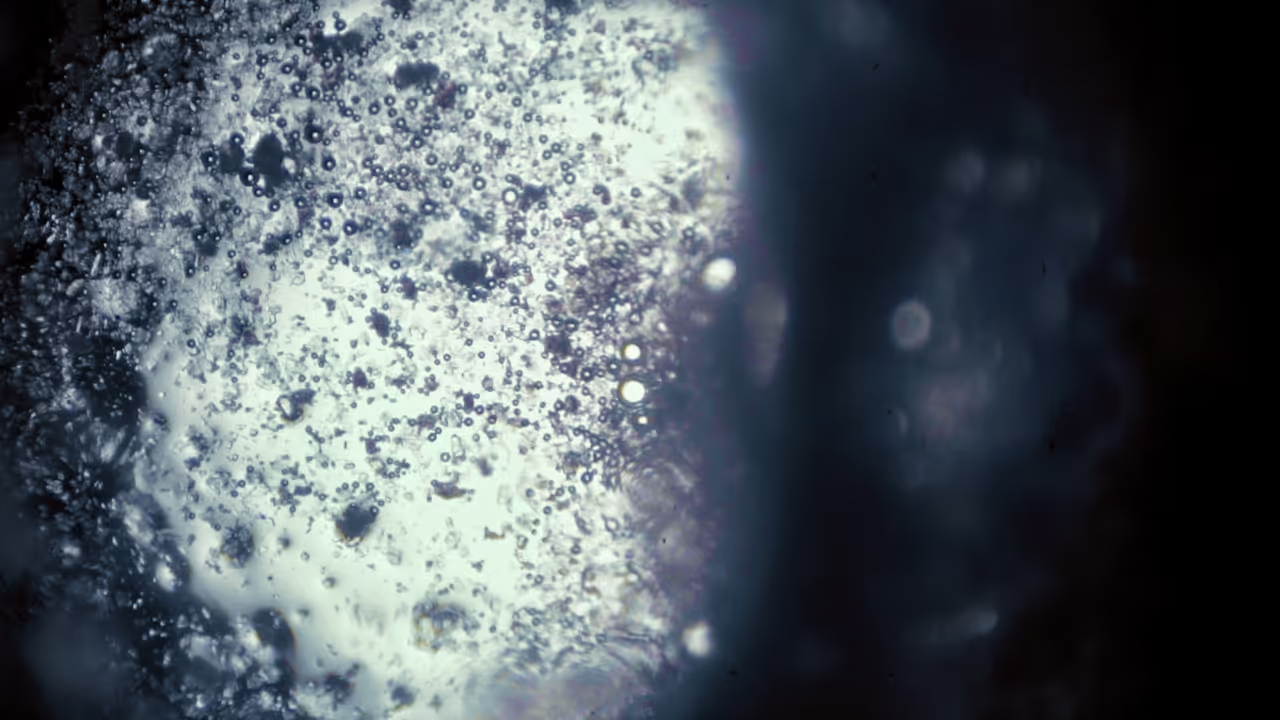



Cesium: An alkali metal that behaves like potassium
A cesium toxin test measures the amount of cesium in your body using a human sample—typically urine (spot or 24-hour collection) and sometimes whole blood. Most labs quantify total elemental cesium using inductively coupled plasma–mass spectrometry (ICP‑MS), a highly sensitive technology that detects trace levels with excellent precision. Results are reported in units like micrograms per liter and may be adjusted to urinary creatinine to account for hydration. In select situations, specialized testing with gamma spectrometry can identify radiocesium isotopes (such as Cs‑137), which is different from measuring total elemental cesium.
Why this matters: cesium behaves a lot like potassium, distributes throughout soft tissues, and is eliminated mainly via the kidneys. Measuring it provides objective data on exposure and how efficiently you’re clearing it. Results can reflect short‑term uptake (for example, from certain foods or regional contamination) and, when tracked, your longer‑term elimination. This context helps spot hidden risks before symptoms appear and informs discussions about detoxification capacity, cellular stress, and overall resilience—especially if you live, work, or source foods in areas where cesium exposure is more likely.
Why cesium levels are worth knowing
Zooming out, testing gives you a baseline, a way to detect early warning signs, and a metric to see whether changes—like avoiding a suspected source or adjusting diet—are moving the needle. The goal isn’t to “pass” or “fail.” It’s to understand where you stand, minimize ongoing exposure, and protect long‑term health. In research and public health monitoring, population data show that most people carry low background levels; when an individual result is higher than expected, a targeted, stepwise evaluation with a clinician is the safest, most effective path forward.
Who should consider a cesium test
Cesium is an alkali metal that can slip into biological pathways meant for potassium. In excess, it may nudge electrical signaling in nerves and the heart off rhythm, contribute to muscle weakness or cramps, and add to the body’s oxidative and inflammatory load. Radiocesium adds a second concern—internal radiation dose—when present, typically after specific environmental incidents. Testing is especially relevant if you’ve consumed wild mushrooms or game from regions with known fallout, have occupational exposure (nuclear, industrial radiography, certain mining or scrap settings), recently used unregulated cesium-containing supplements, or have unexplained symptoms that line up with electrolyte imbalance. It can also be useful during pregnancy planning and lactation because cesium crosses the placenta and enters breast milk, though absolute risk depends on dose and duration.
Reading a cesium result
Your report typically shows a numeric level compared with a reference range derived from healthy population datasets. For urine, you may see both a raw concentration and a creatinine‑corrected value, which helps normalize for how diluted or concentrated your sample is. “Normal” means common in the general population; “optimal” may refer to levels associated with lower long‑term risk in observational data. Context matters: a single mildly elevated value after a foraged‑food weekend can mean something different from a persistently high level on repeated tests.
Higher values may indicate recent intake (for example, certain wild mushrooms or game from affected regions), occupational contamination, or supplement use. With radiocesium concerns, a clinician may pair total cesium testing with targeted isotope analysis to quantify internal dose. Lower-than-expected values rarely signal a problem by themselves; interpretation focuses on elevations and trends. Abnormal results are not a diagnosis—they are data points that help prioritize exposure history, kidney function, electrolyte balance (especially potassium), and, when appropriate, confirmatory testing.
What can skew a cesium reading
When values fall in a lower, stable range, it suggests limited recent exposure and effective renal elimination—akin to a well‑tuned filter. In that setting, related systems like cardiac conduction, neuromuscular function, and oxidative balance are less likely to be stressed by cesium. Expect some day‑to‑day variability influenced by diet, hydration, exercise, and genetics.
What a cesium test can and can't tell you
The real power of this test is trend analysis. Repeating the measurement after removing likely sources shows how quickly levels fall—useful because biological half‑life varies across individuals. Interpreted alongside electrolytes, kidney markers, and symptoms, your results can map a clear, personalized path to reduce exposure and support recovery, without guesswork or unnecessary interventions.


FAQs
A cesium toxin test measures how much cesium is present in a person — either in biological samples (for example blood, urine, hair) or in the body directly using whole‑body counting — and can detect stable cesium or radioactive isotopes (such as cesium‑137). Results are reported as the amount or activity of cesium detected and are used to quantify an individual’s internal exposure.
These tests are intended to let a person understand their own cesium levels and exposure and nothing else; results are measurements of concentration or activity, not by themselves a medical diagnosis.
Samples are usually collected as a urine specimen (either a single “spot” sample or a 24‑hour collection) or a blood draw at a clinic; some providers also offer non‑invasive whole‑body gamma counting to directly detect radioactive cesium. If you receive a home kit you’ll get a sterile container and clear instructions on timing, storage (usually refrigerate) and how to return the sample; blood collection is done by a trained phlebotomist and whole‑body counts are performed by a technician during a short scan.
Follow the lab’s instructions exactly for labeling, storage and shipping to ensure accurate results. These tests are intended only to help you understand your personal cesium levels and are not a substitute for medical diagnosis or environmental monitoring.
A cesium toxin test measures the amount of cesium in a biological sample (blood, urine or tissue) and primarily tells whether you have been exposed and gives an estimate of your body burden. Results are reported as a concentration that a clinician compares with laboratory reference ranges; values within the reference range usually indicate low or background exposure, while values above the reference range indicate elevated exposure and a need for further evaluation. The clinical significance of an elevated result depends on whether the cesium is radioactive or non‑radioactive, the route and duration of exposure, and whether you have symptoms or other abnormal test results.
Tests have limits: a single result cannot reliably predict specific symptoms or long‑term outcomes and can be affected by timing, the sample type, and individual factors. Interpretation and follow‑up should be done by a healthcare or public‑health professional who can consider exposure history, recommend repeat or specialized testing (for example whole‑body counting for radioactive cesium), monitor related health markers, and advise on exposure removal and appropriate medical care.
Reliability depends on sample type, collection and storage, the timing of sampling relative to exposure, laboratory quality assurance, and whether confirmatory testing is used. Point‑of‑care or unvalidated assays are less dependable. For meaningful results, use an accredited lab, confirm unexpected findings with a second method or lab, and interpret concentrations in the context of exposure timing and clinical or environmental reference values.
If you have no known or suspected exposure to cesium, routine testing is generally unnecessary. If exposure is suspected (occupational, environmental incident, nearby contamination, or symptoms consistent with heavy-metal/toxin exposure), get a baseline test as soon as possible and follow your clinician’s guidance for repeat testing to monitor levels and response to any treatment—commonly this involves repeat measurements in the days to weeks after the initial test until levels decline.
For people with ongoing exposure risk (e.g., certain industrial jobs or living in a contaminated area), periodic surveillance testing is typically recommended and scheduled according to workplace safety rules or public‑health guidance (often monthly to quarterly or as required by regulators). Pregnant people, children, or anyone undergoing chelation or other treatment should follow more frequent, clinician‑directed monitoring. Always follow the advice of your healthcare provider or local health authorities for the exact timing.
Yes — the amount of cesium in the body can change relatively quickly. Cesium is water‑soluble and is not permanently fixed in bone, so levels respond to recent intake and excretion; ongoing exposure (food, water, inhalation) can raise body burden within days, while stopping exposure or beginning removal measures will begin to lower it over days to weeks and continue to decline over months.
Measured changes also depend on treatment and on testing factors: medical countermeasures (for example, Prussian blue) substantially speed elimination, and test results can vary with timing of the sample, hydration, and laboratory measurement variability. Because of this, clinicians interpret cesium test results as a snapshot and often track trends over time rather than relying on a single measurement.
References
- Brouwer, J., Asaggau, S., Wafa, M., Janssen, J. P. J., Hament, W. Y., Bazgarjar, H., Zwinkels, K. G., van Diest, R. A., & van der Heyden, M. A. G. (2026). Intoxication by self-administered cesium salts, the clinical impact of questionable research output. Cardiovascular Toxicology, 26(1), 10. https://doi.org/10.1007/s12012-025-10081-9
- Thompson, D. F., & Church, C. O. (2001). Prussian blue for treatment of radiocesium poisoning. Pharmacotherapy, 21(11), 1364-1367. https://doi.org/10.1592/phco.21.17.1364.34426
- Agency for Toxic Substances and Disease Registry. (2004). Toxicological profile for cesium. U.S. Department of Health and Human Services. https://www.atsdr.cdc.gov/toxprofiles/tp157.pdf
- Tchounwou, P. B., Yedjou, C. G., Patlolla, A. K., & Sutton, D. J. (2012). Heavy metal toxicity and the environment. Experientia Supplementum, 101, 133-164. https://doi.org/10.1007/978-3-7643-8340-4_6
- Barr, D. B., Wilder, L. C., Caudill, S. P., Gonzalez, A. J., Needham, L. L., & Pirkle, J. L. (2005). Urinary creatinine concentrations in the U.S. population: Implications for urinary biologic monitoring measurements. Environmental Health Perspectives, 113(2), 192-200. https://doi.org/10.1289/ehp.7337
- Jones, D. R., Jarrett, J. M., Tevis, D. S., Franklin, M., Mullinix, N. J., Wallon, K. L., Quarles, C. D., Jr., Caldwell, K. L., & Jones, R. L. (2017). Analysis of whole human blood for Pb, Cd, Hg, Se, and Mn by ICP-DRC-MS for biomonitoring and acute exposures. Talanta, 162, 114-122. https://doi.org/10.1016/j.talanta.2016.09.060


























.avif)
.svg)
.svg)


