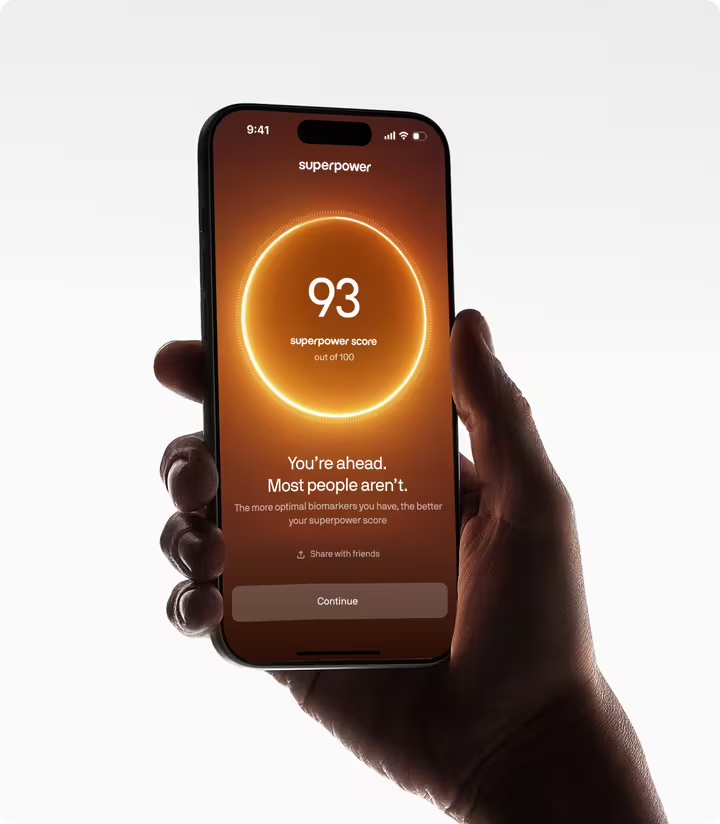

Understand what your longevity results really mean
See your biomarkers in context with a comprehensive panel.
- CLIA-certified labs
- HIPAA compliant
- Personalized health protocol
What a longevity blood panel actually measures
A longevity blood panel is not the same as a standard annual physical. Standard panels are designed to catch disease. Longevity panels are designed to catch risk before it becomes pathology. The distinction matters. A fasting glucose of 99 mg/dL is technically normal, but it signals insulin resistance years before a diabetes diagnosis. An ApoB of 100 mg/dL is above the threshold where cardiovascular risk accelerates, even if LDL cholesterol looks fine (ranking biomarkers of aging by citation profiling). A high-sensitivity C-reactive protein (hs-CRP) of 2.0 mg/L is within the normal range but reflects chronic low-grade inflammation that accelerates aging across multiple systems (Mayo Clinic on cholesterol and lipid panel testing).
The best blood tests for longevity focus on metabolic health, cardiovascular risk, systemic inflammation, and organ function. These markers reveal how efficiently your body handles energy, whether insulin resistance is developing, and how well your organs are functioning under metabolic stress:
- Metabolic markers include fasting glucose, hemoglobin A1c, fasting insulin, and the triglyceride-glucose index.
- Cardiovascular markers include ApoB, lipoprotein(a), and non-HDL cholesterol, which predict atherosclerotic risk more accurately than total cholesterol or LDL alone.
- Inflammatory markers include hs-CRP and erythrocyte sedimentation rate (ESR), as chronic inflammation drives nearly every age-related disease.
- Organ function markers include creatinine, estimated glomerular filtration rate (eGFR), alanine aminotransferase (ALT), and aspartate aminotransferase (AST), which reflect kidney and liver health.
- Nutrient status markers include vitamin D, vitamin B12, ferritin, and magnesium, as deficiencies impair cellular function and accelerate aging at the molecular level.
How longevity markers connect to the hallmarks of aging
The hallmarks of aging provide a framework for understanding why certain biomarkers matter. Deregulated nutrient sensing is reflected in fasting insulin, glucose, and HbA1c. When insulin signaling becomes dysregulated, mTOR stays chronically activated, autophagy is suppressed, and cellular cleanup stalls. This accelerates the accumulation of damaged proteins and organelles, feeding into loss of proteostasis and mitochondrial dysfunction. Chronic inflammation, measured by hs-CRP, drives cellular senescence and accelerates epigenetic aging. Senescent cells secrete pro-inflammatory cytokines that create a feedback loop, recruiting more immune cells and amplifying tissue damage.
Mitochondrial dysfunction is indirectly reflected in metabolic markers. When mitochondria lose efficiency, cells rely more on glycolysis, glucose handling deteriorates, and oxidative stress increases. This shows up as rising fasting glucose, insulin resistance, and elevated triglycerides. Genomic instability and telomere attrition are not directly measured in standard longevity biomarker tests, but they are influenced by the same inputs that drive metabolic and inflammatory markers. Oxidative stress, chronic inflammation, and poor nutrient status all accelerate DNA damage and telomere shortening.
Altered intercellular communication is reflected in inflammatory markers and hormonal panels. As aging progresses, signaling between cells becomes noisy. Immune cells become hyperactive or exhausted. Hormones like IGF-1, testosterone, and thyroid-stimulating hormone (TSH) shift out of optimal ranges. These changes compound across systems, which is why tracking multiple markers over time gives a more complete picture than any single test.
What drives biomarker trajectories over time
Metabolic inputs and nutrient sensing
Dietary patterns directly influence fasting insulin, glucose, and triglycerides. Chronic caloric excess, particularly from refined carbohydrates and added sugars, drives insulin resistance by overstimulating mTOR and suppressing AMPK. This shifts metabolism toward storage rather than repair. Protein intake modulates IGF-1 signaling, which is linked to both muscle maintenance and cancer risk. Time-restricted eating and periodic fasting activate autophagy and improve insulin sensitivity by giving cells time to clear damaged components and reset nutrient-sensing pathways.
Exercise and mitochondrial biogenesis
Aerobic exercise activates PGC-1alpha, a master regulator of mitochondrial biogenesis. This improves glucose uptake, reduces insulin resistance, and lowers fasting glucose and HbA1c. Resistance training activates mTOR in muscle tissue, promoting protein synthesis and preserving lean mass. This improves metabolic health by increasing glucose disposal capacity. High-intensity interval training (HIIT) induces transient metabolic stress that activates autophagy and improves mitochondrial efficiency. VO2 max, a measure of aerobic capacity, is one of the strongest predictors of all-cause mortality and is modifiable through training.
Sleep and circadian rhythm
Sleep deprivation accelerates epigenetic aging and impairs glucose metabolism. During deep sleep, growth hormone is secreted, which supports tissue repair and metabolic regulation. The glymphatic system clears metabolic waste from the brain, including amyloid-beta and tau proteins linked to neurodegeneration. Circadian rhythm disruption, from shift work or irregular sleep schedules, dysregulates cortisol and insulin signaling, raising fasting glucose and inflammatory markers.
Chronic stress and the HPA axis
Chronic activation of the hypothalamic-pituitary-adrenal (HPA) axis elevates cortisol, which is catabolic to muscle and bone, suppresses immune function, and accelerates telomere shortening. Elevated cortisol also drives visceral fat accumulation and insulin resistance. Stress-induced inflammation, mediated by cortisol and catecholamines, raises hs-CRP and other inflammatory markers. Chronic stress is one of the most underappreciated drivers of accelerated biological aging.
Environmental exposures
Air pollution increases systemic oxidative stress and inflammation, raising hs-CRP and accelerating cardiovascular disease. Heavy metals like lead and mercury impair mitochondrial function and increase oxidative damage. Endocrine-disrupting chemicals, found in plastics and personal care products, interfere with hormonal signaling and metabolic regulation. UV radiation accelerates DNA damage and epigenetic aging in skin and systemic tissues.
Why the same markers look different in different people
Individual variation in biomarkers stems from multiple factors that interact to create unique metabolic and aging profiles. Understanding these differences helps explain why optimal ranges and interventions must be personalized rather than universally applied.
Genetic architecture and polygenic risk
APOE genotype influences cardiovascular and Alzheimer's risk. APOE4 carriers have higher baseline LDL and ApoB and are more sensitive to dietary saturated fat. FOXO3 variants are associated with exceptional longevity and influence insulin signaling and stress resistance. Genetic variants in DNA repair pathways affect how quickly genomic instability accumulates. Telomere length is partially heritable, but rate of attrition is modifiable through lifestyle.
Epigenetic baseline and pace of aging
Biological age, as measured by epigenetic clocks like GrimAge and DunedinPACE, can diverge significantly from chronological age. Two people of the same age can have biological ages that differ by a decade or more. Lifestyle interventions, including diet, exercise, and stress management, can slow or even reverse epigenetic aging. The pace of aging is not fixed. It is a dynamic process that responds to inputs.
Metabolic phenotype and insulin sensitivity
Baseline insulin sensitivity varies widely. Some people maintain excellent glucose control despite high carbohydrate intake. Others develop insulin resistance on the same diet. Mitochondrial efficiency, influenced by genetics and prior metabolic history, affects how well cells handle glucose and fatty acids. Substrate utilization, the balance between burning carbohydrates and fats, varies by individual and influences metabolic markers.
Hormonal milieu and life stage
Menopause accelerates bone loss, increases visceral fat, and raises cardiovascular risk. Estradiol decline shifts lipid profiles and increases inflammatory markers. Andropause, the gradual decline in testosterone in men, reduces lean mass, increases fat mass, and impairs insulin sensitivity. Thyroid function declines with age, slowing metabolism and affecting energy regulation. Growth hormone and IGF-1 decline with age, reducing tissue repair capacity but also lowering cancer risk.
Allostatic load and cumulative stress
Early life adversity, chronic stress, and environmental toxin exposure accumulate as allostatic load, the cumulative burden of stress on the body. This accelerates biological aging and shifts biomarker trajectories. Infection history, including chronic viral infections like Epstein-Barr virus and cytomegalovirus, contributes to immune aging and inflammaging. Prior metabolic insults, such as periods of obesity or insulin resistance, leave epigenetic scars that persist even after weight loss.
What the evidence actually shows about longevity testing
The evidence for longevity biomarkers is strongest for metabolic and cardiovascular markers. Fasting insulin and HOMA-IR (homeostatic model assessment of insulin resistance) predict type 2 diabetes and cardiovascular disease years before clinical diagnosis. ApoB is a superior predictor of cardiovascular events compared to LDL cholesterol, with robust data from large cohort studies. Lipoprotein(a) is a genetically determined risk factor for atherosclerosis, and elevated levels predict heart attack and stroke independent of other lipid markers. hs-CRP predicts cardiovascular events and all-cause mortality in multiple large cohorts.
Epigenetic clocks show strong correlations with disease risk and mortality, but their causal role remains unclear:
- GrimAge predicts time to death and healthspan better than chronological age.
- DunedinPACE measures the pace of aging, not just biological age, and is sensitive to lifestyle interventions.
- Whether interventions that move clock scores actually extend lifespan in humans is unproven, as the clocks are correlational rather than causal.
- Telomere length is a noisy biomarker with high individual variability and is not a reliable standalone marker for biological age.
VO2 max, a measure of aerobic capacity, is one of the strongest predictors of all-cause mortality. It is modifiable through training and declines predictably with age. Muscle mass, measured by DEXA or bioimpedance, predicts metabolic resilience, physical function, and longevity. Sarcopenia, the loss of muscle mass with age, is a major driver of frailty and mortality.
Nutrient status markers, including vitamin D, B12, and magnesium, are linked to immune function, bone health, and metabolic regulation. Deficiencies are common and correctable. However, supplementation beyond deficiency does not consistently improve longevity outcomes. The evidence for NAD+ precursors, senolytics, and other longevity supplements is promising in animal models but limited in human trials. Most human data is short-term and focused on surrogate markers, not lifespan or healthspan outcomes.
Test 100+ biomarkers from home
One blood draw. A full picture of your health, explained in plain language.
Test 100+ biomarkers from home
One blood draw. A full picture of your health, explained in plain language.
Building a longevity blood panel that evolves with you
A longevity blood panel should be personalized to your baseline health, risk factors, and life stage. The markers you prioritize and the frequency of testing should shift as you age and as your metabolic and cardiovascular risk profile changes.
In your 20s and 30s, the focus is on establishing a baseline and catching early metabolic dysfunction:
- Core markers include fasting glucose, insulin, HbA1c, lipid panel with ApoB, hs-CRP, liver enzymes, kidney function, and complete blood count.
- Nutrient status markers like vitamin D, B12, and ferritin are useful if you have dietary restrictions or symptoms of deficiency.
- Hormonal panels, including thyroid function and sex hormones, are useful if you have symptoms or family history of hormonal disorders.
In your 40s and 50s, the focus shifts to tracking metabolic and cardiovascular risk as aging accelerates:
- Add lipoprotein(a), homocysteine, and advanced lipid testing with particle number and size.
- Track fasting insulin and HOMA-IR more closely, as insulin resistance often emerges in this decade.
- Monitor liver enzymes and kidney function, as metabolic stress accumulates.
- Consider adding IGF-1 and DHEA-S to track hormonal aging.
- For women approaching menopause, track estradiol, FSH, and bone turnover markers.
- For men, track testosterone and PSA.
In your 60s and beyond, the focus is on preserving function and catching disease early:
- Continue tracking metabolic and cardiovascular markers.
- Add markers of inflammation and immune aging, including ESR and lymphocyte subsets.
- Monitor kidney function closely, as eGFR declines with age.
- Track muscle mass with DEXA and grip strength as functional markers of aging.
- Consider adding epigenetic clock testing to measure biological age and pace of aging.
Frequency of testing depends on baseline health and active interventions. If you are metabolically healthy and not making major changes, annual testing is sufficient. If you are actively modifying diet, exercise, or supplements, test every three to six months to track response.
Turning data into a trajectory you can track
A single test is a snapshot. A series of tests over time is a trajectory. Directionality matters more than any single value. Is your fasting insulin rising or falling? Is your hs-CRP stable or climbing? Is your eGFR declining faster than expected for your age? Rate of change reveals whether your interventions are working and whether your biological age is diverging from or converging with your chronological age.
Optimal ranges differ from clinical ranges. A fasting glucose of 85 mg/dL is better than 99 mg/dL, even though both are normal. A fasting insulin below 5 µIU/mL is optimal; above 10 signals insulin resistance. An ApoB below 80 mg/dL is associated with minimal cardiovascular risk; above 100 accelerates atherosclerosis. An hs-CRP below 1.0 mg/L is optimal; above 3.0 reflects chronic inflammation. Tracking toward optimal ranges, not just staying within normal ranges, is the goal of longevity-focused testing.
Context matters. A single elevated marker may be noise. A pattern of related markers moving in the same direction is signal. Rising fasting glucose, insulin, triglycerides, and ALT together suggest metabolic dysfunction. Rising ApoB, lipoprotein(a), and hs-CRP together suggest accelerating cardiovascular risk. Tracking multiple markers in context gives a more complete picture than any single test.
How Superpower helps you build and track your longevity panel
If you want to track how your metabolic, cardiovascular, and inflammatory health is evolving over time, Superpower's 100+ biomarker panel covers fasting insulin, ApoB, lipoprotein(a), hs-CRP, homocysteine, and more. These are the markers that predict long-term health outcomes but are often missing from standard annual bloodwork. Superpower tracks your results over time, flags trends, and helps you interpret changes in the context of optimal ranges, not just clinical cutoffs. Longevity is not about a single test. It is about building a baseline, tracking your trajectory, and adjusting your inputs based on what the data shows.
Frequently Asked Questions
References
- National Institute on Aging. (n.d.). *In search of better biomarkers of aging*. https://nia.nih.gov/research/blog/2021/11/search-better-biomarkers-aging
- Harvard Health Publishing. (2025). *New thinking on important blood tests - Harvard Health*. https://health.harvard.edu/healthy-aging-and-longevity/new-thinking-on-important-blood-tests
- Murata S, Ebeling M, Meyer AC, Schmidt-Mende K, Hammar N, Modig K (2024). Blood biomarker profiles and exceptional longevity: comparison of centenarians and non-centenarians in a 35-year follow-up of the Swedish AMORIS cohort. *GeroScience*, *46*(2), 1693-1702. https://doi.org/10.1007/s11357-023-00936-w
- Hartmann A, Hartmann C, Secci R, Hermann A, Fuellen G, Walter M (2021). Ranking Biomarkers of Aging by Citation Profiling and Effort Scoring. *Frontiers in genetics*, *12*, 686320. https://doi.org/10.3389/fgene.2021.686320
- Mayo Clinic. (n.d.). *About*. https://mayoclinic.org/tests-procedures/cholesterol-test/about/pac-20384601