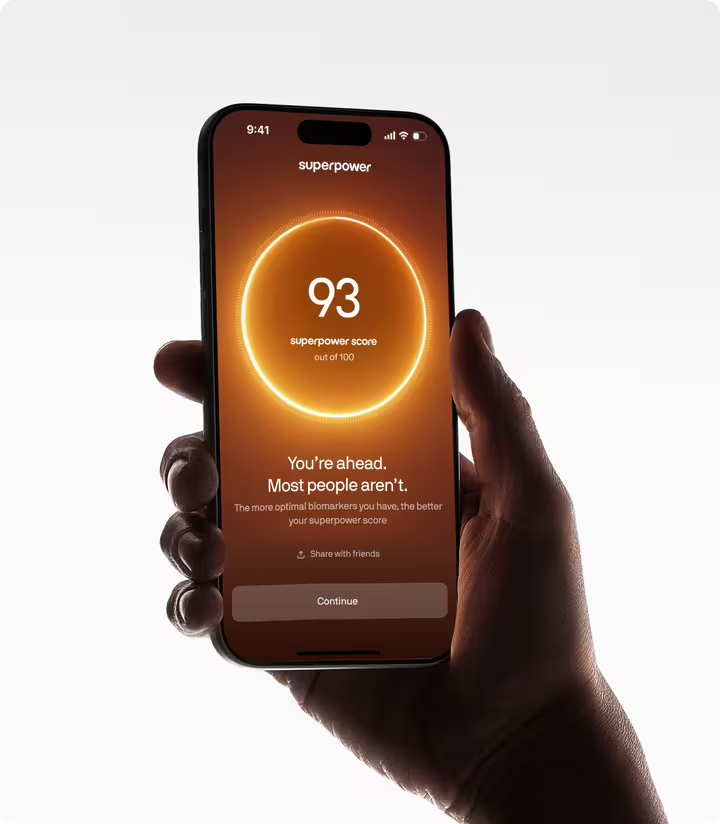

Understand what your longevity results really mean
See your biomarkers in context with a comprehensive panel.
- CLIA-certified labs
- HIPAA compliant
- Personalized health protocol
What healthspan actually measures at a biological level
Healthspan refers to the number of years you live free from chronic disease and functional decline. It's distinct from lifespan, which counts total years lived regardless of health status. The gap between the two is where most people spend their final decade: alive, but managing multiple conditions that limit independence and quality of life.
At a cellular level, healthspan reflects how well your body maintains the processes that resist the hallmarks of aging (increasing healthspan: prosper and live long). These include:
- Genomic stability, which protects DNA from damage accumulation.
- Mitochondrial function, which determines cellular energy production efficiency.
- Proteostasis, the ability to maintain properly folded proteins.
- Clearance of senescent cells, which prevents inflammatory signaling from damaged cells.
When these systems remain intact, tissues function efficiently. When they degrade, chronic disease risk rises and functional capacity declines.
How healthspan connects to the hallmarks of aging
The hallmarks of aging, as defined by Lopez-Otin and colleagues, provide a framework for understanding what drives biological aging at a molecular level. Healthspan improvement targets several of these hallmarks simultaneously. Exercise, for example, activates mitochondrial biogenesis through PGC-1alpha signaling, which counters mitochondrial dysfunction. It also stimulates autophagy, the cellular recycling process that clears damaged proteins and organelles, addressing loss of proteostasis. Resistance training preserves muscle mass, which mitigates stem cell exhaustion in skeletal muscle and maintains metabolic flexibility (CDC physical activity guidelines for adults).
Nutrition influences deregulated nutrient sensing, one of the primary hallmarks. Caloric restriction and protein modulation affect mTOR and AMPK pathways, which regulate cellular growth, stress resistance, and longevity across species. Sleep impacts multiple hallmarks by driving glymphatic clearance of metabolic waste, supporting DNA repair during deep sleep, and maintaining circadian rhythm alignment, which regulates nearly every physiological process. Chronic stress and social isolation drive inflammaging, the low-grade systemic inflammation that accelerates cellular senescence and compounds other aging pathways.
The five core pillars that drive healthspan extension
Exercise and cardiorespiratory fitness
VO2 max, the maximum rate at which your body can use oxygen during exercise, is one of the strongest independent predictors of all-cause mortality. Higher VO2 max is associated with lower risk of cardiovascular disease, metabolic dysfunction, and premature death. The mechanism is straightforward: aerobic exercise stimulates mitochondrial biogenesis, increasing the number and efficiency of mitochondria in muscle and other tissues. This improves energy production, reduces oxidative stress, and enhances metabolic flexibility. Endurance training also increases capillary density, improving oxygen delivery to tissues.
Resistance training preserves muscle mass, which declines by approximately 3 to 8 percent per decade after age 30 without intervention. Muscle is metabolically active tissue that regulates glucose disposal, supports insulin sensitivity, and maintains basal metabolic rate. Loss of muscle mass is directly linked to increased risk of type 2 diabetes, frailty, and loss of independence. Strength training activates mTOR signaling in muscle, driving protein synthesis and maintaining muscle protein balance. It also improves bone density, reducing fracture risk.
Nutrition and metabolic signaling
Caloric restriction extends lifespan in most model organisms, from yeast to primates. The mechanism involves activation of AMPK and inhibition of mTOR, pathways that regulate cellular stress resistance, autophagy, and metabolic efficiency. In humans, the CALERIE trial demonstrated that moderate caloric restriction improves markers of metabolic health, including fasting insulin, inflammatory markers, and oxidative stress.
Protein intake influences aging through the mTOR pathway. High protein intake, particularly from animal sources, activates mTOR and IGF-1 signaling, which promote growth but may accelerate aging when chronically elevated. Moderate protein restriction in midlife has been associated with improved metabolic health in observational studies, though adequate protein intake remains essential in older adults to prevent sarcopenia. Dietary patterns that emphasize whole foods, fiber, and polyphenols support gut microbiome diversity, which influences systemic inflammation and metabolic health.
Sleep and glymphatic clearance
Sleep drives the glymphatic system, a waste clearance pathway in the brain that removes metabolic byproducts, including amyloid-beta and tau (proteins implicated in Alzheimer's disease). Glymphatic flow increases during deep NREM sleep, when cerebrospinal fluid flushes through brain tissue, clearing accumulated waste. Chronic sleep deprivation impairs this process, leading to accumulation of neurotoxic proteins and increased risk of neurodegenerative disease.
Sleep also regulates circadian rhythms, which control nearly every physiological process, from hormone secretion to immune function. Disrupted circadian rhythms are associated with accelerated epigenetic aging, metabolic dysfunction, and increased cancer risk. Growth hormone, which supports tissue repair and muscle maintenance, is secreted primarily during deep sleep. Inadequate sleep reduces growth hormone secretion, impairs glucose metabolism, and increases cortisol, a catabolic hormone that breaks down muscle and bone.
Stress management and HPA axis regulation
Chronic stress activates the hypothalamic-pituitary-adrenal (HPA) axis, leading to sustained elevation of cortisol. Cortisol is catabolic, breaking down muscle and bone, suppressing immune function, and promoting visceral fat accumulation. Chronic cortisol elevation is associated with accelerated telomere shortening (a marker of cellular aging) and increased risk of cardiovascular disease, metabolic syndrome, and cognitive decline.
Stress management interventions, including mindfulness meditation, yoga, and cognitive behavioral therapy, reduce cortisol levels and improve markers of biological aging. Meditation has been shown to increase telomerase activity (the enzyme that maintains telomere length) and reduce inflammatory markers. The mechanism involves downregulation of the sympathetic nervous system and activation of the parasympathetic nervous system, which promotes rest, repair, and immune function.
Social connection and systemic inflammation
Social isolation and loneliness are independent risk factors for premature mortality, comparable in magnitude to smoking and obesity. The mechanism involves chronic activation of the inflammatory response. Socially isolated individuals have higher levels of inflammatory markers, including C-reactive protein and interleukin-6, which drive cellular senescence and accelerate aging. Social connection, by contrast, modulates the immune system, reducing systemic inflammation and improving stress resilience.
Longitudinal studies show that individuals with strong social networks have lower rates of cardiovascular disease, cognitive decline, and all-cause mortality. The effect is dose-dependent: more frequent social interaction is associated with greater health benefits. Social connection also influences health behaviors, including exercise, diet, and adherence to medical recommendations, creating a compounding effect on healthspan.
Why the same interventions produce different outcomes
Genetics account for approximately 20 to 30 percent of lifespan variability, with the remainder determined by environmental and behavioral factors. Specific genetic variants influence how individuals respond to interventions:
- APOE4 carriers have higher risk of Alzheimer's disease and may benefit more from interventions that support brain health, including aerobic exercise and sleep improvement.
- FOXO3 variants are associated with exceptional longevity and enhanced stress resistance.
Epigenetic age, as measured by DNA methylation clocks like GrimAge and DunedinPACE, reflects the cumulative impact of lifestyle and environment on biological aging. Two individuals of the same chronological age can have significantly different biological ages, and this gap predicts disease risk and mortality. Interventions that improve epigenetic age include exercise, caloric restriction, and stress reduction, though individual responses vary based on baseline health, adherence, and genetic background.
Metabolic phenotype also influences outcomes. Individuals with insulin resistance respond differently to dietary interventions than those with normal insulin sensitivity. Gut microbiome composition affects nutrient absorption, immune function, and systemic inflammation, with centenarians showing distinct microbiome profiles characterized by higher diversity and greater abundance of butyrate-producing bacteria. Hormonal status, including sex hormones, thyroid function, and cortisol levels, modulates aging rate and resilience.

Test 150+ biomarkers
Two blood draws. A full picture of your health, explained in plain language.
Test 150+ biomarkers
Two blood draws. A full picture of your health, explained in plain language.
What the research actually supports
The evidence for exercise and healthspan is robust. Observational studies consistently show that higher VO2 max and greater muscle mass are associated with lower all-cause mortality. Randomized controlled trials demonstrate that exercise improves metabolic markers, cardiovascular function, and cognitive performance. The dose-response relationship is clear: more exercise, up to a point, produces greater benefits.
Caloric restriction extends lifespan in most model organisms, but human data are limited. The CALERIE trial showed metabolic benefits from moderate caloric restriction, but whether this translates to extended lifespan remains unknown. Protein restriction shows promise in animal models, but human trials are sparse, and the optimal protein intake likely varies by age, with higher intake needed in older adults to prevent sarcopenia.
Sleep duration and quality are consistently associated with health outcomes in observational studies, but causal evidence is harder to establish. Experimental sleep deprivation impairs glucose metabolism, increases inflammation, and accelerates epigenetic aging, supporting a causal role. The glymphatic system is well-characterized in animal models, but direct evidence in humans is emerging.
Stress reduction interventions improve biomarkers of aging, including telomere length and inflammatory markers, in randomized trials. Social connection is strongly associated with longevity in observational studies, but the causal pathways are complex and likely bidirectional. The evidence is strongest for interventions that combine multiple pillars, as the effects are additive and sometimes synergistic.
Measuring what matters for your healthspan trajectory
Tracking biomarkers over time provides a real signal on how interventions are affecting your biological aging rate. Single measurements are snapshots; serial measurements reveal trajectory. That shift is measurable: 36.3% of Superpower members reduced their biological age score between their first to second blood draw.
Key markers for healthspan include:
- Metabolic health indicators like fasting insulin, HbA1c, and ApoB, which predict cardiovascular and metabolic disease risk decades before symptoms appear.
- Inflammatory markers, including hsCRP, which reflect systemic inflammation and correlate with accelerated aging.
- Hormonal markers, including IGF-1, DHEA-S, and cortisol, which provide insight into stress response and anabolic-catabolic balance.
- Nutrient status, including vitamin D, magnesium, which influence mitochondrial function, immune health, and inflammation.
- Body composition, measured by DEXA scan, which quantifies lean mass and visceral fat (both strong predictors of metabolic health and longevity).
- Functional markers like VO2 max and grip strength, which are among the most predictive of long-term outcomes.
The value of longitudinal tracking is that it reveals whether your interventions are moving markers in the right direction. A single elevated fasting insulin measurement is less informative than a trend showing insulin rising or falling over six months. Directionality and rate of change matter more than any single data point.
Building a healthspan strategy with the right data
If you want to know whether your current approach is actually extending your healthspan or just maintaining the status quo, Superpower's 150+ biomarker panel gives you the metabolic, inflammatory, and hormonal markers that predict how well you're aging at a biological level. Standard annual bloodwork misses most of the signals that matter for long-term resilience. Tracking fasting insulin, ApoB, hsCRP, and body composition over time shows you whether the interventions you're investing in are producing measurable change. Healthspan improvement isn't about following generic protocols. It's about building a data-driven baseline, testing interventions, and adjusting based on what your biology is actually doing.
Frequently Asked Questions
References
- Harvard Health Publishing. (2022). *Stay active as you age to extend your health span - Harvard Health*. https://health.harvard.edu/heart-health/stay-active-as-you-age-to-extend-your-health-span
- Wickramasinghe K, Mathers JC, Wopereis S, Marsman DS, Griffiths JC (2020). From lifespan to healthspan: the role of nutrition in healthy ageing. *Journal of nutritional science*, *9*, e33. https://doi.org/10.1017/jns.2020.26
- Ravyts SG, Dzierzewski JM (2024). Sleep and Healthy Aging: A Systematic Review and Path Forward. *Clinical gerontologist*, *47*(3), 367-379. https://doi.org/10.1080/07317115.2022.2064789
- (2015). Increasing Healthspan: Prosper and Live Long. *EBioMedicine*, *2*(11), 1559. https://doi.org/10.1016/j.ebiom.2015.11.015
- Centers for Disease Control and Prevention. (n.d.). *Adult Activity: An Overview*. https://cdc.gov/physical-activity-basics/guidelines/adults.html