

Excellent 4.6 out of 5
Cardiovascular and Vascular Diseases

Peripheral Artery Disease Biomarker Testing

Peripheral artery disease stems from atherosclerosis and vascular inflammation. Biomarkers quantify lipoprotein burden and inflammatory tone, revealing arterial injury risk early. At Superpower, we measure LDL, ApoB, Lp(a), hs-CRP, and AIP to map atherogenic risk and vascular stress, clarifying disease trajectory before symptoms.

With Superpower, you have access to a comprehensive range of biomarker tests.

Test for Peripheral Artery Disease
Cancel anytime
HSA/FSA eligible
Results in a week
Physician reviewed

Every result is checked

·
CLIA-certified labs

Federal standard for testing

·
HIPAA compliant

Your data is 100% secure

Key Benefits

'- Spot artery-clogging risk driving PAD by measuring harmful lipids and inflammation.

  • Quantify atherogenic particles with ApoB and clarify LDL-related plaque risk precisely.
  • Uncover inherited risk with Lp(a), a strong, lifelong driver of PAD.
  • Flag vascular inflammation using hs-CRP to expose residual atherosclerotic risk.
  • Reveal atherogenic dyslipidemia through AIP, reflecting high triglycerides and low HDL.
  • Guide treatment intensity to lower LDL/ApoB targets and reduce limb and heart events.
  • Track response over time, confirming lifestyle and medications are meaningfully reducing risk.
  • Best interpreted with an ankle-brachial index and your leg symptoms for diagnosis.

What are Peripheral Artery Disease Biomarkers?

Peripheral artery disease biomarkers are measurable signals in your blood that reflect how healthy your limb arteries are and how active the plaque-building process is. They turn silent artery injury into a readout—showing whether the vessel lining is stressed, inflamed, or clot‑prone, and whether plaque is biologically “hot.” Together, these markers link leg symptoms to whole‑body artery health. Key biology they capture includes inflammation (C‑reactive protein, interleukin‑6), cholesterol‑driven plaque formation (apolipoprotein B, LDL particles, lipoprotein[a]), blood‑clot tendency (fibrinogen, D‑dimer), and endothelial stress/activation (VCAM‑1, ICAM‑1). Signals of oxidative damage in plaque (oxidized LDL) also contribute. Testing helps detect PAD earlier than symptoms, estimate disease burden, and forecast complications such as heart attack, stroke, or limb events. It also helps personalize care by identifying people who may benefit most from intensive risk‑lowering and by tracking whether treatment is damping down vascular inflammation and clotting activity.

Why are Peripheral Artery Disease biomarkers important?

Peripheral Artery Disease (PAD) biomarkers are blood-based signals of plaque burden, lipoprotein particle load, and vascular inflammation. They help translate what is happening in leg arteries into whole‑body risk for heart attack, stroke, and wound healing—because the same biology drives disease across the arterial tree.

For LDL cholesterol, optimal is under 100, 100–129 near‑optimal, 130–159 borderline high, and 160 or more high. ApoB is best under 80–90, with 100 or more indicating many atherogenic particles. Lp(a) is most favorable below 50. hs‑CRP reflects arterial wall inflammation: under 1 is low risk, 1–3 intermediate, over 3 high. AIP (log[TG/HDL]) under 0.11 is low risk, 0.11–0.21 intermediate, over 0.21 high. When these are elevated, plaque grows and hardens, microthrombi form more readily, and the endothelium stiffens—translating into calf pain with walking, shorter walking distance, cold feet, non‑healing sores, and higher risks of critical limb ischemia, heart attack, and stroke. Men may notice erectile dysfunction; women may report leg fatigue more than focal calf pain.

When these values sit low, they reflect fewer atherogenic particles, quieter immune signaling, and more stable plaques; PAD symptoms are less likely or milder. Very low LDL/ApoB rarely causes symptoms outside of uncommon genetic disorders. Lp(a) is largely fixed from childhood; women’s risk rises after menopause; pregnancy raises lipids and hs‑CRP physiologically.

Big picture: this biomarker set maps the interplay of lipids, inflammation, and thrombosis that determines arterial health. Tracked alongside ankle–brachial index and imaging, they clarify trajectory, link to kidney and brain vascular health, and forecast long‑term limb and cardiovascular outcomes.

What Insights Will I Get?

Peripheral artery disease (PAD) reflects systemic atherosclerosis that restricts blood flow to muscles and skin. Biomarkers reveal the drivers of plaque formation, inflammation, and thrombosis—signals that predict oxygen delivery, exercise capacity, wound repair, and overall cardiovascular risk. At Superpower, we test LDL, ApoB, Lp(a), hs-CRP, and AIP.

LDL carries cholesterol and correlates with plaque. ApoB tallies all artery-entering atherogenic particles. Lp(a) is a genetically set LDL-like particle that fosters calcification and clotting. hs-CRP tracks vascular inflammation. AIP, from the triglyceride-to-HDL ratio, indicates small, dense LDL and endothelial stress. Higher ApoB, Lp(a), hs-CRP, and AIP relate to greater PAD burden.

For stability, lower ApoB and LDL mean fewer particles depositing cholesterol and less plaque growth. Lower Lp(a) signals lower thrombosis tendency and slower calcification. Lower hs-CRP suggests quieter arterial inflammation and more stable plaques. A favorable AIP reflects larger, buoyant lipoproteins and healthier endothelium. Together, these patterns indicate arteries more likely to maintain flow and oxygen delivery in the limbs.

Notes: Acute infection, injury, or hard exercise can transiently raise hs-CRP. Fasting notably affects triglycerides (and thus AIP) more than LDL or ApoB. Lp(a) is largely genetic, changes little over time, and may rise with kidney disease. Age, pregnancy, autoimmune conditions, medications, and lab methods can shift results.

Superpower also tests for

See more diseases

Frequently Asked Questions About Peripheral Artery Disease

What is Peripheral Artery Disease biomarker testing?

PAD biomarker testing is a blood-based look at the biology that drives plaque in limb arteries—lipoprotein burden and vascular inflammation. It does not diagnose PAD (that needs an ankle–brachial index or imaging); it quantifies risk. Superpower measures LDL and ApoB (atherogenic particle load), Lp(a) (inherited atherogenic lipoprotein), hs-CRP (vascular inflammation), and AIP (triglycerides/HDL-C, a proxy for small, dense LDL).

Why should I get Peripheral Artery Disease biomarker testing?

PAD is a manifestation of systemic atherosclerosis. These markers reveal the particle and inflammation pressures that cause limb ischemia and cardiovascular events. Superpower’s LDL, ApoB, Lp(a), hs-CRP, and AIP sharpen risk assessment beyond a basic lipid panel, help catch silent disease, and create a baseline to track change.

How often should I test?

Annually if stable. If results are elevated or therapy is starting or changing, every 3–6 months until stable, then yearly. If hs-CRP is unexpectedly high and you feel well, repeat in about two weeks to confirm a persistent signal rather than a transient spike.

Peripheral artery disease is about reduced blood flow to the legs from artery narrowing. Blood biomarkers don’t diagnose PAD by themselves, but they track the biology behind it—lipids, inflammation, and clotting (LDL-C, Lp(a), hs-CRP, fibrinogen). There’s no single schedule that fits everyone. For signal over noise, testing twice a year captures meaningful change in vascular biology. At Superpower, we take a blood draw every 6 months to trend these markers consistently.

What can affect biomarker levels?

Genetics drives Lp(a). Insulin resistance shifts lipids (higher triglycerides, lower HDL) and raises AIP. Acute infection, injury, or flare-ups raise hs-CRP and can transiently alter LDL/ApoB. Statins, PCSK9 inhibitors, ezetimibe, thyroid meds, steroids, and hormones change lipids; niacin may modestly lower Lp(a). Pregnancy, menstrual phase, heavy alcohol, and hard exercise affect triglycerides and hs-CRP. Fasting mainly influences AIP.

Are there any preparations needed before Peripheral Artery Disease biomarker testing?

Fast 8–12 hours (water is fine) to standardize triglycerides and AIP; LDL, ApoB, and Lp(a) are less fasting-sensitive. Avoid testing during acute illness; wait 2–3 weeks for hs-CRP to normalize. Keep usual medications unless told otherwise, draw at a consistent time of day, and skip vigorous exercise and heavy alcohol the day before.

Can lifestyle changes affect my biomarker levels?

Yes. Better metabolic health—weight loss, regular activity, not smoking, and higher-quality nutrition—typically lowers ApoB, LDL, hs-CRP, and AIP by reducing atherogenic particles and inflammation. Lp(a) is largely genetic and usually does not change with lifestyle.

How do I interpret my results?

Higher ApoB and LDL indicate more artery-entering particles (atherogenic burden) and higher PAD risk. High Lp(a) adds inherited risk independent of LDL. Elevated hs-CRP signals vascular inflammation. A higher AIP reflects an insulin-resistant lipid pattern with smaller, denser LDL. Lower ApoB/LDL/AIP with a low, stable hs-CRP suggests lower vascular risk; Lp(a) serves as a fixed risk enhancer. Prioritize patterns and trends over single values.

How it works

1

Test your whole body

Get a comprehensive blood draw at one of our 2,000+ partner labs or from the comfort of your own home.

2

An Actionable Plan

Easy to understand results & a clear action plan with tailored recommendations on diet, lifestyle changes, supplements and pharmaceuticals.

3

A Connected Ecosystem

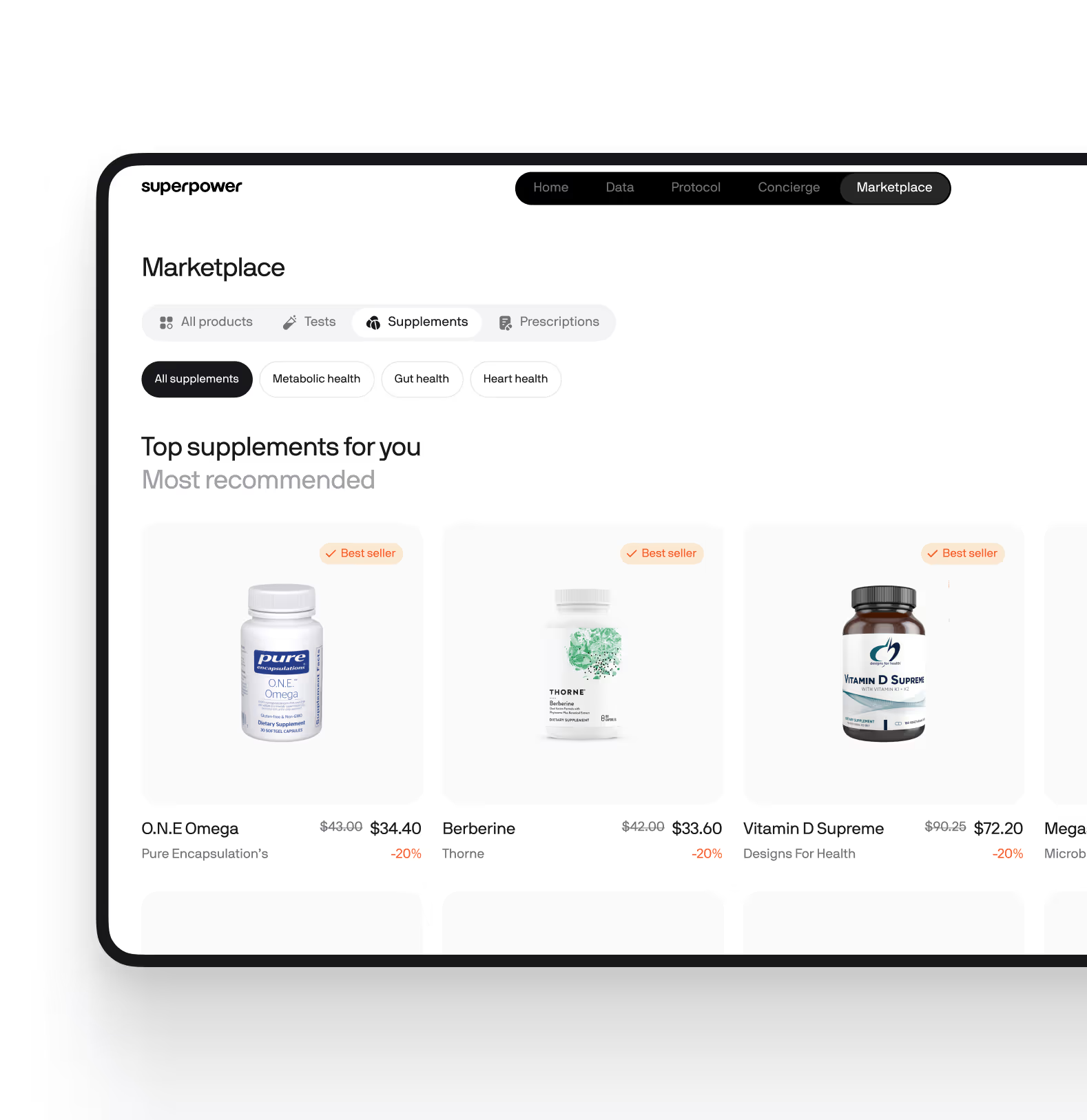
You can book additional diagnostics, buy curated supplements for 20% off & pharmaceuticals within your Superpower dashboard.

Superpower tests more than 
100+ biomarkers & common symptoms

Developed by world-class medical professionals

Supported by the world’s top longevity clinicians and MDs.

Dr Anant Vinjamoori

Superpower Chief Longevity Officer, Harvard MD & MBA

A smiling woman wearing a white coat and stethoscope poses for a portrait.

Dr Leigh Erin Connealy

Clinician & Founder of The Centre for New Medicine

Man in a black medical scrub top smiling at the camera.

Dr Abe Malkin

Founder & Medical Director of Concierge MD

Dr Robert Lufkin

UCLA Medical Professor, NYT Bestselling Author

Your membership

Select your assessment level

Superpower provides the most advanced health check with a plan that works. Go far beyond your annual physical.

Panels designed by

world class clinicians

2,000+ lab locations

across the country

Baseline

$199/yr

100+ biomarker blood test

Performance

Recommended

$365/yr

115+ biomarker blood test

60 biomarker follow-up retest

Complete

$649/yr

115+ biomarker blood test

60 biomarker follow-up retest

Gut microbiome analysis

Organ age breakdown

Get started
Loading...
HSA/ FSA eligible · Secure checkout

Baseline

$199

per year

Covers your metabolic, hormonal and cardiovascular baseline. The best basis for a single snapshot of your overall health.

What's included

Test Breakdown

These are the panels offered in the tiers above

100+ biomarker blood test

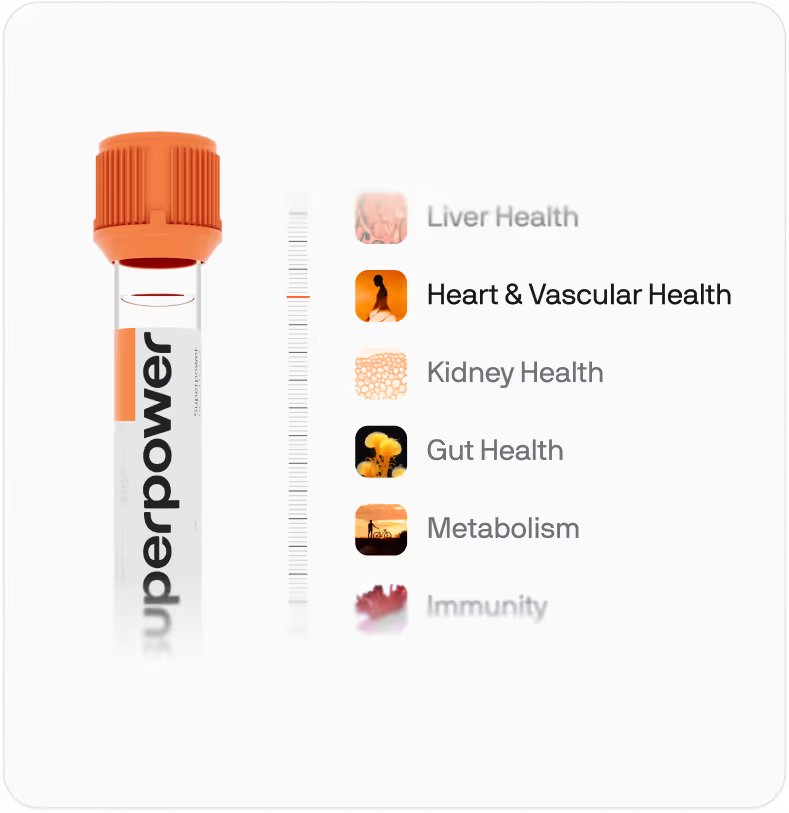
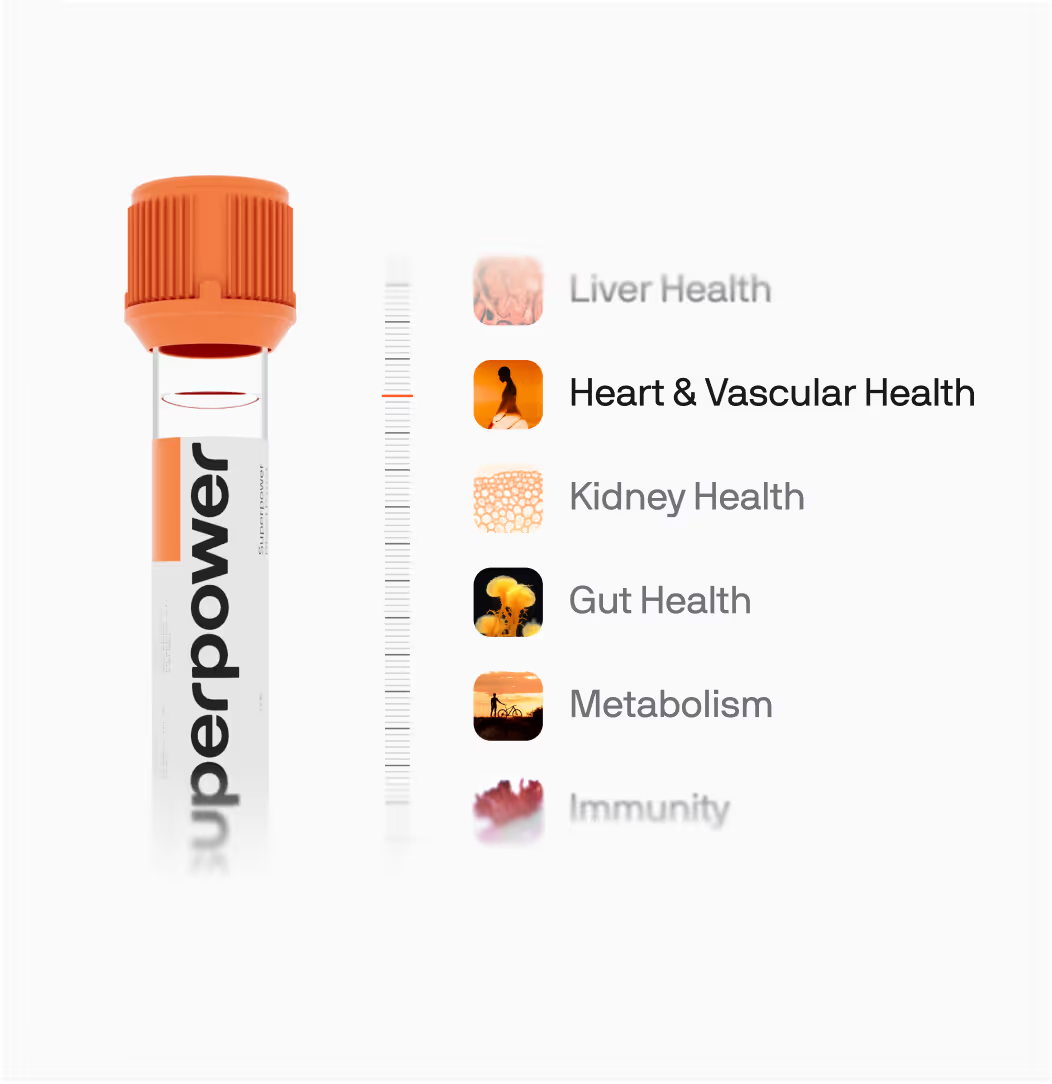
Heart & Vascular Health

20 markers

ApoB, LDL-Cholesterol, Triglycerides

Sex Hormones

8 markers

Testosterone, Estradiol, DHEA-S, Cortisol

Metabolic Health

7 markers

Glucose, HbA1c

Thyroid Health

4 markers

TSH, T3 Uptake, Free T4, T4 Total

Liver Health

13 markers

ALT, AST, GGT, Bilirubin

Nutrients

12 markers

Vitamin D, Total Protein, Hemoglobin

Immune System

16 markers

White blood cells, Neutrophils, Lymphocytes

Energy

5 markers

Ferritin, Iron, Cortisol

Kidney Health

9 markers

Creatinine, eGFR, Potassium, Sodium

See full list →

+21 additional

Included with every assessment

17 health areas developed by world class clinicians

Personalized clinical protocol

On-demand messaging with your care team

20% off superpower marketplace

Member pricing on add-on tests, supplements & RX

Upload past labs & wearable data for tracking

Superpower AI — a world class system trained on you

Complete

$649

per year

Normally $703 (save 8%)

Adds gut microbiome analysis and organ age surfacing, what standard blood panels may miss across energy, digestion, and immunity.

What's included

Test Breakdown

These are the panels offered in the tiers above

115+ biomarker blood test

Heart & Vascular Health

20 markers

ApoB, LDL-Cholesterol, Triglycerides, Lipoprotein(a)

Sex Hormones

11 markers

Testosterone, Estradiol, DHEA-S, Cortisol, PSA, FSH, LH, AMH

Metabolic Health

7 markers

Glucose, HbA1c, Insulin

Thyroid Health

4 markers

TSH, T3 Uptake, Free T4, T4 Total

Liver Health

8 markers

ALT, AST, GGT, Bilirubin

Nutrients

12 markers

Vitamin D, Total Protein, Hemoglobin

Immune System

16 markers

White blood cells, Neutrophils, Lymphocytes

Energy

5 markers

Ferritin, Iron, Cortisol

Kidney Health

24 markers

Creatinine, eGFR, Potassium, Urinary pH, RBC Urine, Nitrites

DNA Health

3 markers

Homocysteine, B12, Folate

Inflammation

3 markers

hs-CRP, Systemic Immune-Inflammation Index

See full list →

+8 additional

60 biomarker follow-up retest

Retesting panel

100 markers

Complete second draw — 60 biomarkers retested for longitudinal tracking.
Most biomarkers can move significantly within 3–6 months if you're actively trying to fix them.

Gut microbiome analysis

$239

Gut microbiome

300+ data points

Profiles 300 bacterial strains in your gut to map your microbial balance.
Identifies dysbiosis that may be driving symptoms like bloating, irregular digestion, skin issues, and mood changes, with actionable guidance on diet and lifestyle shifts to help restore balance.

Organ age breakdown

$99

OrganAge is the most detailed biological age test available today. Rather than showing a single number, it reveals how old each of your body's nine key systems is

Organ age breakdown

10 key systems

Circulatory, digestive, genitourinary, infectious, mental, metabolic, musculoskeletal, nervous, respiratory and systemic ages based on cutting edge longevity research

Included with every assessment

17 health areas developed by world class clinicians

Personalized clinical protocol

On-demand messaging with your care team

20% off superpower marketplace

Member pricing on add-on tests, supplements & RX

Upload past labs & wearable data for tracking

Superpower AI — a world class system trained on you

Get started
Loading...
HSA/ FSA eligible · Secure checkout

Finally, healthcare that looks at the whole you

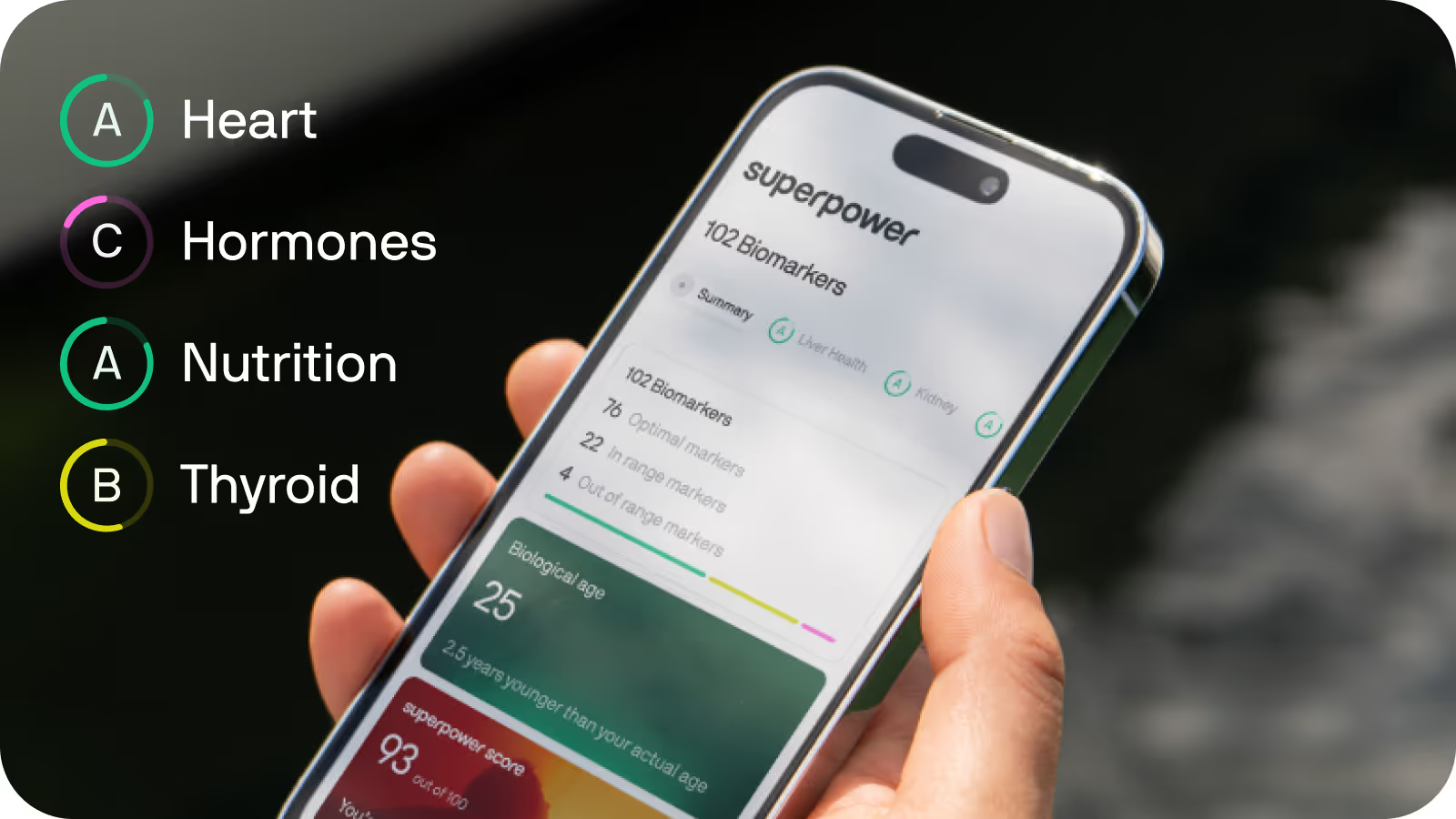
Superpower app on phone
Designed by world-class physicians

Get simple, free protocols for energy, heart health and more

Please enter a valid email address

Free protocols for

Improving energy with simple lifestyle changes

Reducing heart attack risk if you’re 30+

Slowing your pace of aging

Thanks for signing up!

Your health journey starts now. Watch your inbox for updates and smarter health insights – stay tuned.