


Understand what your hormone testing results really mean
See your biomarkers in context with a comprehensive panel.
- CLIA-certified labs
- HIPAA compliant
- Personalized health protocol
Bioavailable testosterone, defined in plain terms
Bioavailable testosterone is the portion of testosterone not locked up by sex hormone–binding globulin (SHBG). It includes free testosterone plus the fraction loosely attached to albumin, which can detach and enter cells — making it the usable pool. In medical terms: bioavailable testosterone equals free testosterone plus albumin-bound testosterone; the SHBG-bound fraction is considered tightly bound and largely unavailable to tissues. Most labs do not measure it directly but calculate it from total testosterone, SHBG, and albumin using the Vermeulen equation. It is a sharper lens than total testosterone when SHBG is out of balance.
The free plus albumin-bound fraction your tissues can use
SHBG is the primary gatekeeper. When SHBG rises, more testosterone is sequestered and bioavailable levels fall; when SHBG falls, more testosterone remains accessible. Several factors shift SHBG: estrogens tend to raise it; insulin resistance and higher body fat tend to lower it. Thyroid status matters — hyperthyroidism typically raises SHBG, hypothyroidism often lowers it. Liver health influences SHBG production. Age shifts the set point: SHBG tends to climb with age in men, so bioavailable testosterone can decline meaningfully even when total testosterone has not changed much. By age 70, bioavailable testosterone in men may be 35–40% lower than at age 25.
Bioavailable testosterone does not directly measure hormone activity in tissues — it estimates tissue availability, which is why symptoms and clinical context still matter.
Observational research links lower bioavailable testosterone in men with higher fat mass, lower lean mass, and more features of metabolic syndrome, as well as lower bone mineral density and higher fracture risk over time. In women, higher bioavailable testosterone associated with PCOS has been linked to cardiometabolic risk factors, while very low levels can influence sexual function and quality of life. These are associations, not causal proofs, but the trends are consistent across large datasets.
Daily rhythms also matter. Testosterone peaks in the morning and drifts down through the day. Sleep loss blunts that peak. Acute illness can transiently suppress values. A single lab value is a snapshot; patterns over time are the movie.
Reading your bioavailable testosterone result in context
Reference intervals are built from large populations, not from your personal baseline. "Normal" means you fall within that population's range, not necessarily that your hormones are performing optimally for you. Ranges are also lab-specific, and because most labs calculate bioavailable testosterone from total testosterone, SHBG, and albumin via the Vermeulen equation rather than measuring it directly, results can vary depending on the assay methods used for those inputs. For valid comparisons over time, draw in the morning under consistent conditions and confirm the same calculation method is used.
Typical reference ranges are approximately 110–575 ng/dL in men and 0.5–8.5 ng/dL in women, though these vary by lab and age. For women, where absolute numbers are much lower, assay quality and SHBG effects are especially important. Oral estrogens raise SHBG, which can lower bioavailable testosterone even if total testosterone looks unchanged. Life stage matters: pregnancy increases SHBG; menopause shifts ovarian androgen output. Treat ranges as a starting point and trends as the story.
High bioavailable testosterone
High bioavailable testosterone can stem from high total testosterone, low SHBG, or both. In men, low SHBG from insulin resistance or higher visceral fat can make bioavailable testosterone appear relatively elevated compared with total testosterone, even when the overall androgen picture is not straightforward. Symptoms and other labs steer interpretation — rising hematocrit, acne, or suspected sleep apnea add context. Certain medications and supplements can also alter SHBG and shift the balance.
In women, elevated bioavailable testosterone may align with androgen excess symptoms: increased facial or body hair, acne, scalp hair thinning, and irregular cycles. Polycystic ovary syndrome (PCOS) is a common cause, but adrenal contributions and, rarely, tumors are also possible. Clues from DHEA-S, LH/FSH patterns, and ultrasound help clinicians differentiate causes.
Low bioavailable testosterone
Low bioavailable testosterone can reflect low total testosterone, high SHBG, or both. In men, this may come from primary testicular issues, pituitary signaling problems, or from factors that raise SHBG — such as aging, hyperthyroidism, oral estrogens, or liver conditions. Certain medications, including opioids and glucocorticoids, can suppress the hypothalamic-pituitary-gonadal axis. Symptoms may include low libido, erectile difficulties, decreased morning erections, reduced muscle mass, and slower recovery; depression, anemia, and bone loss can also overlap.
In women, low bioavailable testosterone can appear with combined oral contraceptives (due to higher SHBG), with menopause, or with undernutrition and intensive training. Responses vary widely, and because normal ranges are lower to begin with, high-quality assays and clinical context are essential to avoid over- or under-calling a result.
High-dose biotin supplements can interfere with some immunoassays used to measure total testosterone, which would invalidate the calculated bioavailable value. Acute illness can also transiently suppress values, which is why repeat testing under stable conditions matters.
How SHBG shifts your bioavailable testosterone fraction
Because bioavailable testosterone is calculated from total testosterone, SHBG, and albumin, anything that moves SHBG will shift the bioavailable fraction even if total testosterone stays the same. Key factors that raise SHBG — and therefore reduce bioavailable testosterone — include aging, hyperthyroidism, oral estrogen use (including combined oral contraceptives), and liver disease. Factors that lower SHBG — and therefore increase the bioavailable fraction — include insulin resistance, obesity, hypothyroidism, and androgen use.
Medications can shift bioavailable testosterone through several mechanisms. Oral estrogens typically raise SHBG. Opioids and glucocorticoids can suppress the hypothalamic-pituitary-gonadal axis. Anti-androgens affect signaling directly. Finasteride and dutasteride alter dihydrotestosterone (DHT) more than testosterone, but downstream effects on symptoms can overlap. Thyroid disease, liver disease, obesity, and diabetes all reshape the hormonal landscape, as do life stages such as puberty, pregnancy, perimenopause, and menopause.
Body composition and metabolic health influence SHBG dynamics: higher visceral fat and insulin resistance tend to suppress SHBG, which can raise the bioavailable fraction relative to total testosterone — though this does not necessarily reflect a favorable androgen environment overall. Gradual fat loss in men with higher body fat tends to improve androgen balance over time, partly by reducing inflammation and insulin resistance and partly by normalizing SHBG.
Sleep and circadian rhythm affect the testosterone peak from which bioavailable T is derived. Short or disrupted sleep blunts the morning testosterone rise. Shift work, jet lag, and erratic schedules can magnify this effect.
Liver health matters because SHBG is produced in the liver; conditions that impair liver function can alter SHBG output and therefore the bioavailable fraction. High-dose biotin before a blood draw can interfere with immunoassay-based total testosterone measurements, invalidating the calculated bioavailable value — follow your lab's guidance on biotin avoidance before testing.
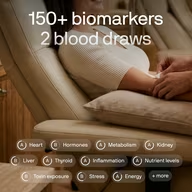
Test 150+ biomarkers
Two blood draws. A full picture of your health, explained in plain language.
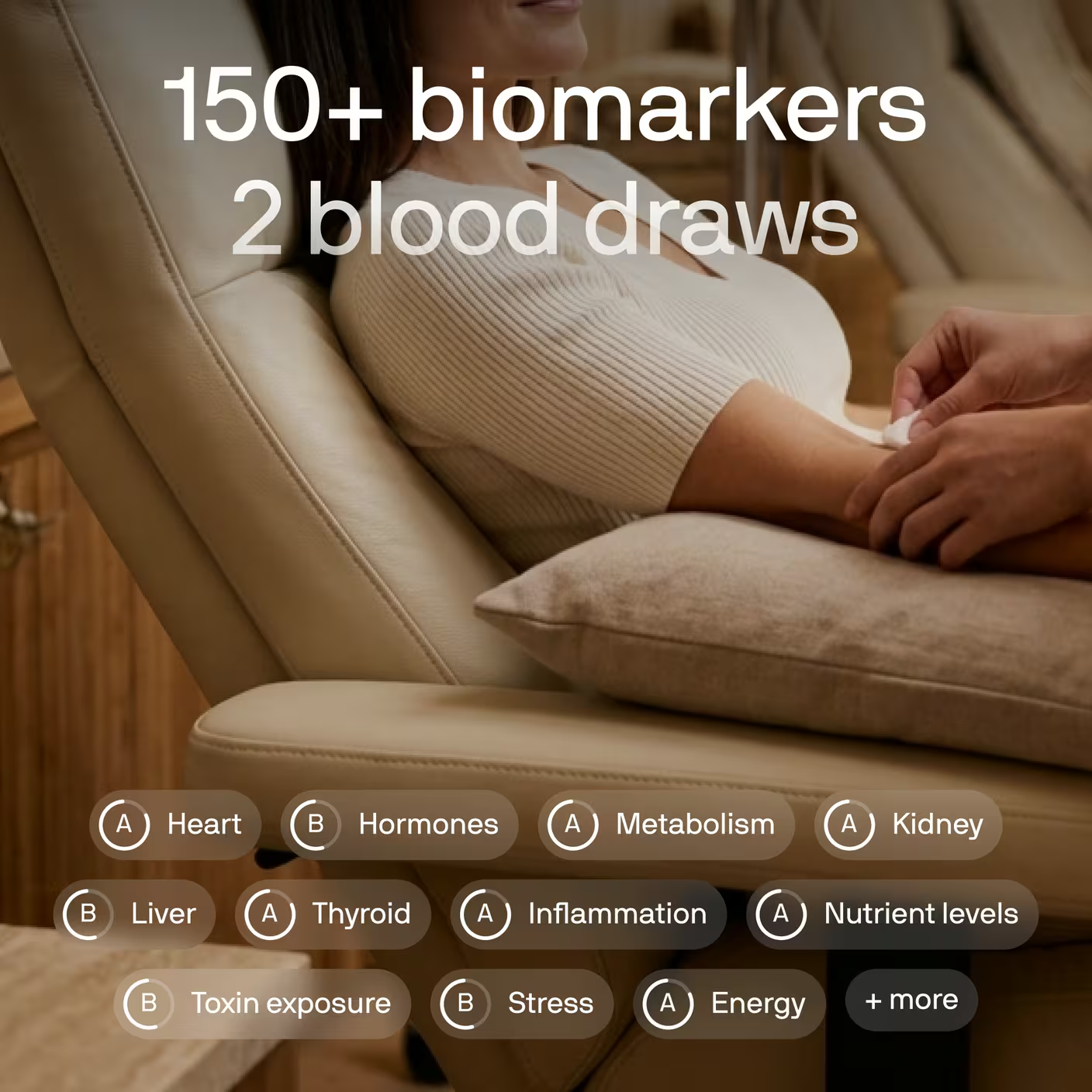
Test 150+ biomarkers
Two blood draws. A full picture of your health, explained in plain language.
Markers that read bioavailable testosterone in context
- Total testosterone — sets the production ceiling; bioavailable testosterone is the SHBG-corrected read. Comparing the two identifies whether low availability stems from reduced production or excess binding.
- Sex hormone–binding globulin (SHBG) — the direct gatekeeper of bioavailable testosterone. Rising SHBG with aging or hyperthyroidism can drive bioavailable T below the functional range even when total T is midrange. SHBG is also a required input for the Vermeulen calculation.
- Free testosterone — measures only the unbound fraction; bioavailable testosterone adds the albumin-bound share, making it a slightly broader availability estimate that is particularly useful when SHBG is very high.
- Luteinizing hormone (LH) — distinguishes primary (gonadal) from secondary (pituitary or hypothalamic) causes when bioavailable T is low and total T is also suppressed. Low LH with low testosterone suggests a central pattern; high LH with low testosterone points to a primary gland issue.
- Estradiol — in men with elevated adiposity, excess aromatization of testosterone to estradiol provides feedback that suppresses LH and further reduces production. Relevant when bioavailable T falls alongside rising estradiol. In women, estradiol patterns help differentiate ovarian from adrenal causes of androgen changes.
- Follicle-stimulating hormone (FSH) — alongside LH, helps characterize the pituitary signal to the gonads and is relevant when evaluating fertility or distinguishing central from primary causes of low testosterone.
DHEA-S adds an adrenal angle: elevated DHEA-S with high bioavailable testosterone leans adrenal; normal DHEA-S with high bioavailable testosterone leans ovarian or SHBG-related. Albumin rounds out the Vermeulen calculation and helps confirm the math. Layer these markers together and ambiguous pictures sharpen.
A realistic retest window for bioavailable testosterone
Like total testosterone, bioavailable testosterone reaches a new steady state approximately 4–6 weeks after a testosterone replacement therapy (TRT) initiation or a significant lifestyle intervention. Because SHBG changes slightly more slowly than total testosterone, full stabilization of the calculated bioavailable value may take 6–8 weeks. A retest at 8–12 weeks after initiating a change is a reasonable interval; absent an active intervention, annual retesting is appropriate for monitoring.
A morning fasted draw is required for valid results. Testosterone follows a diurnal rhythm, and bioavailable T calculated from a late-afternoon draw will be meaningfully lower than a morning value — making cross-time comparisons unreliable if draw timing is inconsistent.
Because most labs calculate bioavailable T from total T, SHBG, and albumin via the Vermeulen equation, ensure the same calculation method and the same assay platforms are used across draws for valid trend comparison. High-dose biotin can interfere with immunoassay-based total T measurements, which would invalidate the calculated bioavailable value; follow your lab's guidance on biotin avoidance before testing.
When bioavailable testosterone results deserve a clinician's read
Testing turns hunches into data. Trends over time capture the effects of nutrition, training, sleep, and stress on your hormonal landscape. Morning draws, consistent conditions, and repeat testing when something looks off protect against chasing noise. Pairing numbers with how you feel, how you perform, and how you recover is prevention in action — early course corrections before problems compound.
A clinician's read is warranted when bioavailable testosterone is persistently low or high alongside symptoms; when total testosterone and bioavailable testosterone diverge significantly, pointing to a binding-protein issue; when LH and FSH patterns suggest a central or primary cause that needs further evaluation; or when fertility is a consideration, since exogenous testosterone can suppress sperm production and management choices change accordingly. Diagnostic evaluation may include LH, FSH, prolactin, iron studies, and imaging when indicated, guided by the clinical picture and established guidelines.
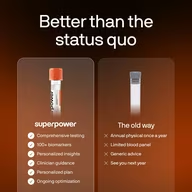
A comprehensive biomarker panel makes your biology legible. Bioavailable testosterone reads best alongside SHBG, total testosterone, free testosterone, LH, FSH, and estradiol. Together, they map where you are, show which levers matter most, and help you move beyond population averages toward informed, personalized decisions. Superpower is built on that approach — advanced biomarker testing with a clinician by your side.
Frequently Asked Questions
References
- Vermeulen A, Verdonck L, Kaufman JM (1999). A critical evaluation of simple methods for the estimation of free testosterone in serum. *The Journal of clinical endocrinology and metabolism*, *84*(10), 3666-72. https://doi.org/10.1210/jcem.84.10.6079
- Bhasin S, Brito JP, Cunningham GR, Hayes FJ, Hodis HN, Matsumoto AM, Snyder PJ, Swerdloff RS, Wu FC, Yialamas MA (2018). Testosterone Therapy in Men With Hypogonadism: An Endocrine Society Clinical Practice Guideline. *The Journal of clinical endocrinology and metabolism*, *103*(5), 1715-1744. https://doi.org/10.1210/jc.2018-00229
- Fabbri E, An Y, Gonzalez-Freire M, Zoli M, Maggio M, Studenski SA, Egan JM, Chia CW, Ferrucci L (2016). Bioavailable Testosterone Linearly Declines Over A Wide Age Spectrum in Men and Women From The Baltimore Longitudinal Study of Aging. *The journals of gerontology. Series A, Biological sciences and medical sciences*, *71*(9), 1202-9. https://doi.org/10.1093/gerona/glw021
- Brambilla DJ, Matsumoto AM, Araujo AB, McKinlay JB (2009). The effect of diurnal variation on clinical measurement of serum testosterone and other sex hormone levels in men. *The Journal of clinical endocrinology and metabolism*, *94*(3), 907-13. https://doi.org/10.1210/jc.2008-1902
- Axelsson J, Ingre M, Akerstedt T, Holmbäck U (2005). Effects of acutely displaced sleep on testosterone. *The Journal of clinical endocrinology and metabolism*, *90*(8), 4530-5. https://doi.org/10.1210/jc.2005-0520






















 Heart & Vascular Health
 Metabolic Health
 Energy
 Liver Health
 Kidney
 Sex Hormones
 Thyroid Health
 Nutrients
 Immune System
 Inflammation