

Understand what your organ health supplements results really mean
See your biomarkers in context with a comprehensive panel.
- CLIA-certified labs
- HIPAA compliant
- Personalized health protocol
What supplements are good for kidneys?
Your kidneys filter roughly 180 liters of blood every day, removing waste while holding onto what your body needs. When that filtration system declines, the downstream consequences are specific and measurable: uremic toxins accumulate, inflammation intensifies, homocysteine climbs. The supplements with the strongest evidence for kidney health target those metabolic consequences, not the kidneys themselves.
Three supplements have consistent clinical support. Each works through a distinct mechanism. Each carries safety considerations that depend heavily on your stage of kidney disease.
A direct answer: What supplements help kidney function
Research suggests omega-3 fatty acids (EPA and DHA) may help reduce kidney inflammation and proteinuria. Probiotics may help lower gut-derived uremic toxins that build up as filtration declines. B vitamins, folate, B6, and B12, support homocysteine metabolism. Effectiveness depends on your kidney disease stage and mineral balance. Anyone at CKD stages 3 to 5 should work with a nephrologist before starting these supplements.
Omega-3 fatty acids: Inflammation and proteinuria
How omega-3s affect kidney physiology
Kidney damage activates inflammatory pathways that accelerate glomerular scarring. Omega-3 fatty acids, EPA and DHA, suppress those pathways by competing with arachidonic acid for inflammatory enzyme activity. This reduces pro-inflammatory prostaglandin production in renal tissue.
Research suggests omega-3 supplementation may reduce proteinuria in CKD patients, with the strongest evidence in diabetic kidney disease. The 2020 meta-analysis reporting this finding detected no significant improvement in eGFR or creatinine, so the benefit appears specific to protein leak rather than overall filtration capacity. Proteinuria, protein leaking into urine, is both a marker and a driver of kidney damage. Lowering it may help slow the feedback loop of glomerular injury.
Cardiovascular and renal benefits
CKD carries dramatically elevated cardiovascular risk because the same inflammation damaging your kidneys affects your arteries. Omega-3s address both simultaneously. A meta-analysis of 60 RCTs covering 4,129 patients in Clinical Nutrition found that omega-3 supplementation may be associated with slower progression to ESRD in patients not yet on renal replacement therapy and was associated with lower cardiovascular mortality rates in those on hemodialysis in that analysis, though the evidence quality was rated low to very low. Results vary by CKD stage and baseline inflammation, and the benefit appears most consistent in people with higher inflammatory markers at baseline.
Probiotics: The gut-kidney axis
Why gut bacteria matter for kidney function
As kidney filtration declines, uremic toxins that your body would normally excrete accumulate in the bloodstream. Many of these toxins, indoxyl sulfate, p-cresyl sulfate, originate in the gut, where bacteria ferment protein into precursor compounds. This is the gut-kidney axis: research suggests what happens in your intestines may influence kidney disease progression.
Probiotics shift the gut microbiome toward species that produce fewer uremic toxin precursors. They also improve gut barrier integrity, reducing the translocation of bacterial endotoxins that drive systemic inflammation, mechanisms reviewed in a 2024 analysis in the Journal of Agricultural and Food Chemistry. This microbiome explainer covers how gut bacteria affect whole-body inflammatory load.
Clinical outcomes in CKD patients
In clinical trials, CKD patients taking probiotics showed lower blood urea nitrogen (BUN) and improved markers of gut barrier integrity. A 2024 meta-analysis of 21 RCTs found a statistically significant but modest BUN reduction, most pronounced in non-hemodialysis CKD patients, with no significant effect on eGFR or creatinine. The most studied strains include Lactobacillus acidophilus, Bifidobacterium longum, and Streptococcus thermophilus, often in multi-strain combinations. Evidence quality is moderate; most trials are small and short-term, which limits confidence.
B vitamins: Methylation and homocysteine
Why homocysteine rises in kidney disease
Homocysteine is a byproduct of amino acid metabolism. Healthy kidneys help clear it; failing kidneys let it accumulate. Elevated homocysteine damages blood vessel walls, which is why CKD patients face elevated cardiovascular risk independent of their cholesterol numbers. This guide to optimal homocysteine levels explains what ranges signal real risk.
How B vitamins lower homocysteine
Folate, B6, and B12 are cofactors in the methylation cycle that converts homocysteine back into methionine or cysteine. Supplementing these vitamins reliably lowers homocysteine in CKD patients, though this has not translated into fewer cardiovascular events in CKD-specific trials. A 5-year RCT of 619 CKD patients in Nephrology Dialysis Transplant found that B vitamin therapy lowered homocysteine but did not reduce cardiovascular risk, with a numerically higher event rate in the treatment arm (29.3% vs. 25.6%, non-significant). Effects on long-term kidney function remain under investigation.
One important caution: high-dose B12 in advanced CKD can accumulate and may interfere with metabolic pathways, so dosing must be individualized. Methylated forms, methylfolate and methylcobalamin, may work better if you carry MTHFR variants that impair standard B vitamin conversion.
What the clinical evidence actually shows
Omega-3 fatty acids
A 2020 meta-analysis of 10 RCTs spanning 344 participants found that omega-3 fatty acids may reduce proteinuria in type 2 diabetes patients when supplemented for at least 24 weeks; no significant improvement in eGFR was detected. Doses ranged from 1 to 4 grams per day of combined EPA and DHA. Not all studies showed benefit, those with lower baseline inflammation or less advanced CKD saw smaller effects.
Omega-3s are generally safe in CKD, with minimal GI side effects and no significant bleeding risk at studied doses.
Probiotics
Multi-strain formulations at 10 billion CFU or more per day show the most consistent results across CKD trials. The effect on BUN and uremic toxin markers is modest, the 2024 meta-analysis reported a standardized mean difference of −0.23 for BUN, consistent with reductions in the 10 to 15 percent range, not dramatic normalization. Evidence quality is moderate. Most trials are small and short-term, which limits how confidently you can apply these findings to your own situation.
B vitamins
The FAVORIT trial, a large RCT in 4,110 kidney transplant recipients, found that high-dose B vitamins (folic acid 5 mg, B6 50 mg, B12 1 mg daily) reliably lowered homocysteine but did not reduce cardiovascular events, total mortality, or dialysis-dependent kidney failure; side effects were similar between groups. Lower doses appear safer and still effectively lower homocysteine. This is a case where more is demonstrably not better.
Dosing, timing, and supplement form
Dosing information below reflects ranges used in clinical research. Individual needs vary by kidney function stage, lab values, and medications. Consult your healthcare provider or nephrologist before starting or adjusting any supplement.
Omega-3 fatty acids
Triglyceride forms of omega-3s absorb better than ethyl ester forms, a 2010 pharmacokinetics study found re-esterified triglycerides roughly 24% more bioavailable than natural fish oil while ethyl esters were approximately 27% less bioavailable, especially when taken without a fat-containing meal. Avoid fish oil supplements with added vitamin A or D, both accumulate in CKD and can reach toxic levels. Timing has minimal effect on absorption, but taking omega-3s with food reduces nausea and the fishy aftertaste. MegaMarine uses triglyceride-form fish oil without added fat-soluble vitamins.
Probiotics
Synbiotics, probiotics combined with prebiotics like inulin or fructooligosaccharides, may perform as well as probiotics alone in CKD; a 2024 meta-analysis of 21 RCTs found synbiotic subgroups showed significant BUN and CRP reductions comparable to probiotics alone. They provide the fermentable substrate bacteria need to establish in the gut. Take them on an empty stomach or with a small amount of food to maximize bacterial survival through stomach acid. Refrigerated formulations generally carry higher viable counts than shelf-stable versions. MegaSporeBiotic is a spore-based, shelf-stable option with strong evidence for gut barrier support.
B vitamins
Lower doses (folate 0.8 mg, B6 10 mg, B12 0.4 mg daily) appear safer in advanced CKD and still effectively lower homocysteine. Methylated forms, methylfolate and methylcobalamin, may work better if you carry MTHFR variants that impair standard B vitamin conversion. B vitamins are water-soluble and can be taken any time of day, though food reduces nausea. Homocysteine Supreme provides methylated B vitamins at lower, safer doses designed specifically for homocysteine support.
Test 150+ biomarkers
Two blood draws. A full picture of your health, explained in plain language.
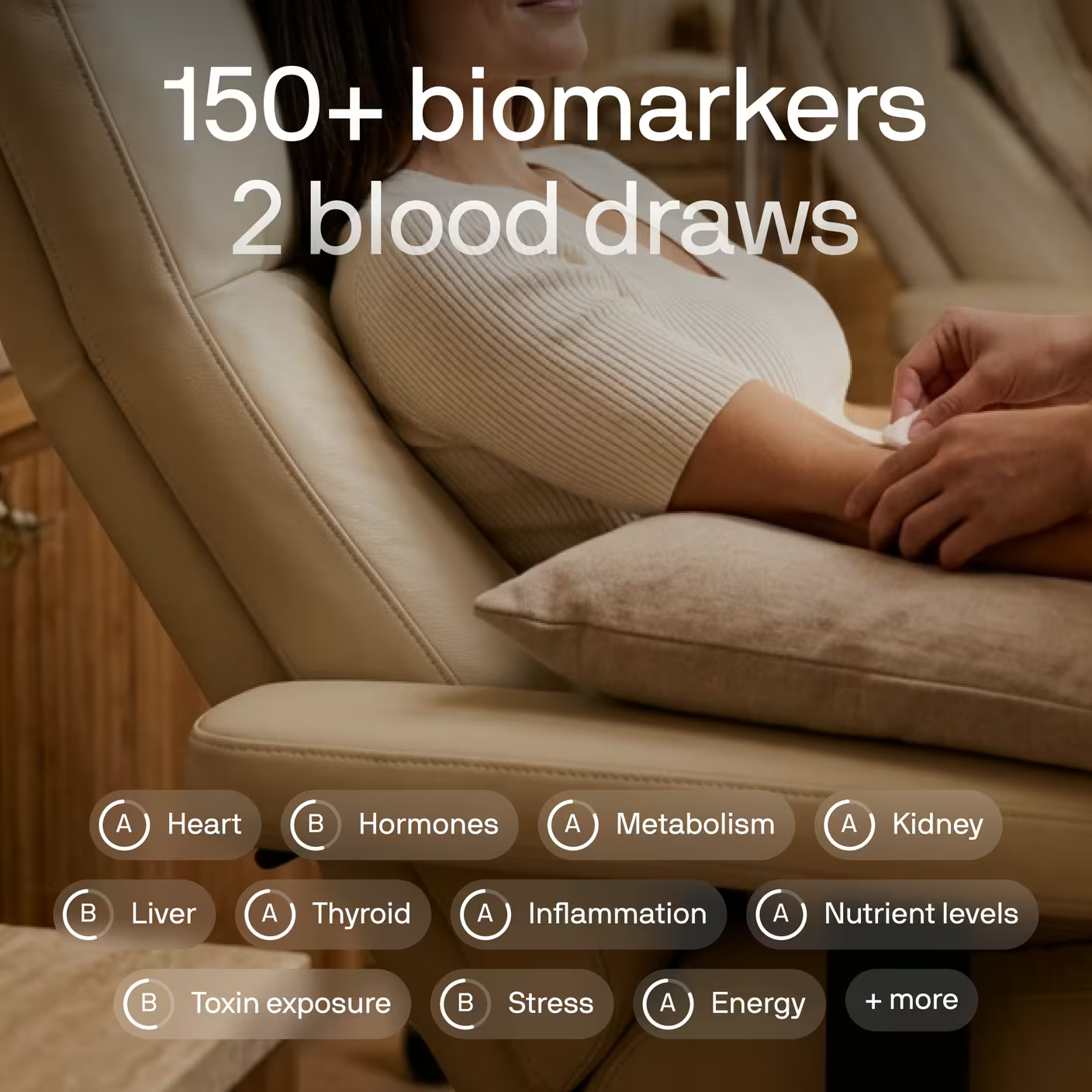
Test 150+ biomarkers
Two blood draws. A full picture of your health, explained in plain language.
Who should use caution and why responses vary
Kidney supplements are not universally safe. What helps at CKD stage 3 can harm at stage 5. Your response to any supplement depends on kidney function, mineral balance, and what medications you already take.
Potassium and phosphorus content
Many "kidney support" supplements contain hidden potassium chloride, potassium citrate, or phosphate salts. When the kidneys can't excrete excess potassium, levels rise quickly and can trigger dangerous cardiac arrhythmias. Phosphorus additives accelerate vascular calcification and bone disease in CKD. Manufacturers commonly add these minerals as fillers or preservatives, always check labels.
Stage of kidney disease
Supplement needs shift substantially across CKD stages. Dialysis patients have different nutritional requirements and may need higher doses of water-soluble vitamins that dialysis removes. Someone at stage 3 CKD with normal potassium can tolerate a very different supplement profile than someone at stage 5. Stage-specific guidance requires working with a nephrologist who knows your full labs.
Medication interactions
Omega-3s may modestly affect platelet aggregation at higher doses (above 3 g/day), which is worth flagging if you're on warfarin or other anticoagulation therapy even though no significant bleeding risk has been documented at typical supplement doses. High-dose B vitamins can interfere with methotrexate, which some CKD patients take for underlying autoimmune conditions. Probiotics carry a small risk of systemic infection in severely immunocompromised people. Always tell your prescribing physician about supplements you take alongside CKD medications.
Baseline deficiencies
Supplements work best when they address an actual deficiency. If your omega-3 index is already optimal, additional fish oil won't provide extra kidney protection. If your homocysteine is normal, high-dose B vitamins offer no benefit and carry real risk. Testing baseline levels before supplementing lets you target what your body actually needs.
Connecting supplements to kidney biomarkers
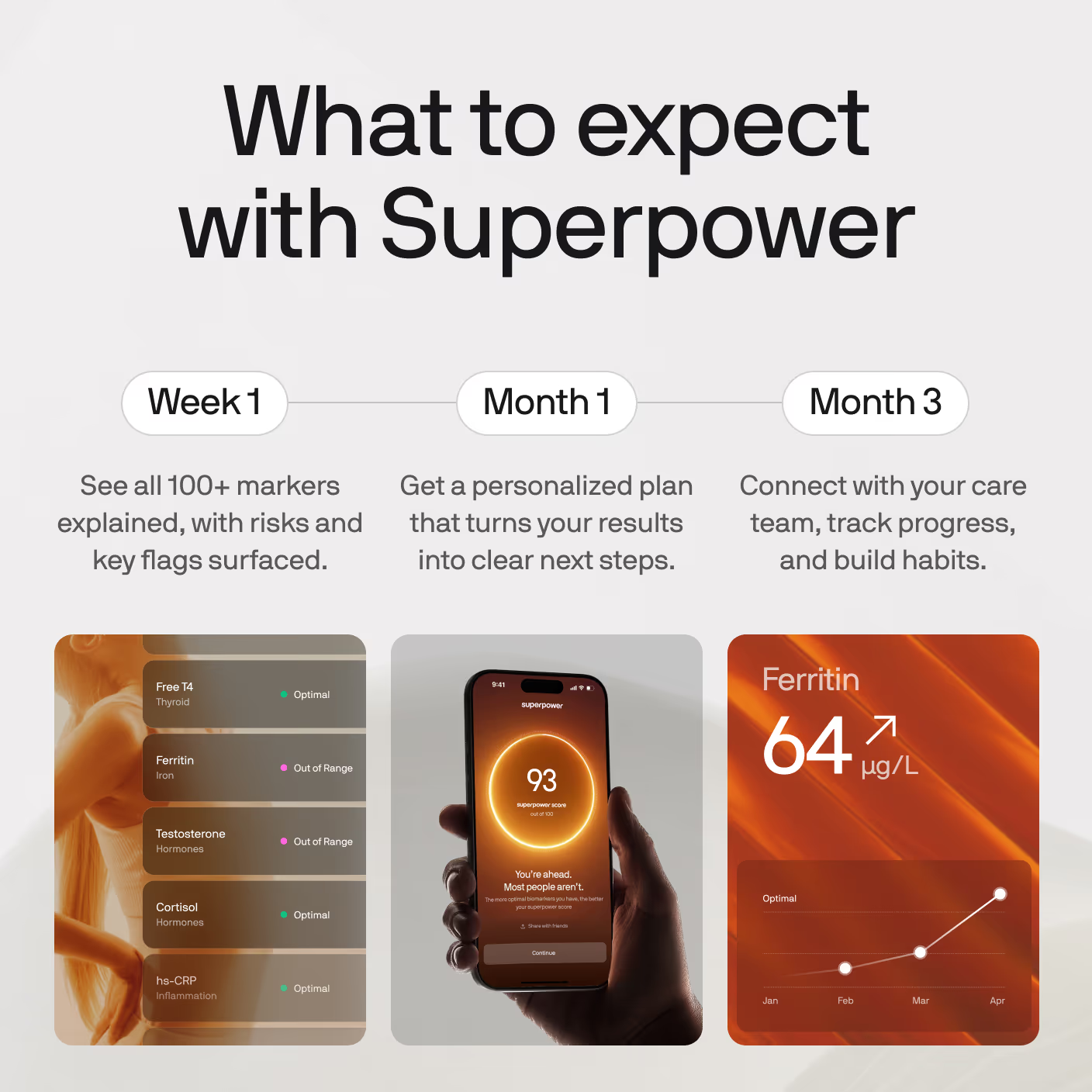
Supplements don't work in isolation. Tracking kidney-related biomarkers before and during supplementation tells you whether your intervention is helping, neutral, or quietly causing harm.
Key markers to monitor include:
- eGFR, reflects overall filtration capacity; stable or rising eGFR suggests a supplement is helping
- Creatinine, rises as filtration declines; should hold steady or improve with effective supplementation
- BUN, tracks nitrogen waste accumulation; probiotics aim to lower this
- Homocysteine, B vitamin supplementation should lower this within 8 to 12 weeks
- hs-CRP, measures systemic inflammation; omega-3s and probiotics both aim to reduce this
- Potassium and calcium, reveal whether supplements are causing mineral imbalances
If biomarkers aren't moving in the expected direction after 3 to 6 months, the supplement may not be addressing your specific physiology, or the dose needs adjustment. For a comprehensive view of where your kidneys stand, the chronic kidney disease biomarker profile maps your lab values against CKD staging criteria.
Frequently Asked Questions
References
- Saglimbene VM, Wong G, van Zwieten A, Palmer SC, Ruospo M, Natale P, Campbell K, Teixeira-Pinto A, Craig JC, Strippoli GFM (2020). Effects of omega-3 polyunsaturated fatty acid intake in patients with chronic kidney disease: Systematic review and meta-analysis of randomized controlled trials. *Clinical nutrition (Edinburgh, Scotland)*, *39*(2), 358-368. https://doi.org/10.1016/j.clnu.2019.02.041
- Huang HW, Chen MJ (2024). Exploring the Preventive and Therapeutic Mechanisms of Probiotics in Chronic Kidney Disease through the Gut-Kidney Axis. *Journal of agricultural and food chemistry*, *72*(15), 8347-8364. https://doi.org/10.1021/acs.jafc.4c00263
- Liu C, Yang L, Wei W, Fu P (2024). Efficacy of probiotics/synbiotics supplementation in patients with chronic kidney disease: a systematic review and meta-analysis of randomized controlled trials. *Frontiers in nutrition*, *11*, 1434613. https://doi.org/10.3389/fnut.2024.1434613
- Mann JF, Sheridan P, McQueen MJ, Held C, Arnold JM, Fodor G, Yusuf S, Lonn EM, HOPE-2 investigators (2008). Homocysteine lowering with folic acid and B vitamins in people with chronic kidney disease--results of the renal Hope-2 study. *Nephrology, dialysis, transplantation : official publication of the European Dialysis and Transplant Association - European Renal Association*, *23*(2), 645-53. https://doi.org/10.1093/ndt/gfm485
- Chewcharat A, Chewcharat P, Rutirapong A, Papatheodorou S (2020). The effects of omega-3 fatty acids on diabetic nephropathy: A meta-analysis of randomized controlled trials. *PloS one*, *15*(2), e0228315. https://doi.org/10.1371/journal.pone.0228315
- Bostom AG, Carpenter MA, Kusek JW, Levey AS, Hunsicker L, Pfeffer MA, Selhub J, Jacques PF, Cole E, Gravens-Mueller L, House AA, Kew C, McKenney JL, Pacheco-Silva A, Pesavento T, Pirsch J, Smith S, Solomon S, Weir M (2011). Homocysteine-lowering and cardiovascular disease outcomes in kidney transplant recipients: primary results from the Folic Acid for Vascular Outcome Reduction in Transplantation trial. *Circulation*, *123*(16), 1763-70. https://doi.org/10.1161/CIRCULATIONAHA.110.000588
- Dyerberg J, Madsen P, Møller JM, Aardestrup I, Schmidt EB (2010). Bioavailability of marine n-3 fatty acid formulations. *Prostaglandins, leukotrienes, and essential fatty acids*, *83*(3), 137-41. https://doi.org/10.1016/j.plefa.2010.06.007
- Williamson L, New D (2014). How the use of creatine supplements can elevate serum creatinine in the absence of underlying kidney pathology. *BMJ case reports*, *2014*. https://doi.org/10.1136/bcr-2014-204754
- Longobardi I, Gualano B, Seguro AC, Roschel H (2023). Is It Time for a Requiem for Creatine Supplementation-Induced Kidney Failure? A Narrative Review. *Nutrients*, *15*(6). https://doi.org/10.3390/nu15061466
- Ferraro PM, Curhan GC, Gambaro G, Taylor EN (2016). Total, Dietary, and Supplemental Vitamin C Intake and Risk of Incident Kidney Stones. *American journal of kidney diseases : the official journal of the National Kidney Foundation*, *67*(3), 400-7. https://doi.org/10.1053/j.ajkd.2015.09.005

























 Heart & Vascular Health
 Metabolic Health
 Energy
 Liver Health
 Kidney
 Sex Hormones
 Thyroid Health
 Nutrients
 Immune System
 Inflammation