
Understand what your muscle energy supplements results really mean
See your biomarkers in context with a comprehensive panel.
- CLIA-certified labs
- HIPAA compliant
- Personalized health protocol
Ingredients with strong research support
Caffeine
Caffeine is the most extensively studied ergogenic compound in sports nutrition. It works by competitively antagonizing adenosine receptors in the central nervous system, reducing the perception of effort and fatigue. At doses typically used in sports contexts (3 to 6 mg per kilogram of body weight), caffeine has been consistently shown to improve endurance performance, power output, and reaction time. Evidence also supports modest improvements in strength and resistance exercise performance.
Individual response varies substantially. Genetic variants in CYP1A2 (the primary caffeine-metabolizing enzyme) determine how quickly caffeine is cleared, affecting both performance response and cardiovascular side effects at higher doses. Tolerance develops with regular use, and abrupt discontinuation after habitual high intake produces withdrawal symptoms including headache, fatigue, and reduced concentration. Caffeine from whole food sources — coffee, tea — produces the same pharmacological effects as isolated caffeine anhydrous.
Creatine monohydrate
Creatine is not typically included in pre-workout products designed for acute use because its benefit is derived from chronic tissue saturation rather than a single dose. However, it deserves inclusion in any discussion of natural performance supplementation. Creatine monohydrate is the most researched performance supplement of all time. It works by increasing intramuscular phosphocreatine stores, which accelerates ATP regeneration during high-intensity, short-duration efforts. This supports higher training volumes, faster recovery between sets, and — over time — greater lean muscle adaptation.
The evidence base for creatine monohydrate is large, consistent, and extends beyond athletic performance to include potential cognitive benefits and clinical applications in aging and neurodegenerative conditions. Creatine loading does transiently elevate serum creatinine — a routine kidney function marker on metabolic panels — which can cause unnecessary concern if clinicians are unaware of supplementation. This is a laboratory artifact rather than a marker of impaired renal function in otherwise healthy individuals who are well-hydrated.
L-citrulline and citrulline malate
Citrulline is an amino acid that serves as a precursor to arginine, which in turn drives endothelial nitric oxide (NO) production. Nitric oxide causes vasodilation — the widening of blood vessels — which increases blood flow to working muscles, reduces the oxygen cost of exercise, and may delay fatigue. Research on citrulline supplementation shows modest but reproducible improvements in endurance performance and resistance exercise volume at doses of 6 to 8 grams of l-citrulline (or 8 grams of citrulline malate). Citrulline is absorbed more effectively than arginine itself when taken orally, which is why direct arginine supplementation fell out of favor in sports nutrition research.
Citrulline malate, a combination of l-citrulline with malic acid, has been studied specifically in resistance exercise contexts and shows benefits for repetition performance and subjective recovery ratings. The proportion of citrulline in citrulline malate products varies (typically 1:1 or 2:1 citrulline to malate) — this matters when comparing dosages across products.
Beta-alanine
Beta-alanine is a precursor to carnosine, a dipeptide stored in skeletal muscle that buffers the hydrogen ions produced during high-intensity exercise. By increasing muscle carnosine concentrations, beta-alanine may extend the time to muscular fatigue in efforts lasting one to four minutes — the range where metabolic acidosis is a primary limiting factor. Evidence is most consistent for middle-distance athletic events and high-intensity interval training. Benefits are modest in very short efforts (under 60 seconds) or long-duration aerobic exercise.
The characteristic tingling sensation (paraesthesia) associated with beta-alanine is a well-documented pharmacological effect of transient skin nerve activation. It is benign and dose-dependent. Extended-release formulations reduce the intensity of this sensation. At standard doses of 3.2 to 6.4 grams per day, carnosine loading occurs gradually over several weeks, meaning beta-alanine shares creatine's characteristic of benefiting from consistent daily use rather than single acute doses.
Beetroot and dietary nitrates
Dietary nitrates, found in high concentrations in beetroot, leafy greens, and celery, are converted in the body to nitrite and then to nitric oxide through a pathway that is independent of endothelial nitric oxide synthase. This represents an alternative NO source to the arginine/citrulline pathway and is particularly active in low-oxygen (hypoxic) conditions — relevant to exercise. Research on concentrated beetroot juice or nitrate supplementation shows consistent improvements in oxygen efficiency (lower VO2 for the same workload) and endurance performance. Effects are most pronounced in untrained to moderately trained individuals; elite athletes show attenuated responses, possibly due to already-efficient NO metabolism.
Electrolytes
Sodium, potassium, and magnesium are lost in sweat and support nerve conduction and muscle contraction. Including electrolytes in a pre-workout formulation makes physiological sense for efforts lasting over 60 minutes in warm environments or any bout that generates meaningful sweat. There is no ergogenic benefit to electrolyte supplementation for short, low-sweat exercise bouts. Magnesium is also involved in ATP synthesis and muscle relaxation, and deficiency is associated with increased muscle cramping and fatigue — making it a reasonable monitoring biomarker for individuals with high training volumes. Superpower's Nutrient and Antioxidant Panel includes RBC magnesium, which is a more sensitive indicator of magnesium status than serum magnesium.
Ingredients that are commonly included but less well-supported
L-theanine (combined with caffeine)
L-theanine, an amino acid found in green tea, is frequently included in "cleaner" pre-workout products as a complement to caffeine. The caffeine-theanine combination has been studied and shows modest evidence of improving focus while attenuating some of caffeine's jitteriness-associated side effects. Effects are subtle and vary by individual. It is not an ergogenic compound in isolation but may improve the subjective quality of a caffeinated pre-workout for those who are sensitive to caffeine's anxiogenic effects.
Adaptogens (ashwagandha, rhodiola)
Ashwagandha and rhodiola rosea appear in many natural pre-workout formulations. Ashwagandha has a reasonable evidence base for modestly reducing perceived exertion and supporting testosterone levels in strength-trained men, though studies are typically short in duration. Rhodiola has limited human trial data at sports-relevant doses. Both compounds are likely safe at standard supplement doses, but their acute pre-workout ergogenic effects are speculative relative to the evidence available for caffeine, creatine, or citrulline.

Test 100+ biomarkers from home
One blood draw. A full picture of your health, explained in plain language.
Test 100+ biomarkers from home
One blood draw. A full picture of your health, explained in plain language.
Biomarkers worth monitoring if you train hard and supplement regularly
Regular intense training combined with supplement use creates a context where a handful of biomarkers are worth tracking annually or more frequently. These are not markers that pre-workout supplementation is known to disrupt — rather, they reflect the overall physiological load of a high-training lifestyle.
- Ferritin — iron depletion is common in endurance athletes; low ferritin impairs performance
- Hemoglobin + hematocrit — Oxygen-carrying capacity; anemia directly limits endurance
- Vitamin D — Supports muscle function, recovery, and immune resilience
- hs-CRP — chronic inflammation from overtraining or inadequate recovery
- Fasting insulin + glucose — Metabolic health and carbohydrate partitioning efficiency
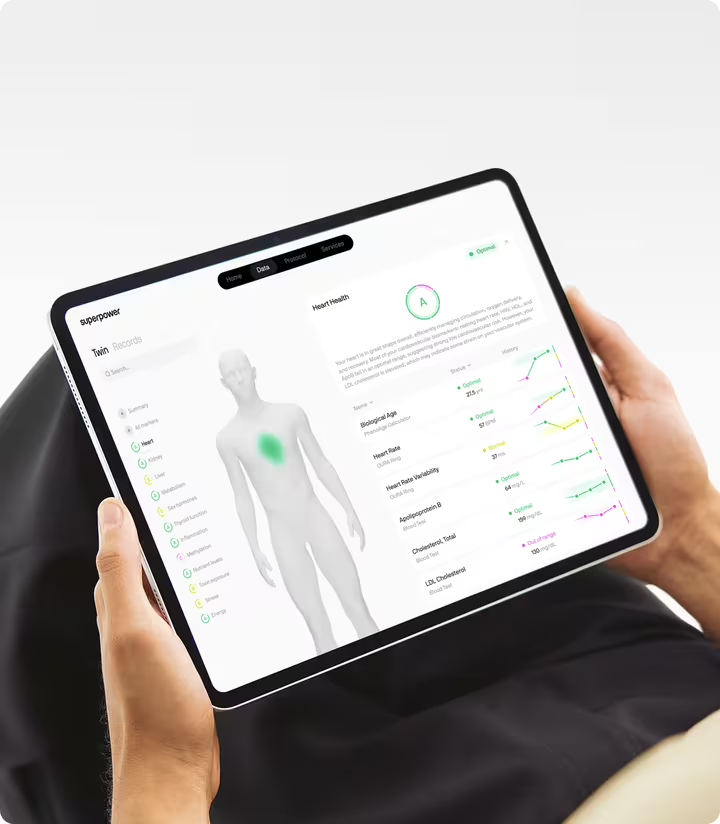
Superpower's Baseline Blood Panel covers ferritin, hemoglobin, hematocrit, vitamin D, hs-CRP, fasting glucose, insulin, and more in a single draw — providing a comprehensive performance health baseline without requiring multiple separate orders.
This article is for informational purposes only and does not constitute medical advice. Always consult a qualified healthcare provider before making changes to your supplement routine. Superpower offers blood panels that include the biomarkers discussed in this article. Links to individual tests are provided for informational context.
Frequently Asked Questions
References
- Grgic J, Grgic I, Pickering C, Schoenfeld BJ, Bishop DJ, Pedisic Z (2020). Wake up and smell the coffee: caffeine supplementation and exercise performance-an umbrella review of 21 published meta-analyses. *British journal of sports medicine*, *54*(11), 681-688. https://doi.org/10.1136/bjsports-2018-100278
- Grgic J, Trexler ET, Lazinica B, Pedisic Z (2018). Effects of caffeine intake on muscle strength and power: a systematic review and meta-analysis. *Journal of the International Society of Sports Nutrition*, *15*, 11. https://doi.org/10.1186/s12970-018-0216-0
- Barreto G, Esteves GP, Marticorena F, Oliveira TN, Grgic J, Saunders B (2024). Caffeine, CYP1A2 Genotype, and Exercise Performance: A Systematic Review and Meta-analysis. *Medicine and science in sports and exercise*, *56*(2), 328-339. https://doi.org/10.1249/MSS.0000000000003313
- Kreider RB, Kalman DS, Antonio J, Ziegenfuss TN, Wildman R, Collins R, Candow DG, Kleiner SM, Almada AL, Lopez HL (2017). International Society of Sports Nutrition position stand: safety and efficacy of creatine supplementation in exercise, sport, and medicine. *Journal of the International Society of Sports Nutrition*, *14*, 18. https://doi.org/10.1186/s12970-017-0173-z
- Avgerinos KI, Spyrou N, Bougioukas KI, Kapogiannis D (2018). Effects of creatine supplementation on cognitive function of healthy individuals: A systematic review of randomized controlled trials. *Experimental gerontology*, *108*, 166-173. https://doi.org/10.1016/j.exger.2018.04.013
- de Souza E Silva A, Pertille A, Reis Barbosa CG, Aparecida de Oliveira Silva J, de Jesus DV, Ribeiro AGSV, Baganha RJ, de Oliveira JJ (2019). Effects of Creatine Supplementation on Renal Function: A Systematic Review and Meta-Analysis. *Journal of renal nutrition : the official journal of the Council on Renal Nutrition of the National Kidney Foundation*, *29*(6), 480-489. https://doi.org/10.1053/j.jrn.2019.05.004
- Gonzalez AM, Trexler ET (2020). Effects of Citrulline Supplementation on Exercise Performance in Humans: A Review of the Current Literature. *Journal of strength and conditioning research*, *34*(5), 1480-1495. https://doi.org/10.1519/JSC.0000000000003426
- Georgiou GD, Antoniou K, Antoniou S, Michelekaki EA, Zare R, Ali Redha A, Prokopidis K, Christodoulides E, Clifford T (2024). Effect of Beta-Alanine Supplementation on Maximal Intensity Exercise in Trained Young Male Individuals: A Systematic Review and Meta-Analysis. *International journal of sport nutrition and exercise metabolism*, *34*(6), 397-412. https://doi.org/10.1123/ijsnem.2024-0027
- Silva KVC, Costa BD, Gomes AC, Saunders B, Mota JF (2022). Factors that Moderate the Effect of Nitrate Ingestion on Exercise Performance in Adults: A Systematic Review with Meta-Analyses and Meta-Regressions. *Advances in nutrition (Bethesda, Md.)*, *13*(5), 1866-1881. https://doi.org/10.1093/advances/nmac054
- Camfield DA, Stough C, Farrimond J, Scholey AB (2014). Acute effects of tea constituents L-theanine, caffeine, and epigallocatechin gallate on cognitive function and mood: a systematic review and meta-analysis. *Nutrition reviews*, *72*(8), 507-22. https://doi.org/10.1111/nure.12120
- Wankhede S, Langade D, Joshi K, Sinha SR, Bhattacharyya S (2015). Examining the effect of Withania somnifera supplementation on muscle strength and recovery: a randomized controlled trial. *Journal of the International Society of Sports Nutrition*, *12*, 43. https://doi.org/10.1186/s12970-015-0104-9
- Pengelly M, Pumpa K, Pyne DB, Etxebarria N (2025). Iron deficiency, supplementation, and sports performance in female athletes: A systematic review. *Journal of sport and health science*, *14*, 101009. https://doi.org/10.1016/j.jshs.2024.101009
- Naeini EK, Eskandari M, Mortazavi M, Gholaminejad A, Karevan N (2025). Effect of creatine supplementation on kidney function: a systematic review and meta-analysis. *BMC nephrology*, *26*(1), 622. https://doi.org/10.1186/s12882-025-04558-6
- McMahon NF, Leveritt MD, Pavey TG (2017). The Effect of Dietary Nitrate Supplementation on Endurance Exercise Performance in Healthy Adults: A Systematic Review and Meta-Analysis. *Sports medicine (Auckland, N.Z.)*, *47*(4), 735-756. https://doi.org/10.1007/s40279-016-0617-7
- Wang J, Dewi L, Peng Y, Hou CW, Song Y, Condello G (2024). Does ergogenic effect of caffeine supplementation depend on CYP1A2 genotypes? A systematic review with meta-analysis. *Journal of sport and health science*, *13*(4), 499-508. https://doi.org/10.1016/j.jshs.2023.12.005
- Badenhorst CE, Goto K, O'Brien WJ, Sims S (2021). Iron status in athletic females, a shift in perspective on an old paradigm. *Journal of sports sciences*, *39*(14), 1565-1575. https://doi.org/10.1080/02640414.2021.1885782