


See your TSH and total T4 together
TSH, total T4, and cortisol, measured from one blood draw
- CLIA-certified labs
- HIPAA compliant
- Personalized health protocol
What a normal TSH with a low T4 means
A normal thyroid-stimulating hormone (TSH) with a low thyroxine (T4) means the thyroid's main hormone reads low without the usual rise in TSH. Low thyroxine beside an inappropriately normal TSH can reflect serious illness, medication, a test problem, or, less often, a pituitary problem called central hypothyroidism.
TSH comes from the pituitary gland, and a low T4 normally pushes TSH up. Free T4 is the active, unbound hormone, and total T4 adds the protein-bound share.
Low free T4 is a common lab finding. Yet in a Welsh study of adults 16 and older, only 2% to 4% of those results proved to be central hypothyroidism. Most low T4 results with a normal TSH have more ordinary causes.
Common causes of low T4 with a normal TSH
Low T4 with a normal TSH has six main explanations. Most come from illness, medication, or the way T4 was measured, and these can mimic a pituitary problem.
| Cause | What happens | Clue that points to it |
|---|---|---|
| Central hypothyroidism (secondary hypothyroidism) | The pituitary gland or hypothalamus sends too little TSH to a normal thyroid | Other pituitary symptoms or known pituitary disease |
| Non-thyroidal illness (euthyroid sick syndrome) | Serious illness lowers T4 while TSH stays normal or slightly low | A recent hospital stay or major illness |
| Medications that lower TSH | Steroids (glucocorticoids), dopamine agonists, and somatostatin analogs can hold TSH down, though most do not cause true central hypothyroidism | Starting one of these medications |
| Test interference | Biotin supplements or antibodies in the blood can distort thyroid test results | A result that does not fit symptoms or other results |
| Low binding proteins | Low thyroxine-binding globulin (TBG) lowers total T4 while free T4 stays normal | Only total T4, or a free T4 index calculated from it, was measured |
| T3-containing thyroid medication | Liothyronine or desiccated thyroid lowers T4 levels, and combination T4 plus T3 leaves TSH unchanged | Taking either medication |
Test interference can change care, since at least half of documented interference cases led to misdiagnosis or wrong management, including unnecessary treatment. Clinicians rule out the more common explanations first, and when none fits, attention turns to the pituitary gland and hypothalamus.
Why central hypothyroidism can leave TSH normal
Central hypothyroidism produces low T4 with a normal TSH because the pituitary gland, the hypothalamus, or both under-stimulate a thyroid that works normally. Since TSH can read low or normal, a TSH-only check that skips free T4 can miss central hypothyroidism. A damaged pituitary can also release TSH with weak activity, so an in-range number does not mean the signal works.
Causes include pituitary tumors, surgery near the pituitary, radiation to the head, head injury, pituitary damage after childbirth (Sheehan syndrome), pituitary inflammation (hypophysitis), and some cancer immunotherapies (checkpoint inhibitors). The condition is rare, at roughly 1 in 16,000 to 1 in 100,000 people.
Without a TSH warning, central hypothyroidism can be hard to diagnose from symptoms or blood tests.
Symptoms that can come with low T4
Low T4 with a normal TSH can bring underactive-thyroid symptoms, plus signs of other missing pituitary hormones when the pituitary is the cause. In central hypothyroidism, thyroid symptoms are usually milder than when the thyroid itself fails.
- Thyroid symptoms: tiredness, weight gain, joint and muscle pain, dry skin, thinning hair, and trouble tolerating cold
- Pituitary clues: headaches; vision problems; low sex drive; irregular or missed periods; dizziness or fainting; and loss of armpit or pubic hair
New vision problems deserve prompt medical attention, since a large pituitary mass pressing on the optic nerves can cause permanent vision loss. Tiredness and weight gain are common and do not necessarily mean a thyroid problem, so symptoms alone cannot settle the cause.
Get 100+ biomarkers tested
One blood draw a year. A full picture of your health, explained in plain language.
Get 100+ biomarkers tested
One blood draw a year. A full picture of your health, explained in plain language.
Tests that clarify a low T4 result
Low T4 with a normal TSH is confirmed by repeating free T4 on at least two separate tests. When the low result holds, a few follow-up tests check the rest of the pituitary.
| Test | What it answers |
|---|---|
| Repeat free T4 (not total T4) | Whether the low result is real, with biotin stopped 2 days before the draw |
| Cortisol | Whether the pituitary's signal to the adrenal glands is also low, which shapes how treatment starts |
| Prolactin, luteinizing hormone, and follicle-stimulating hormone, with testosterone or estradiol | Whether other pituitary hormones are running low |
| Pituitary MRI | Whether a tumor or other pituitary change explains the hormone results, used when blood tests point there |
A result taken during serious illness is rechecked after recovery, since low T4 from serious illness resolves as the illness passes. Reverse T3, an inactive form of thyroid hormone, does not help show whether hypothyroidism is present in people who are not hospitalized.
Prolactin is measured in the Pituitary & Growth Hormones panel. Together, these checks point toward a cause.
Treatment for low T4 with a normal TSH
Treatment for low T4 with a normal TSH depends on the cause. Illness-related and test-related results usually need no thyroid hormone, while central hypothyroidism is managed with levothyroxine (synthetic T4) guided by free T4. Once therapy starts, TSH stops being a reliable guide, so clinicians keep free T4 in the upper half of its normal range.
Cortisol is checked, and replaced if low, before thyroid hormone begins. Starting thyroid hormone alongside untreated low cortisol can be life threatening.
The right next step depends on every result together, so that decision belongs with a clinician who can order follow-up tests.
Understand your thyroid markers with Superpower
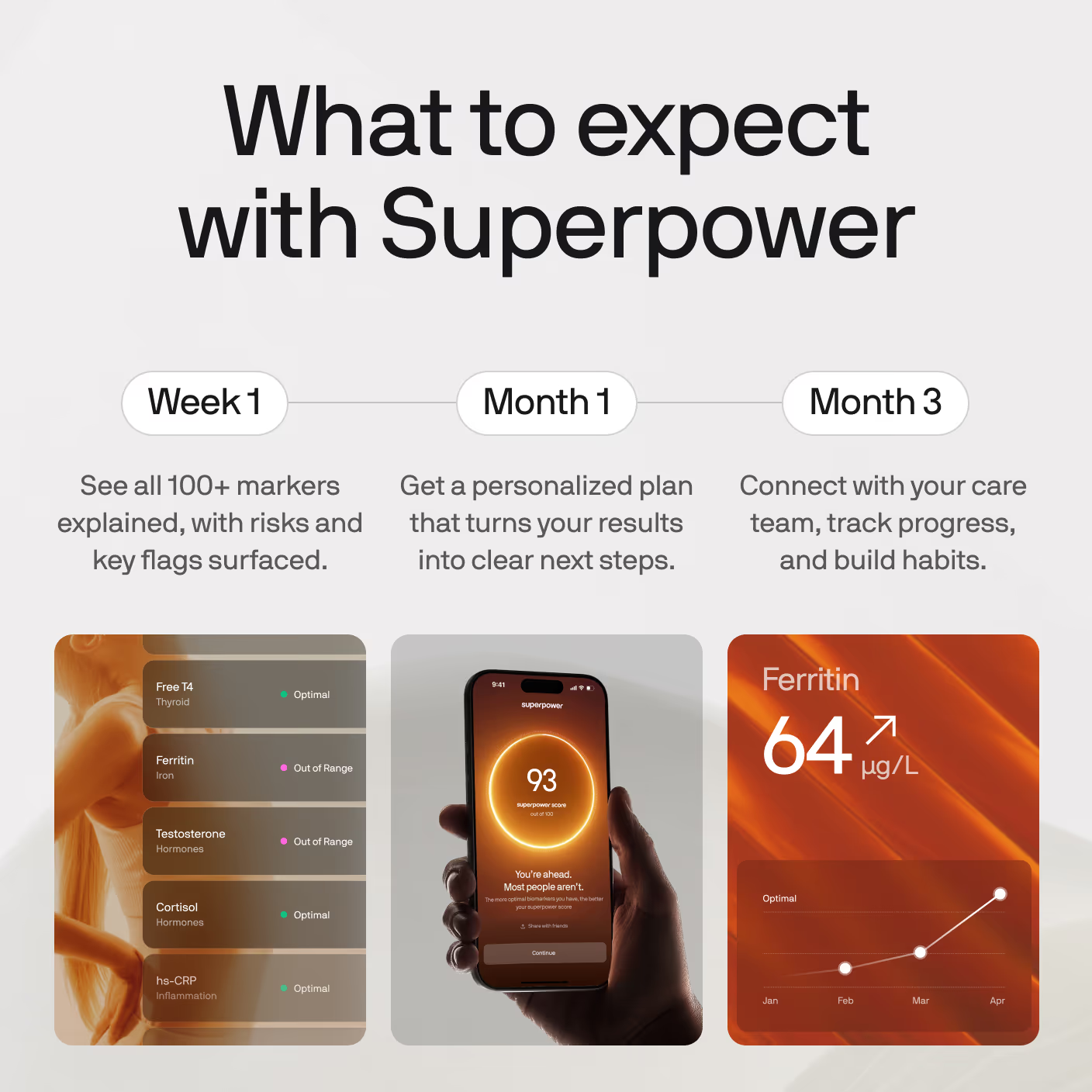
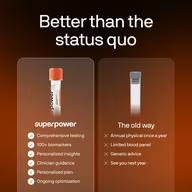
A normal TSH with a low T4 is easier to understand when a comprehensive blood test puts your other markers beside it. A Superpower membership includes 100+ biomarkers in a single draw, among them TSH, total T4, and cortisol. Superpower is your home for health, measuring those markers and helping you improve them with a personalized protocol, plus AI and care team support.
It's time to know your numbers. Start your Superpower membership and get your baseline in one draw.
References
- Koulouri O, Gurnell M. How to interpret thyroid function tests. *Clin Med (Lond)*. 2013;13(3):282-286. https://doi.org/10.7861/clinmedicine.13-3-282
- MedlinePlus. Thyroxine (T4) test. National Library of Medicine. Updated December 12, 2024. Accessed October 17, 2026. https://medlineplus.gov/lab-tests/thyroxine-t4-test/
- Evans C, Jacob J, Rodham A, et al. Current utility of first-line FT4 and TSH in screening for central hypothyroidism. *Clin Endocrinol (Oxf)*. 2024;101(1):78-84. https://doi.org/10.1111/cen.15068
- Persani L, Brabant G, Dattani M, et al. 2018 European Thyroid Association (ETA) guidelines on the diagnosis and management of central hypothyroidism. *Eur Thyroid J*. 2018;7(5):225-237. https://doi.org/10.1159/000491388
- Beck-Peccoz P, Rodari G, Giavoli C, Lania A. Central hypothyroidism - a neglected thyroid disorder. *Nat Rev Endocrinol*. 2017;13(10):588-598. https://doi.org/10.1038/nrendo.2017.47
- Fliers E, Bianco AC, Langouche L, Boelen A. Thyroid function in critically ill patients. *Lancet Diabetes Endocrinol*. 2015;3(10):816-825. https://doi.org/10.1016/S2213-8587(15)00225-9
- Haugen BR. Drugs that suppress TSH or cause central hypothyroidism. *Best Pract Res Clin Endocrinol Metab*. 2009;23(6):793-800. https://doi.org/10.1016/j.beem.2009.08.003
- Li D, Radulescu A, Shrestha RT, et al. Association of biotin ingestion with performance of hormone and nonhormone assays in healthy adults. *JAMA*. 2017;318(12):1150-1160. https://doi.org/10.1001/jama.2017.13705
- Favresse J, Burlacu MC, Maiter D, Gruson D. Interferences with thyroid function immunoassays: clinical implications and detection algorithm. *Endocr Rev*. 2018;39(5):830-850. https://doi.org/10.1210/er.2018-00119
- Chakravarthy V & Ejaz S (2023). *Thyroxine-binding globulin deficiency*. StatPearls Publishing.
- Nassar M, Hassan A, Ramadan S, et al. Evaluating the effectiveness of combined T4 and T3 therapy or desiccated thyroid versus T4 monotherapy in hypothyroidism: a systematic review and meta-analysis. *BMC Endocr Disord*. 2024;24(1):90. https://doi.org/10.1186/s12902-024-01612-6
- National Institute of Diabetes and Digestive and Kidney Diseases. Hypothyroidism (underactive thyroid). Last reviewed March 2021. Accessed October 17, 2026. https://www.niddk.nih.gov/health-information/endocrine-diseases/hypothyroidism
- MedlinePlus. Hypopituitarism. Medical Encyclopedia. National Library of Medicine. Reviewed April 24, 2025. Accessed October 17, 2026. https://medlineplus.gov/ency/article/000343.htm
- American Thyroid Association. Thyroid function tests. Accessed October 17, 2026. https://www.thyroid.org/thyroid-function-tests/
- Higham CE, Johannsson G, Shalet SM. Hypopituitarism. *Lancet*. 2016;388(10058):2403-2415. https://doi.org/10.1016/S0140-6736(16)30053-8















 Heart & Vascular Health
 Metabolic Health
 Energy
 Liver Health
 Kidney
 Sex Hormones
 Thyroid Health
 Nutrients
 Immune System
 Inflammation