


Understand what your thyroid health results really mean
See your biomarkers in context with a comprehensive panel.
- CLIA-certified labs
- HIPAA compliant
- Personalized health protocol
What free T4 test means
Think of your thyroid hormones like passengers on a bus. Total T4 measures everyone on the bus, but free T4 counts only the passengers who can actually get off and go to work. This distinction matters because bound T4 sits inactive, while free T4 drives your cellular processes.
Your thyroid produces mostly T4, which then converts to the more potent T3 in your tissues. Most circulating T4 is bound to proteins like thyroxine-binding globulin (TBG), leaving only a tiny fraction free. That small fraction packs enormous metabolic punch.
Free T4 levels reflect your thyroid gland's current output and your body's immediate hormone availability. Unlike total T4, which can fluctuate based on binding protein levels, free T4 gives you a direct read on functional thyroid status.
Normal free T4 ranges typically span 0.8-1.8 ng/dL (10-23 pmol/L), though labs use slightly different reference ranges. Your optimal level depends on your individual physiology, symptoms, and how you feel within that range. Some people thrive at the lower end, while others need levels closer to the upper limit for peak function.
How to interpret free T4 test
Low free T4 often signals hypothyroidism, where your thyroid underproduces hormone. You might experience fatigue, weight gain, cold sensitivity, or brain fog. But context matters. If your TSH (thyroid-stimulating hormone) is also elevated, that confirms primary hypothyroidism. If TSH is low or normal with low free T4, suspect secondary hypothyroidism from pituitary dysfunction.
High free T4 typically indicates hyperthyroidism, causing symptoms like rapid heartbeat, weight loss, heat intolerance, or anxiety. Again, check TSH for the complete picture. Suppressed TSH with high free T4 suggests classic hyperthyroidism. Normal or elevated TSH with high free T4 is uncommon and may point to rare conditions like TSH-secreting pituitary tumors or thyroid hormone resistance.
Free T4 in the normal range doesn't automatically mean optimal thyroid function. Some people with "normal" free T4 still experience hypothyroid symptoms if their levels sit at the bottom of the range or if they have conversion issues from T4 to T3.
Pay attention to trends over time rather than single measurements. Your free T4 can fluctuate based on stress, illness, medications, or natural variation. Multiple tests spaced weeks apart provide better insight than isolated results.
What can influence free T4 test
Medications dramatically impact free T4 levels. Levothyroxine (synthetic T4) directly raises free T4, while methimazole and propylthiouracil suppress thyroid hormone production. Biotin supplements can interfere with certain thyroid immunoassays, potentially skewing results. Stop biotin 2-3 days before testing.
Pregnancy increases binding proteins, which can affect total T4 and often requires pregnancy-specific reference ranges. Thyroid hormone needs increase during gestation, and many women require higher levothyroxine doses during pregnancy.
Severe illness, major surgery, or prolonged fasting can alter thyroid labs through non-thyroidal illness syndrome (NTIS). The classic pattern is low T3 with low or normal T4 and TSH, reflecting downregulation of the thyroid axis during critical illness. Recovery typically normalizes levels.
Timing and sample handling affect accuracy. Most clinicians test in the morning before the daily levothyroxine dose, since measured T4 can transiently rise after absorption. Avoid testing during acute illness unless clinically necessary.
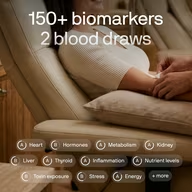
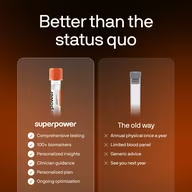
Test 150+ biomarkers
Two blood draws. A full picture of your health, explained in plain language.
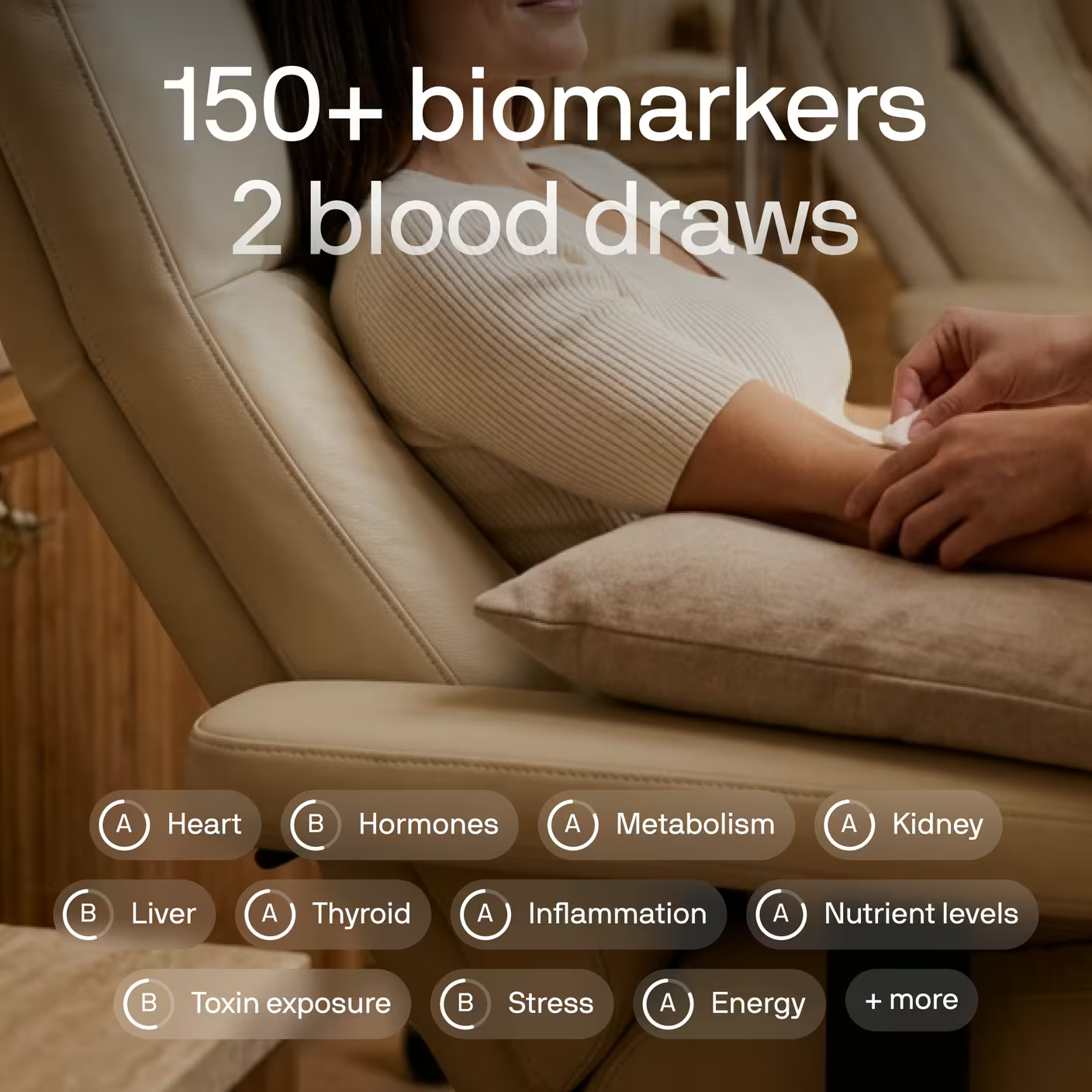
Test 150+ biomarkers
Two blood draws. A full picture of your health, explained in plain language.
Related context that changes the picture
TSH provides essential context for free T4 interpretation. TSH responds to free T4 levels through negative feedback, so the relationship between these hormones reveals thyroid axis function. Discordant results (normal free T4 with out of range TSH, or vice versa) warrant investigation.
Free T3 adds another layer of insight. Some people convert T4 to T3 efficiently, while others struggle with this conversion. You might have adequate free T4 but low free T3, suggesting conversion problems rather than primary thyroid dysfunction. This pattern sometimes responds better to combination T4/T3 therapy.
Thyroid antibodies help distinguish autoimmune from non-autoimmune thyroid disease. Elevated TPO (thyroid peroxidase) or thyroglobulin antibodies alongside out of range free T4 point toward Hashimoto's thyroiditis or Graves' disease. Antibody-negative thyroid dysfunction has different causes and treatment approaches.
Reverse T3 (rT3) is an inactive T3 metabolite. Levels can rise during critical illness and some medication exposures as part of non-thyroidal illness syndrome. The clinical utility of routine rT3 testing in otherwise healthy outpatients remains debated.
Take control of your thyroid health
Understanding your free T4 test results is just the beginning. True thyroid optimization requires tracking multiple biomarkers over time and understanding how they interact with your unique physiology.
Comprehensive thyroid testing covers free T4, TSH, free T3, and thyroid antibodies. Together they show how your thyroid is functioning, and how that function connects to your broader health patterns.
Frequently Asked Questions
References
- Patil N, Rehman A, Anastasopoulou C, Jialal I (2024). *Hypothyroidism*. StatPearls Publishing. https://www.ncbi.nlm.nih.gov/books/NBK519536/
- Mathew P, Kaur J, Rawla P (2023). *Hyperthyroidism*. StatPearls Publishing. https://www.ncbi.nlm.nih.gov/books/NBK537053/
- Singh S, Haq N, Sandhu S (2025). *Thyroid disease and pregnancy*. StatPearls Publishing. https://www.ncbi.nlm.nih.gov/books/NBK538485/
- Bowden SA, Goldis M (2023). *Congenital hypothyroidism*. StatPearls Publishing. https://www.ncbi.nlm.nih.gov/books/NBK558913/
- Shahid MA, Ashraf MA, Sharma S (2023). *Physiology, thyroid hormone*. StatPearls Publishing. https://www.ncbi.nlm.nih.gov/books/NBK500006/
- Eghtedari B, Correa R (2023). *Levothyroxine*. StatPearls Publishing. https://www.ncbi.nlm.nih.gov/books/NBK539808/
- Cervantes A, Daley SF (2025). *Biotin deficiency*. StatPearls Publishing. https://www.ncbi.nlm.nih.gov/books/NBK547751/
- Ganesan K, Anastasopoulou C, Wadud K (2022). *Euthyroid sick syndrome*. StatPearls Publishing. https://www.ncbi.nlm.nih.gov/books/NBK482219/
- Kaur J, Jialal I (2026). *Hashimoto thyroiditis*. StatPearls Publishing. https://www.ncbi.nlm.nih.gov/books/NBK459262/














 Heart & Vascular Health
 Metabolic Health
 Energy
 Liver Health
 Kidney
 Sex Hormones
 Thyroid Health
 Nutrients
 Immune System
 Inflammation