


Understand what your thyroid health results really mean
See your biomarkers in context with a comprehensive panel.
- CLIA-certified labs
- HIPAA compliant
- Personalized health protocol
Hypothyroidism and the hormones that reveal it
Hypothyroidism biomarkers are blood signals that map the thyroid’s hormone supply and its master control, letting us see how well the body can keep its metabolic pace. The pituitary’s messenger, thyroid-stimulating hormone (TSH), reflects how loudly the brain is asking the thyroid to work. The thyroid’s main output, free thyroxine (free T4), shows how much hormone is actually available to tissues, while free triiodothyronine (free T3) represents the active form that cells use after conversion from T4. Autoimmune flags—thyroid peroxidase antibodies (TPO antibodies) and thyroglobulin antibodies (Tg antibodies)—reveal whether the immune system is targeting the gland, the most common root of underactivity. Read together, these markers locate the weak link in the feedback loop (thyroid versus pituitary), show current hormone availability, and uncover immune pressure on the gland. Testing matters because thyroid hormones set the baseline for energy, temperature regulation, heart rhythm, mood, and lipid handling; precise biomarker tracking allows early detection of underactive function, clearer diagnosis of cause, and tailored dosing when hormone replacement is needed.
Why a thyroid panel matters in suspected underactivity
Thyroid blood tests show how your body sets its metabolic “idle.” When the thyroid underproduces hormone, every system that relies on steady cellular energy slows—brain, heart, gut, skin, blood, and reproduction. Testing maps that slowdown early, before complications build. TSH is the pituitary’s signal; in primary hypothyroidism it rises above the upper limit, often before symptoms peak. Most adults do well with TSH in the lower half of normal and a free T4 index sitting mid-to-upper range; Total T4 typically tracks similarly. T3 uptake tends to be mid-range when binding proteins and hormone levels are balanced. TPO and Tg antibodies are normally negative; when elevated, they point to autoimmune (Hashimoto) thyroiditis and predict progression. In pregnancy, a lower-normal TSH is expected; in children, slightly higher TSH can be normal for age. When free T4 index and total T4 fall below range, cellular metabolism slows: fatigue, cold intolerance, weight gain, constipation, dry skin, hair loss, slowed heart rate, heavy periods, and elevated LDL. T3 uptake can be low when hormone is low or binding proteins are high; during pregnancy this may reflect increased binding rather than true deficiency. Women may notice cycle changes and fertility issues; men may experience low libido and muscle slowing. If TSH is low or normal despite low T4, consider central (pituitary) hypothyroidism. Big picture, these markers link thyroid output to cardiovascular risk (higher LDL and blood pressure), mood and cognition, anemia, fluid balance, and pregnancy outcomes. Regular, accurate measurement helps align the thyroid-pituitary axis with whole-body physiology, reducing long-term risks to the heart, brain, and metabolic health.
Test 150+ biomarkers
Two blood draws. A full picture of your health, explained in plain language.
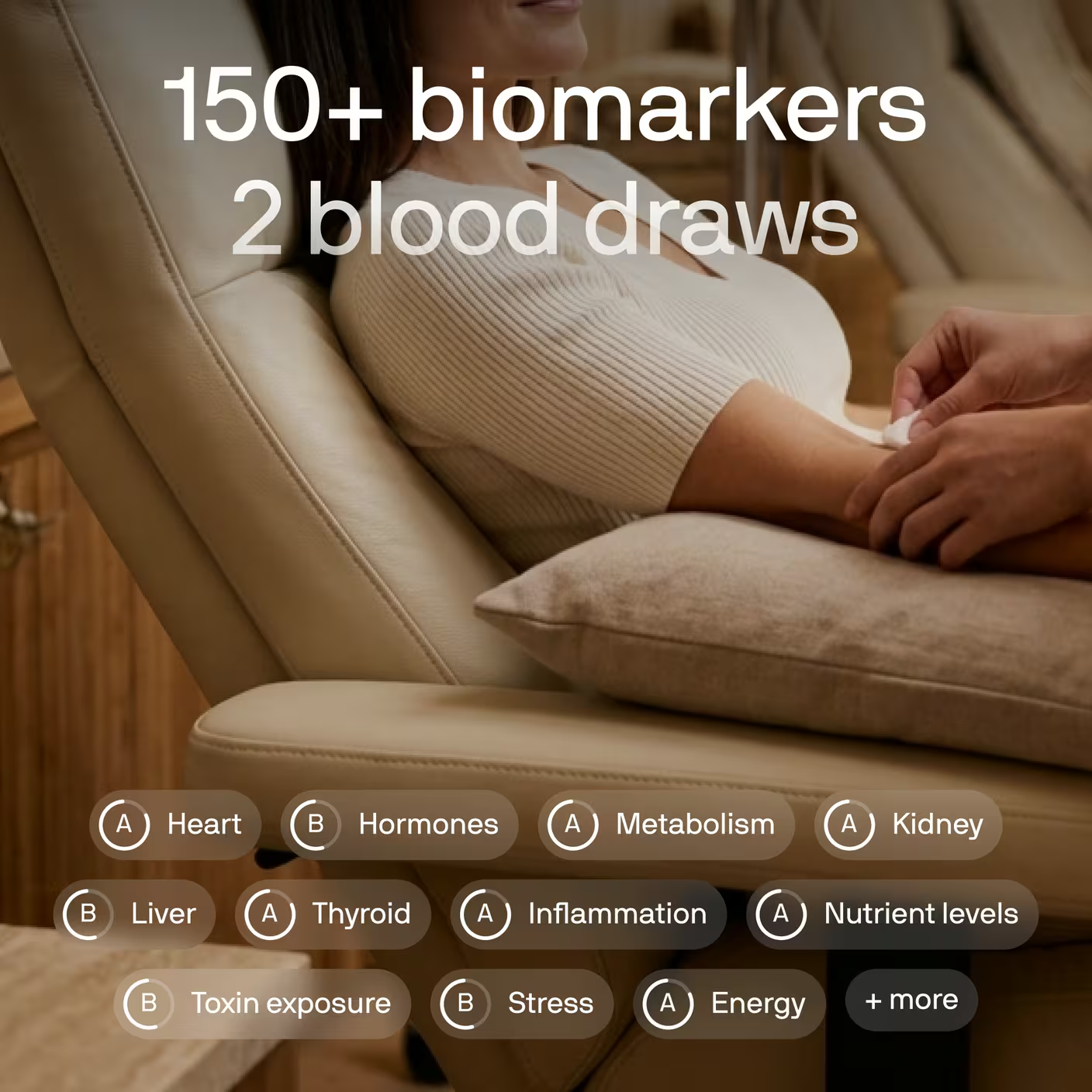
Test 150+ biomarkers
Two blood draws. A full picture of your health, explained in plain language.
What a TSH-centered panel settles and what it doesn't
Hypothyroidism blood testing provides a window into how well your thyroid gland supports the body’s energy production, metabolism, cardiovascular function, brain health, reproductive system, and immune balance. The thyroid acts as a metabolic control center, and when it underperforms, nearly every system can be affected. At Superpower, we assess hypothyroidism using these biomarkers: TSH (Thyroid stimulating hormone), free T4 index, total T4, T3 uptake, TPO antibodies (TPO Ab), and thyroglobulin antibodies (Tg Ab).TSH is a hormone from the pituitary gland that signals the thyroid to produce hormones. In hypothyroidism, TSH levels rise (↑) as the body tries to stimulate a sluggish thyroid. Free T4 index and total T4 measure the main hormone produced by the thyroid; both decrease (↓) when the gland is underactive. T3 uptake reflects how much thyroid hormone is available to tissues and also tends to decrease (↓) in hypothyroidism. TPO Ab and Tg Ab are antibodies that, when elevated, indicate the immune system is attacking the thyroid, a common cause of hypothyroidism known as autoimmune thyroiditis. When TSH is high and thyroid hormones are low, it signals that the body’s energy regulation is compromised. This can lead to symptoms like fatigue, weight changes, slowed thinking, and changes in heart and reproductive health. The presence of thyroid antibodies points to immune system involvement, which can affect the stability and long-term function of the thyroid gland. Interpretation of these results can be influenced by factors such as pregnancy, age, acute illness, certain medications, and differences in laboratory methods. These variables are important to consider for an accurate understanding of thyroid health.
Frequently Asked Questions
References
- Jonklaas J, Bianco AC, Bauer AJ, Burman KD, Cappola AR, Celi FS, Cooper DS, Kim BW, Peeters RP, Rosenthal MS, Sawka AM (2014). Guidelines for the treatment of hypothyroidism: Prepared by the American Thyroid Association task force on thyroid hormone replacement. *Thyroid*, *24*(12), 1670-1751. https://doi.org/10.1089/thy.2014.0028
- Rodondi N, den Elzen WPJ, Bauer DC, Cappola AR, Razvi S, Walsh JP, Asvold BO, Iervasi G, Imaizumi M, Collet TH, Bremner A, Maisonneuve P, Sgarbi JA, Khaw KT, Vanderpump MPJ, Newman AB, Cornuz J, Franklyn JA, Westendorp RGJ, ... Gussekloo J (2010). Subclinical hypothyroidism and the risk of coronary heart disease and mortality. *JAMA*, *304*(12), 1365-1374. https://doi.org/10.1001/jama.2010.1361
- Ross DS, Burch HB, Cooper DS, Greenlee MC, Laurberg P, Maia AL, Rivkees SA, Samuels M, Sosa JA, Stan MN, Walter MA (2016). 2016 American Thyroid Association guidelines for diagnosis and management of hyperthyroidism and other causes of thyrotoxicosis. *Thyroid*, *26*(10), 1343-1421. https://doi.org/10.1089/thy.2016.0229
- Chaker L, Bianco AC, Jonklaas J, Peeters RP (2017). Hypothyroidism. *Lancet*, *390*(10101), 1550-1562. https://doi.org/10.1016/S0140-6736(17)30703-1
- National Institute of Diabetes and Digestive and Kidney Diseases. (2021). *Hypothyroidism (underactive thyroid)*. https://www.niddk.nih.gov/health-information/endocrine-diseases/hypothyroidism



















 Heart & Vascular Health
 Metabolic Health
 Energy
 Liver Health
 Kidney
 Sex Hormones
 Thyroid Health
 Nutrients
 Immune System
 Inflammation