


See your TSH and T4 side by side
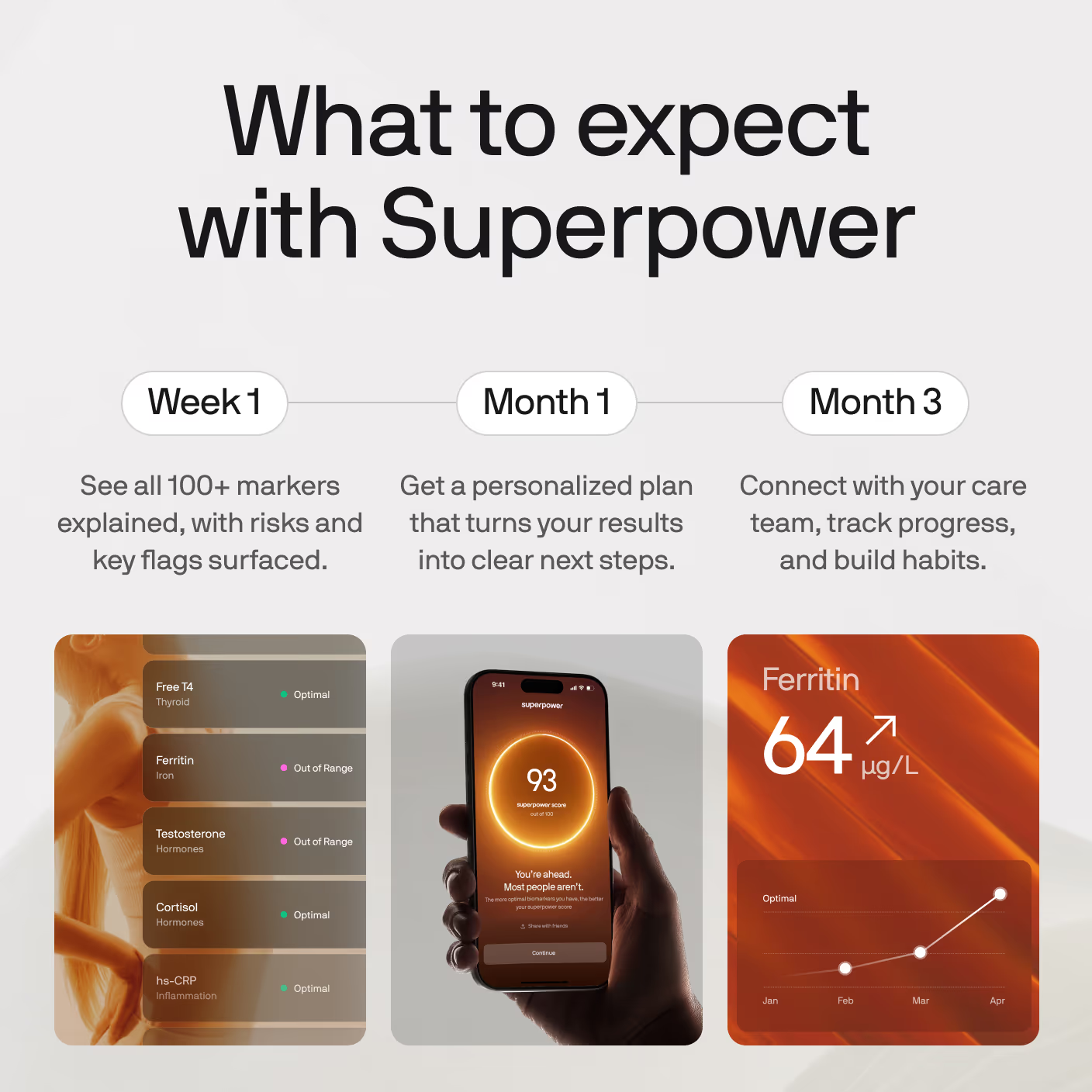
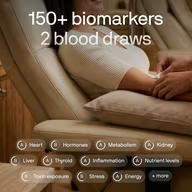
Your membership includes TSH and total T4 in a single draw
- CLIA-certified labs
- HIPAA compliant
- Personalized health protocol
What normal TSH with low T3 and T4 means
Normal TSH with low T3 and T4 means the pituitary gland is not responding to a thyroid hormone shortfall. When very little T4 is circulating, TSH normally rises. A TSH that stays in range beside low free T4 and free T3 is inappropriately normal, meaning too low for the hormone levels next to it. The pattern points away from the thyroid gland, toward the pituitary or hypothalamus, an illness, or the test itself.
Thyroid-stimulating hormone (TSH) is the pituitary's signal to the thyroid, and thyroxine (T4) is the main hormone the thyroid makes. Triiodothyronine (T3) is the active form, made mostly from T4 in the liver and brain. Read together, the three results tell this pattern apart from more familiar ones.
How this result compares with other thyroid patterns
Normal TSH with low T3 and T4 differs from primary hypothyroidism, the familiar underactive-thyroid pattern, because TSH stays flat. In primary hypothyroidism, TSH climbs as T4 falls, since the pituitary is working and the thyroid gland has slowed. Each combination of results points somewhere different.
| TSH | T4 | T3 | What the pattern can suggest |
|---|---|---|---|
| High | Low | Low or normal | Primary hypothyroidism, an underactive thyroid gland, including Hashimoto's disease |
| Normal | Low | Low | TSH not rising as expected, an inappropriately normal TSH |
| Low | Low | Low | A pituitary problem (secondary hypothyroidism) or a serious illness |
| Normal | Normal | Low | A mild illness lowering T3 alone, often called low T3 syndrome |
| Normal | Low | Normal | A related pattern with overlapping causes |
A flat TSH beside two low hormones narrows the explanation to a short list of causes upstream of the thyroid gland or inside the test.
Common causes of normal TSH with low T3 and T4
Most causes of normal TSH with low T3 and T4 lie outside the thyroid gland itself.
- Serious or prolonged illness: severe illness or starvation lowers T3, then T4, without a TSH rise (non-thyroidal illness).
- Certain medications: glucocorticoids, dopamine agonists, somatostatin analogs, and rexinoids can suppress TSH at the pituitary.
- Low binding proteins: most T4 and T3 travels bound to blood proteins, so less protein lowers total hormone while free hormone holds steady.
- Test interference: biotin supplements and some blood antibodies can skew results for TSH, T4, and T3.
- Recovery: levels can take time to settle after a serious illness or a spell of overactive thyroid.
A result that clashes with how someone feels is usually repeated first. If the pattern persists and no cause fits, a clinician looks to the pituitary gland.
Central hypothyroidism and the pituitary
Central hypothyroidism is a rare condition in which the pituitary gland, the hypothalamus, or both send too little TSH stimulation. A healthy thyroid then makes too little T4 and T3, while TSH reads normal or low, and the TSH released may be less active. Central hypothyroidism, including secondary hypothyroidism from the pituitary, affects an estimated 1 in 16,000 to 1 in 100,000 people.
TSH-only screening misses central hypothyroidism because TSH looks fine, so labs can read normal while someone feels unwell. Clinicians look for a history of pituitary tumors, brain surgery, head radiation, or head injury, plus recurring headaches or loss of side vision. Whatever its cause, central hypothyroidism brings the symptoms of an underactive thyroid.
Get 100+ biomarkers tested
One blood draw a year. A full picture of your health, explained in plain language.
Get 100+ biomarkers tested
One blood draw a year. A full picture of your health, explained in plain language.
Symptoms of low T3 and T4
Low T3 and T4 produce the symptoms of an underactive thyroid, which usually develop slowly and vary from person to person.
- Fatigue
- Weight gain
- Trouble tolerating cold
- Joint and muscle pain
- Dry skin or dry, thinning hair
- Heavy or irregular periods, or fertility problems
- Slowed heart rate
- Depression
Most of these symptoms have other common causes too. In central hypothyroidism they are usually milder, so the lab result guides what comes next.
Next steps after normal TSH with low T3 and T4
The usual next step after normal TSH with low T3 and T4 is a repeat blood test measuring free T4. Free T4 is considered more accurate than total T4, while T3 tests are not commonly used to check for hypothyroidism.
Pausing biotin 2 days before the draw avoids a skewed result. If the pattern holds, a clinician may check other pituitary hormones, including the one that drives the adrenal glands. Once central hypothyroidism is confirmed and thyroid hormone is replaced, free T4, not TSH, guides monitoring.
A clinician can say which explanation fits, and repeat results show whether the pattern is settling.
Understand your thyroid markers with Superpower
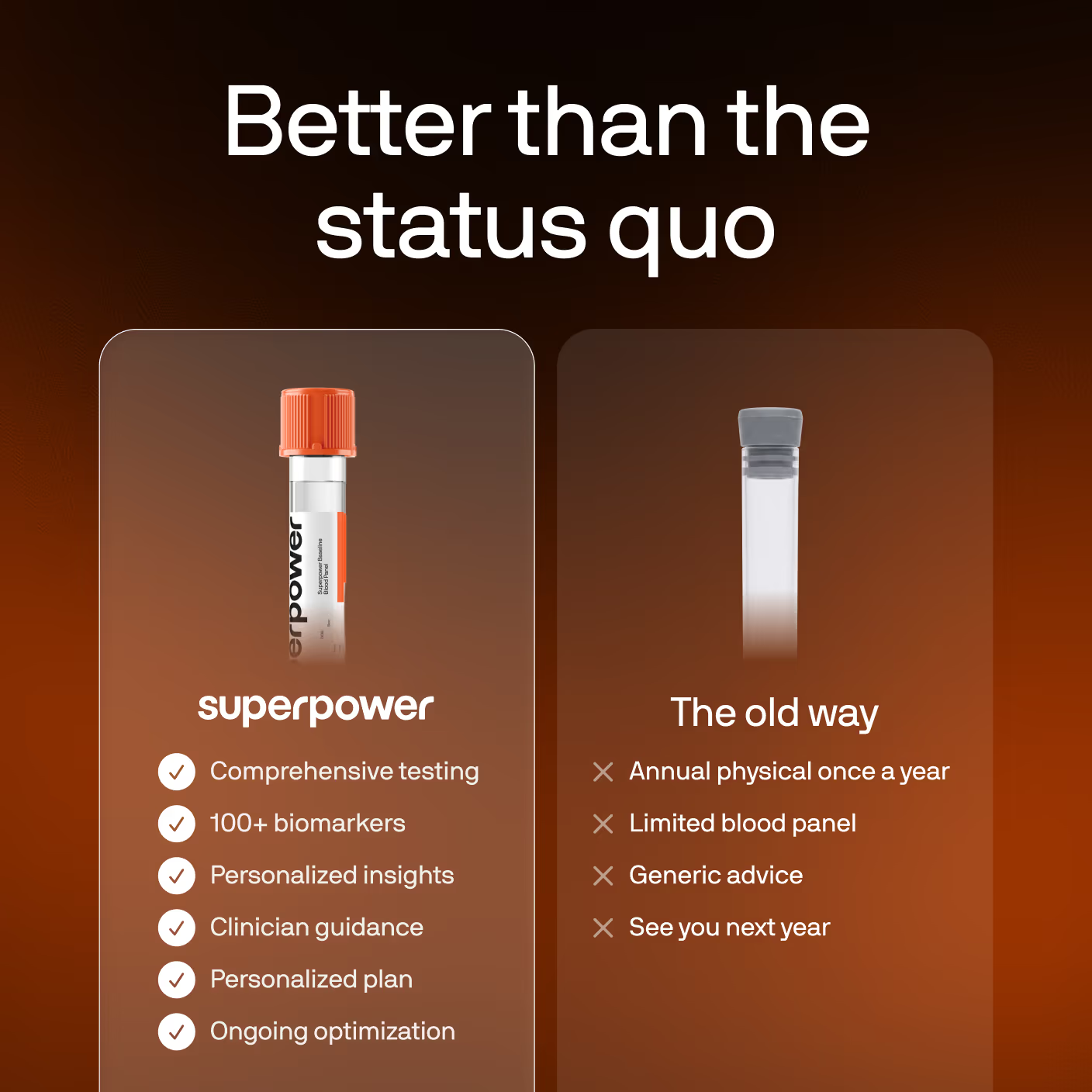
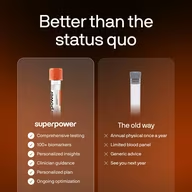
Normal TSH with low T3 and T4 shows only when a comprehensive blood test reads TSH and T4 together, since TSH should rise as T4 falls. A Superpower membership includes 100+ biomarkers in a single draw, TSH and total T4 among them. Superpower is your home for health, measuring these markers and supporting you in improving them with a personalized protocol, plus AI and care team support.
It's time to see your own thyroid numbers side by side. Start your Superpower membership and get your baseline in one draw.
References
- American Thyroid Association. Thyroid function tests. Accessed October 17, 2026.
- Koulouri O, Gurnell M. How to interpret thyroid function tests. *Clin Med (Lond)*. 2013;13(3):282-286. https://doi.org/10.7861/clinmedicine.13-3-282
- MedlinePlus. Thyroxine (T4) test. National Library of Medicine. Updated December 12, 2024. Accessed October 17, 2026.
- Fliers E, Boelen A. An update on non-thyroidal illness syndrome. *J Endocrinol Invest*. 2021;44(8):1597-1607. https://doi.org/10.1007/s40618-020-01482-4
- Haugen BR. Drugs that suppress TSH or cause central hypothyroidism. *Best Pract Res Clin Endocrinol Metab*. 2009;23(6):793-800. https://doi.org/10.1016/j.beem.2009.08.003
- Favresse J, Burlacu MC, Maiter D, Gruson D. Interferences with thyroid function immunoassays: clinical implications and detection algorithm. *Endocr Rev*. 2018;39(5):830-850. https://doi.org/10.1210/er.2018-00119
- Beck-Peccoz P, Rodari G, Giavoli C, Lania A. Central hypothyroidism - a neglected thyroid disorder. *Nat Rev Endocrinol*. 2017;13(10):588-598. https://doi.org/10.1038/nrendo.2017.47
- Persani L, Brabant G, Dattani M, et al. 2018 European Thyroid Association (ETA) guidelines on the diagnosis and management of central hypothyroidism. *Eur Thyroid J*. 2018;7(5):225-237. https://doi.org/10.1159/000491388
- National Institute of Diabetes and Digestive and Kidney Diseases. Hypothyroidism (underactive thyroid). Last reviewed March 2021. Accessed October 17, 2026.
- MedlinePlus. Triiodothyronine (T3) tests. National Library of Medicine. Updated January 10, 2024. Accessed October 17, 2026.














 Heart & Vascular Health
 Metabolic Health
 Energy
 Liver Health
 Kidney
 Sex Hormones
 Thyroid Health
 Nutrients
 Immune System
 Inflammation