


See your TSH and T4 side by side
Read your thyroid signal next to the hormone it responds to
- CLIA-certified labs
- HIPAA compliant
- Personalized health protocol
Hyperthyroidism with a normal TSH is rare, but possible
You can have hyperthyroidism with a normal TSH, but only rarely. In almost every overactive thyroid, thyroid-stimulating hormone (TSH) reads low or suppressed. A normal or high TSH beside high thyroid hormone points to a few rare conditions of the pituitary or of hormone response.
The pituitary gland sets its TSH output by how much thyroxine (T4) it senses. Once thyroid hormone in the blood rises past a certain level, the pituitary shuts TSH production off. That loop is why TSH is read beside the thyroid hormones themselves.
Thyroid lab patterns and what they mean
Reading TSH, free thyroxine (free T4), and free triiodothyronine (free T3) together separates overt hyperthyroidism from milder and rarer patterns. A standard thyroid function test checks TSH, T3, and T4.
| Pattern | TSH | Free T4 | Free T3 | What it usually points to |
|---|---|---|---|---|
| Overt hyperthyroidism | Low | High or normal | High or normal | An overactive thyroid, with T4, T3, or both high |
| Subclinical hyperthyroidism | Low | Normal | Normal | A mild overactive thyroid |
| T3-predominant (T3 toxicosis) | Low | Normal | High | An overactive thyroid making mostly T3 |
| High hormone, TSH not suppressed | Normal or high | High | High or normal | A rare cause, or a skewed test result |
| Normal thyroid function | Normal | Normal | Normal | Thyroid hormone within range |
Worldwide, overt hyperthyroidism affects roughly 0.2% to 1.4% of people, and the subclinical form about 0.7% to 1.4%. Free T4 can also read falsely normal in true hyperthyroidism when only T3 runs high. High hormone beside an unsuppressed TSH is far rarer, with only a handful of causes.
Conditions that keep TSH normal while thyroid hormone runs high
Only a few conditions raise thyroid hormone without suppressing TSH, and just one is a very rare cause of hyperthyroidism.
- TSH-secreting pituitary adenoma: a pituitary tumor, found in about one per million people, keeps releasing TSH and causes central (secondary) hyperthyroidism.
- Resistance to thyroid hormone: an inherited THRB gene change leaves tissues less responsive, so hormone runs high without TSH suppression. Most people feel well, though some have a racing heart.
- Euthyroid hyperthyroxinemia: high T4 on paper with a normally working thyroid. Most T4 travels bound to blood proteins, so an inherited protein variant, familial dysalbuminemic hyperthyroxinemia, can make free T4 read high without symptoms.
A high result can also come from the sample or its timing.
When a thyroid result is misleading
A thyroid result can mislead when something interferes with the test or the draw catches a passing change. Results that clash with symptoms are worth repeating.
High-dose, over-the-counter biotin can push TSH falsely low and free T4 and T3 falsely high. A clinician may ask you to stop biotin for 2 to 7 days before retesting, so tell whoever orders the test if you take it.
Heparin, amiodarone, and acute psychiatric illness can each raise measured T4 without suppressing TSH. Most forms of thyroiditis move through a hyperthyroid phase, then an underactive one, then usually back to normal, so one draw captures a single point in that cycle. Other times the panel is accurate, and symptoms remain.
Symptoms that mimic an overactive thyroid
The palpitations, anxiety, heat intolerance, and weight loss linked to an overactive thyroid also have causes outside the thyroid. That matters when a panel reads in range.
- Panic attacks: a pounding heart, sweating, trembling, and dizziness
- Caffeine and nicotine: both can set off a racing heart
- Stimulant drugs and diet pills: both can quicken the heartbeat
- Decongestants: medicines such as pseudoephedrine or phenylephrine
- Fever and heavy drinking: either can speed up the heart
A racing heart is usually harmless, but new or lasting symptoms are worth a clinician's look.
Get 100+ biomarkers tested
One blood draw a year. A full picture of your health, explained in plain language.
Get 100+ biomarkers tested
One blood draw a year. A full picture of your health, explained in plain language.
Tests that clarify a normal TSH with hyperthyroid symptoms
Clinicians check medicines and recent illness first, then screen for a test artifact, then look for a rare cause.
Re-running the sample on a different test method shows whether interference skewed it. A TSH receptor antibody test identifies Graves disease. Current versions catch 97.7% of cases and clear 99.5% of people without it. Pituitary imaging and genetic testing come in only when the pattern points there.
Free T3, thyroid peroxidase antibodies, and thyroglobulin antibodies are available via the Thyroid Autoimmunity add-on. Tracking thyroid markers across more than one draw shows a pattern a single result cannot.
Understand your thyroid markers with Superpower
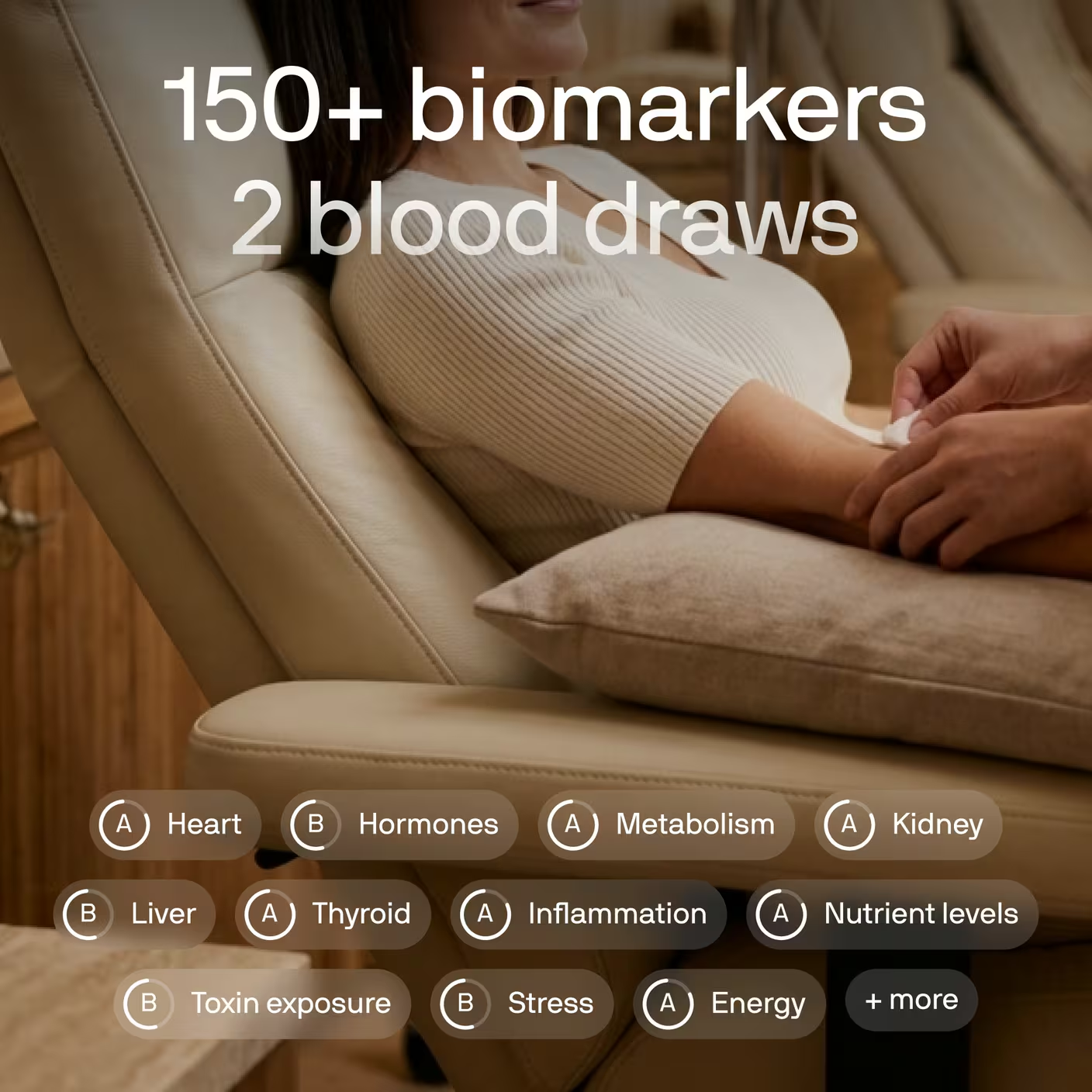
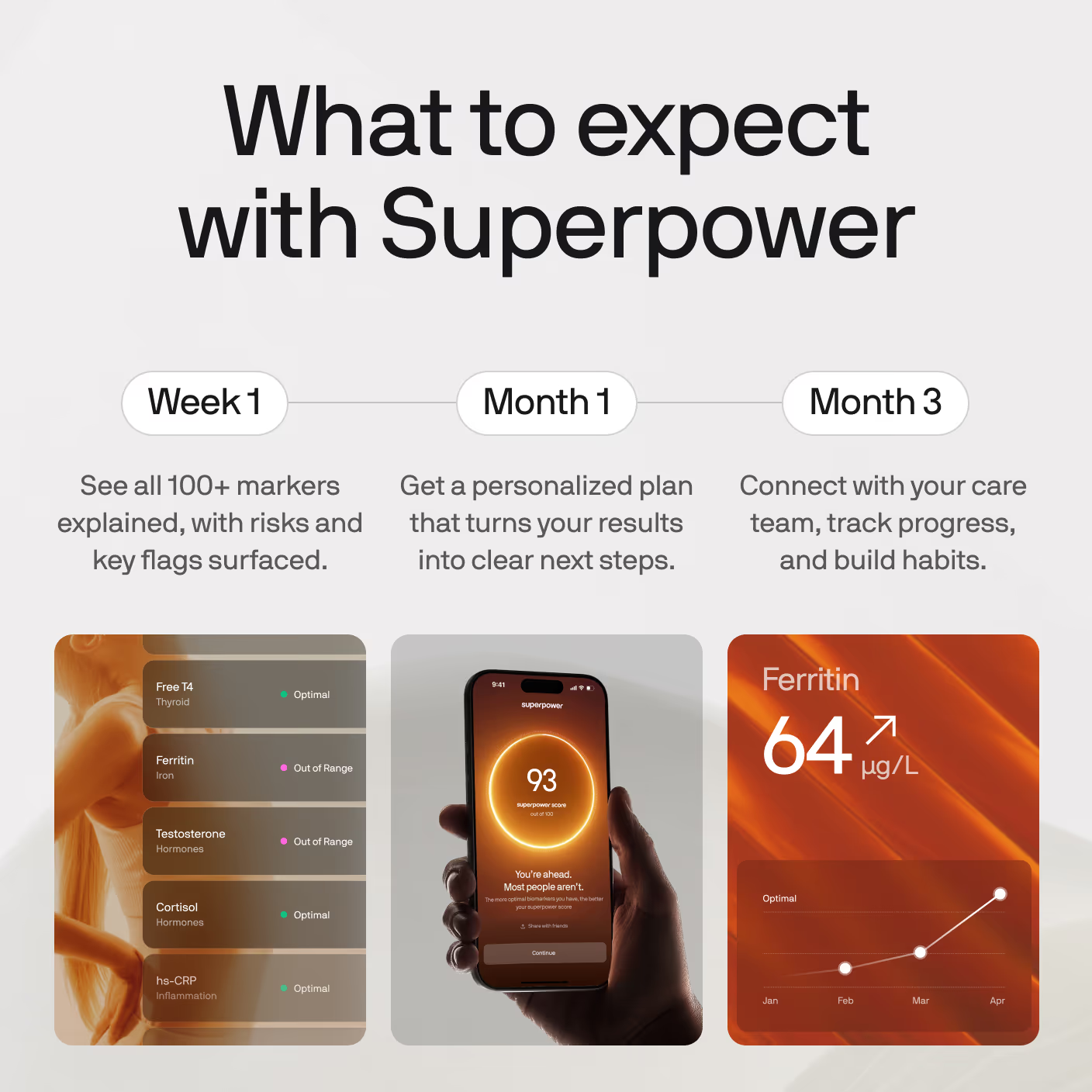
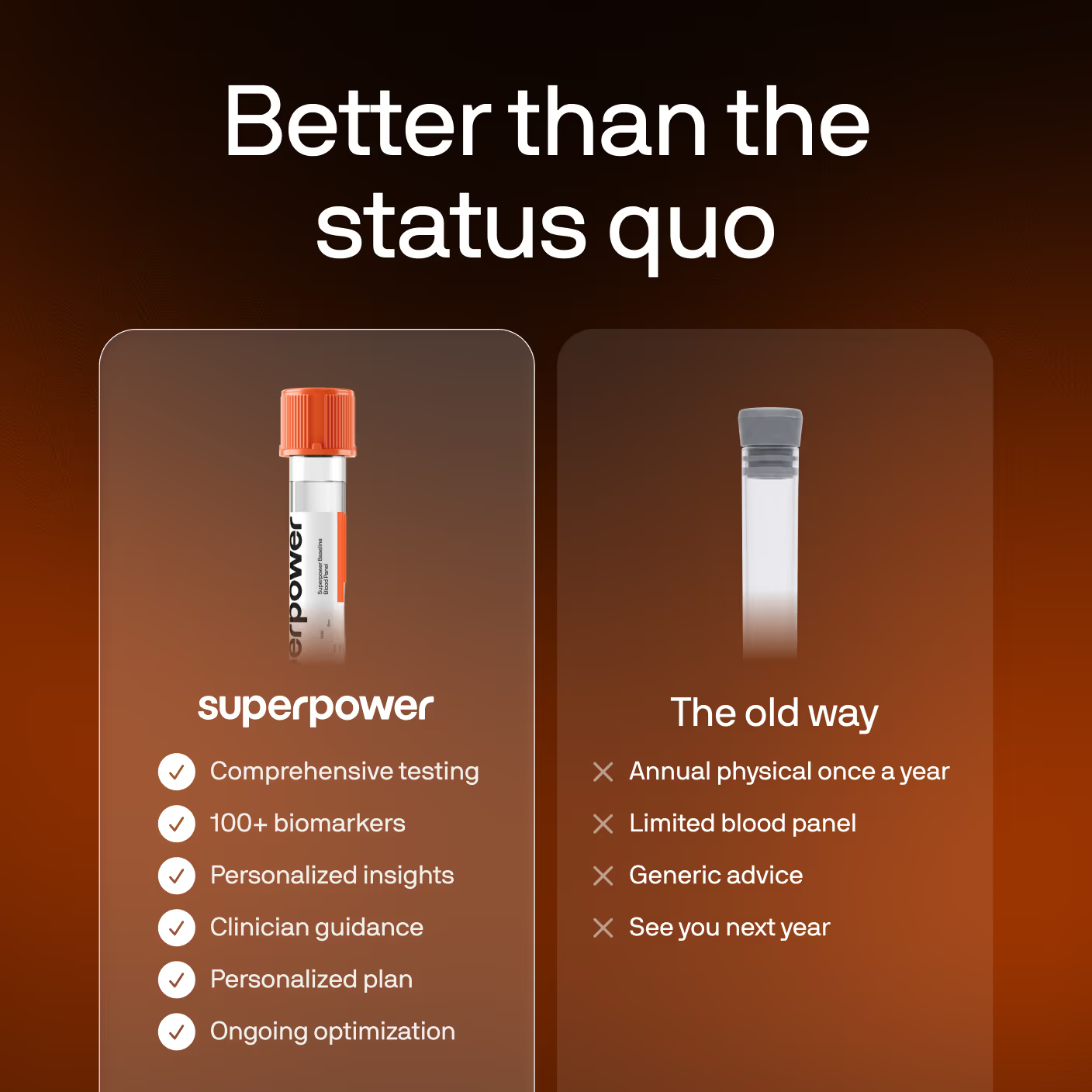
Answering whether you can have hyperthyroidism with a normal TSH starts with a comprehensive blood test that reads TSH beside thyroid hormone. A Superpower membership includes 100+ biomarkers in a single draw, TSH and total T4 among them. Superpower is your home for health, pairing results with a personalized protocol, plus AI and care team support.
Get clear answers about your thyroid. Start your Superpower membership and get your baseline in one draw.
References
- Boucai L. Hyperthyroidism (thyrotoxicosis, including Graves disease). Merck Manual Professional Version. Full review January 2026. Accessed October 17, 2026. https://www.merckmanuals.com/professional/endocrine-and-metabolic-disorders/thyroid-disorders/hyperthyroidism
- American Thyroid Association. Thyroid function tests. Accessed October 17, 2026. https://www.thyroid.org/thyroid-function-tests/
- National Health Service. Overactive thyroid (hyperthyroidism): diagnosis. Page last reviewed April 11, 2023. Accessed October 17, 2026. https://www.nhs.uk/conditions/overactive-thyroid-hyperthyroidism/diagnosis/
- Lee SY, Pearce EN. Hyperthyroidism: a review. *JAMA*. 2023;330(15):1472-1483. https://doi.org/10.1001/jama.2023.19052
- Koulouri O, Moran C, Halsall D, Chatterjee K, Gurnell M. Pitfalls in the measurement and interpretation of thyroid function tests. *Best Pract Res Clin Endocrinol Metab*. 2013;27(6):745-762. https://doi.org/10.1016/j.beem.2013.10.003
- Beck-Peccoz P, Lania A, Beckers A, Chatterjee K, Wemeau JL. 2013 European Thyroid Association guidelines for the diagnosis and treatment of thyrotropin-secreting pituitary tumors. *Eur Thyroid J*. 2013;2(2):76-82. https://doi.org/10.1159/000351007
- De Herdt C, Philipse E, De Block C. Endocrine tumours: thyrotropin-secreting pituitary adenoma: a structured review of 535 adult cases. *Eur J Endocrinol*. 2021;185(2):R65-R74. https://doi.org/10.1530/EJE-21-0162
- Pappa T, Refetoff S. Resistance to thyroid hormone beta: a focused review. *Front Endocrinol (Lausanne)*. 2021;12:656551. https://doi.org/10.3389/fendo.2021.656551
- Dieu X, Bouzamondo N, Briet C, et al. Familial dysalbuminemic hyperthyroxinemia: an underdiagnosed entity. *J Clin Med*. 2020;9(7):2105. https://doi.org/10.3390/jcm9072105
- Favresse J, Burlacu MC, Maiter D, Gruson D. Interferences with thyroid function immunoassays: clinical implications and detection algorithm. *Endocr Rev*. 2018;39(5):830-850. https://doi.org/10.1210/er.2018-00119
- Samarasinghe S, Meah F, Singh V, et al. Biotin interference with routine clinical immunoassays: understand the causes and mitigate the risks. *Endocr Pract*. 2017;23(8):989-998. https://doi.org/10.4158/EP171761.RA
- Martinez Quintero B, Yazbeck C, Sweeney LB. Thyroiditis: evaluation and treatment. *Am Fam Physician*. 2021;104(6):609-617.
- National Institute of Mental Health. Panic disorder: what you need to know. Revised 2025. Accessed October 17, 2026. https://www.nimh.nih.gov/health/publications/panic-disorder-when-fear-overwhelms
- MedlinePlus. Heart palpitations. National Library of Medicine. Review date June 4, 2026. Accessed October 17, 2026. https://medlineplus.gov/ency/article/003081.htm



















 Heart & Vascular Health
 Metabolic Health
 Energy
 Liver Health
 Kidney
 Sex Hormones
 Thyroid Health
 Nutrients
 Immune System
 Inflammation