


See where your TSH and total T4 sit
Two core thyroid markers, measured in one draw of 100+ biomarkers
- CLIA-certified labs
- HIPAA compliant
- Personalized health protocol
What free T4 measures in your blood
Free thyroxine (free T4, or FT4) is the unbound share of thyroxine (T4), about 0.03% of total serum T4, the only part tissues can use.
Tissues such as the liver convert T4 to active triiodothyronine (T3). Pregnancy, birth control pills, illness, and steroids shift total T4, but those binding protein changes don't affect free T4.
A free T4 test reports against the lab's range, separate from any free T4 optimal range.
Free T4 reference range vs optimal range
The free T4 normal range is the middle 95% of healthy adults' results on one lab's assay (test method), while no optimal free T4 level is agreed. Across four platforms, those limits differed significantly by manufacturer. Normal is deliberately wide, marking the absence of disease. Optimal is narrower, describing a level suited to long-term health.
| Lab assay platform | Lower limit (pmol/L) | Upper limit (pmol/L) |
|---|---|---|
| Abbott Architect | 10.6 | 15.5 |
| Beckman Unicel DxI | 7.9 | 13.0 |
| Roche Cobas | 12.5 | 19.6 |
| Siemens Advia Centaur XP | 11.8 | 19.0 |
Reports print pmol/L or ng/dL, and 11.3 to 32.1 pmol/L equals 0.881 to 2.49 ng/dL. Your own report's range applies, and landing inside it only clears a statistical cutoff.
Why a normal free T4 result can mislead
A normal free T4 result marks the middle 95% of healthy adults, and that cutoff does not take into consideration the risk of heart disease or death.
Across 21 free T4 tests, only 21 of 40 donor samples were classified alike as low, normal, or high. Antibody-based immunoassays read a median 20.3% below the reference method.
A result near either end still reads normal, so a clean report does not always explain why you feel unwell.
What shifts free T4: age, pregnancy, and medication
Free T4 can shift with who is tested and when.
- Age and sex: women's levels run no more than 0.1 ng/dL higher, and upper limits rise from age 70 onward.
- Pregnancy: ranges are specific to each trimester and assay.
- Levothyroxine (thyroid medication): free T4 stays raised for 9 hours after an oral dose.
- Biotin: the supplement can make normal thyroid tests look out of range.
- Severe illness and steroids: both can affect T4 results.
Assay interference, such as from biotin, led to misdiagnosis or inappropriate management in at least 50% of documented cases, so confirming a reading comes first.
What long-term outcome data says about free T4
Across 134,346 adults, the lowest heart disease and death risk came in the lower-middle of the normal range, rather than the upper half often called optimal online. That band, the 20th to 40th percentiles, had cohort medians of 13.5 and 14.8 pmol/L, which set no universal target. The top fifth had a 34% higher risk of death than that band.
High-normal free T4 also tracked with 1.45 times the risk of atrial fibrillation, an irregular heartbeat, versus low-normal levels. It is not known whether managing either end of the range changes these risks. Free T4 is clearer beside its partner markers.
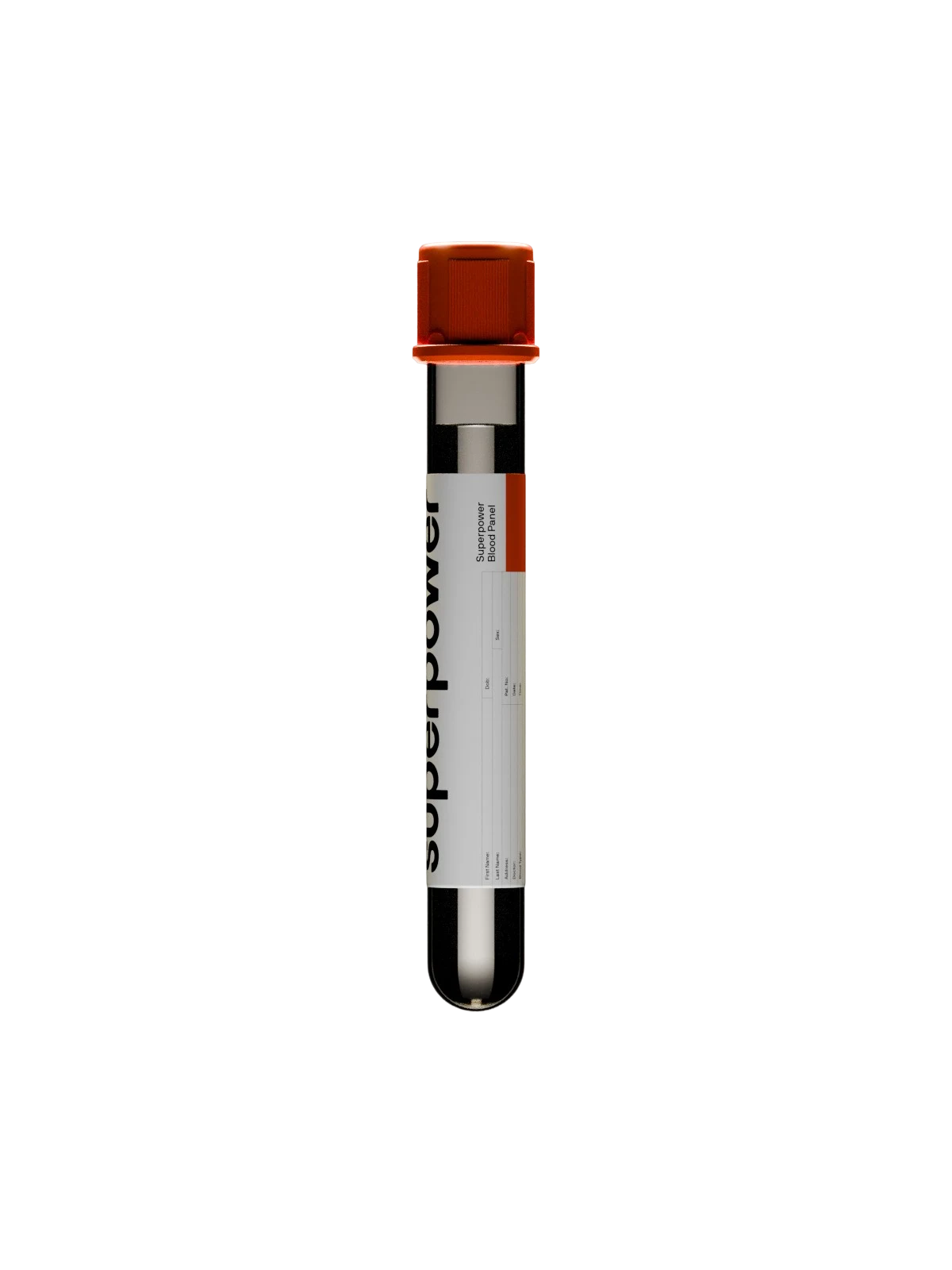
Get 100+ biomarkers tested
One blood draw a year. A full picture of your health, explained in plain language.
Get 100+ biomarkers tested
One blood draw a year. A full picture of your health, explained in plain language.
Reading free T4 alongside TSH, free T3, and antibodies
Free T4 is usually read with thyroid-stimulating hormone (TSH), since the pituitary adjusts TSH in response to T4.
- High TSH, low free T4: points to an underactive thyroid, called primary hypothyroidism
- Low TSH, low free T4: can point to a pituitary cause
- Low TSH, high free T4: points to an overactive thyroid
- Low TSH, normal free T4: sometimes only T3 runs high
Antibodies to thyroid peroxidase (TPO) and thyroglobulin help identify an autoimmune cause, such as Hashimoto's. The Thyroid Autoimmunity panel measures both antibodies along with free T3, a marker whose measurement is often unreliable. Free T4 far outside its range can also bring symptoms.
Signs your free T4 sits too low or too high
Free T4 below the range can point to an underactive thyroid, and above it to an overactive one.
An underactive thyroid commonly brings fatigue, weight gain, and trouble tolerating cold, plus a slowed heart rate, dry skin, and depression.
An overactive thyroid can bring weight loss despite a bigger appetite, a rapid heartbeat, nervousness, poor sleep, and shaky hands. Older adults may instead show appetite loss or withdrawal.
Fatigue and weight gain do not necessarily mean a thyroid problem, so symptoms are read alongside measured markers.
Understand your thyroid markers with Superpower
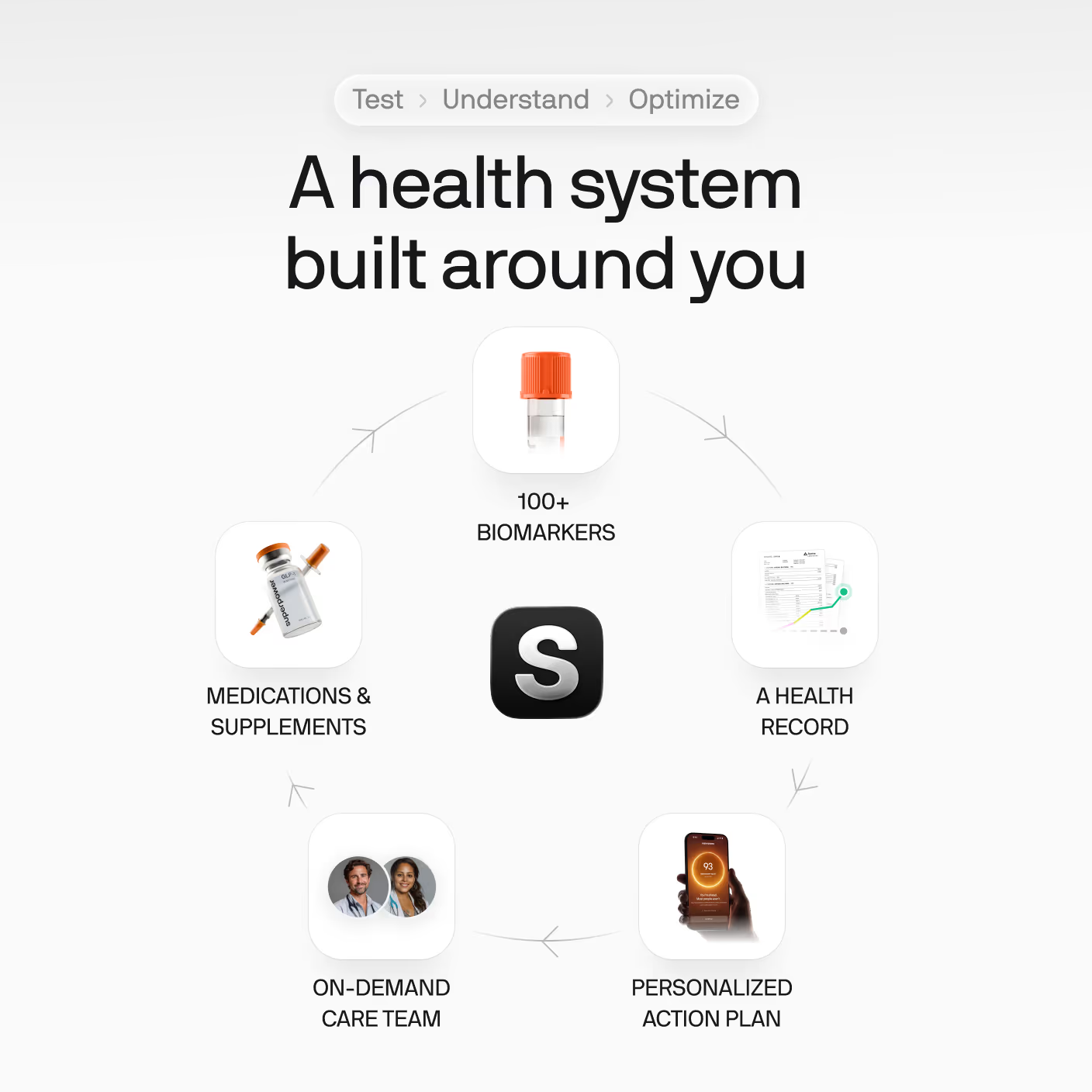
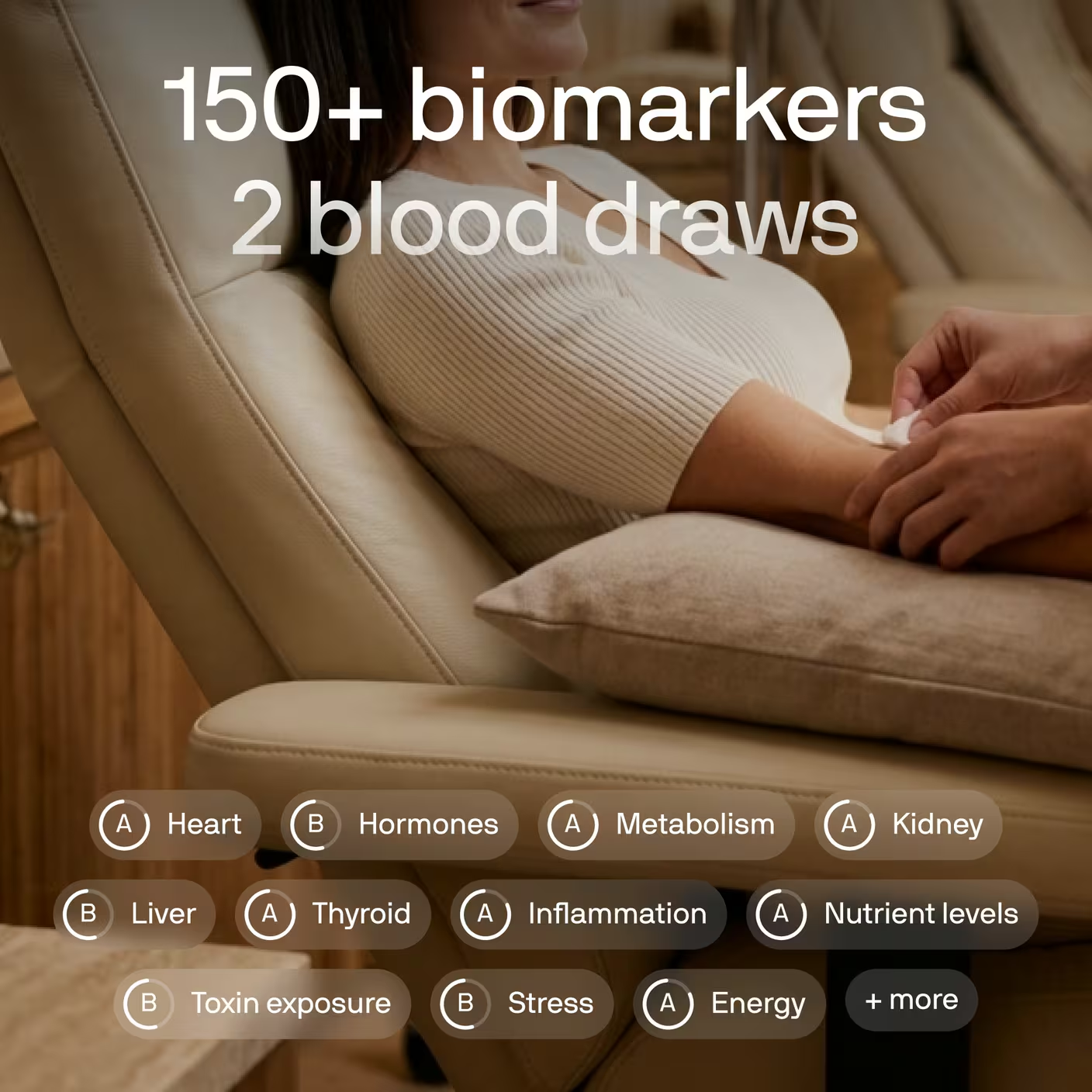
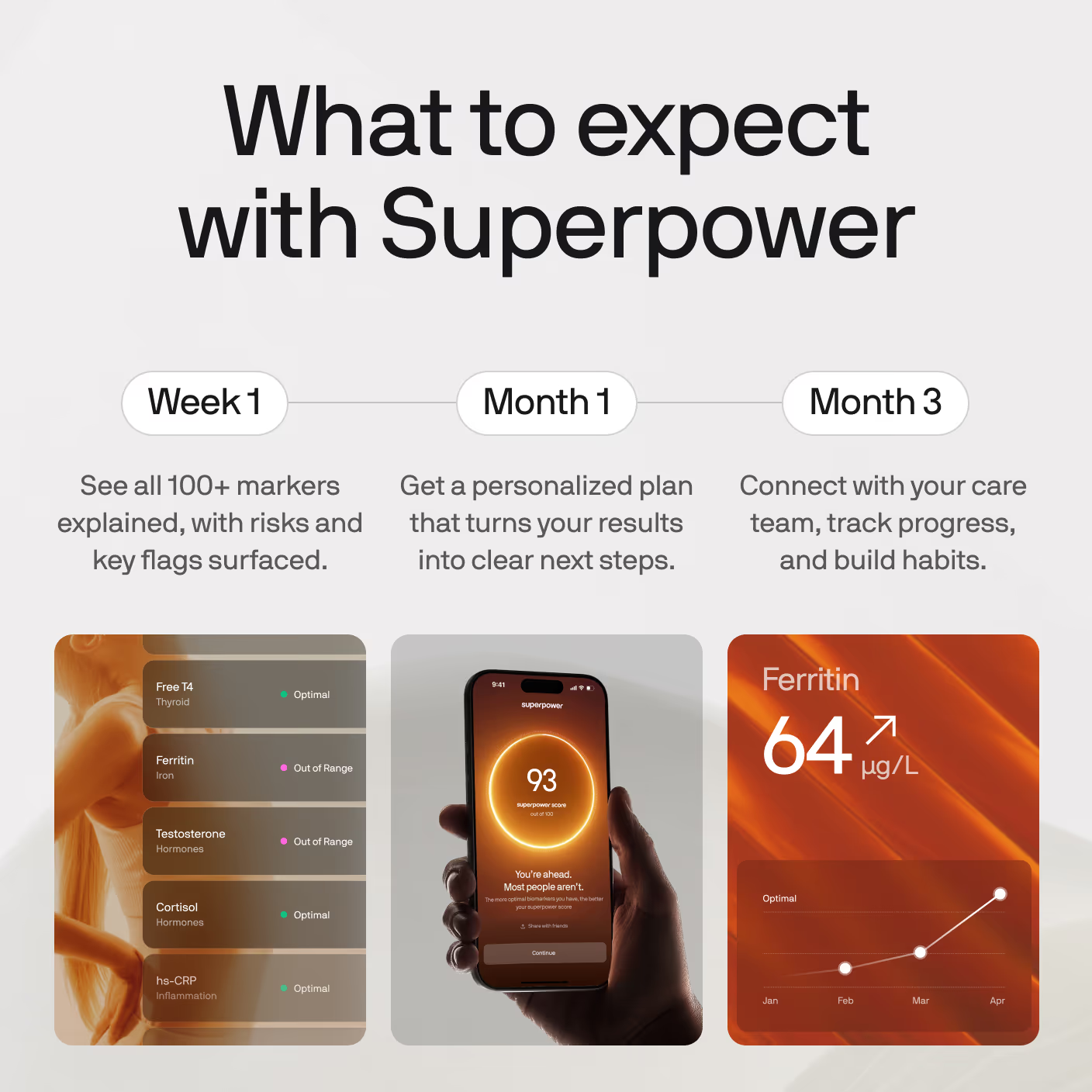
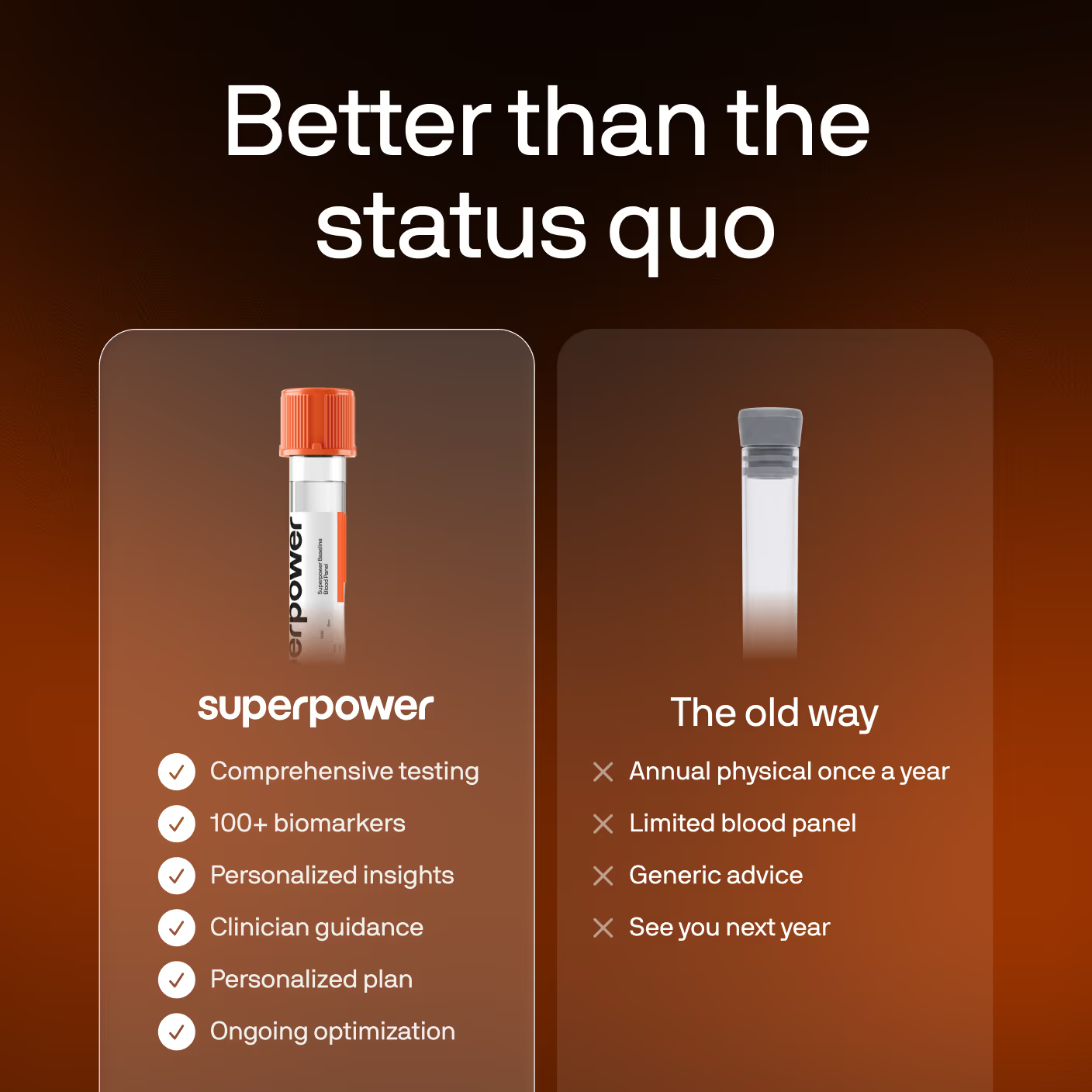
Free T4 is usually read with TSH, so a comprehensive blood test that reports your thyroid markers together is the place to start. A Superpower membership includes 100+ biomarkers in a single draw, with TSH and total T4 among them. As your home for health, Superpower pairs results with a personalized protocol, plus AI and care team support to help improve them.
Discover what your own health data says. Start your Superpower membership.
References
- Boucai L (2026). Overview of thyroid function. *Merck Manual Professional Version*. Reviewed January 2026. https://www.merckmanuals.com/professional/endocrine-and-metabolic-disorders/thyroid-disorders/overview-of-thyroid-function
- American Thyroid Association (n.d.). Thyroid function tests. *American Thyroid Association patient information*. https://www.thyroid.org/thyroid-function-tests/
- National Institute of Diabetes and Digestive and Kidney Diseases (2017). Thyroid tests. *National Institutes of Health*. Reviewed May 2017. https://www.niddk.nih.gov/health-information/diagnostic-tests/thyroid
- Barth JH, Luvai A, Jassam N, et al (2018). Comparison of method-related reference intervals for thyroid hormones: studies from a prospective reference population and a literature review. *Annals of Clinical Biochemistry*, *55*(1), 107–112. https://doi.org/10.1177/0004563217691549
- Ribera A, Sugahara O, Buchannan T, et al (2025). Evaluation of the current state of thyroid hormone testing in human serum: results of the free thyroxine and thyrotropin interlaboratory comparison study. *Thyroid*, *35*(5), 471–484. https://doi.org/10.1089/thy.2024.0728
- Smith P (2024). The "new normal" for thyroid function test ranges. *Clinical Thyroidology for the Public*, *17*(2), 5–6. https://www.thyroid.org/patient-thyroid-information/ct-for-patients/february-2024/vol-17-issue-2-p-5-6/
- Ehrenkranz J, Bach PR, Snow GL, et al (2015). Circadian and circannual rhythms in thyroid hormones: determining the TSH and free T4 reference intervals based upon time of day, age, and sex. *Thyroid*, *25*(8), 954–961. https://doi.org/10.1089/thy.2014.0589
- Jansen HI, Dirks NF, Hillebrand JJ, et al (2024). Age-specific reference intervals for thyroid-stimulating hormones and free thyroxine to optimize diagnosis of thyroid disease. *Thyroid*, *34*(11), 1346–1355. https://doi.org/10.1089/thy.2024.0346
- Okosieme OE, Agrawal M, Usman D, Evans C (2021). Method-dependent variation in TSH and FT4 reference intervals in pregnancy: a systematic review. *Annals of Clinical Biochemistry*, *58*(5), 537–546. https://doi.org/10.1177/00045632211026955
- Ain KB, Pucino F, Shiver TM, Banks SM (1993). Thyroid hormone levels affected by time of blood sampling in thyroxine-treated patients. *Thyroid*, *3*(2), 81–85. https://doi.org/10.1089/thy.1993.3.81
- MedlinePlus (2024). Thyroxine (T4) test. *National Library of Medicine*. Updated December 12, 2024. https://medlineplus.gov/lab-tests/thyroxine-t4-test/
- Favresse J, Burlacu MC, Maiter D, Gruson D (2018). Interferences with thyroid function immunoassays: clinical implications and detection algorithm. *Endocrine Reviews*, *39*(5), 830–850. https://doi.org/10.1210/er.2018-00119
- Xu Y, Derakhshan A, Hysaj O, et al (2023). The optimal healthy ranges of thyroid function defined by the risk of cardiovascular disease and mortality: systematic review and individual participant data meta-analysis. *Lancet Diabetes & Endocrinology*, *11*(10), 743–754. https://doi.org/10.1016/S2213-8587(23)00227-9
- Baumgartner C, da Costa BR, Collet TH, et al (2017). Thyroid function within the normal range, subclinical hypothyroidism, and the risk of atrial fibrillation. *Circulation*, *136*(22), 2100–2116. https://doi.org/10.1161/CIRCULATIONAHA.117.028753
- National Institute of Diabetes and Digestive and Kidney Diseases (2021). Hypothyroidism (underactive thyroid). *National Institutes of Health*. Reviewed March 2021. https://www.niddk.nih.gov/health-information/endocrine-diseases/hypothyroidism
- National Institute of Diabetes and Digestive and Kidney Diseases (2021). Hyperthyroidism (overactive thyroid). *National Institutes of Health*. Reviewed August 2021. https://www.niddk.nih.gov/health-information/endocrine-diseases/hyperthyroidism













 Heart & Vascular Health
 Metabolic Health
 Energy
 Liver Health
 Kidney
 Sex Hormones
 Thyroid Health
 Nutrients
 Immune System
 Inflammation