


Understand what your mental wellness results really mean
See your biomarkers in context with a comprehensive panel.
- CLIA-certified labs
- HIPAA compliant
- Personalized health protocol
What mindfulness-based stress reduction actually is
Mindfulness-based stress reduction is a specific 8-week program developed by Jon Kabat-Zinn in the late 1970s, originally designed for chronic pain patients at the University of Massachusetts Medical Center. It's not synonymous with meditation apps, breathing exercises, or general wellness advice. The original MBSR protocol involves:
- Weekly 2.5-hour group sessions with trained instructors
- A full-day silent retreat during the program
- 45 minutes of daily home practice
- Body scan meditation, sitting meditation, and mindful movement (gentle yoga)
- Informal mindfulness practices integrated into daily activities
The core mechanism is cultivating present-moment awareness without judgment. This involves noticing thoughts, sensations, and emotions as they arise, observing them without reacting or suppressing them, and returning attention to an anchor like the breath or body sensations. The theory is that this repeated practice shifts how the brain processes stress, moving from automatic reactivity to conscious response. Over time, participants develop what's called "decentering," the ability to observe mental events as transient phenomena rather than absolute truths. This is distinct from relaxation training (which aims to induce calm states) or cognitive restructuring (which challenges thought content). MBSR doesn't ask you to change what you think or feel; it changes your relationship to those experiences.
How MBSR affects the nervous system, hormones, and immune function
Autonomic nervous system changes
Studies using heart rate variability (HRV) as a proxy for autonomic tone show that consistent MBSR practice increases parasympathetic activity, the branch responsible for rest and recovery. Higher HRV reflects better vagal tone and greater capacity to downregulate the sympathetic fight-or-flight response. This shift doesn't happen immediately; it emerges over weeks of practice and correlates with the amount of formal meditation completed.
Cortisol and stress hormones
Cortisol, the primary stress hormone, presents a more complicated picture. Some studies report reductions in morning cortisol or flattening of the diurnal cortisol slope after MBSR, particularly in populations with elevated baseline stress like cancer patients or individuals with chronic pain. However, meta-analyses reveal inconsistent findings. Healthy adults often show no significant cortisol changes, and some studies report increases in cortisol reactivity during acute stress tasks post-intervention, which may reflect improved physiological engagement rather than dysfunction.
Immune function and inflammation
MBSR has been associated with increased antibody response to influenza vaccination, reduced inflammatory markers like interleukin-6 (IL-6) and C-reactive protein (CRP) in clinical populations, and shifts in gene expression related to inflammation. The mechanism likely involves the vagus nerve, which connects the brain to immune organs and modulates inflammatory signaling. Chronic stress drives low-grade inflammation; mindfulness may interrupt that pathway by enhancing vagal tone and reducing sympathetic overdrive. The effects are modest and most pronounced in individuals with pre-existing inflammation or immune dysregulation.
What drives stress reduction in MBSR
The most consistent predictor of benefit is practice time. Studies tracking daily meditation logs find a dose-response relationship: more minutes of formal practice correlate with greater reductions in anxiety, depression, and perceived stress. The 8-week MBSR program prescribes 45 minutes daily; participants who complete 30 minutes or more show significantly better outcomes than those averaging 15 minutes or less.
Baseline distress level matters. Individuals entering MBSR with higher anxiety, depression, or stress scores tend to show larger improvements than those with subclinical symptoms. This is partly a statistical artifact (more room to improve), but it also reflects the fact that mindfulness targets stress reactivity. If your nervous system isn't chronically activated, the intervention has less to modulate.
Sleep quality and physical activity interact with MBSR outcomes. Poor sleep amplifies stress reactivity and impairs emotional regulation, making it harder to sustain attention during meditation. Conversely, regular aerobic exercise enhances neuroplasticity and HPA axis regulation, potentially amplifying the benefits of mindfulness practice. Nutritional status, particularly magnesium and omega-3 levels, also influences stress physiology and may affect how well someone responds to MBSR, though this hasn't been directly tested in controlled trials.
Why the same program produces different results
Personality traits predict who benefits most from mindfulness-based stress reduction. Openness to experience, one of the Big Five personality dimensions, consistently correlates with greater engagement and larger symptom reductions. People high in openness are more willing to tolerate the discomfort of sitting with difficult emotions, more curious about internal experiences, and less likely to dismiss the practice as irrelevant. Neuroticism, characterized by emotional instability and stress sensitivity, predicts higher initial distress but also greater potential for improvement, assuming the person completes the program.
Baseline brain structure and function matter. Neuroimaging studies show that individuals with smaller prefrontal cortex volume or lower baseline activity in regions governing attention and emotional regulation show larger structural and functional changes after MBSR. This suggests that mindfulness may be particularly effective for those with pre-existing deficits in top-down cognitive control.
Early life stress and allostatic load shape how the HPA axis responds to mindfulness training. Individuals with adverse childhood experiences often have blunted cortisol responses or dysregulated diurnal rhythms. MBSR may help recalibrate these patterns, but the process is slower and less predictable than in those without significant early trauma. Chronic stress exposure also affects gut microbiome composition, which influences mood and stress reactivity via the gut-brain axis.
Expectation effects and social support within the group setting contribute to outcomes. MBSR is delivered in a group format, and the shared experience of learning mindfulness with others provides validation, reduces isolation, and enhances motivation. Participants who feel connected to the group and instructor report better adherence and outcomes. This is a real therapeutic mechanism, not a placebo effect, but it means that individual responses are partly shaped by relational and contextual factors beyond the meditation techniques themselves.
What the research actually shows about MBSR effectiveness
The evidence base for mindfulness-based stress reduction is substantial but requires careful interpretation. A 2017 Cochrane review of 29 randomized controlled trials (n=2,668) found that MBSR produces small to moderate reductions in anxiety and depression compared to inactive controls, with effect sizes around 0.3 to 0.5. This is clinically meaningful but not transformative. For context, cognitive-behavioral therapy (CBT) for anxiety typically shows effect sizes of 0.6 to 0.8.
When MBSR is compared to active controls like health education, exercise programs, or relaxation training, the differences shrink. Some studies find no significant advantage for MBSR over these alternatives, suggesting that nonspecific factors like attention, social support, and expectation contribute to outcomes. The structured, time-intensive nature of the program itself, the group cohesion, and the instructor's skill all matter.
Brain imaging studies provide the most compelling evidence for MBSR-specific effects. Functional MRI research shows increased activity in the prefrontal cortex and anterior cingulate cortex during tasks requiring attention and emotional regulation after 8 weeks of MBSR. Structural MRI studies report increased gray matter density in the hippocampus (involved in memory and stress regulation) and decreased density in the amygdala (the brain's threat-detection center). These changes correlate with self-reported stress reduction and are not typically seen in control groups receiving health education or relaxation training.
Long-term outcomes are less well studied. Most trials assess participants immediately post-intervention or at 3 to 6 months. A few studies with 1-year follow-up show that benefits persist in those who continue practicing, but many participants stop meditating regularly after the program ends. MBSR appears to require ongoing practice to maintain effects, which means it's more accurately described as a skill-building intervention than a one-time treatment.
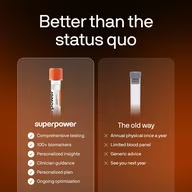
Test 150+ biomarkers
Two blood draws. A full picture of your health, explained in plain language.
Test 150+ biomarkers
Two blood draws. A full picture of your health, explained in plain language.
How to measure whether MBSR is working for you
Subjective stress ratings are useful but incomplete. Tracking perceived stress, anxiety, and mood over the 8-week program gives you a sense of whether you're improving, but these measures are influenced by external life events, sleep quality, and expectation effects. Objective physiological markers provide a more stable signal:
- Cortisol testing using a 4-point salivary curve captures diurnal rhythm and HPA axis recalibration
- High-sensitivity C-reactive protein (hs-CRP) tracks systemic inflammation changes
- Heart rate variability (HRV) measures autonomic tone and recovery capacity in real-time
- Ferritin, magnesium, and vitamin D reveal nutrient deficiencies that impair stress resilience
Wearable devices can track HRV trends over weeks, and consistent MBSR practice should correlate with gradual increases in resting HRV after 4 to 6 weeks of daily practice. HRV also responds to sleep quality, alcohol intake, and physical activity, so it's best interpreted as part of a broader physiological picture rather than a standalone metric.
If you're tracking mental wellness biomarkers, consider adding homocysteine (elevated in chronic stress and linked to mood dysregulation) and IGF-1 (reflects growth hormone activity influenced by stress and sleep). Thyroid function (TSH, free T3, free T4) is also worth checking; hypothyroidism is a commonly missed driver of fatigue and low mood that can masquerade as stress-related symptoms.
Getting objective about your stress physiology
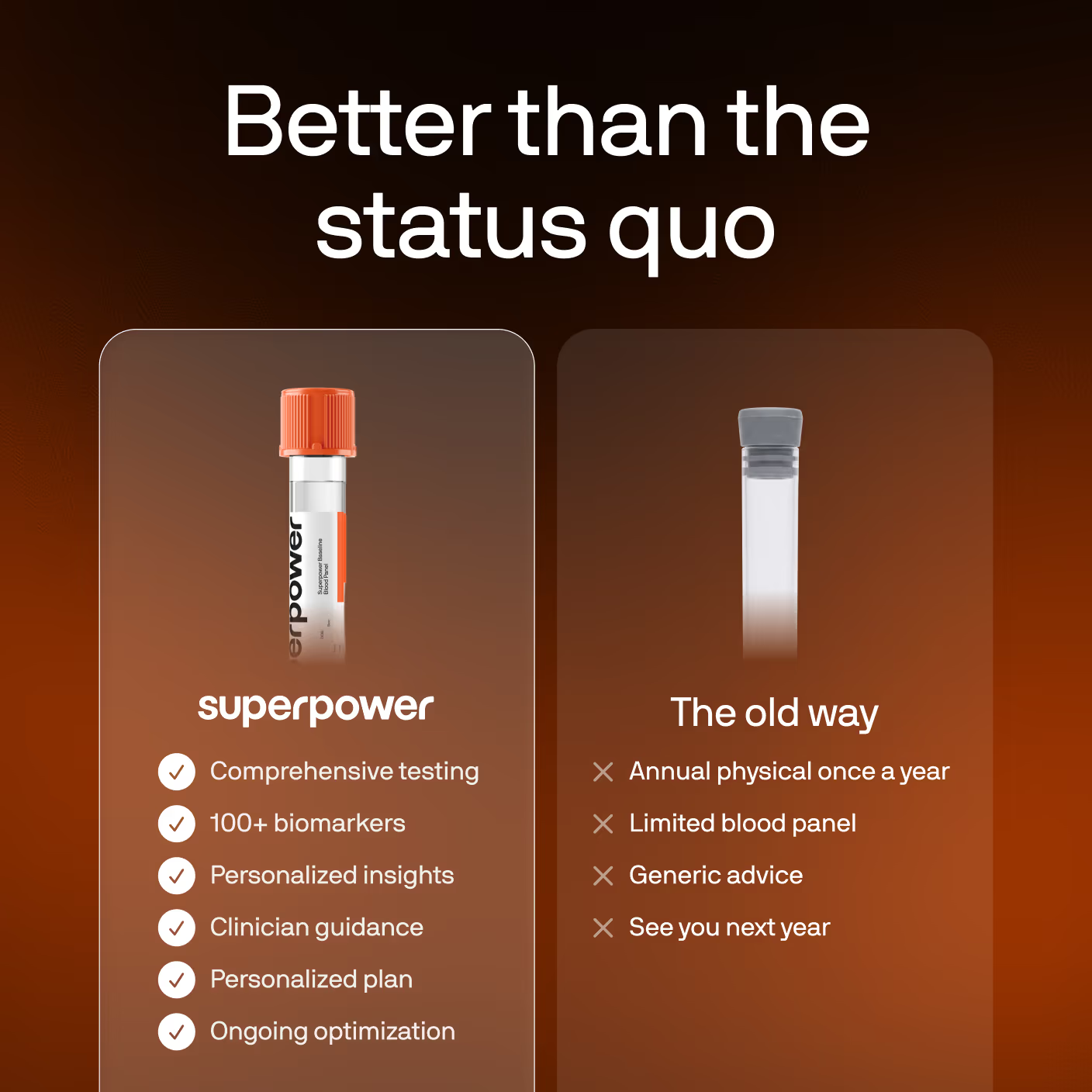
If you're investing time in mindfulness-based stress reduction, you deserve to know whether it's producing measurable change. Superpower's 150+ biomarker panel gives you a baseline across the hormonal, inflammatory, and metabolic markers most relevant to stress recovery, including cortisol, hs-CRP, HbA1c, thyroid function, and nutrient status. Tracking these markers before and after an 8-week MBSR program provides a physiological narrative that subjective mood ratings can't capture. You'll see whether your inflammation is dropping, whether your HPA axis is recalibrating, and whether nutrient deficiencies are limiting your response. Mindfulness works, but it works differently for everyone. Objective data tells you how it's working for you.
Frequently Asked Questions
References
- American Psychological Association. (n.d.). *Meditation*. https://apa.org/topics/mindfulness/meditation
- Hofmann SG, Sawyer AT, Witt AA, Oh D (2010). The effect of mindfulness-based therapy on anxiety and depression: A meta-analytic review. *Journal of consulting and clinical psychology*, *78*(2), 169-83. https://doi.org/10.1037/a0018555
- Davidson RJ, Kabat-Zinn J, Schumacher J, Rosenkranz M, Muller D, Santorelli SF, Urbanowski F, Harrington A, Bonus K, Sheridan JF (2003). Alterations in brain and immune function produced by mindfulness meditation. *Psychosomatic medicine*, *65*(4), 564-70. https://doi.org/10.1097/01.psy.0000077505.67574.e3
- Brown RP, Gerbarg PL (2009). Yoga breathing, meditation, and longevity. *Annals of the New York Academy of Sciences*, *1172*, 54-62. https://doi.org/10.1111/j.1749-6632.2009.04394.x
- Yamauchi D, Nishimura T, Yorimitsu H (2017). Hydroxoiridium-Catalyzed Hydroalkylation of Terminal Alkenes with Ureas by C(sp. *Angewandte Chemie (International ed. in English)*, *56*(25), 7200-7204. https://doi.org/10.1002/anie.201702169
- Hölzel BK, Carmody J, Vangel M, Congleton C, Yerramsetti SM, Gard T, Lazar SW (2011). Mindfulness practice leads to increases in regional brain gray matter density. *Psychiatry research*, *191*(1), 36-43. https://doi.org/10.1016/j.pscychresns.2010.08.006























 Heart & Vascular Health
 Metabolic Health
 Energy
 Liver Health
 Kidney
 Sex Hormones
 Thyroid Health
 Nutrients
 Immune System
 Inflammation