


Understand what your skin conditions results really mean
See your biomarkers in context with a comprehensive panel.
- CLIA-certified labs
- HIPAA compliant
- Personalized health protocol
What keratosis pilaris actually is and where it starts
Keratosis pilaris happens when keratin, the structural protein that protects skin, hair, and nails, accumulates inside hair follicles instead of shedding normally. This creates a plug that blocks the follicle opening, producing the characteristic rough, raised bumps. The hair may become trapped beneath the plug, coiling inside the follicle rather than emerging through the skin.
The condition is not inflammatory by default, though it can trigger a mild immune response in some cases, leading to redness around the bumps. The plugs themselves are composed of compacted keratin and dead skin cells. The follicle remains structurally intact, but the keratinization process at the follicle opening is disordered.
The condition tends to run in families and is associated with other atopic conditions like eczema, asthma, and allergic rhinitis. The genetic link is strong: mutations in the filaggrin gene, which encodes a protein critical for skin barrier formation, are found in a significant subset of people with keratosis pilaris. These mutations disrupt the normal maturation and flattening of skin cells, leading to abnormal keratin accumulation at follicle openings.
How keratosis pilaris connects to skin barrier function and immune tone
Keratosis pilaris is not just a surface-level texture issue. It reflects an underlying defect in how the skin barrier forms and maintains itself. Filaggrin is a protein that helps flatten and bind together the outermost skin cells, creating a tight, protective barrier. When filaggrin function is impaired, either through genetic mutations or environmental factors, the skin becomes more permeable, loses moisture more easily, and is more prone to irritation.
This barrier dysfunction explains why keratosis pilaris often coexists with eczema and why both conditions worsen in dry, cold climates. The skin's inability to retain water and protect against external irritants creates a cycle: dryness worsens keratinization, which worsens barrier function, which worsens dryness. The compromised barrier also allows allergens and irritants to penetrate more easily, potentially triggering localized immune responses that contribute to the redness seen in some cases.
What drives flares and severity in keratosis pilaris
Environmental and mechanical triggers
Keratosis pilaris doesn't flare in the same way eczema or psoriasis does, but its severity fluctuates based on environmental and physiological inputs. The most consistent aggravating factor is low humidity. Winter air, indoor heating, and arid climates all strip moisture from the skin, worsening the keratinization defect and making bumps more prominent. Mechanical irritation also plays a role. Tight clothing, friction from repetitive movement, and aggressive physical exfoliation can inflame the follicles and increase redness. Over-cleansing with harsh soaps disrupts the lipid barrier, compounding the problem.
Hormonal influences
Hormonal shifts influence keratosis pilaris as well. The condition often worsens during puberty, when androgen levels rise and sebum production increases. Pregnancy can either improve or worsen symptoms, likely due to fluctuations in estrogen and progesterone, which affect skin cell turnover and barrier function. Some women notice improvement during pregnancy, while others see an increase in bump density and redness.
Dietary and nutritional factors
Diet has been explored as a potential trigger, particularly in individuals with concurrent atopic conditions. High glycemic load and dairy intake have been implicated in worsening inflammatory skin conditions, though the evidence specific to keratosis pilaris is limited. What's clearer is that nutrient deficiencies, particularly in vitamin A, can impair keratinocyte differentiation and worsen follicular plugging. Vitamin A regulates the genes responsible for normal skin cell maturation, and its absence leads to excessive keratin production and abnormal follicle architecture.
Why the same condition looks different and responds differently across individuals
Genetic variation accounts for much of the difference in how keratosis pilaris presents. The specific filaggrin variant a person carries can influence both the severity of keratosis pilaris and the likelihood of developing atopic dermatitis. Some mutations cause complete loss of filaggrin function, while others result in reduced but not absent protein production, leading to milder phenotypes.
Skin type and melanin content also affect presentation. In darker skin tones, the inflammatory response to follicular plugging can trigger melanocyte activation, leading to persistent dark spots even after the bumps resolve. This makes keratosis pilaris on black skin more challenging to treat, as the goal shifts from texture alone to both texture and pigmentation.
Immune phenotype matters too. People with a Th2-skewed immune system, common in atopic individuals, are more likely to experience the red, inflamed variant of keratosis pilaris. Those with a more balanced immune profile may have the non-inflammatory, flesh-colored form. Microbiome composition may also play a role. The skin microbiome in keratosis pilaris has not been extensively studied, but disruptions in the balance of commensal bacteria could theoretically influence follicular inflammation and keratin plug formation.
Test 100+ biomarkers
One blood draw. A full picture of your health, explained in plain language.
Test 100+ biomarkers
One blood draw. A full picture of your health, explained in plain language.
When skin symptoms point to something systemic
Keratosis pilaris is usually an isolated finding, but persistent or severe cases warrant a broader look. The condition is strongly associated with atopic dermatitis, and individuals with both conditions often have more severe barrier dysfunction and higher rates of food allergies and asthma. This is part of the "atopic march," the progression from eczema in infancy to asthma and allergic rhinitis in childhood.
Keratosis pilaris can also signal nutritional deficiencies. Severe vitamin A deficiency causes a condition called phrynoderma, which resembles keratosis pilaris but is more widespread and associated with other signs of malnutrition. Deficiencies in essential fatty acids, particularly omega-3s, can impair skin barrier function and worsen follicular keratinization.
In rare cases, keratosis pilaris-like eruptions can be a sign of underlying metabolic or endocrine disorders:
- Hypothyroidism slows skin cell turnover and can produce a keratosis pilaris-like texture throughout the body.
- Cushing's syndrome affects collagen synthesis and skin integrity, potentially presenting with follicular hyperkeratosis.
- Malabsorption syndromes like celiac disease can lead to multiple nutrient deficiencies that manifest as skin changes including follicular keratosis.
What biomarkers can tell you when topicals aren't enough
If keratosis pilaris is severe, treatment-resistant, or accompanied by other symptoms, testing can help identify underlying drivers. Vitamin A levels are worth checking, as deficiency impairs keratinocyte differentiation and can worsen follicular plugging. Vitamin D is also relevant, given its role in immune regulation and skin barrier function.
Thyroid function should be assessed if keratosis pilaris is accompanied by dry skin, fatigue, or other signs of hypothyroidism. A TSH, free T3, and free T4 panel can surface subclinical thyroid dysfunction that may be contributing to skin symptoms.
For individuals with concurrent eczema or a history of atopic disease, testing for food sensitivities or IgE-mediated allergies may be useful. Elevated hs-CRP or other markers of systemic inflammation can indicate that the skin condition is part of a broader inflammatory picture. Tracking ferritin, zinc, and essential fatty acid status can also be informative, as deficiencies in these nutrients impair skin barrier repair and keratinocyte function.
Getting to the root of what's driving your skin
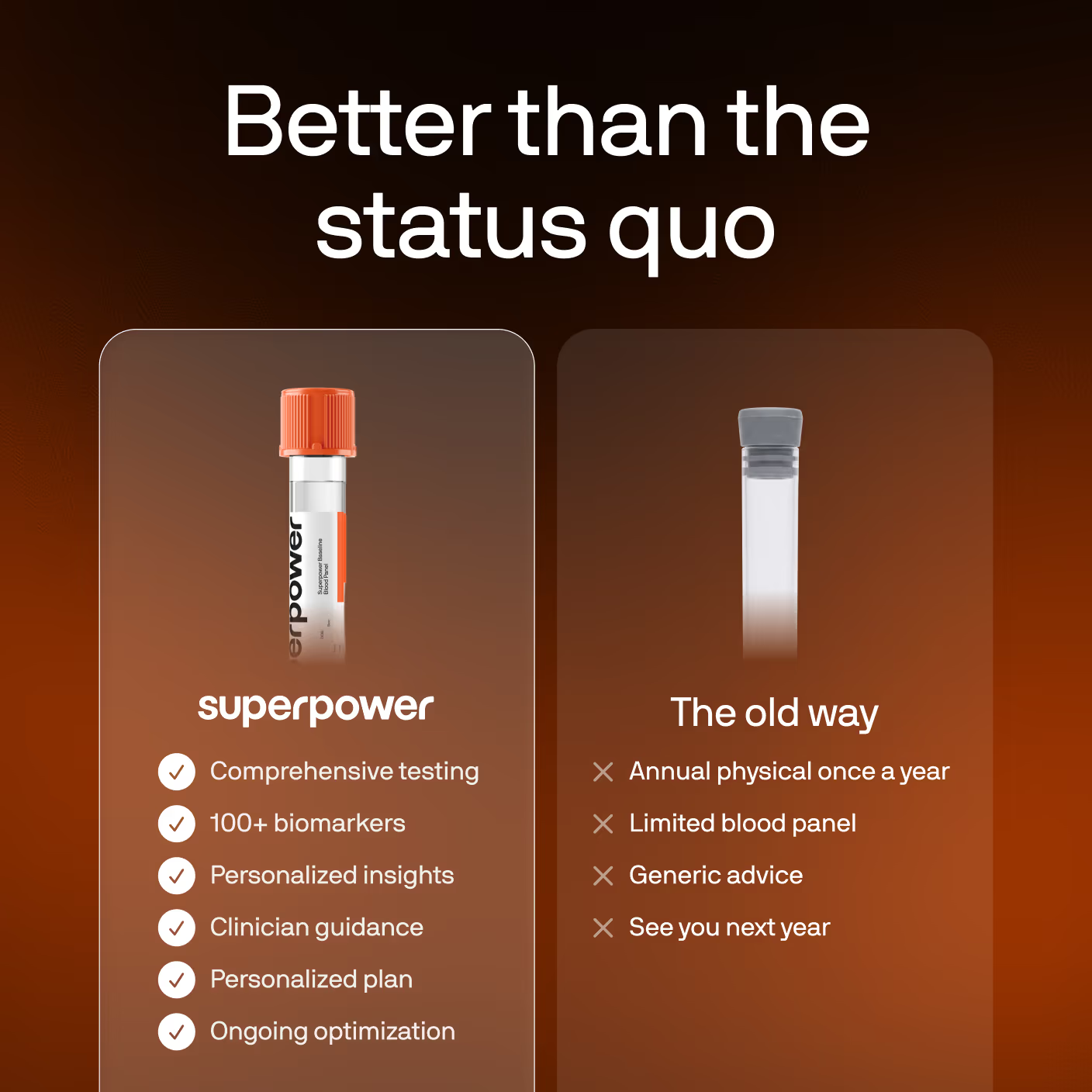
If keratosis pilaris persists despite topical treatment, or if you're dealing with other skin or systemic symptoms, Superpower's 100+ biomarker panel can help you identify the internal factors at play. From thyroid function to vitamin D, ferritin, and inflammatory markers, the panel surfaces the data you need to understand whether your skin is signaling a deeper imbalance. Keratosis pilaris may be common, but that doesn't mean you have to accept it without understanding what's driving it.
Frequently Asked Questions
References
- American Academy of Dermatology. (n.d.). *Keratosis pilaris: Overview*. https://aad.org/public/diseases/a-z/keratosis-pilaris-overview
- Cleveland Clinic. (n.d.). *Keratosis Pilaris: What It Is, Causes, Symptoms & Treatment*. https://my.clevelandclinic.org/health/diseases/17758-keratosis-pilaris
- Salava A, Salo V, Remitz A (2022). Keratosis pilaris and filaggrin loss-of-function mutations in patients with atopic dermatitis - Results of a Finnish cross-sectional study. *The Journal of dermatology*, *49*(9), 928-932. https://doi.org/10.1111/1346-8138.16477
- National Center for Biotechnology Information. (2023). *Keratosis Pilaris*. https://ncbi.nlm.nih.gov/books/NBK546708
- American Academy of Dermatology. (n.d.). *Keratosis pilaris: Who gets and causes*. https://aad.org/public/diseases/a-z/keratosis-pilaris-causes
- DermNet NZ. (2023). *Keratosis Pilaris: Symptoms, Causes, and Treatment*. https://dermnetnz.org/topics/keratosis-pilaris












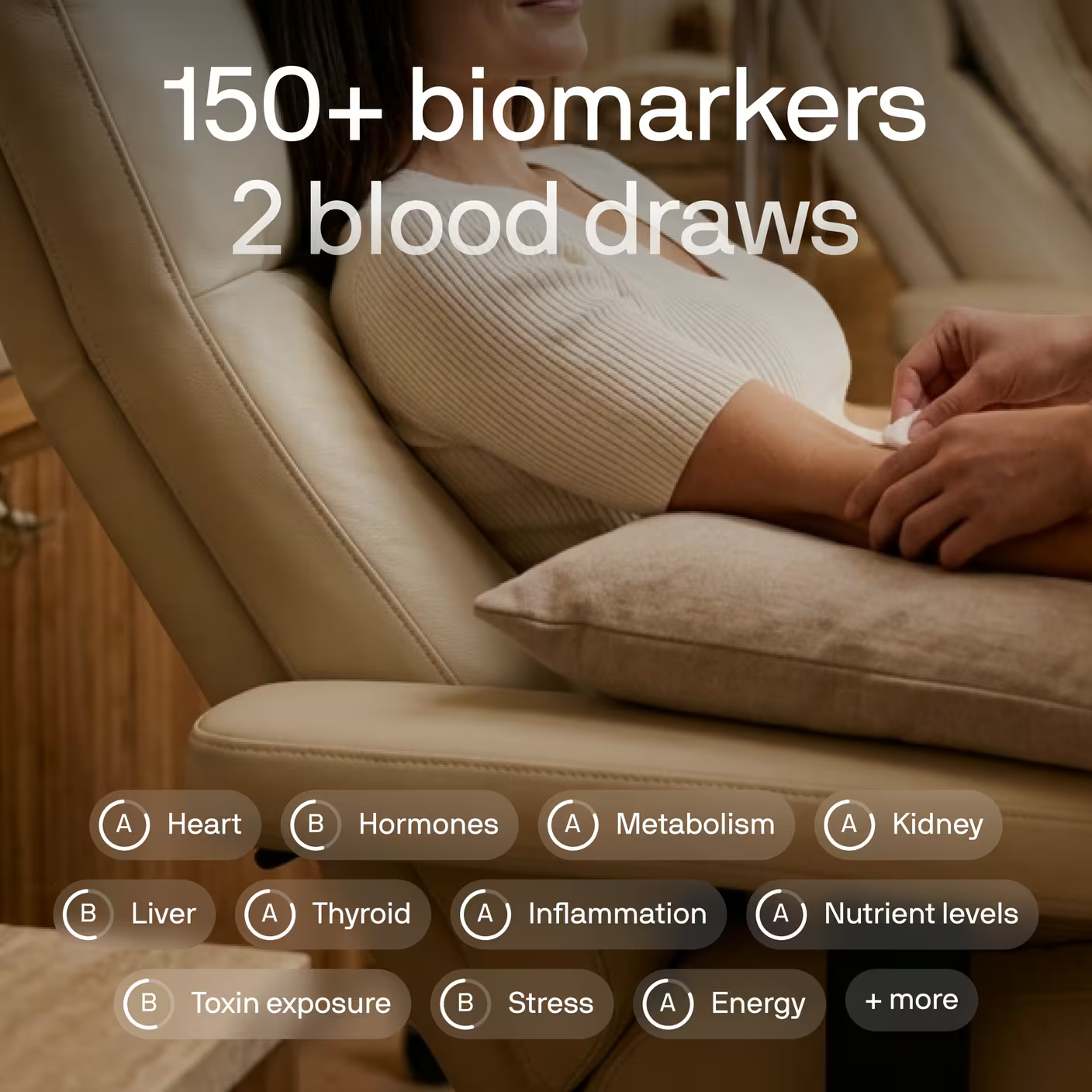













 Heart & Vascular Health
 Metabolic Health
 Energy
 Liver Health
 Kidney
 Sex Hormones
 Thyroid Health
 Nutrients
 Immune System
 Inflammation