


Understand what your hormone testing results really mean
See your biomarkers in context with a comprehensive panel.
- CLIA-certified labs
- HIPAA compliant
- Personalized health protocol
The free androgen index, defined in plain terms
The free androgen index (FAI) estimates how much androgen signal reaches tissues by comparing total testosterone to SHBG, the binding protein that limits how much testosterone is biologically available. Think of it as measuring how much of the gas pedal is actually reachable by your cells, not just sitting in the tank. SHBG is made in the liver and acts like a sponge that soaks up testosterone; when SHBG is high, less testosterone is free, and when SHBG is low, more is free. FAI is an estimate, not a direct measurement, and context is everything.
What SHBG hides that FAI exposes
Picture SHBG as the bouncer at a crowded club. Total testosterone is the whole line outside. Only the unescorted guests get in. FAI approximates how many make it past the rope and onto the dance floor where receptors live. Total testosterone alone cannot tell you this — SHBG buffers the signal, and its level determines how much of that testosterone is actually bioactive.
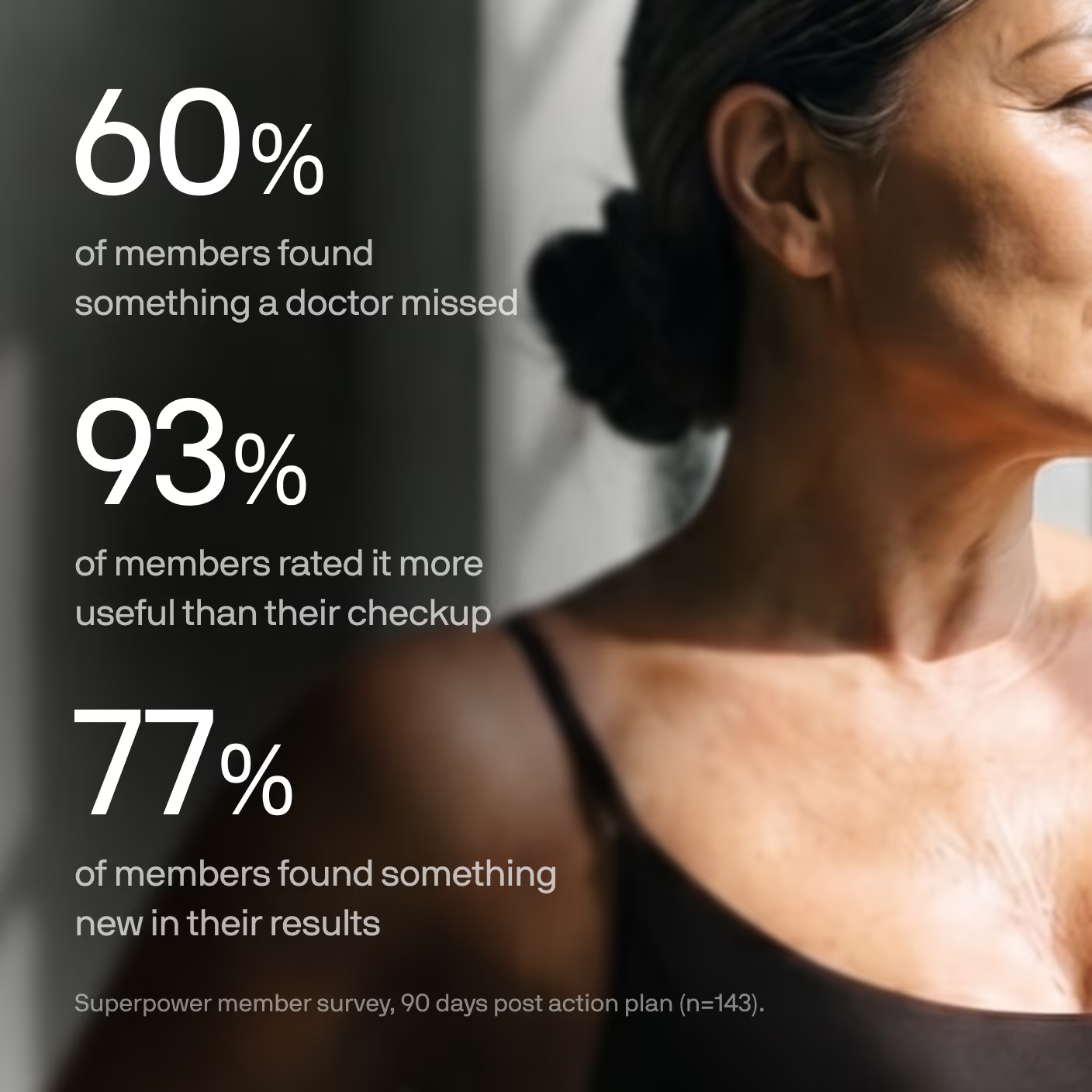
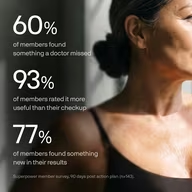
When SHBG is high, total testosterone can sit in the midrange while the bioactive fraction is low — a person may experience symptoms of androgen deficiency despite a "normal" total testosterone result. The reverse is equally important: when SHBG is low, as commonly occurs with insulin resistance, total testosterone may appear normal while FAI is elevated, indicating that more androgen signal is reaching tissues than the headline number suggests. A normal-looking total testosterone result can hide exactly this kind of shift, and 60% of members said Superpower identified something previously missed or overlooked by a doctor.
What changes SHBG? Insulin can push it down, which lets more testosterone stay free. Estrogen and thyroid hormone lift SHBG, which tightens access. The liver sets SHBG policy, so anything that changes liver metabolism can tip the balance. Stress, sleep, and training load also play roles, and in women, ovarian and adrenal output shifts with the menstrual cycle while hormonal contraception can raise SHBG substantially. Even aging changes the choreography.
Calculating your FAI from testosterone and SHBG
FAI is calculated from two values in the same blood draw. Both total testosterone and SHBG must be reported in nanomoles per liter (nmol/L); converting from other units is required before dividing.
Free androgen index (FAI): (Total testosterone [nmol/L] ÷ SHBG [nmol/L]) × 100
The result is a unitless percentage. If total testosterone is reported in ng/dL, convert to nmol/L first (ng/dL × 0.0347 = nmol/L).
FAI is not strictly fasting-dependent, but morning draws are strongly recommended: testosterone follows a circadian rhythm and peaks in the early morning in most individuals. A draw before 10 a.m. produces the most representative result. For women, standardizing to a consistent phase of the menstrual cycle — typically days 19–22 of a 28-day cycle for luteal-phase sampling — reduces cycle-driven variability.
Worked example
A woman with total testosterone of 1.2 nmol/L and SHBG of 90 nmol/L has an FAI of (1.2 ÷ 90) × 100 = 1.3 — well below the 7 threshold, suggesting very low androgen bioavailability likely driven by high SHBG, a pattern seen with estrogen-containing oral contraceptives. The same testosterone of 1.2 nmol/L with SHBG of 15 nmol/L gives an FAI of 8.0 — above the 7 threshold, indicating relatively higher androgen bioavailability from low SHBG, a pattern associated with insulin resistance.
Reading your FAI score by sex and life stage
Reference ranges are built from large populations and show where most people land, not whether you're thriving. For FAI, there is no universal cut-off that fits everyone — different labs use different assays and units, and the formula depends on the accuracy of both total testosterone and SHBG measurements. Treat your result as a conversation starter, not a verdict.
Interpretation depends on sex, age, and life stage. In women, FAI is used primarily to screen for hyperandrogenism, especially in suspected polycystic ovary syndrome (PCOS). In men, FAI adds less diagnostic value because free testosterone calculated by equilibrium dialysis or the Vermeulen equation is preferred. Hormonal contraception, pregnancy, thyroid status, liver health, and metabolic status can all shift FAI without reflecting a primary androgen problem.
A general framework for women, noting that lab-specific ranges differ:
- FAI below 3: Low bioavailable androgens — may reflect high SHBG (for example, from estrogen-containing oral contraceptives or hyperthyroidism) rather than low testosterone production.
- FAI 3–7: Normal range per most reference laboratories in women of reproductive age.
- FAI 7–10: Borderline elevated — interpretation is context-dependent; low SHBG from insulin resistance can push FAI into this range even with average total testosterone.
- FAI above 10–12: Associated with androgen excess and PCOS per most reference frameworks; persistent elevation across repeat tests, paired with symptoms such as irregular periods, acne, or unwanted hair growth, is what moves clinicians toward a diagnosis.
- FAI in men: Lower diagnostic value; free testosterone by equilibrium dialysis is the preferred measure. FAI's primary validated use is in women with suspected hyperandrogenism.
An important assay caveat: in women, total testosterone concentrations are low, and many immunoassays lack the sensitivity to measure them accurately. LC-MS/MS is the preferred method and produces more reliable FAI calculations at these concentrations.
What moves SHBG and shifts your FAI
Insulin signaling and SHBG production
The liver produces SHBG, and insulin signaling is the dominant regulator of how much it makes. Research shows that insulin sensitivity is associated with higher SHBG, which reduces FAI when the elevation is driven by low SHBG. Conversely, insulin resistance — commonly associated with higher visceral fat, excess added sugars, and chronic caloric surplus driving liver fat accumulation — suppresses SHBG and raises FAI. Sustained energy balance and weight stability tend to normalize SHBG over time.
Thyroid status and SHBG regulation
Thyroid hormones are a major upstream regulator of SHBG. Hyperthyroidism raises SHBG, which lowers FAI; hypothyroidism lowers SHBG, which raises FAI. This means an unexpected FAI result — one that doesn't match symptoms or other androgen markers — may reflect undiagnosed or undertreated thyroid dysfunction rather than a primary change in androgen production. Iodine sufficiency and overall thyroid health, managed with a clinician when needed, can normalize SHBG and with it FAI.
Estrogen exposure and SHBG upregulation
Estrogen is a potent stimulator of hepatic SHBG production. Estrogen-containing oral contraceptives and menopausal hormone therapy commonly raise SHBG substantially, lowering FAI. This is why FAI interpretation requires knowing a person's contraceptive status — a low FAI on combined oral contraceptives reflects pharmacological SHBG elevation, not necessarily a pathological state. Pregnancy similarly raises SHBG. After discontinuation of estrogen-containing contraceptives, SHBG returns to baseline slowly, over months, which affects FAI interpretation during that transition period.
Energy balance and adrenal androgen output
Acute illness, overtraining, severe caloric deficit, and medications such as glucocorticoids or opioids can reduce androgen production regardless of SHBG, lowering FAI through the numerator rather than the denominator. Zinc deficiency can impair androgen production; iron deficiency can impair thyroid and mitochondrial function, indirectly affecting SHBG. Alcohol can lower SHBG in some contexts. If you supplement biotin for hair or nails, note that high doses can interfere with some immunoassays — labs often advise pausing biotin before blood draws to avoid misleading results.
The hormone panel that surrounds FAI
- SHBG: The denominator in the FAI formula and the primary driver of FAI variability. Understanding what raises or lowers SHBG — estrogen, thyroid status, insulin signaling — is essential for interpreting why FAI is high or low.
- Total testosterone: The numerator. In women with very low total testosterone, immunoassay accuracy is limited and LC-MS/MS is preferred; a low total testosterone reduces FAI regardless of SHBG.
- Free testosterone: Calculated or measured free testosterone is what FAI approximates. When SHBG is at extreme values, free testosterone by equilibrium dialysis is a more precise alternative to FAI and is generally preferred in men.
- DHEA-S: Reflects adrenal androgen output. Elevated FAI alongside high DHEA-S points to adrenal rather than ovarian origin of androgen excess, which has implications for diagnosis and management.
- TSH: Thyroid status significantly influences SHBG. Hyperthyroidism raises SHBG (lowering FAI); hypothyroidism lowers it (raising FAI). Checking TSH explains unexpected SHBG and FAI shifts that don't fit the clinical picture.
Test 150+ biomarkers
Two blood draws. A full picture of your health, explained in plain language.
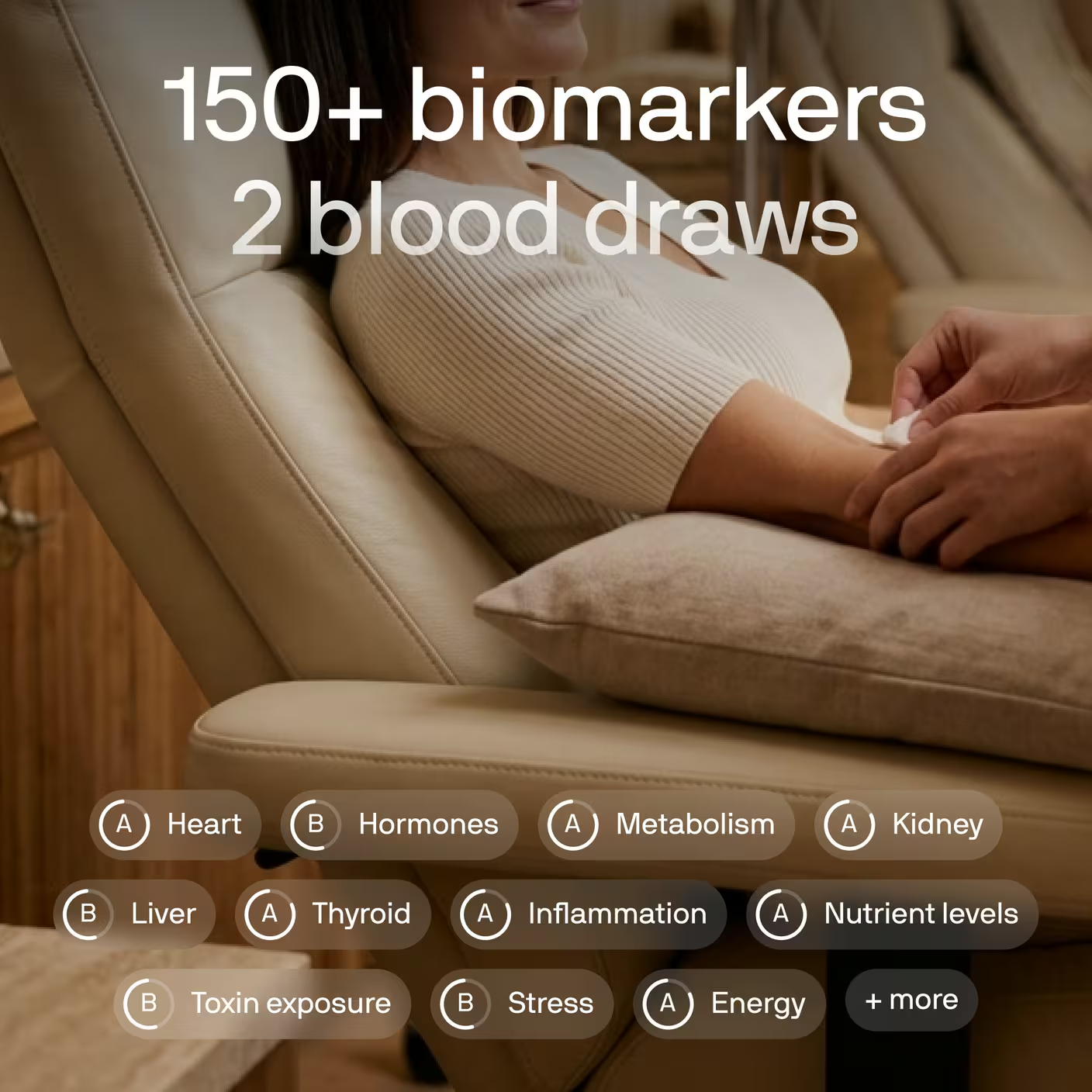
Test 150+ biomarkers
Two blood draws. A full picture of your health, explained in plain language.
Why FAI needs a longer retest interval than testosterone
Total testosterone can respond within 4–6 weeks to hormonal therapy or meaningful lifestyle changes. SHBG, however, responds slowly — over months — to shifts in insulin sensitivity, thyroid status, or estrogen exposure. Because FAI is a ratio of both, a retest at 6–12 weeks is too soon to capture SHBG's response and will produce a misleading FAI trend even if the underlying biology is genuinely shifting.
For women monitoring PCOS or androgen-related symptoms on active management, 6-month intervals are the practical minimum for a meaningful FAI retest. For women who have recently discontinued oral contraceptives, FAI may not normalize until 3–6 months after stopping, reflecting SHBG's slow return-to-baseline kinetics. Retesting before that window closes risks misinterpreting a transitional result as a stable one.
To ensure results are comparable across retests, draw conditions should be consistent: morning draw before 10 a.m., the same phase of the menstrual cycle if premenopausal, and the same laboratory and assay method. Switching between immunoassay and LC-MS/MS, or between labs with different reference ranges, introduces variability that can obscure real trends.
When an abnormal FAI warrants endocrine follow-up
A single abnormal FAI is a signal, not a sentence. Persistent elevation or suppression across repeat tests — drawn under consistent conditions and paired with symptoms — is what moves clinicians toward evaluation and diagnosis.
In women, a persistently elevated FAI (above 10–12 on most reference frameworks) alongside symptoms such as irregular periods, acne, or unwanted hair growth warrants evaluation for PCOS, nonclassic congenital adrenal hyperplasia, or, rarely, androgen-secreting tumors. PCOS carries long-term cardiometabolic implications — including associations with insulin resistance, dyslipidemia, and higher cardiovascular risk — making early identification meaningful beyond symptom management. A persistently low FAI with symptoms of androgen deficiency (low libido, low energy, poor recovery) warrants investigation of SHBG drivers before attributing the finding to low androgen production.
In men, FAI is not the preferred tool. Free testosterone by equilibrium dialysis or calculated free testosterone using albumin and SHBG is recommended by major guidelines for evaluating hypogonadism. FAI's primary validated use is in women with suspected hyperandrogenism.
When FAI becomes uninterpretable
FAI is unreliable when SHBG is at extreme values. At SHBG above 200 nmol/L — seen with severe liver disease or significant estrogen excess — or below 5 nmol/L — seen with severe insulin resistance or exogenous androgen use — the ratio no longer accurately reflects bioavailable androgen. In these cases, measured free testosterone by equilibrium dialysis is required for a meaningful result.
Building a feedback loop
Hormones are dynamic. They respond to sleep, training, food patterns, medication changes, and life phases. One measurement is a snapshot; a few measurements across time create a trend line. Match numbers with how you feel and function — energy, cycle regularity, skin and hair changes, recovery, mood. When the data and your day-to-day align, you get clarity. When they don't, you know where to look next.
A well-constructed panel — FAI alongside high-quality testosterone, SHBG, DHEA-S, and TSH — turns scattered puzzle pieces into a picture you can act on. At Superpower, the approach is grounded in evidence and guided by qualified professionals, so you can build a clear feedback loop, act with confidence, and course-correct early. Learn more about the approach.
Frequently Asked Questions
References
- Teede HJ, Tay CT, Laven JJE, Dokras A, Moran LJ, Piltonen TT, Costello MF, Boivin J, Redman LM, Boyle JA, Norman RJ, Mousa A, Joham AE (2023). Recommendations From the 2023 International Evidence-based Guideline for the Assessment and Management of Polycystic Ovary Syndrome. *The Journal of clinical endocrinology and metabolism*, *108*(10), 2447-2469. https://doi.org/10.1210/clinem/dgad463
- Vermeulen A, Verdonck L, Kaufman JM (1999). A critical evaluation of simple methods for the estimation of free testosterone in serum. *The Journal of clinical endocrinology and metabolism*, *84*(10), 3666-72. https://doi.org/10.1210/jcem.84.10.6079
- Fiers T, Wu F, Moghetti P, Vanderschueren D, Lapauw B, Kaufman JM (2018). Reassessing Free-Testosterone Calculation by Liquid Chromatography-Tandem Mass Spectrometry Direct Equilibrium Dialysis. *The Journal of clinical endocrinology and metabolism*, *103*(6), 2167-2174. https://doi.org/10.1210/jc.2017-02360
- Peter A, Kantartzis K, Machann J, Schick F, Staiger H, Machicao F, Schleicher E, Fritsche A, Häring HU, Stefan N (2010). Relationships of circulating sex hormone-binding globulin with metabolic traits in humans. *Diabetes*, *59*(12), 3167-73. https://doi.org/10.2337/db10-0179
- Qu X, Donnelly R (2020). Sex Hormone-Binding Globulin (SHBG) as an Early Biomarker and Therapeutic Target in Polycystic Ovary Syndrome. *International journal of molecular sciences*, *21*(21). https://doi.org/10.3390/ijms21218191
- Zimmerman Y, Eijkemans MJ, Coelingh Bennink HJ, Blankenstein MA, Fauser BC (2014). The effect of combined oral contraception on testosterone levels in healthy women: a systematic review and meta-analysis. *Human reproduction update*, *20*(1), 76-105. https://doi.org/10.1093/humupd/dmt038
- Bhasin S, Brito JP, Cunningham GR, Hayes FJ, Hodis HN, Matsumoto AM, Snyder PJ, Swerdloff RS, Wu FC, Yialamas MA (2018). Testosterone Therapy in Men With Hypogonadism: An Endocrine Society Clinical Practice Guideline. *The Journal of clinical endocrinology and metabolism*, *103*(5), 1715-1744. https://doi.org/10.1210/jc.2018-00229


















 Heart & Vascular Health
 Metabolic Health
 Energy
 Liver Health
 Kidney
 Sex Hormones
 Thyroid Health
 Nutrients
 Immune System
 Inflammation