


Understand what your heart cardiovascular testing results really mean
See your biomarkers in context with a comprehensive panel.
- CLIA-certified labs
- HIPAA compliant
- Personalized health protocol
What total cholesterol actually is on a panel
Total cholesterol is the sum of cholesterol carried in all lipoprotein particles in the blood — a headcount of cargo, not the trucks themselves. It includes cholesterol in LDL, HDL, and VLDL (plus less familiar fractions like IDL and remnants). In lab terms, it is measured enzymatically and reported in mg/dL or mmol/L (mg/dL divided by ~38.7). It is stable whether you fast or not. Because it blends "good" and "bad" cargo in a single figure, it needs its supporting cast to make real sense.
Why total cholesterol blends good and bad fractions
Cholesterol is a structural building block. Cells use it to keep membranes sturdy and flexible; the adrenal glands and gonads convert it into steroid hormones; the liver turns it into bile acids to digest fats. Liver cells regulate the flow with a thermostat: when intracellular cholesterol dips, they ramp up production and pull more from the blood via LDL receptors; when levels rise, they dial back. Diet can nudge this system, but genetics and LDL receptor activity are the main throttle for what stays in circulation.
Insulin resistance shifts the mix. The liver makes more triglyceride-rich VLDL, which remodels HDL and LDL into smaller, denser particles. Thyroid hormones speed up LDL clearance; low thyroid slows it. Estrogen tends to raise HDL and lower LDL; menopause often nudges the opposite. Acute illness or infection can transiently lower total cholesterol as the body reroutes lipids for immune function — a reminder that a single reading reflects the moment, not the trend.
Critically, total cholesterol does not independently measure LDL particle count — it includes the cardioprotective HDL fraction. Two people with identical total cholesterol can have vastly different cardiovascular risk profiles. Non-HDL cholesterol and ApoB outperform total cholesterol for predicting cardiovascular events because they tally all cholesterol inside atherogenic particles directly, making them more robust long-term gauges.
Reading low, normal, and high total cholesterol
Normal ranges
Reference intervals are descriptive, not prescriptive. Many labs still report categories from older guidelines: desirable below 200 mg/dL, borderline high 200–239 mg/dL, and high at 240 mg/dL or above. Those bins are a population benchmark, not an absolute risk threshold. Risk lives in the particles that deliver cholesterol into artery walls — LDL particles and the atherogenic burden counted by ApoB — not in the total figure alone. Two people can share the same total cholesterol but carry very different risk depending on LDL, non-HDL cholesterol, ApoB, triglycerides, and lipoprotein(a).
Age, sex, and life stage shift interpretation. During pregnancy, total cholesterol rises as a normal physiologic adaptation. After menopause, many people see LDL climb. Older adults may have lower total cholesterol due to illness or weight loss, which does not necessarily mean lower risk. Ranges also vary by lab and method, so always read the reference range on your specific report.
When levels run high
A high total cholesterol most commonly reflects elevated LDL, which tracks with diets high in saturated fat, hypothyroidism, weight gain, insulin resistance, menopause-related shifts, or a genetic pattern such as familial hypercholesterolemia. Medications including certain diuretics, steroids, and retinoids can push levels up. Nephrotic syndrome and cholestatic liver disease are medical causes clinicians screen for when numbers are very high.
Sometimes, however, total cholesterol climbs because HDL is high rather than because LDL is elevated. Endurance athletes, people with certain genetic variants, or those who have improved metabolic health may see HDL rise, making the total look worse on paper even as the cardiovascular risk signal is neutral or improving. Triglycerides help decode the picture: high triglycerides usually indicate higher VLDL and remnant particles, which contribute to risk. Patterns over time tell more than a single result; rechecking alongside LDL-C, non-HDL-C, ApoB, HDL-C, and triglycerides gives the composite view that guidelines recommend.
When levels run low
Low total cholesterol is not always better. It can reflect very low LDL due to genetics, potent lipid-lowering therapy, weight loss, or hyperthyroidism. It can also signal malabsorption, chronic liver disease, or chronic illness, particularly when other labs and symptoms align. Very low HDL also lowers total cholesterol and can occur with high triglycerides, insulin resistance, or rare genetic conditions. If total cholesterol is unexpectedly low, the question is why — whether it represents a healthy adaptation or a clue to something deeper is clarified by the full lipid panel and clinical context.
Factors that move total cholesterol between draws
Diet
Dietary composition affects cholesterol primarily by changing LDL receptor activity in the liver. Replacing saturated fats from fatty meat, butter, and full-fat dairy with unsaturated fats from fish, olive oil, nuts, and seeds typically increases LDL receptor uptake and lowers circulating LDL. Soluble fiber from oats, beans, psyllium, and fruit traps bile acids in the gut, prompting the liver to pull more cholesterol from the blood to synthesize new bile. Ultra-processed dietary patterns that drive weight gain and insulin resistance increase VLDL production and can push total cholesterol up alongside triglycerides. Some people on very low-carb, high-fat diets see marked rises in LDL and total cholesterol — a documented hyper-responder phenomenon — making retesting during diet changes important.
Physical activity and body weight
Regular aerobic training improves triglyceride clearance and tends to raise HDL over weeks to months. Resistance training supports weight and glucose control, which reduces VLDL output from the liver. Weight loss reduces VLDL production over time. Acute workouts do not radically change total cholesterol within 24 hours, but the cumulative effect improves the quality and quantity of lipoproteins in circulation.
Sleep, stress, and circadian rhythm
Short sleep and circadian disruption alter cortisol, growth hormone, and insulin signaling in ways that raise triglycerides and can worsen LDL profiles. Shift work studies show less favorable lipid patterns independent of diet. The benefit of consistent sleep and circadian alignment shows up as a steadier lipid profile over time.
Medications and medical conditions
Statins, ezetimibe, bempedoic acid, and PCSK9 inhibitors lower LDL through different mechanisms; statins and dietary changes typically produce near-maximal LDL effects within 4–6 weeks. GLP-1–based therapies that drive weight loss often improve triglycerides and non-HDL cholesterol. Conversely, steroids, certain HIV therapies, some diuretics, and retinoids can raise lipids. Thyroid disease, liver disease, kidney disease, pregnancy, and menopause all shift the baseline set point. Statin therapy also remodels VLDL and LDL particle size over time, which is not fully captured by total cholesterol alone. Dietary hyper-responders and people with thyroid dysfunction may see larger-than-expected swings, making clinical context essential when interpreting any result.
Test 150+ biomarkers
Two blood draws. A full picture of your health, explained in plain language.
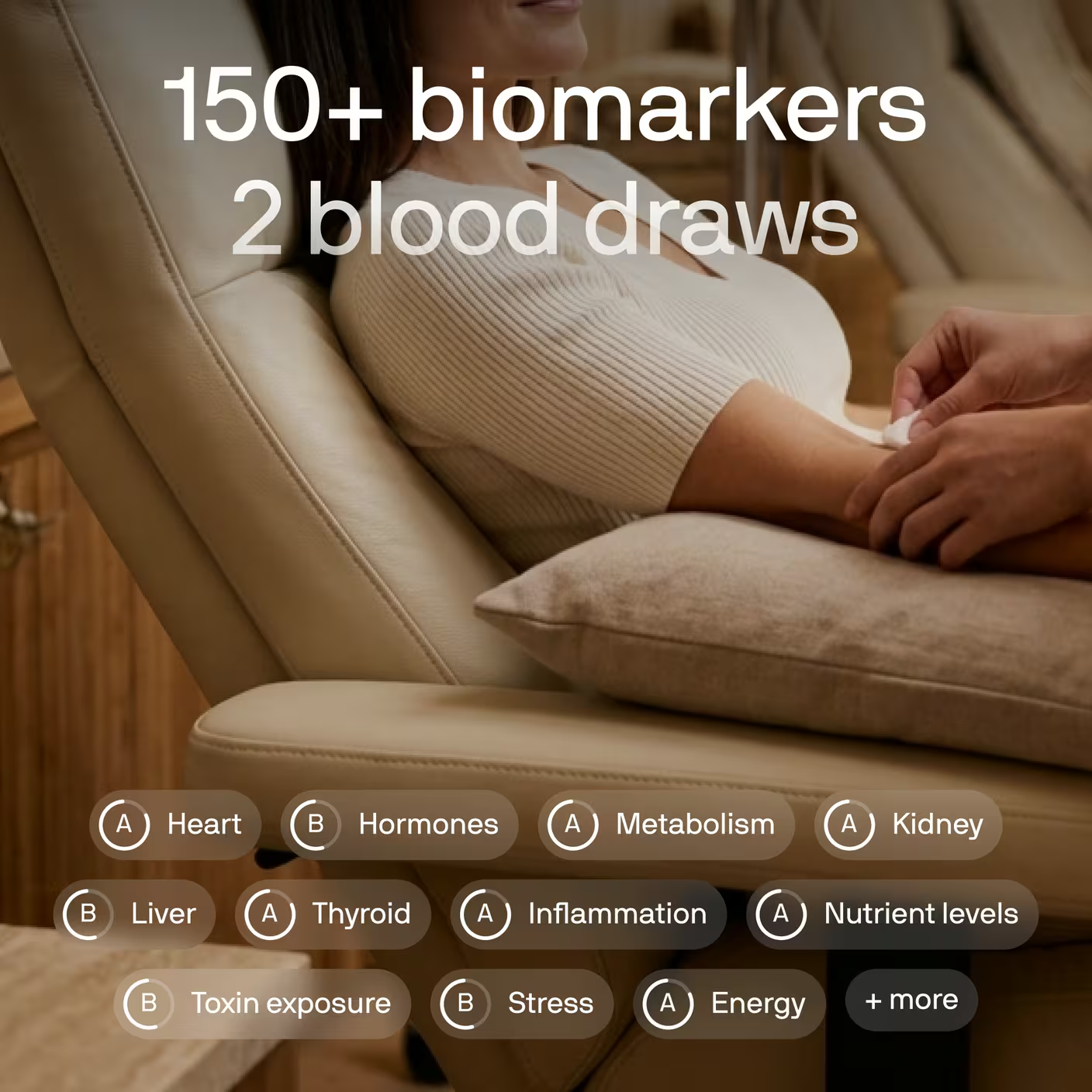
Test 150+ biomarkers
Two blood draws. A full picture of your health, explained in plain language.
The panel that reads cholesterol in context
Total cholesterol is a starting point. The markers below provide the context needed to interpret what it means for cardiovascular risk:
- LDL cholesterol — LDL-C carries most of the atherogenic cholesterol; a high total cholesterol driven primarily by LDL carries different implications than one driven by high HDL.
- HDL cholesterol — HDL-C is the cardioprotective fraction included in total cholesterol; high HDL inflates the total without adding cardiovascular risk.
- Apolipoprotein B (ApoB) — ApoB counts atherogenic particles directly and outperforms total cholesterol for predicting cardiovascular events; a "normal" total cholesterol with high ApoB signals residual particle risk.
- Triglycerides — triglycerides reflect VLDL output and remnant particles; high triglycerides alongside total cholesterol reveals metabolic context — insulin resistance, dietary pattern — beyond what total cholesterol shows alone.
- Non-HDL cholesterol — non-HDL cholesterol (total minus HDL) captures all atherogenic particles without advanced testing and is a more robust predictor than total cholesterol; it can be calculated from any standard lipid panel.
Together these markers reveal patterns: insulin resistance with high triglycerides and low HDL; familial hypercholesterolemia with very high LDL; mixed dyslipidemia in metabolic syndrome; or a modest total cholesterol masking elevated ApoB or lipoprotein(a). That is how a single number becomes a narrative.
When to retest total cholesterol after a change
Diet changes and statin therapy both produce near-maximal effects on LDL within 4–6 weeks in clinical trials, making 8–12 weeks a practical retest window when actively tracking a dietary change, a new medication, or a lifestyle intervention. This interval is long enough to capture a real signal and short enough to course-correct if needed.
Outside of active monitoring, guideline-recommended intervals apply: every 4–6 years for low-risk adults not on medication, and annually or more frequently for those on lipid-lowering therapy or managing established cardiovascular risk.
Draw conditions matter for consistent comparison. Fasting for 9–12 hours is preferred for a full lipid panel because triglycerides affect non-HDL calculations, though total cholesterol itself is reliable non-fasting. Using the same lab and the same fasting conditions between draws removes a source of variability that can obscure real change.
One important caveat: acute illness, surgery, or a major physiological stressor can transiently suppress total cholesterol as lipids are rerouted for immune and repair functions. Avoid testing within 4 weeks of a significant health event, and flag any recent illness when reviewing results with a clinician.
When a cholesterol result needs a clinician's read
Total cholesterol is a reliable screening tool precisely because it is fast and accessible — a stake in the ground that prompts the right follow-ups. A result above 240 mg/dL, a result that has shifted substantially between draws, or a pattern of borderline-high total cholesterol alongside other risk factors (high triglycerides, low HDL, elevated blood pressure, family history of early cardiovascular disease) warrants a clinician's interpretation rather than self-management alone.
Specific situations that call for prompt clinical review include: a very high total cholesterol that may indicate familial hypercholesterolemia; an unexpectedly low result in the context of new symptoms, weight loss, or changed medications; any result obtained during or shortly after an acute illness; and results that conflict across draws without a clear lifestyle explanation.
Preventive care is about early course correction. Tracking total cholesterol alongside LDL, non-HDL, ApoB, triglycerides, and HDL — and pairing those numbers with the story of how you have been eating, moving, sleeping, and medicating — gives you and your clinician the feedback needed to distinguish healthy adaptation from a signal worth acting on. Small shifts identified early compound into fewer problems over time.
Join Superpower today to access advanced biomarker testing with over 150 biomarkers.
Frequently Asked Questions
References
- Grundy SM, Stone NJ, Guideline Writing Committee for the 2018 Cholesterol Guidelines (2019). 2018 Cholesterol Clinical Practice Guidelines: Synopsis of the 2018 American Heart Association/American College of Cardiology/Multisociety Cholesterol Guideline. *Annals of internal medicine*, *170*(11), 779-783. https://doi.org/10.7326/M19-0365
- Boekholdt SM, Arsenault BJ, Mora S, Pedersen TR, LaRosa JC, Nestel PJ, Simes RJ, Durrington P, Hitman GA, Welch KM, DeMicco DA, Zwinderman AH, Clearfield MB, Downs JR, Tonkin AM, Colhoun HM, Gotto AM, Jr., Ridker PM, Kastelein JJ (2012). Association of LDL cholesterol, non-HDL cholesterol, and apolipoprotein B levels with risk of cardiovascular events among patients treated with statins: a meta-analysis. *JAMA*, *307*(12), 1302-9. https://doi.org/10.1001/jama.2012.366
- Cholesterol Treatment Trialists' (CTT) Collaboration, Fulcher J, O'Connell R, Voysey M, Emberson J, Blackwell L, Mihaylova B, Simes J, Collins R, Kirby A, Colhoun H, Braunwald E, La Rosa J, Pedersen TR, Tonkin A, Davis B, Sleight P, Franzosi MG, Baigent C, Keech A (2015). Efficacy and safety of LDL-lowering therapy among men and women: meta-analysis of individual data from 174,000 participants in 27 randomised trials. *Lancet*, *385*(9976), 1397-405. https://doi.org/10.1016/S0140-6736(14)61368-4
- Jovanovski E, Yashpal S, Komishon A, Zurbau A, Blanco Mejia S, Ho HVT, Li D, Sievenpiper J, Duvnjak L, Vuksan V (2018). Effect of psyllium (Plantago ovata) fiber on LDL cholesterol and alternative lipid targets, non-HDL cholesterol and apolipoprotein B: a systematic review and meta-analysis of randomized controlled trials. *The American journal of clinical nutrition*, *108*(5), 922-932. https://doi.org/10.1093/ajcn/nqy115
- Nordestgaard BG, Langsted A, Mora S, Kolovou G, Baum H, Bruckert E, Watts GF, Sypniewska G, Wiklund O, Borén J, Chapman MJ, Cobbaert C, Descamps OS, von Eckardstein A, Kamstrup PR, Pulkki K, Kronenberg F, Remaley AT, Rifai N, ... Langlois M, European Atherosclerosis Society (EAS) and the European Federation of Clinical Chemistry and Laboratory Medicine (EFLM) joint consensus initiative (2016). Fasting is not routinely required for determination of a lipid profile: clinical and laboratory implications including flagging at desirable concentration cut-points-a joint consensus statement from the European Atherosclerosis Society and European Federation of Clinical Chemistry and Laboratory Medicine. *European heart journal*, *37*(25), 1944-58. https://doi.org/10.1093/eurheartj/ehw152






















 Heart & Vascular Health
 Metabolic Health
 Energy
 Liver Health
 Kidney
 Sex Hormones
 Thyroid Health
 Nutrients
 Immune System
 Inflammation