


Understand what your digestive health supplements results really mean
See your biomarkers in context with a comprehensive panel.
- CLIA-certified labs
- HIPAA compliant
- Personalized health protocol
What supplements are good for gut health
The supplements with the strongest evidence for gut health are probiotics, L-glutamine, butyrate, and prebiotic fiber. Probiotics introduce beneficial bacteria, L-glutamine fuels intestinal cell repair, butyrate nourishes colonocytes, and fiber feeds the bacteria that produce butyrate naturally. Effects are dose- and strain-specific, and they're measurable.
Most people think "gut health supplements" means a daily probiotic capsule. That's a start, but each of these compounds targets a distinct mechanism. Getting the right match depends on understanding what's actually happening in your gut.
Probiotics
Probiotics are live microorganisms that confer measurable health benefits when taken in adequate amounts. They colonize the gut temporarily, compete with pathogenic bacteria, produce antimicrobial compounds, and modulate immune responses. A meta-analysis of 26 RCTs (n=1,891) found that high-quality probiotics significantly improve gut barrier markers, lower C-reactive protein, and increase Bifidobacterium and Lactobacillus populations, though results across individual RCTs have been mixed, particularly for blood endotoxin endpoints. Strain selection matters, not all products perform the same way.
L-glutamine
L-glutamine is the primary fuel source for enterocytes, the cells lining your intestines. They turn over every few days, and glutamine supports their regeneration and tight junction integrity. A 2024 meta-analysis found that glutamine at doses above 30 grams per day significantly reduces intestinal permeability, though only in high-dose, short-term protocols lasting under two weeks; studies of four or more weeks showed no significant effect. It also serves as a precursor for glutathione, protecting intestinal cells from oxidative damage.
Butyrate
Butyrate is a short-chain fatty acid your gut bacteria produce when they ferment dietary fiber. It's the preferred energy source for colonocytes and plays a central role in maintaining gut lining integrity. Butyrate also reduces inflammation, regulates immune cell activity, and stimulates mucus production (2021 review, Nutrients). When fiber fermentation is impaired or your microbiome is depleted, direct butyrate supplementation delivers higher concentrations than diet alone can achieve.
How these supplements affect the gut barrier and microbiome
Probiotics and the gut barrier
The gut barrier is only as strong as the proteins holding it together. Probiotics strengthen barrier function by upregulating tight junction proteins like occludin, ZO-1, and claudins. They also reduce zonulin, a protein that disassembles tight junctions and increases permeability when elevated. Strains like Lactobacillus rhamnosus GG and Bifidobacterium animalis subsp. lactis have the most evidence for reducing gut permeability, though much of the B. animalis data comes from animal and in vitro models rather than human RCTs. Spore-based options like MegaSporeBiotic also survive the digestive tract better than standard capsule forms.
Probiotics modulate immune responses by interacting with dendritic cells and regulatory T cells, promoting tolerance and dampening the excessive inflammatory signaling that so often originates in the gut.
L-glutamine and intestinal repair
Intestinal epithelial cells replace themselves every few days. Glutamine supports that rapid turnover, serving as both a fuel source and a precursor for glutathione. In conditions like leaky gut, L-glutamine may help support tight junction integrity and reduce bacterial translocation into the bloodstream. A 2018 RCT (published in Gut) in post-infectious IBS found that oral glutamine significantly reduced intestinal permeability and symptom severity. Evidence in IBD specifically is less consistent, a systematic review found no significant effect on IBD disease activity or permeability markers, suggesting benefit may be more pronounced after acute gut insults than in chronic inflammatory disease.
Butyrate and colonocyte health
Butyrate provides 60–70% of colonocytes' energy supply (human colonic epithelial studies). It also inhibits histone deacetylases, enzymes that regulate gene expression, producing downstream anti-inflammatory effects. Butyrate promotes regulatory T cell differentiation, maintains immune tolerance, and stimulates goblet cells to secrete the mucus layer that protects the gut lining. You can measure your microbiome's butyrate capacity to see how well your bacteria handle this job.
What the evidence says about gut health supplements
Probiotics
Meta-analyses generally show that probiotics outperform placebos for gut health markers, though results across individual RCTs have been inconsistent. A 2023 meta-analysis of 26 RCTs (n=1,891) found that probiotics significantly improved gut barrier markers, including serum zonulin and transepithelial electrical resistance, and increased Bifidobacterium and Lactobacillus populations. Strains with the strongest clinical evidence include Lactobacillus rhamnosus, Bifidobacterium longum, and Saccharomyces boulardii, particularly in studies involving IBS, IBD, and antibiotic-associated diarrhea. Strain specificity, viable cell counts, and delivery mechanisms all affect outcomes, so not every probiotic product performs equally.
L-glutamine
A 2024 systematic review and meta-analysis of 10 trials (428 participants) found that overall, glutamine supplementation did not significantly reduce intestinal permeability. However, a high-dose subgroup, above 30 grams per day for fewer than two weeks, did show a statistically significant reduction. Studies lasting four or more weeks did not reach significance, which limits confidence in extended high-dose protocols. Studies in athletes also show reduced markers of gut damage from intense exercise. One important caveat: long-term high-dose glutamine may alter amino acid metabolism, and the clinical significance of this shift isn't yet fully understood.
Butyrate
Researchers have studied direct butyrate supplementation less thoroughly than probiotics or glutamine, but early findings are promising. Per a clinical literature review, human trials of sodium butyrate most commonly use 150 to 300 mg daily, with some studies extending to 600 mg or higher, and show improvements in gut barrier function and reductions in inflammatory markers in studies enrolling individuals with IBS and diverticulitis. Butyrate may not suit everyone, people with small intestinal bacterial overgrowth may experience worsening symptoms, so clinical context matters before starting.
Can you take probiotics and fiber supplements together
Yes, and the combination often outperforms either supplement alone. Fiber, particularly prebiotic fiber like inulin, fructooligosaccharides, and resistant starch, feeds the beneficial bacteria in your gut. When you take probiotics alongside fiber, that fiber helps the bacteria thrive and produce beneficial metabolites, including butyrate. A review of synbiotic research shows that prebiotic fiber selectively feeds probiotic bacteria, enhancing their survival, colonization, and beneficial metabolite output.
No safety concerns exist with taking probiotics and fiber supplements together. Many gut health protocols intentionally combine them. The key is introducing fiber gradually, starting low and increasing slowly lets your microbiome adapt and prevents bloating. A prebiotic fiber supplement pairs well with most probiotic regimens, and targeted prebiotics like MegaPre can further support specific bacterial strains.
Test 100+ biomarkers
One blood draw. A full picture of your health, explained in plain language.
Test 100+ biomarkers
One blood draw. A full picture of your health, explained in plain language.
How to take butyrate supplements
Butyrate supplements come as sodium butyrate or calcium-magnesium butyrate. Based on clinical trial evidence, the typical dose range is 150 to 600 mg daily, split into two or three doses with food. Most published trials start at 150 mg twice daily (300 mg total); some protocols increase to 300 mg twice daily. Taking butyrate with meals allows it to work while your digestive system is most active.
Butyrate works gradually, gut changes don't happen overnight. Consistent use for 8 to 12 weeks is the standard window for assessing whether butyrate supplements are helping. If constipation occurs, adjusting the dose or timing usually resolves it. You can also take butyrate alongside probiotics and fiber, since all three work through complementary mechanisms. As with any supplement, consult a healthcare provider before starting butyrate, especially if you have an existing health condition or take medications.
Why your response to gut supplements varies
Baseline microbiome composition shapes how you respond to any gut health supplement. If you already have robust populations of Faecalibacterium prausnitzii and other butyrate-producing species, additional butyrate supplementation may produce smaller effects. If your microbiome is depleted or dysbiotic, the same supplement can drive dramatic improvements.
Existing health conditions also change the picture. People with IBD, IBS, or small intestinal bacterial overgrowth may respond very differently to probiotics, fiber, or butyrate than healthy individuals. In SIBO, high-fiber and high-fermentable-substrate intake can worsen symptoms by feeding bacteria in the wrong location, addressing the underlying overgrowth first often makes more sense.
Medications interact with gut supplements in important ways. Antibiotics blunt probiotic effectiveness. Proton pump inhibitors alter gut pH and shift bacterial populations. If you take immunosuppressive drugs, consult your doctor before starting any live-bacteria product.
Age, pregnancy, menopause, and prolonged stress all affect gut barrier function and microbiome composition. Older adults often have lower microbial diversity, which can make supplementation more impactful. Life stage matters, there's no single protocol that works for everyone.
How biomarkers reveal what your gut actually needs
Supplements work best when they address a real deficiency. Biomarkers tell you what's happening before and after. High-sensitivity C-reactive protein (hs-CRP) reflects systemic inflammation, much of which originates in the gut. Elevated hs-CRP alongside digestive symptoms may indicate gut barrier dysfunction or dysbiosis.
Ferritin tells a layered story. Low ferritin may reflect poor nutrient absorption from gut damage. When ferritin is elevated alongside high hs-CRP, it points to inflammation-driven ferritin elevation rather than true iron excess. Tracking both markers together gives a clearer picture of gut-driven inflammation.
A targeted gut microbiome analysis adds another layer, showing butyrate-producing bacteria, microbial diversity, and pathogen load. Combining blood biomarkers with microbiome data removes the guesswork. You can track whether hs-CRP drops, diversity improves, and nutrient absorption normalizes over a course of supplementation.
Frequently Asked Questions
References
- Zheng Y, Zhang Z, Tang P, Wu Y, Zhang A, Li D, Wang CZ, Wan JY, Yao H, Yuan CS (2023). Probiotics fortify intestinal barrier function: a systematic review and meta-analysis of randomized trials. *Frontiers in immunology*, *14*, 1143548. https://doi.org/10.3389/fimmu.2023.1143548
- Abbasi F, Haghighat Lari MM, Khosravi GR, Mansouri E, Payandeh N, Milajerdi A (2024). A systematic review and meta-analysis of clinical trials on the effects of glutamine supplementation on gut permeability in adults. *Amino acids*, *56*(1), 60. https://doi.org/10.1007/s00726-024-03420-7
- Gasaly N, Hermoso MA, Gotteland M (2021). Butyrate and the Fine-Tuning of Colonic Homeostasis: Implication for Inflammatory Bowel Diseases. *International journal of molecular sciences*, *22*(6). https://doi.org/10.3390/ijms22063061
- Ferris MM, Subitoni Antonio L, Al-Sadi R (2025). Probiotics and the intestinal tight junction barrier function. *Frontiers in cell and developmental biology*, *13*, 1671152. https://doi.org/10.3389/fcell.2025.1671152
- Fasano A (2011). Zonulin and its regulation of intestinal barrier function: the biological door to inflammation, autoimmunity, and cancer. *Physiological reviews*, *91*(1), 151-75. https://doi.org/10.1152/physrev.00003.2008
- Kwon HK, Lee CG, So JS, Chae CS, Hwang JS, Sahoo A, Nam JH, Rhee JH, Hwang KC, Im SH (2010). Generation of regulatory dendritic cells and CD4+Foxp3+ T cells by probiotics administration suppresses immune disorders. *Proceedings of the National Academy of Sciences of the United States of America*, *107*(5), 2159-64. https://doi.org/10.1073/pnas.0904055107
- Zhou Q, Verne ML, Fields JZ, Lefante JJ, Basra S, Salameh H, Verne GN (2019). Randomised placebo-controlled trial of dietary glutamine supplements for postinfectious irritable bowel syndrome. *Gut*, *68*(6), 996-1002. https://doi.org/10.1136/gutjnl-2017-315136
- Lambert DW, Wood IS, Ellis A, Shirazi-Beechey SP (2002). Molecular changes in the expression of human colonic nutrient transporters during the transition from normality to malignancy. *British journal of cancer*, *86*(8), 1262-9. https://doi.org/10.1038/sj.bjc.6600264
- Banasiewicz T, Domagalska D, Borycka-Kiciak K, Rydzewska G (2020). Determination of butyric acid dosage based on clinical and experimental studies - a literature review. *Przeglad gastroenterologiczny*, *15*(2), 119-125. https://doi.org/10.5114/pg.2020.95556
- Yadav MK, Kumari I, Singh B, Sharma KK, Tiwari SK (2022). Probiotics, prebiotics and synbiotics: Safe options for next-generation therapeutics. *Applied microbiology and biotechnology*, *106*(2), 505-521. https://doi.org/10.1007/s00253-021-11646-8
- Souza C, Rocha R, Cotrim HP (2022). Diet and intestinal bacterial overgrowth: Is there evidence?. *World journal of clinical cases*, *10*(15), 4713-4716. https://doi.org/10.12998/wjcc.v10.i15.4713











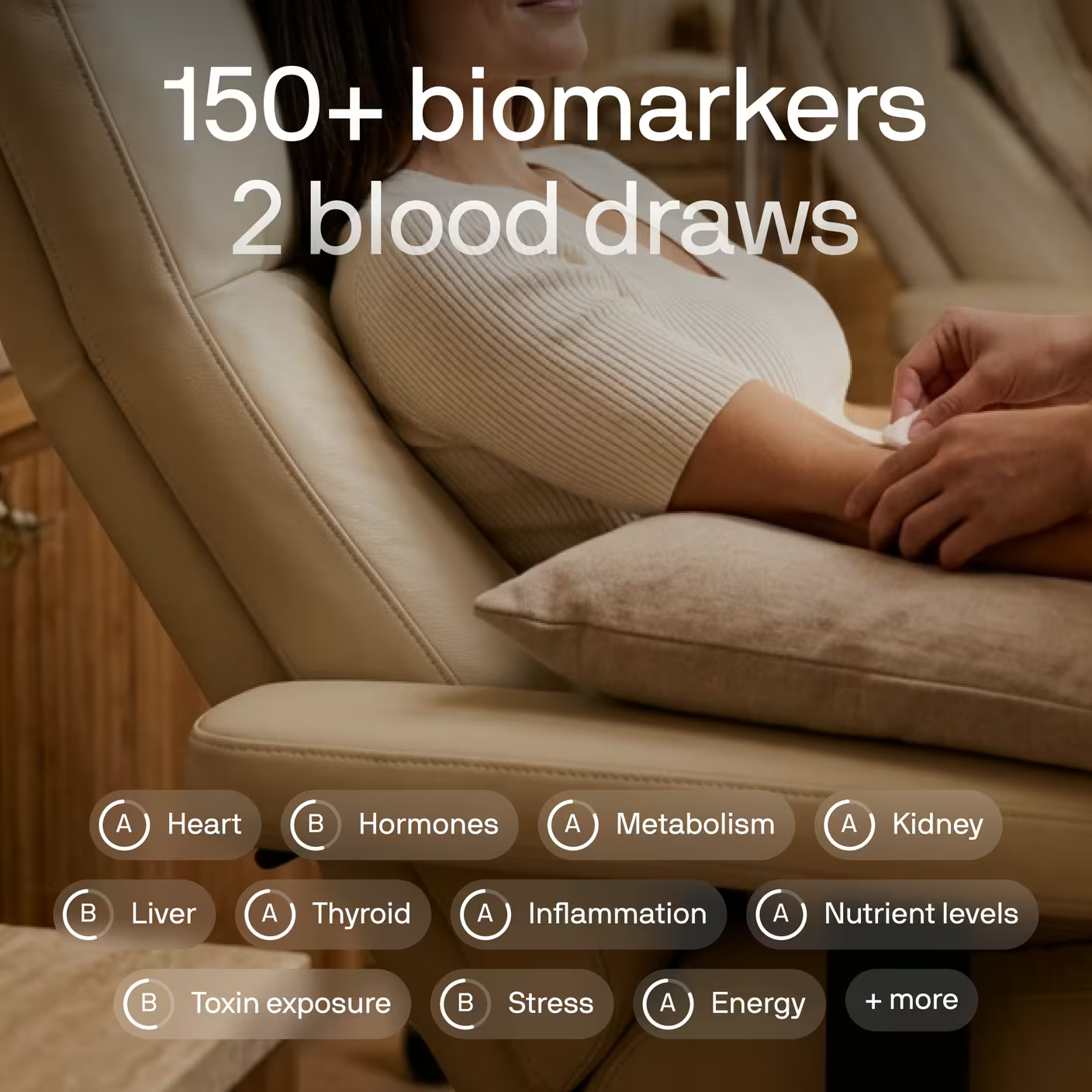














 Heart & Vascular Health
 Metabolic Health
 Energy
 Liver Health
 Kidney
 Sex Hormones
 Thyroid Health
 Nutrients
 Immune System
 Inflammation