Excellent 4.6 out of 5
Cardiovascular and Vascular Diseases

Blood Testing for Peripheral Artery Disease

Peripheral artery disease reflects systemic atherosclerosis impairing limb perfusion. Blood biomarkers illuminate risk and inflammatory drive. Superpower offers LDL, ApoB, Lp(a), hs-CRP, and AIP testing to profile atherogenic burden. Access testing in-clinic or at home; home blood testing for PAD is available in selected states. (See FAQs below for more info).

Book a Peripheral Artery Disease blood test today.
Cancel anytime
HSA/FSA eligible
Results in a week
Physician reviewed

Every result is checked

·
CLIA-certified labs

Federal standard for testing

·
HIPAA compliant

Your data is 100% secure

Key Benefits

  • Spot early artery-narrowing risk to prevent Peripheral Artery Disease and its complications.
  • Quantify LDL and ApoB burden to guide cholesterol-lowering intensity and treatment targets.
  • Flag inherited Lp(a) risk to prompt earlier action and family member screening.
  • Reveal arterial inflammation with hs-CRP to refine overall cardiovascular and limb risk.
  • Highlight AIP patterns that signal insulin resistance and unhealthy triglyceride-HDL balance.
  • Guide treatment choices, including statins and add-ons, to lower cardiovascular and limb events.
  • Track progress over time to ensure targets are met and residual risk declines.
  • Best interpreted with an Ankle-Brachial Index and your symptoms for diagnosis.

What are Peripheral Artery Disease biomarkers?

Peripheral artery disease biomarkers are blood signals that mirror the biology unfolding inside your leg and body arteries. They spotlight the processes that narrow and stiffen vessels (atherosclerosis) and the risks that travel with them. Broadly, they reflect three themes: irritation and injury of the artery lining (vascular inflammation; examples: high-sensitivity C‑reactive protein, interleukin‑6), burden of artery-clogging particles and metabolic strain (atherogenic lipoproteins; examples: LDL cholesterol, apolipoprotein B, lipoprotein(a), plus glucose control markers such as HbA1c), and a tendency to form clots and lose vessel flexibility (thromboinflammation and endothelial dysfunction; examples: fibrinogen, D‑dimer, von Willebrand factor). Together, these markers help uncover silent artery damage, estimate risk for heart, brain, and limb events, and show whether treatment is calming the disease biology. Kidney stress can add context because it accelerates arterial injury (reduced glomerular filtration). In short, PAD biomarkers translate a complex condition into actionable biology—revealing whether the dominant driver is inflamed plaque, excess atherogenic particles, or a pro‑thrombotic state—and guiding targeted prevention and therapy.

Why is blood testing for Peripheral Artery Disease important?

Peripheral artery disease (PAD) is the downstream result of plaque and inflammation in the arteries that feed the legs—and the same biology affects the heart and brain. Blood tests uncover the drivers of that process: LDL cholesterol (the cholesterol cargo), ApoB (the number of atherogenic particles), Lp(a) (a genetic, pro-plaque, pro-clot lipoprotein), hs-CRP (vascular inflammation), and AIP, the atherogenic index of plasma (a balance of triglycerides to HDL that tracks small, dense LDL).For PAD risk, optimal values cluster toward the low end. LDL is generally “better lower,” often below 100 and, in established atherosclerosis like PAD, typically nearer 70. ApoB is best lower as well, commonly below about 80 and even lower in very high risk. Lp(a) is most protective when low, often under about 30, and risk rises around 50 and above. hs-CRP is lowest-risk under about 1, average 1–3, and high above 3. AIP is desirable below roughly 0.11, intermediate 0.11–0.21, and elevated above 0.21.When these markers are low, the artery wall sees fewer particle entries, less oxidized lipid, and quieter inflammation. That translates to slower plaque growth and fewer limb symptoms like exertional calf tightness. Very low LDL or ApoB can reflect conditions such as hyperthyroidism, malabsorption, or advanced liver disease; symptoms then come from the underlying disorder, not the low number itself. Lp(a) tends to rise in pregnancy and after menopause; having a low Lp(a) at any age is protective.Big picture: these biomarkers integrate lipid transport, coagulation tendency, and immune tone. They interact with glucose control, kidney function, and blood pressure to shape long-term outcomes—claudication, ulcers, heart attack, stroke, and limb loss. Measuring them turns PAD from a leg problem into a whole-system story you can track over time.

What insights will I get?

Peripheral Artery Disease (PAD) blood testing provides a window into the health of your blood vessels and the systems they support, including your heart, brain, muscles, and immune function. PAD occurs when arteries outside the heart and brain—often those supplying the legs—become narrowed by atherosclerosis, reducing blood flow and oxygen delivery. At Superpower, we test LDL cholesterol, ApoB, Lp(a), high-sensitivity C-reactive protein (hs-CRP), and the Atherogenic Index of Plasma (AIP) to assess your risk and vascular health.LDL cholesterol is often called “bad cholesterol” because high levels can contribute to plaque buildup in arteries. ApoB is a protein found on all atherogenic lipoproteins, including LDL, and gives a more precise count of particles that can enter artery walls. Lp(a) is a genetic variant of LDL that is particularly atherogenic and can accelerate plaque formation. hs-CRP is a marker of inflammation, signaling immune system activity that can destabilize plaques. AIP, calculated from triglycerides and HDL cholesterol, reflects the balance between harmful and protective lipids.Healthy levels of these biomarkers suggest stable artery walls and efficient blood flow, supporting energy delivery, muscle function, and cognitive health. Elevated LDL, ApoB, or Lp(a) indicate increased risk for plaque buildup and artery narrowing, while high hs-CRP points to active inflammation that can make plaques more likely to rupture. A high AIP signals an unfavorable lipid balance, further increasing risk.Interpretation of these biomarkers can be influenced by age, acute illness, pregnancy, certain medications, and laboratory methods. These factors may temporarily alter results, so context is important for accurate assessment.

Superpower also tests for

See more diseases

Frequently Asked Questions About

What is Peripheral Artery Disease blood testing?

It’s a blood-based risk scan for the processes that narrow leg arteries: cholesterol particle burden and vascular inflammation. These tests don’t diagnose PAD by themselves; they quantify the biology that drives plaque formation (atherosclerosis). Superpower measures LDL cholesterol, ApoB (total atherogenic particles), Lp(a) (genetically driven, pro-atherogenic/prothrombotic lipoprotein), hs-CRP (systemic inflammation), and AIP, the Atherogenic Index of Plasma [log(triglycerides/HDL-C)] reflecting small, dense LDL. Together, they illuminate your arterial “supply chain” stress, complementing ankle–brachial index (ABI) or imaging. In plain terms, this blood panel tells you how much plaque-building pressure and inflammation your arteries are under, so you can track vascular risk over time with objective numbers.

Why should I get Peripheral Artery Disease blood testing?

PAD is a manifestation of whole‑body atherosclerosis. Blood biomarkers reveal the upstream forces—particle burden (LDL, ApoB, Lp[a]), inflammatory tone (hs‑CRP), and lipoprotein quality (AIP)—that cause plaque to develop and become unstable. Testing helps identify risk before symptoms like calf pain or non‑healing wounds appear, and it refines your overall cardiovascular risk beyond standard cholesterol. Results can be trended to confirm risk is moving in the right direction and to align with other PAD assessments such as ABI or duplex ultrasound. In short, this testing quantifies the biology of arterial disease so you know where you stand and what to monitor next.

Can I get a blood test at home?

Yes. With Superpower, our team member can organize a professional venous blood draw in your home. We bring the supplies, collect samples under clinical protocols, and deliver them to accredited laboratories for analysis of LDL, ApoB, Lp(a), hs‑CRP, and AIP. You get the same laboratory‑grade results you’d receive in a clinic, without leaving home. This supports consistent timing and conditions, which improves result comparability over time. It also streamlines follow‑up testing, so you can trend your vascular risk with minimal disruption to your routine.

How often should I test?

Get a baseline, then retest at least annually to track direction. If you’re adjusting factors that influence lipids or inflammation, recheck in about 8–12 weeks to see a new steady state, then space to every 6–12 months. Lp(a) is largely genetic and usually needs measuring once for status confirmation. hs‑CRP can fluctuate with illness; confirm unexpected highs with a repeat 2–3 weeks later when well. The goal is stable, periodic measurements that show trajectory, not single snapshots. Align blood testing with any ABI or imaging follow‑up to connect biology with vessel measurements.

What can affect biomarker levels?

LDL and ApoB reflect the number of atherogenic particles; they shift with genetics, metabolic state, thyroid function, kidney/liver disease, and lipid‑lowering medications. Lp(a) is mostly genetically determined and stable; it can rise with significant inflammation or kidney disease. hs‑CRP rises with infections, injuries, chronic inflammatory conditions, and hard exercise; it falls as inflammation resolves. AIP depends on triglycerides and HDL; meals, alcohol, recent intense exercise, insulin resistance, and some hormones/medications can change it acutely. Illness, pregnancy, and circadian timing also matter. Consistent testing conditions reduce noise and make trends more meaningful.

Are there any preparations needed before the blood test for LDL, ApoB, Lp(a), hs-CRP, AIP?

For the most consistent AIP and triglycerides, fast 8–12 hours; water is fine. Avoid alcohol and unusually hard exercise for 24 hours. If you have a fever, active infection, or recent injury, delay hs‑CRP testing until you’re well for a stable baseline. Take your usual medications unless you’ve been told otherwise. Aim to test at a similar time of day across visits. Lp(a) and ApoB do not require fasting, but collecting them with the same prep improves comparability. Tell us about recent illness or major changes so we can interpret transient shifts appropriately.

Can lifestyle changes affect my biomarker levels?

Yes. LDL, ApoB, and AIP track the balance of lipid production, clearance, and particle remodeling, which respond over weeks to changes in weight, nutrition, activity patterns, sleep, and metabolic health. hs‑CRP reflects systemic inflammatory tone and typically declines as inflammation resolves. Lp(a) is largely fixed by genetics and usually changes little, though significant kidney disease or inflammation can shift it. Because these biomarkers move on different timelines, trends over several months provide a clearer picture than single results. Repeating measurements at steady intervals shows whether arterial risk pressure is easing or intensifying.

How do I interpret my results?

Lower LDL and ApoB indicate fewer atherogenic particles; for high‑risk vascular prevention, ApoB below ~80 mg/dL is often targeted, with lower being better. Lp(a) at or above 50 mg/dL (≈125 nmol/L) heightens atherosclerotic and thrombotic risk. hs‑CRP below 1.0 mg/L suggests low inflammatory risk, 1.0–3.0 mg/L average, and above 3.0 mg/L high (repeat when well if elevated). AIP, calculated as log10(triglycerides/HDL‑C), is low risk below 0.11, intermediate 0.11–0.21, and high above 0.21. Consider the pattern, not a single number: lower ApoB/LDL, low hs‑CRP, low AIP, and normal Lp(a) together indicate lower PAD biology pressure.

What states are Superpower’s at-home blood testing available in?

Superpower currently offers at-home blood testing in the following states: Alabama, Arizona, California, Colorado, Connecticut, Delaware, District of Columbia, Florida, Georgia, Idaho, Illinois, Indiana, Kansas, Maine, Maryland, Massachusetts, Michigan, Minnesota, Missouri, Montana, Nebraska, Nevada, New Hampshire, New Jersey, New Mexico, New York, North Carolina, Ohio, Oklahoma, Oregon, Pennsylvania, South Carolina, Tennessee, Texas, Utah, Vermont, Virginia, Washington, West Virginia, and Wisconsin.We’re actively expanding nationwide, with new states being added regularly. If your state isn’t listed yet, stay tuned.

How it works

1

Test your whole body

Get a comprehensive blood draw at one of our 3,000+ partner labs or from the comfort of your own home.

2

An Actionable Plan

Easy to understand results & a clear action plan with tailored recommendations on diet, lifestyle changes, supplements and pharmaceuticals.

3

A Connected Ecosystem

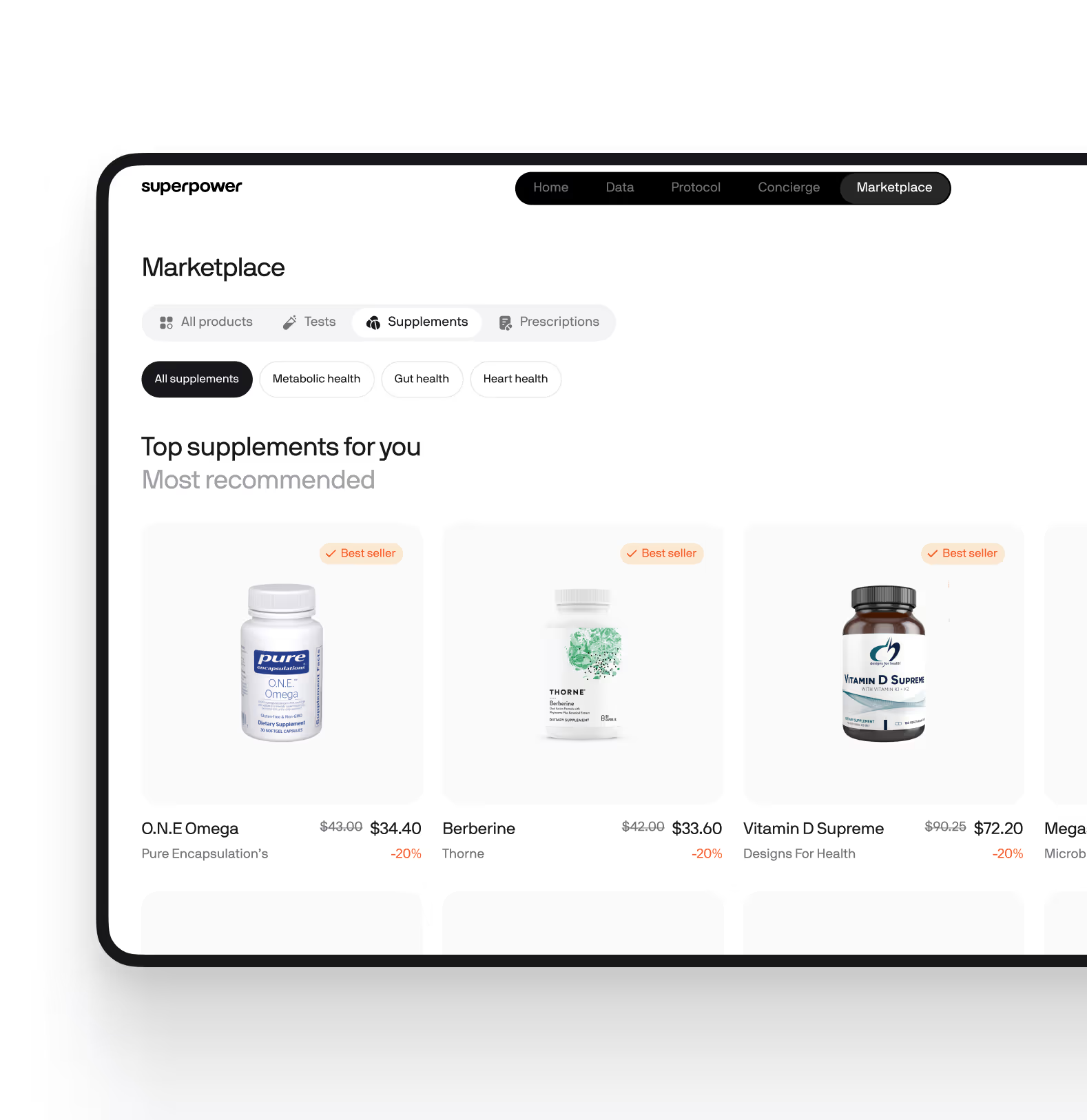
You can book additional diagnostics, buy curated supplements for 20% off & pharmaceuticals within your Superpower dashboard.

Superpower tests more than 
100+ biomarkers & common symptoms

Developed by world-class medical professionals

Supported by the world’s top longevity clinicians and MDs.

Dr Anant Vinjamoori

Superpower Chief Longevity Officer, Harvard MD & MBA

A smiling woman wearing a white coat and stethoscope poses for a portrait.

Dr Leigh Erin Connealy

Clinician & Founder of The Centre for New Medicine

Man in a black medical scrub top smiling at the camera.

Dr Abe Malkin

Founder & Medical Director of Concierge MD

Dr Robert Lufkin

UCLA Medical Professor, NYT Bestselling Author

membership

$17

/month
Billed annually at $199
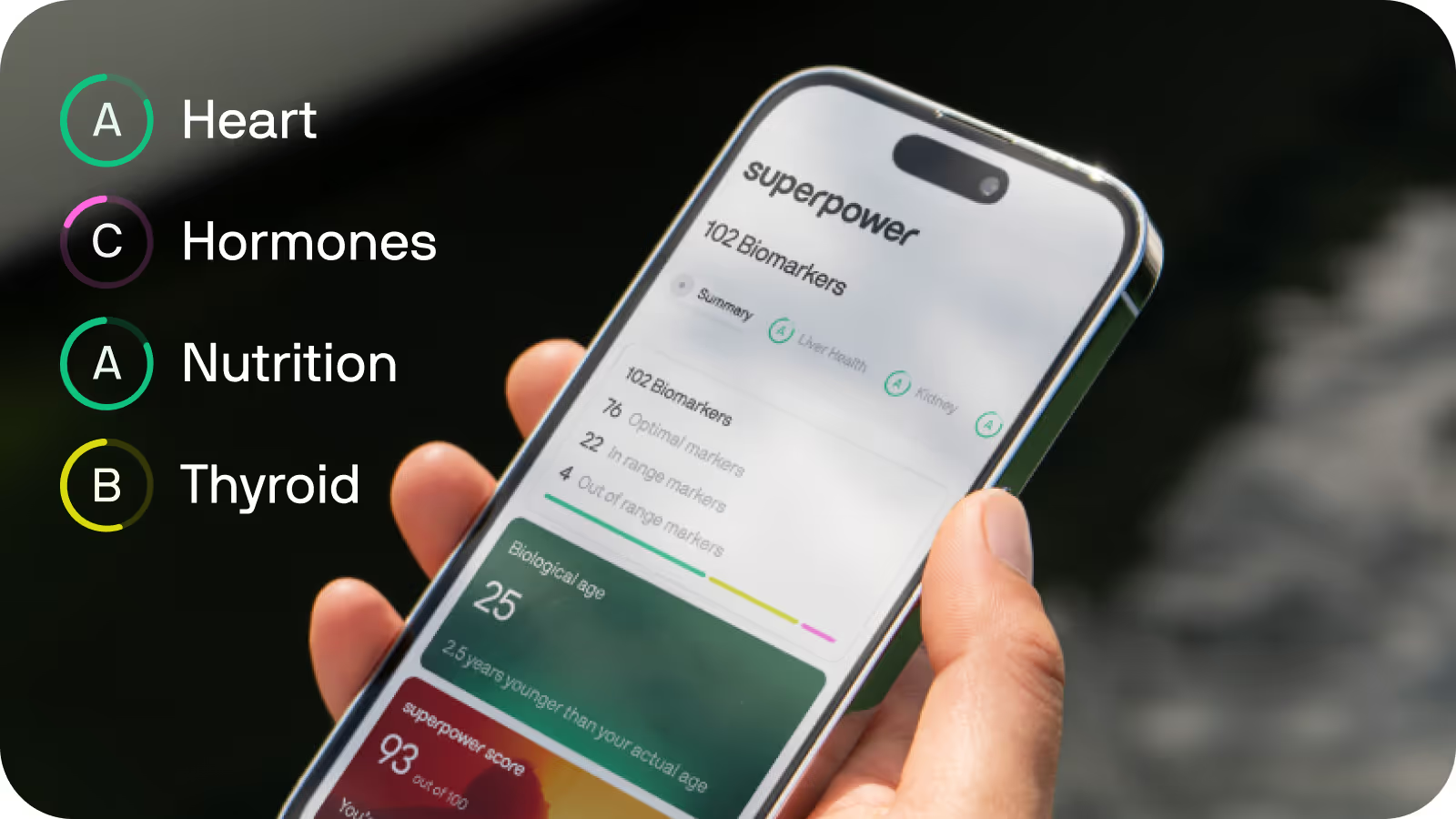
A smartphone displays health app results, showing biomarker summary, superpower score, and biological age details.
What could cost you $15,000 is $199

Superpower
Membership

Your membership includes one comprehensive blood draw each year, covering 100+ biomarkers in a single collection
One appointment, one draw for your annual panel.
100+ labs tested per year
A personalized plan that evolves with you
Get your biological age and track your health over a lifetime
$
17
/month
billed annually
Pricing for members in NY & NJ is $499
Flexible payment options
Four credit card logos: HSA/FSA Eligible, American Express, Visa, and Mastercard.
Start testing
Cancel anytime
HSA/FSA eligible
Results in a week

Finally, healthcare that looks at the whole you