Excellent 4.6 out of 5
Hematological Disorders

Blood Testing for Neutropenia

Blood testing for neutropenia clarifies infection risk and marrow immune function. At Superpower, we measure Neutrophils and Absolute Neutrophils to identify neutropenia. We offer both in-clinic and at-home blood testing. At-home testing for neutropenia is currently available in selected states. (See FAQs below for more info).

Book a Neutropenia blood test today.
Cancel anytime
HSA/FSA eligible
Results in a week
Physician reviewed

Every result is checked

·
CLIA-certified labs

Federal standard for testing

·
HIPAA compliant

Your data is 100% secure

Key Benefits

  • Know your infection-fighting power; this test counts neutrophils to detect neutropenia.
  • Spot dangerous lows; lower counts mean higher infection risk, especially under 500.
  • Clarify unexplained fevers, mouth sores, or infections by confirming neutrophil shortage.
  • Explain likely causes by linking low counts to medicines, viruses, or nutrient gaps.
  • Guide treatment; counts inform growth factor shots, antibiotics, or chemo timing for safety.
  • Protect fertility; plan procedures and preservation around counts to reduce infection risk.
  • Distinguish benign ethnic neutropenia from disease by pairing results with history and infections.
  • Track trends and related labs to map triggers, recovery, and preventive needs.

What are Neutropenia biomarkers?

Neutropenia biomarkers are blood signals that show how many frontline infection-fighters you have and how reliably your body can supply them. The core measure is the number of circulating neutrophils (absolute neutrophil count, ANC). A white blood cell breakdown (differential) and the presence of early neutrophil forms (immature granulocytes, “bands”) reveal whether the bone marrow is stepping up production (granulopoiesis) or falling behind. Together, these markers reflect your immediate infection defense and the resilience of your neutrophil “supply chain” from marrow to bloodstream. Other clues help identify why neutrophils are low: immune tagging of these cells (antineutrophil antibodies) points to autoimmune loss, while general inflammation signals (C‑reactive protein, procalcitonin) flag hidden infections that can be harder to detect when neutrophils are scarce. Interpreted as a set, neutropenia biomarkers tell you two things that matter most: current vulnerability to infection and the likely mechanism—reduced production, increased destruction, or rapid use—so clinicians can target prevention, monitoring, and treatment with the right intensity and timing.

Why is blood testing for Neutropenia important?

Neutrophils are the body’s rapid‑response phagocytes; they patrol blood and tissues to contain bacteria and fungi within hours. Blood testing for neutropenia—using the neutrophil percentage and the absolute neutrophil count (ANC)—shows how ready your innate immune system is and whether bone marrow, immune regulation, or systemic stressors are limiting that frontline defense.On a white cell differential, neutrophils typically make up about 40–70% of leukocytes. The ANC commonly sits around 1500–8000. In general, health tends to live in the middle, with enough reserve to handle everyday microbial exposures; very high values often reflect acute infection, inflammation, or stress hormones, while very low values erode infection protection.When values fall, the physiology points to reduced production (marrow suppression from medications, chemotherapy, deficiencies, marrow disorders), increased destruction (autoimmunity), redistribution, or rare inherited patterns. As ANC declines, risk shifts from minor skin or mouth infections to pneumonia and sepsis; fevers, mouth ulcers, gum inflammation, sore throat, and skin cellulitis are common, and pus may be scant because neutrophils make it. Children can have congenital or cyclic neutropenia with periodic fevers. People of African, Middle Eastern, or West Indian ancestry may have benign ethnic neutropenia—lower baseline counts without excess infections. Pregnancy usually raises neutrophils, so low counts in pregnancy are atypical.Big picture: neutrophil counts integrate marrow health, nutrient status, medications, autoimmune activity, and barrier integrity. Persistent neutropenia flags higher infection risk and can uncover deeper hematologic or systemic disease, guiding monitoring and risk awareness over the long term.

What insights will I get?

Neutropenia blood testing provides insight into the health and resilience of your immune system, which is essential for defending against infections and maintaining overall physiological balance. At Superpower, we assess two key biomarkers: Neutrophils and Absolute Neutrophils. These measurements help us understand how well your body can respond to everyday microbial challenges, which in turn supports energy, recovery, and systemic stability.Neutrophils are a type of white blood cell that act as first responders in your immune defense, quickly targeting bacteria and other invaders. The Absolute Neutrophil Count (ANC) quantifies the total number of these cells in your blood. Neutropenia refers to a lower-than-expected level of neutrophils, which can compromise your body’s ability to fight infections and may signal underlying issues in bone marrow function or immune regulation.A healthy neutrophil count reflects a stable and responsive immune system, supporting your body’s capacity to recover from stressors and maintain internal equilibrium. When neutrophil levels drop, the risk of infection rises, and the body’s ability to repair and protect itself is reduced. Monitoring these markers helps reveal how robust your immune surveillance is and whether your system is operating within a safe and effective range.Interpretation of neutrophil counts can be influenced by factors such as recent infections, certain medications, age, pregnancy, and laboratory assay differences. These variables are important to consider when evaluating results, as they can cause temporary or expected shifts in neutrophil levels.

Superpower also tests for

See more diseases

Frequently Asked Questions About

What is Neutropenia blood testing?

It measures how many neutrophils you have and calculates the Absolute Neutrophil Count (ANC). This shows the strength of your immediate immune defense and how well your bone marrow is producing white cells. Superpower tests your blood for Neutrophils and Absolute Neutrophils. Low ANC (neutropenia) signals higher infection risk or marrow suppression; high ANC (neutrophilia) often reflects inflammation, stress, or steroids.

Why should I get Neutropenia blood testing?

To understand infection risk and bone marrow health. It helps explain fevers, recurrent infections, mouth ulcers, or slow healing. It monitors effects of medicines that can lower counts (for example, chemotherapy, clozapine, antithyroid drugs), tracks recovery after illness, and screens for nutritional deficiency, autoimmune conditions, viral infections, or benign ethnic neutropenia. It is a fast, objective view of innate immune capacity.

Can I get a blood test at home?

Yes. With Superpower our team member can organise blood draw in your home.

How often should I test?

Frequency depends on why you are testing. A one-off test can screen or confirm an abnormal count. Repeat testing is used to verify persistence, track recovery, or monitor medicines that affect the marrow. During treatments known to lower counts, testing may be frequent; otherwise, retesting is guided by prior results and symptoms.

What can affect biomarker levels?

Infections (often down with viral, up with acute bacterial), recent illness or surgery, medications (chemotherapy, clozapine, antithyroid drugs lower; corticosteroids raise), growth factors (G-CSF), autoimmune disease, bone marrow disorders, vitamin B12/folate/copper deficiency, alcohol use, radiation, hypersplenism, pregnancy, smoking, circadian rhythm, and strenuous exercise. Some people have benign ethnic neutropenia with a lower stable baseline ANC without increased infections.

Are there any preparations needed before the blood test for Neutrophils, Absolute Neutrophils?

No special preparation or fasting is needed. It’s a routine venous blood draw. Counts vary through the day and with stress or hard exercise, so timing and context can shift results. Recent infections, steroids, or growth factors can change the ANC. Superpower tests your blood for Neutrophils and Absolute Neutrophils.

Can lifestyle changes affect my biomarker levels?

Mostly indirectly. Neutrophil levels reflect bone marrow output, immune signaling, and medication effects more than day-to-day habits. When counts are low from nutrient deficiencies or alcohol-related marrow suppression, correcting those causes can normalize levels. Otherwise, sustained changes usually come from addressing the underlying medical driver rather than lifestyle alone.

How do I interpret my results?

ANC is the key number. Typical adult reference is about 1.5–8.0 x10^9/L. Neutropenia is ANC <1.5; mild 1.0–1.5, moderate 0.5–1.0, severe <0.5 x10^9/L. Infection risk rises as ANC falls and with longer duration of neutropenia. Some individuals (benign ethnic neutropenia) have a lower baseline without higher infection risk. High ANC often reflects acute infection, inflammation, stress, or steroid use. Context, trends, and medications matter more than a single value.

What states are Superpower’s at-home blood testing available in?

Superpower currently offers at-home blood testing in the following states: Alabama, Arizona, California, Colorado, Connecticut, Delaware, District of Columbia, Florida, Georgia, Idaho, Illinois, Indiana, Kansas, Maine, Maryland, Massachusetts, Michigan, Minnesota, Missouri, Montana, Nebraska, Nevada, New Hampshire, New Jersey, New Mexico, New York, North Carolina, Ohio, Oklahoma, Oregon, Pennsylvania, South Carolina, Tennessee, Texas, Utah, Vermont, Virginia, Washington, West Virginia, and Wisconsin.We’re actively expanding nationwide, with new states being added regularly. If your state isn’t listed yet, stay tuned.

How it works

1

Test your whole body

Get a comprehensive blood draw at one of our 3,000+ partner labs or from the comfort of your own home.

2

An Actionable Plan

Easy to understand results & a clear action plan with tailored recommendations on diet, lifestyle changes, supplements and pharmaceuticals.

3

A Connected Ecosystem

You can book additional diagnostics, buy curated supplements for 20% off & pharmaceuticals within your Superpower dashboard.

Superpower tests more than 
100+ biomarkers & common symptoms

Developed by world-class medical professionals

Supported by the world’s top longevity clinicians and MDs.

Dr Anant Vinjamoori

Superpower Chief Longevity Officer, Harvard MD & MBA

A smiling woman wearing a white coat and stethoscope poses for a portrait.

Dr Leigh Erin Connealy

Clinician & Founder of The Centre for New Medicine

Man in a black medical scrub top smiling at the camera.

Dr Abe Malkin

Founder & Medical Director of Concierge MD

Dr Robert Lufkin

UCLA Medical Professor, NYT Bestselling Author

membership

$17

/month
Billed annually at $199
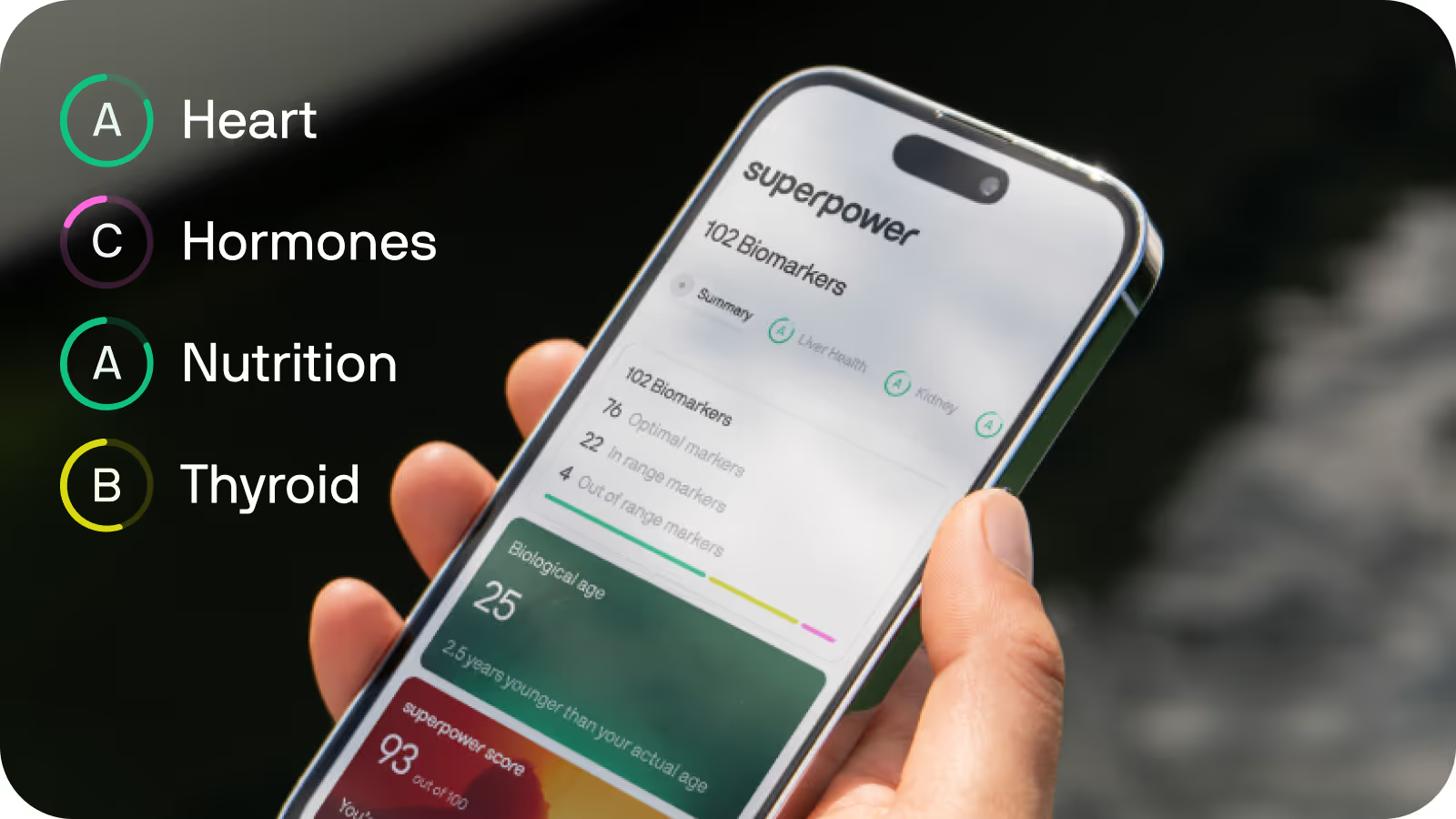
A smartphone displays health app results, showing biomarker summary, superpower score, and biological age details.
What could cost you $15,000 is $199

Superpower
Membership

Your membership includes one comprehensive blood draw each year, covering 100+ biomarkers in a single collection
One appointment, one draw for your annual panel.
100+ labs tested per year
A personalized plan that evolves with you
Get your biological age and track your health over a lifetime
$
17
/month
billed annually
Pricing for members in NY & NJ is $499
Flexible payment options
Four credit card logos: HSA/FSA Eligible, American Express, Visa, and Mastercard.
Start testing
Cancel anytime
HSA/FSA eligible
Results in a week

Finally, healthcare that looks at the whole you