Excellent 4.6 out of 5
Cardiovascular and Vascular Diseases

Blood Testing for Myocardial Infarction

Blood testing clarifies cardiovascular injury and risk, guiding timely care for myocardial infarction. Superpower offers hs-CRP and LDL/HDL testing to assess inflammation and atherogenic burden. Choose in-clinic or at-home collection. Home testing is available in selected states. (See FAQs below for more info).

Book a Myocardial Infarction blood test today.
Cancel anytime
HSA/FSA eligible
Results in a week
Physician reviewed

Every result is checked

·
CLIA-certified labs

Federal standard for testing

·
HIPAA compliant

Your data is 100% secure

Key Benefits

  • Estimate heart attack risk by pairing cholesterol levels with inflammation (hs‑CRP).
  • Spot LDL levels above guideline targets that accelerate artery plaque growth.
  • Flag low HDL that signals reduced protective cholesterol transport.
  • Reveal hidden artery inflammation when hs‑CRP ≥2 mg/L, a risk enhancer.
  • Guide statin and add‑on therapy intensity using LDL level and overall risk.
  • Track response to lifestyle or medications by trending LDL and hs‑CRP over time.
  • Avoid interpreting hs‑CRP during infection or flare, which falsely elevates results.
  • Best interpreted with overall ASCVD risk, blood pressure, diabetes, and smoking status.

What are Myocardial Infarction biomarkers?

Myocardial infarction biomarkers are blood signals that appear when heart muscle is injured by a blocked artery. They capture the moment when heart muscle cells (cardiomyocytes) lose oxygen, their membranes break down, and their inner proteins spill into the bloodstream (ischemic injury and necrosis). The most informative are cardiac troponins I and T (cTnI, cTnT), contractile proteins normally locked onto the heart’s thin filaments. Their release tells us that damage is happening specifically in heart tissue, helping confirm a heart attack even when symptoms are vague or the ECG is unclear. Older markers like CK-MB (creatine kinase MB isoenzyme) and myoglobin rise with muscle injury but are less heart‑specific. Because these molecules enter and clear from blood in a time‑linked pattern (kinetics), repeat measurements can indicate when the injury started and how much muscle is affected, which supports rapid treatment decisions and risk assessment. In short, myocardial infarction biomarkers translate hidden cell damage into a measurable signal from the bloodstream, turning a silent biological event into actionable information.

Why is blood testing for Myocardial Infarction important?

Myocardial infarction blood tests capture heart‑muscle injury and the vascular biology that triggers it. High‑sensitivity cardiac troponin is the central marker; because the heart powers every organ, its rise or stability steers urgent decisions and predicts rhythm, pump, and perfusion complications.In health, hs‑troponin is very low or undetectable. With infarction it rises within hours and persists for days; higher peaks mean larger injury and greater risk of heart failure and arrhythmias. Chest pressure, breathlessness, sweating, or nausea—often atypical in older adults or people with diabetes—may accompany a rising pattern. Kidney disease can raise baseline values, so a rise‑and‑fall is most telling. For background risk, hs‑CRP below 1 is low inflammation, 1–3 average, above 3 high; optimal sits low. LDL is best near the low end, while HDL is more protective near the higher end.When values are low and unchanged on repeat testing, infarction is unlikely; symptoms may reflect lung, esophageal, or musculoskeletal causes. Baseline troponin tends to be lower in women; children and pregnancy also show very low values, so even small, consistent rises deserve attention. Low hs‑CRP and LDL suggest quieter plaque biology, though very low HDL can still indicate higher lifetime risk.Troponin, interpreted alongside the ECG, lipids, glucose, kidney function, and imaging, links cell death to whole‑body physiology—ischemia, inflammation, autonomic stress, and coagulation. Timely testing clarifies the immediate threat and refines long‑term risks of heart failure, recurrent infarction, arrhythmias, stroke, and premature mortality.

What insights will I get?

Myocardial Infarction (MI), commonly known as a heart attack, is a critical event that disrupts the heart’s ability to deliver oxygen and nutrients throughout the body. This affects not only cardiovascular health, but also energy production, metabolism, cognition, and even immune function. At Superpower, we assess your risk and recovery potential by measuring key blood biomarkers: high-sensitivity C-reactive protein (hs-CRP) and cholesterol markers, specifically LDL and HDL.hs-CRP is a marker of inflammation in the body. Elevated hs-CRP levels indicate increased systemic inflammation, which is closely linked to the development and progression of atherosclerosis—the underlying process in most heart attacks. LDL (low-density lipoprotein) is often called “bad” cholesterol because high levels can contribute to plaque buildup in arteries, while HDL (high-density lipoprotein) is “good” cholesterol, helping to remove cholesterol from the bloodstream.Together, these markers provide a window into the stability of your cardiovascular system. Low hs-CRP and a healthy balance of LDL and HDL suggest that your arteries are less inflamed and more resilient, supporting stable heart function. Conversely, high hs-CRP or an unfavorable LDL/HDL ratio may signal increased risk for vessel instability and future cardiac events.Interpretation of these biomarkers can be influenced by factors such as age, acute illness, pregnancy, certain medications, and laboratory assay differences. It’s important to consider these variables when understanding your results.

Superpower also tests for

See more diseases

Frequently Asked Questions About

What is Myocardial Infarction blood testing?

It’s blood testing that detects heart muscle injury and estimates heart-attack risk. In an acute event, high‑sensitivity cardiac troponin (the gold standard) rises and falls as heart cells are damaged. For underlying risk, inflammatory and lipid markers reflect plaque biology. Superpower tests your blood for hs‑CRP (vascular inflammation) and LDL/HDL (atherogenic vs. protective lipoproteins) to assess the system conditions that lead to myocardial infarction.

Why should I get Myocardial Infarction blood testing?

There are two goals: detect damage and quantify risk. Troponin confirms myocardial injury during symptoms. hs‑CRP and LDL/HDL show whether your arteries are inflamed and plaque‑prone, signaling future event risk. Superpower measures hs‑CRP and LDL/HDL to map your inflammatory load and lipoprotein profile so you understand the physiology driving your personal heart‑attack risk.

Can I get a blood test at home?

Yes. With Superpower, our team can organize a professional blood draw in your home for hs‑CRP and LDL/HDL testing.

How often should I test?

Troponin is for symptoms or suspected myocardial infarction, not routine screening. For risk tracking, hs‑CRP and LDL/HDL are typically rechecked every 6–12 months, or sooner after major health changes. This cadence shows whether vascular inflammation and atherogenic lipoproteins are stable, rising, or improving over time.

What can affect biomarker levels?

Troponin can rise with myocarditis, heart failure, tachyarrhythmias, pulmonary embolism, sepsis, kidney disease, and strenuous exertion. hs‑CRP increases with infection, injury, autoimmune activity, and recent procedures. LDL/HDL shift with acute illness, thyroid or kidney disorders, pregnancy, alcohol, medications (statins, steroids, estrogen), and recent heavy exercise or large meals.

Are there any preparations needed before the blood test for hs‑CRP, LDL/HDL markers?

hs‑CRP needs no fasting, but for risk interpretation test when you’re well (not during fever or infection). For LDL/HDL, fasting 8–12 hours helps standardize results; water is fine. Avoid heavy exercise and alcohol the day before. If you’ve had a recent illness or procedure, results can be temporarily distorted.

Can lifestyle changes affect my biomarker levels?

Yes. Systemic inflammation and lipid transport are dynamic. Weight shifts, diet pattern, physical activity, sleep, alcohol exposure, and tobacco smoke all move hs‑CRP and LDL/HDL by altering hepatic lipoprotein production, clearance, and inflammatory signaling across the vascular wall.

How do I interpret my results?

A rising/falling troponin above the lab’s 99th percentile indicates myocardial injury; with symptoms and ECG changes it supports myocardial infarction. hs‑CRP: <1 mg/L low vascular inflammation, 1–3 average, >3 high; >10 suggests acute illness—recheck when well. LDL‑C: lower is less atherogenic burden. HDL‑C: higher generally associates with lower risk, but function matters. Superpower provides hs‑CRP and LDL/HDL to clarify risk, not to diagnose an acute heart attack.

What states are Superpower’s at-home blood testing available in?

Superpower currently offers at-home blood testing in the following states: Alabama, Arizona, California, Colorado, Connecticut, Delaware, District of Columbia, Florida, Georgia, Idaho, Illinois, Indiana, Kansas, Maine, Maryland, Massachusetts, Michigan, Minnesota, Missouri, Montana, Nebraska, Nevada, New Hampshire, New Jersey, New Mexico, New York, North Carolina, Ohio, Oklahoma, Oregon, Pennsylvania, South Carolina, Tennessee, Texas, Utah, Vermont, Virginia, Washington, West Virginia, and Wisconsin.We’re actively expanding nationwide, with new states being added regularly. If your state isn’t listed yet, stay tuned.

How it works

1

Test your whole body

Get a comprehensive blood draw at one of our 3,000+ partner labs or from the comfort of your own home.

2

An Actionable Plan

Easy to understand results & a clear action plan with tailored recommendations on diet, lifestyle changes, supplements and pharmaceuticals.

3

A Connected Ecosystem

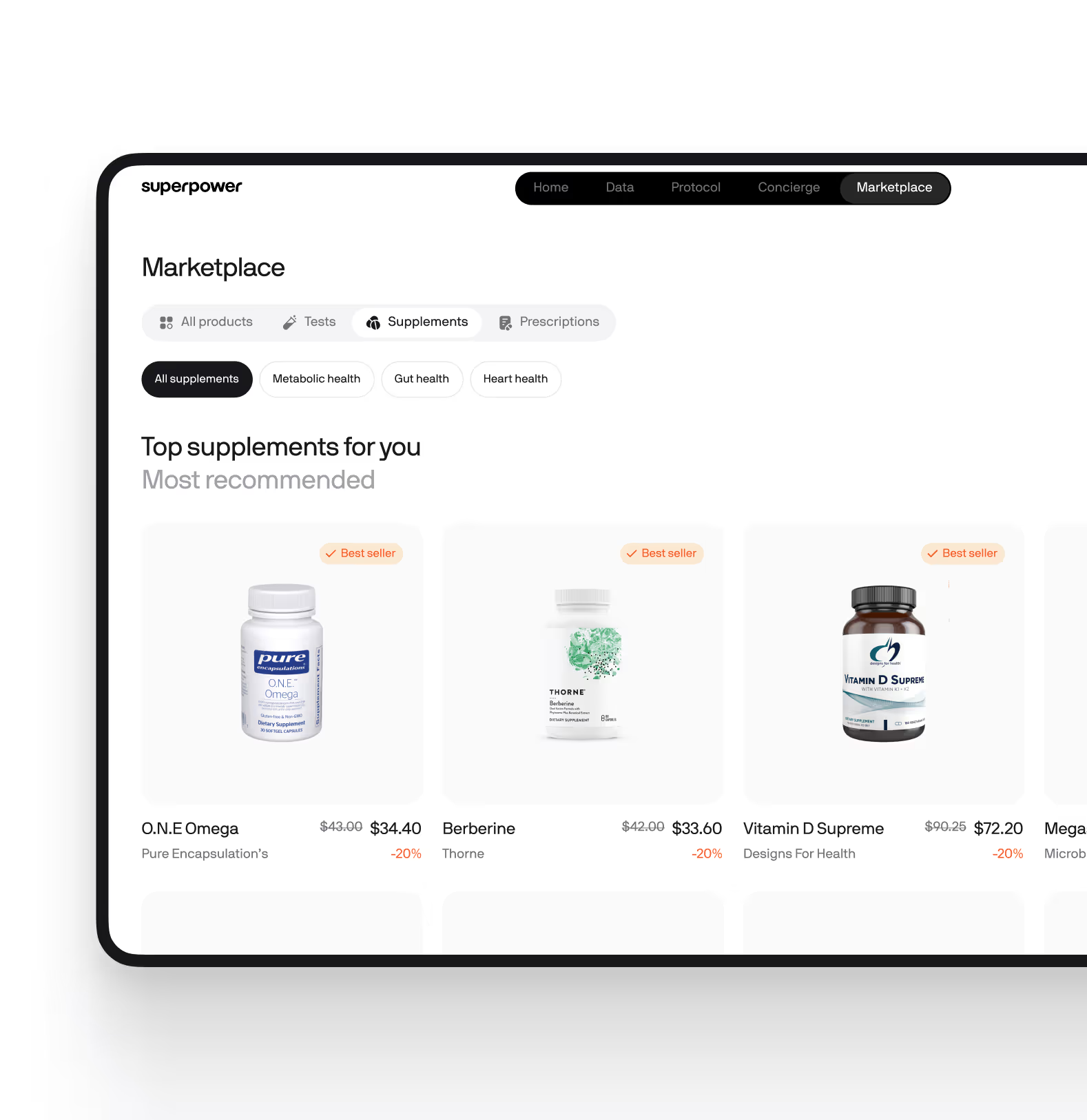
You can book additional diagnostics, buy curated supplements for 20% off & pharmaceuticals within your Superpower dashboard.

Superpower tests more than 
100+ biomarkers & common symptoms

Developed by world-class medical professionals

Supported by the world’s top longevity clinicians and MDs.

Dr Anant Vinjamoori

Superpower Chief Longevity Officer, Harvard MD & MBA

A smiling woman wearing a white coat and stethoscope poses for a portrait.

Dr Leigh Erin Connealy

Clinician & Founder of The Centre for New Medicine

Man in a black medical scrub top smiling at the camera.

Dr Abe Malkin

Founder & Medical Director of Concierge MD

Dr Robert Lufkin

UCLA Medical Professor, NYT Bestselling Author

membership

$17

/month
Billed annually at $199
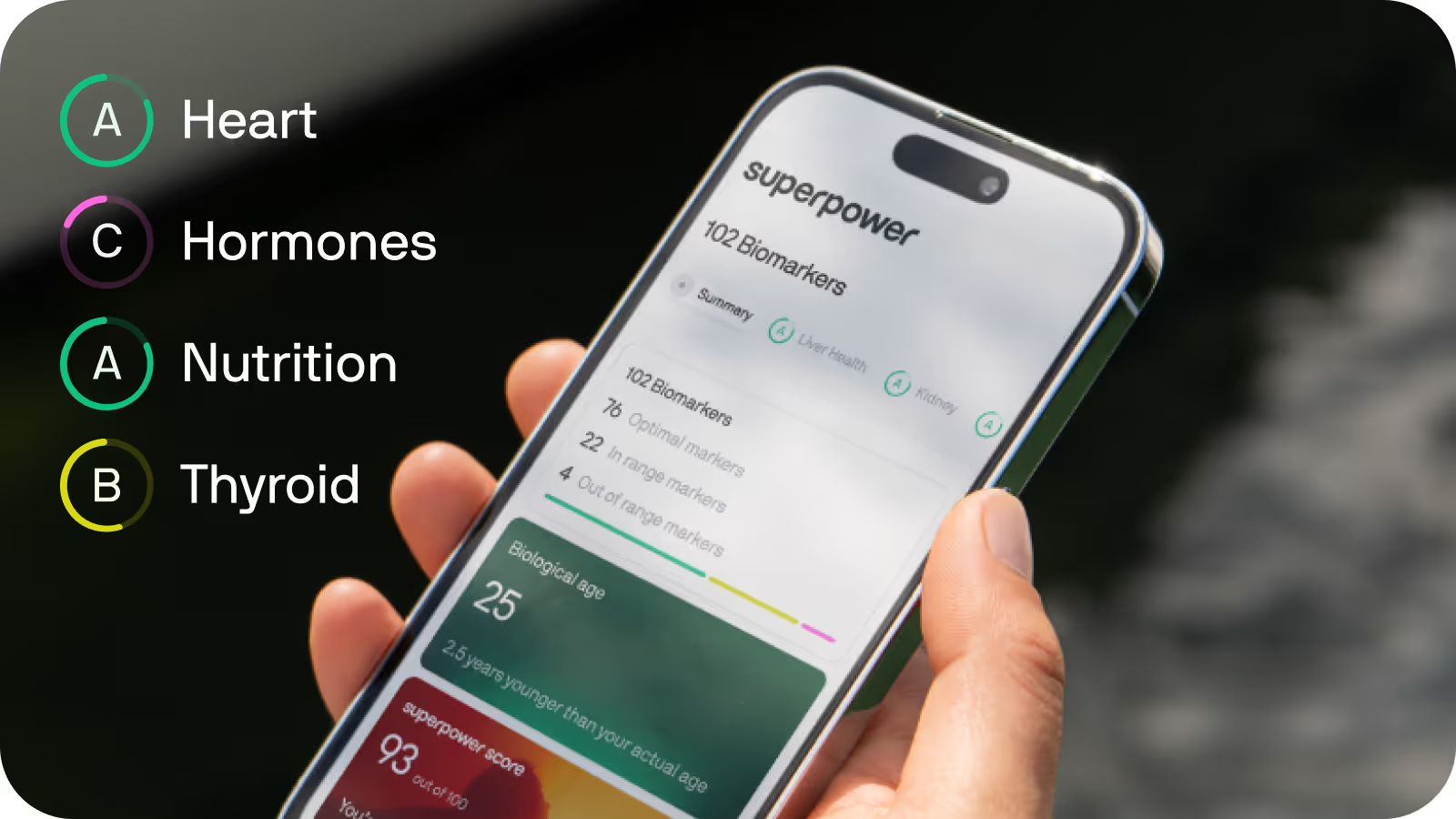
A smartphone displays health app results, showing biomarker summary, superpower score, and biological age details.
What could cost you $15,000 is $199

Superpower
Membership

Your membership includes one comprehensive blood draw each year, covering 100+ biomarkers in a single collection
One appointment, one draw for your annual panel.
100+ labs tested per year
A personalized plan that evolves with you
Get your biological age and track your health over a lifetime
$
17
/month
billed annually
Pricing for members in NY & NJ is $499
Flexible payment options
Four credit card logos: HSA/FSA Eligible, American Express, Visa, and Mastercard.
Start testing
Cancel anytime
HSA/FSA eligible
Results in a week

Finally, healthcare that looks at the whole you