Excellent 4.6 out of 5
Hematological Disorders

Blood Testing for MGUS

Blood testing helps detect MGUS early, signaling abnormal plasma cell protein patterns. At Superpower, we measure Total Protein, Globulin, and the A/G ratio to screen for MGUS. We offer in-clinic and at-home testing; home collection is currently available in selected states. (See FAQs below for more info).

Book a MGUS blood test today.
Cancel anytime
HSA/FSA eligible
Results in a week
Physician reviewed

Every result is checked

·
CLIA-certified labs

Federal standard for testing

·
HIPAA compliant

Your data is 100% secure

Key Benefits

  • Check your protein balance to screen for monoclonal protein (MGUS).
  • Spot high total protein that can flag a hidden monoclonal spike.
  • Flag a low A/G ratio suggesting excess globulin from monoclonal gammopathy.
  • Clarify if protein imbalance fits MGUS versus dehydration, inflammation, or liver disease.
  • Guide next tests like SPEP, immunofixation, and free light chains when abnormal.
  • Track protein trends over time to watch for progression risk or stability.
  • Protect kidney health by prompting early urine checks if protein changes emerge.
  • Best interpreted with SPEP, free light chains, blood counts, calcium, creatinine, symptoms.

What are MGUS biomarkers?

MGUS (monoclonal gammopathy of undetermined significance) biomarkers are blood signals that reveal the presence and behavior of a tiny, single family of antibody‑making cells in the marrow. They center on the abnormal one‑of‑a‑kind antibody protein (monoclonal protein, M‑protein) and its fragments (free light chains, FLCs). These markers show that a clone exists (clonal plasma cells), what class of antibody it makes (immunoglobulin isotype such as IgG, IgA, or IgM), how steady it is over time, and whether it is crowding out healthy antibodies (immunoparesis). By tracking these proteins, clinicians can detect MGUS early, distinguish it from more aggressive conditions, and watch for biological shifts that suggest movement toward disease (progression to multiple myeloma, Waldenström macroglobulinemia, or AL amyloidosis). The light‑chain pattern also hints at balance of production (kappa/lambda FLC ratio), and the kidneys often act as “listening posts” when excess fragments are filtered. Together, MGUS biomarkers offer a noninvasive window into the clone’s size, identity, and impact, enabling calm observation when stable and timely action if its biology changes.

Why is blood testing for MGUS important?

MGUS blood testing looks for a single “clone-made” antibody (the M‑protein) and its light chains, then reads how that protein load is influencing whole‑body systems—bone marrow immunity, blood thickness, kidneys filtering light chains, nerves, and bones. It turns a silent plasma‑cell signal into measurable risk.Typical chemistry anchors help orient the picture: Total Protein 6.0–8.3, Globulin 2.0–3.5, and A/G ratio 1.0–2.2. In general, health tends to sit near the middle of these ranges. With MGUS, Total Protein can drift high‑normal or high, Globulin often rises, and the A/G ratio leans lower; in light‑chain–only MGUS, these may stay normal, so free light‑chain testing and electrophoresis are crucial.When Total Protein or Globulin run low, physiology points to a reduced antibody pool or protein loss from liver, kidney, or gut. In MGUS, this may reflect immunoparesis—suppression of healthy, background immunoglobulins—leading to recurrent sinus or chest infections, fatigue, and slower recovery from illness. Low Total Protein can also mask an M‑spike, delaying recognition. By contrast, when Globulin is high or the A/G ratio falls, thicker serum and higher monoclonal load can bring headaches, blurry vision, tingling or numbness, and, rarely, bleeding. MGUS is uncommon in youth, rises with age, and is more frequent in men; pregnancy hemodilution lowers Total Protein and albumin, often reducing the A/G ratio, so results need context.Big picture, these measurements link the plasma‑cell clone to immune competence, blood rheology, kidney handling of light chains, and bone remodeling—helping estimate progression risk toward myeloma or amyloidosis and guiding how closely to watch the system over time.

What insights will I get?

MGUS (Monoclonal Gammopathy of Undetermined Significance) blood testing provides insight into how your immune system is functioning and whether abnormal proteins are present in your blood. This matters because the immune system is deeply connected to energy, metabolism, cardiovascular health, and even cognitive function. At Superpower, we focus on three key biomarkers for MGUS screening: Total Protein, Globulin, and the Albumin/Globulin (A/G) ratio.Total Protein measures the combined amount of all proteins in your blood, including albumin and globulins. Globulin refers to a group of proteins, many of which are antibodies produced by the immune system. The A/G ratio compares the amount of albumin to globulin. In MGUS, abnormal plasma cells produce a monoclonal protein (M-protein), which can increase total protein and globulin levels, and alter the A/G ratio.Stable and healthy values for Total Protein, Globulin, and the A/G ratio suggest that your immune system is balanced and not overproducing abnormal proteins. When these markers are within expected ranges, it indicates that the body’s protein production and immune surveillance are functioning smoothly, supporting overall system stability.Interpretation of these biomarkers can be influenced by factors such as age, pregnancy, acute or chronic illness, and certain medications. Laboratory methods and reference ranges may also vary, so results are always considered in the context of your overall health and medical history.

Superpower also tests for

See more diseases

Frequently Asked Questions About

What is MGUS blood testing?

MGUS blood testing looks for abnormal immune proteins made by a single plasma‑cell clone. It detects shifts in the blood’s protein balance that suggest a monoclonal protein (M‑protein). Core diagnostic assays are serum protein electrophoresis, immunofixation, and serum free light chains. Superpower measures Total Protein, Globulin, and the Albumin/Globulin (A/G) ratio to flag protein imbalances that may warrant formal MGUS workup.

Why should I get MGUS blood testing?

MGUS is often silent but can stress bone, kidney, and blood systems and carries a small yearly risk of progression. Early identification defines your protein baseline and helps risk‑stratify and monitor safely over time. Superpower’s Total Protein, Globulin, and A/G ratio reveal shifts toward excess immunoglobulins that may need confirmatory testing.

Can I get a blood test at home?

Yes. With Superpower, our team can organise a professional blood draw in your home for Total Protein, Globulin, and A/G ratio.

How often should I test?

Cadence depends on risk and prior results. Many people with stable MGUS are monitored every 6–12 months, while a new abnormal pattern is often rechecked sooner to confirm stability. When results are normal, repeating at intervals is guided by overall risk and symptoms. Trends matter more than a single value.

What can affect biomarker levels?

Hydration shifts Total Protein by concentrating or diluting plasma. Infections, chronic inflammation, autoimmune disease, and IV immunoglobulin raise Globulin. Liver disease lowers albumin and drives a low A/G ratio; kidney protein loss also lowers A/G. Pregnancy, recent infusions, and prolonged tourniquet time can alter results. Some therapies (e.g., monoclonal antibodies) can influence protein measurements.

Are there any preparations needed before the blood test for Total Protein, Globulin, A/G ratio?

No fasting is typically needed. Be well hydrated, and avoid draws from an arm with IV fluids running. Tell the team about recent IVIG or monoclonal antibody therapy, which can raise Globulin. Aim for similar timing between tests for consistency.

Can lifestyle changes affect my biomarker levels?

Indirectly. Hydration, systemic inflammation, liver and kidney function, and body composition can shift albumin and globulin balance over time. However, a true monoclonal protein in MGUS reflects a clonal plasma‑cell process and usually does not normalize with lifestyle change alone.

How do I interpret my results?

High Total Protein and Globulin with a low A/G ratio suggests excess immunoglobulins. This can be polyclonal (broad inflammation) or monoclonal (MGUS and related disorders). Normal values reduce the chance of significant protein excess but do not fully exclude a small M‑protein. Abnormal patterns on Superpower’s Total Protein, Globulin, and A/G ratio should be correlated with serum protein electrophoresis, immunofixation, serum free light chains, and clinical context over time.

What states are Superpower’s at-home blood testing available in?

Superpower currently offers at-home blood testing in the following states: Alabama, Arizona, California, Colorado, Connecticut, Delaware, District of Columbia, Florida, Georgia, Idaho, Illinois, Indiana, Kansas, Maine, Maryland, Massachusetts, Michigan, Minnesota, Missouri, Montana, Nebraska, Nevada, New Hampshire, New Jersey, New Mexico, New York, North Carolina, Ohio, Oklahoma, Oregon, Pennsylvania, South Carolina, Tennessee, Texas, Utah, Vermont, Virginia, Washington, West Virginia, and Wisconsin.We’re actively expanding nationwide, with new states being added regularly. If your state isn’t listed yet, stay tuned.

How it works

1

Test your whole body

Get a comprehensive blood draw at one of our 3,000+ partner labs or from the comfort of your own home.

2

An Actionable Plan

Easy to understand results & a clear action plan with tailored recommendations on diet, lifestyle changes, supplements and pharmaceuticals.

3

A Connected Ecosystem

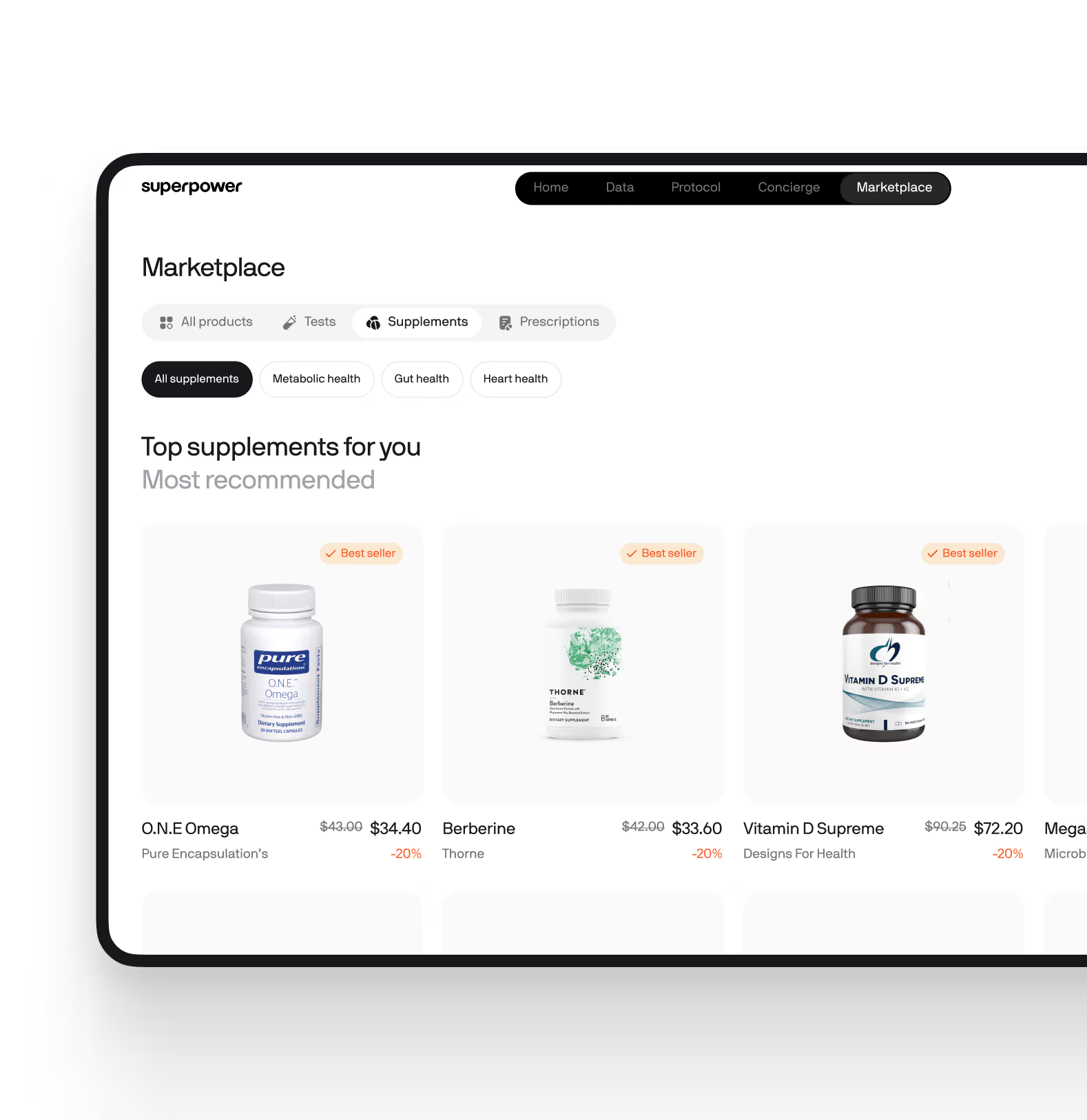
You can book additional diagnostics, buy curated supplements for 20% off & pharmaceuticals within your Superpower dashboard.

Superpower tests more than 
100+ biomarkers & common symptoms

Developed by world-class medical professionals

Supported by the world’s top longevity clinicians and MDs.

Dr Anant Vinjamoori

Superpower Chief Longevity Officer, Harvard MD & MBA

A smiling woman wearing a white coat and stethoscope poses for a portrait.

Dr Leigh Erin Connealy

Clinician & Founder of The Centre for New Medicine

Man in a black medical scrub top smiling at the camera.

Dr Abe Malkin

Founder & Medical Director of Concierge MD

Dr Robert Lufkin

UCLA Medical Professor, NYT Bestselling Author

membership

$17

/month
Billed annually at $199
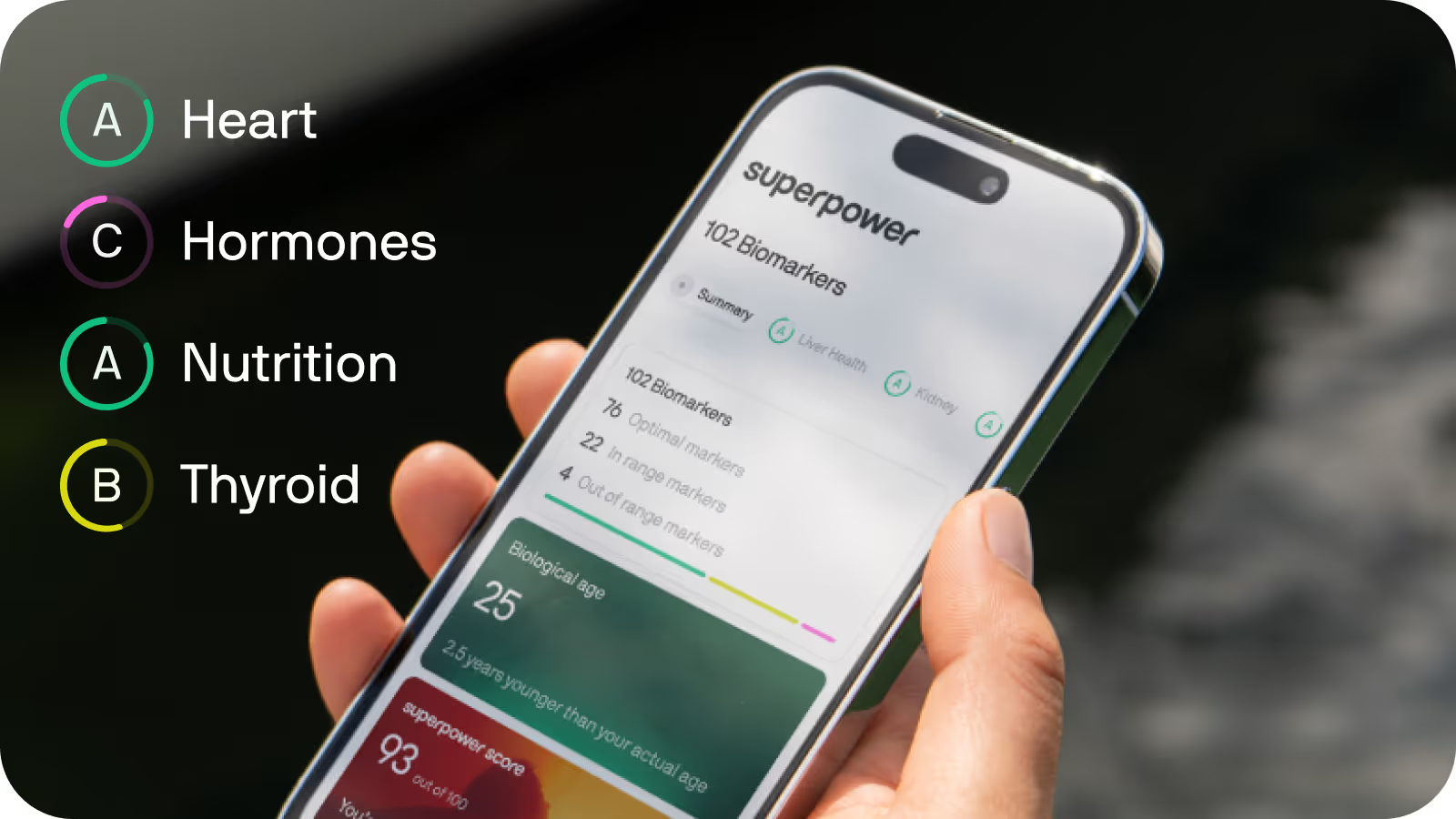
A smartphone displays health app results, showing biomarker summary, superpower score, and biological age details.
What could cost you $15,000 is $199

Superpower
Membership

Your membership includes one comprehensive blood draw each year, covering 100+ biomarkers in a single collection
One appointment, one draw for your annual panel.
100+ labs tested per year
A personalized plan that evolves with you
Get your biological age and track your health over a lifetime
$
17
/month
billed annually
Pricing for members in NY & NJ is $499
Flexible payment options
Four credit card logos: HSA/FSA Eligible, American Express, Visa, and Mastercard.
Start testing
Cancel anytime
HSA/FSA eligible
Results in a week

Finally, healthcare that looks at the whole you