Excellent 4.6 out of 5
Neurological and Mental Health Conditions

Blood Testing for CFS/ME

Blood testing helps map the physiology of CFS/ME—stress signaling, inflammation, nutrient status, and protein balance. At Superpower, we test Cortisol, hs-CRP, Vitamin D, and Albumin. We offer in-clinic and at-home blood testing; home collection for CFS/ME is currently available in selected states. (See FAQs below for more info).

Book a CFS/ME blood test today.
Cancel anytime
HSA/FSA eligible
Results in a week
Physician reviewed

Every result is checked

·
CLIA-certified labs

Federal standard for testing

·
HIPAA compliant

Your data is 100% secure

Key Benefits

  • Check stress hormones, inflammation, vitamin D status, and protein nutrition in CFS/ME.
  • Spot morning cortisol imbalance that may explain stress intolerance and post-exertional crashes.
  • Flag silent inflammation with hs-CRP, guiding pace of activity and recovery strategies.
  • Differentiate ME/CFS symptoms from infection or other inflammatory conditions using hs-CRP trends.
  • Optimize bone, muscle, and immunity with vitamin D sufficiency; support mood and energy.
  • Protect fertility and pregnancy by correcting vitamin D deficiency before and during pregnancy.
  • Track nutrition and inflammation with albumin to guide protein intake and hydration.
  • Best interpreted with thyroid, iron, B12, glucose, and your symptoms.

What are CFS/ME biomarkers?

CFS/ME biomarkers are measurable signals in blood and other tissues that capture how the illness disrupts core body systems. Instead of a single yes/no test, they map the biology behind symptoms—showing shifts in energy production, immune signaling, and automatic body regulation. In blood, these patterns can include altered immune messenger profiles (cytokines), changes in stress‑response rhythms (HPA axis), and metabolic fingerprints of cellular energy strain (mitochondrial oxidative metabolism). They can also reflect autonomic imbalance that drives lightheadedness, temperature swings, and unrefreshing sleep (dysautonomia). By translating invisible processes into objective numbers, biomarkers help validate symptoms like post‑exertional crash (post‑exertional malaise), guide exclusion of look‑alike conditions, and support research to define subtypes and targets for therapy. No single marker currently diagnoses ME/CFS on its own; the value lies in panels that track a consistent biological story over time. Used thoughtfully, biomarker testing turns lived experience into a biological map clinicians and researchers can act on.

Why is blood testing for CFS/ME important?

Blood tests in CFS/ME help map how the stress axis, immune system, nutrient status, and protein reserves are behaving across the whole body. Because CFS/ME is multisystem, objective biomarkers don’t diagnose it on their own, but they reveal patterns that explain fatigue, post‑exertional malaise, pain, sleep disturbance, and orthostatic symptoms—and they help rule out mimics.Cortisol normally peaks in the morning (about 5–25) and falls through the day; feeling best tends to align with a solid morning peak in the mid‑to‑upper normal range and a smooth decline. hs‑CRP reflects systemic inflammation; values near the low end are generally favorable. Vitamin D sufficiency commonly sits in the middle of the usual range (about 30–50). Albumin, a liver‑made carrier protein and oncotic “sponge,” is typically healthy in the mid‑to‑high normal range (about 3.5–5.0).When values run low, physiology shifts. A low or flattened morning cortisol suggests reduced HPA‑axis drive, often felt as unrefreshing sleep, “energy crashes,” worsened post‑exertional malaise, and lightheadedness on standing. Very low hs‑CRP means little systemic inflammation; in CFS/ME, symptoms can still stem from neuroimmune and autonomic dysregulation that CRP doesn’t capture. Low vitamin D impairs muscle function and bone turnover, adding diffuse aches and fatigue; in children/teens it can hinder bone accrual, and in pregnancy it impacts maternal‑fetal bone health. Low albumin points to inflammation, liver or renal loss, or poor intake/absorption, contributing to edema, weakness, and medication binding changes; in pregnancy, modest lowering can be physiologic hemodilution.Big picture: these markers anchor CFS/ME within the stress‑immune‑metabolic network, clarify comorbid risks (bone health, cardiometabolic inflammation, frailty), and support tracking over time as part of a comprehensive, systems‑based understanding.

What insights will I get?

Blood testing for Chronic Fatigue Syndrome/Myalgic Encephalomyelitis (CFS/ME) provides a window into how the body’s core systems are functioning under stress. CFS/ME affects energy production, immune balance, inflammation, and the body’s ability to recover from daily demands. At Superpower, we focus on four key biomarkers—Cortisol, high-sensitivity C-reactive protein (hs-CRP), Vitamin D, and Albumin—to help map out these interconnected systems.Cortisol is the main stress hormone, reflecting how the body manages physical and emotional challenges. In CFS/ME, cortisol patterns can be disrupted, signaling altered stress response and energy regulation. hs-CRP is a sensitive marker of inflammation; even low-level increases can indicate ongoing immune activation, which is often seen in CFS/ME. Vitamin D is essential for immune modulation, muscle function, and overall vitality. Low levels are common in people with chronic fatigue and may reflect reduced sun exposure or altered metabolism. Albumin, a major blood protein, helps maintain fluid balance and transports hormones and nutrients. Lower albumin can signal chronic inflammation or poor nutritional status, both relevant in CFS/ME.Together, these biomarkers help assess the stability and resilience of the body’s stress response, inflammation control, and nutrient reserves. Balanced levels suggest the body is maintaining homeostasis, while persistent abnormalities may point to ongoing physiological strain in CFS/ME.Interpretation of these results depends on factors like age, sex, pregnancy, acute illness, medications, and laboratory methods. These variables can shift biomarker levels, so results are always considered in the context of the individual’s overall health and circumstances.

Superpower also tests for

See more diseases

Frequently Asked Questions About

What is CFS/ME blood testing?

There is no single diagnostic blood test for ME/CFS. Testing maps key body systems that drive symptoms and rules out mimics. Superpower measures cortisol (stress response/HPA axis), hs-CRP (systemic inflammation), vitamin D (immune and musculoskeletal status), and albumin (nutritional status, liver function, and plasma protein balance). Together, these markers give an objective baseline and show how your physiology shifts over time, especially around crashes and recovery.

Why should I get CFS/ME blood testing?

It gives objective data on stress biology, inflammation, micronutrient status, and protein balance—systems commonly disturbed in ME/CFS. Abnormal patterns can explain flares, guide further evaluation, and help exclude other causes of fatigue, pain, orthostasis, and brain fog. Serial results show trends, not just snapshots, which is crucial in a fluctuating condition.

Can I get a blood test at home?

Yes. With Superpower, our team member can organize a professional blood draw in your home at a time that suits you.

How often should I test?

Start with a baseline, then repeat every 3–6 months to track trends. Recheck sooner after major symptom shifts. If you’ve had an acute illness, wait about 2 weeks before repeating hs-CRP to assess baseline inflammation. Vitamin D often benefits from seasonal checks. Use the same lab where possible for consistency.

What can affect biomarker levels?

Cortisol varies by time of day and stress; steroids and oral contraceptives can alter it. hs-CRP rises with infection, injury, or vaccination; smoking and higher adiposity can elevate it. Vitamin D fluctuates with sun exposure, season, skin pigmentation, malabsorption, and supplements. Albumin falls with inflammation and liver or kidney disease and shifts with hydration; severe protein–energy intake also matters.

Are there any preparations needed before the blood test for Cortisol, hs-CRP, Vitamin D, Albumin?

Cortisol is best drawn in the early morning (around 7–9 AM); avoid strenuous exercise right before testing. hs-CRP needs no fasting; for baseline assessment, avoid testing during an acute illness. Vitamin D needs no special prep. Albumin needs no fasting; come normally hydrated.

Can lifestyle changes affect my biomarker levels?

Yes. Sleep and psychological stress influence cortisol rhythms. Intercurrent infections, tissue injury, and recovery dynamics drive hs-CRP. Sun exposure and intake affect vitamin D. Hydration status and overall protein balance influence albumin. These are physiology-driven responses; direction and magnitude vary by individual and context.

How do I interpret my results?

Use lab reference ranges and look for patterns over time. High hs-CRP signals active systemic inflammation; persistently low values suggest a quieter inflammatory state. Low vitamin D indicates insufficiency or deficiency. Low albumin often reflects inflammation, fluid shifts, or impaired protein synthesis. Cortisol should peak in the morning; values that are unexpectedly high or low can suggest HPA-axis dysregulation. These results inform ME/CFS care but do not diagnose it on their own.

What states are Superpower’s at-home blood testing available in?

Superpower currently offers at-home blood testing in the following states: Alabama, Arizona, California, Colorado, Connecticut, Delaware, District of Columbia, Florida, Georgia, Idaho, Illinois, Indiana, Kansas, Maine, Maryland, Massachusetts, Michigan, Minnesota, Missouri, Montana, Nebraska, Nevada, New Hampshire, New Jersey, New Mexico, New York, North Carolina, Ohio, Oklahoma, Oregon, Pennsylvania, South Carolina, Tennessee, Texas, Utah, Vermont, Virginia, Washington, West Virginia, and Wisconsin.We’re actively expanding nationwide, with new states being added regularly. If your state isn’t listed yet, stay tuned.

How it works

1

Test your whole body

Get a comprehensive blood draw at one of our 2,000+ partner labs or from the comfort of your own home.

2

An Actionable Plan

Easy to understand results & a clear action plan with tailored recommendations on diet, lifestyle changes, supplements and pharmaceuticals.

3

A Connected Ecosystem

You can book additional diagnostics, buy curated supplements for 20% off & pharmaceuticals within your Superpower dashboard.

Superpower tests more than 
100+ biomarkers & common symptoms

Developed by world-class medical professionals

Supported by the world’s top longevity clinicians and MDs.

Dr Anant Vinjamoori

Superpower Chief Longevity Officer, Harvard MD & MBA

A smiling woman wearing a white coat and stethoscope poses for a portrait.

Dr Leigh Erin Connealy

Clinician & Founder of The Centre for New Medicine

Man in a black medical scrub top smiling at the camera.

Dr Abe Malkin

Founder & Medical Director of Concierge MD

Dr Robert Lufkin

UCLA Medical Professor, NYT Bestselling Author

Your membership

Select your assessment level

Superpower provides the most advanced health check with a plan that works. Go far beyond your annual physical.

Panels designed by

world class clinicians

2,000+ lab locations

across the country

Baseline

$199/yr

100+ biomarker blood test

Performance

Recommended

$365/yr

115+ biomarker blood test

60 biomarker follow-up retest

Complete

$649/yr

115+ biomarker blood test

60 biomarker follow-up retest

Gut microbiome analysis

Organ age breakdown

Get started
Loading...
HSA/ FSA eligible · Secure checkout

Baseline

$199

per year

Covers your metabolic, hormonal and cardiovascular baseline. The best basis for a single snapshot of your overall health.

What's included

Test Breakdown

These are the panels offered in the tiers above

100+ biomarker blood test

Heart & Vascular Health

20 markers

ApoB, LDL-Cholesterol, Triglycerides

Sex Hormones

8 markers

Testosterone, Estradiol, DHEA-S, Cortisol

Metabolic Health

7 markers

Glucose, HbA1c

Thyroid Health

4 markers

TSH, T3 Uptake, Free T4, T4 Total

Liver Health

13 markers

ALT, AST, GGT, Bilirubin

Nutrients

12 markers

Vitamin D, Total Protein, Hemoglobin

Immune System

16 markers

White blood cells, Neutrophils, Lymphocytes

Energy

5 markers

Ferritin, Iron, Cortisol

Kidney Health

9 markers

Creatinine, eGFR, Potassium, Sodium

See full list →

+21 additional

Included with every assessment

17 health areas developed by world class clinicians

Personalized clinical protocol

On-demand messaging with your care team

20% off superpower marketplace

Member pricing on add-on tests, supplements & RX

Upload past labs & wearable data for tracking

Superpower AI — a world class system trained on you

Complete

$649

per year

Normally $703 (save 8%)

Adds gut microbiome analysis and organ age surfacing, what standard blood panels may miss across energy, digestion, and immunity.

What's included

Test Breakdown

These are the panels offered in the tiers above

115+ biomarker blood test

Heart & Vascular Health

20 markers

ApoB, LDL-Cholesterol, Triglycerides, Lipoprotein(a)

Sex Hormones

11 markers

Testosterone, Estradiol, DHEA-S, Cortisol, PSA, FSH, LH, AMH

Metabolic Health

7 markers

Glucose, HbA1c, Insulin

Thyroid Health

4 markers

TSH, T3 Uptake, Free T4, T4 Total

Liver Health

8 markers

ALT, AST, GGT, Bilirubin

Nutrients

12 markers

Vitamin D, Total Protein, Hemoglobin

Immune System

16 markers

White blood cells, Neutrophils, Lymphocytes

Energy

5 markers

Ferritin, Iron, Cortisol

Kidney Health

24 markers

Creatinine, eGFR, Potassium, Urinary pH, RBC Urine, Nitrites

DNA Health

3 markers

Homocysteine, B12, Folate

Inflammation

3 markers

hs-CRP, Systemic Immune-Inflammation Index

See full list →

+8 additional

60 biomarker follow-up retest

Retesting panel

100 markers

Complete second draw — 60 biomarkers retested for longitudinal tracking.
Most biomarkers can move significantly within 3–6 months if you're actively trying to fix them.

Gut microbiome analysis

$239

Gut microbiome

300+ data points

Profiles 300 bacterial strains in your gut to map your microbial balance.
Identifies dysbiosis that may be driving symptoms like bloating, irregular digestion, skin issues, and mood changes, with actionable guidance on diet and lifestyle shifts to help restore balance.

Organ age breakdown

$99

OrganAge is the most detailed biological age test available today. Rather than showing a single number, it reveals how old each of your body's nine key systems is

Organ age breakdown

10 key systems

Circulatory, digestive, genitourinary, infectious, mental, metabolic, musculoskeletal, nervous, respiratory and systemic ages based on cutting edge longevity research

Included with every assessment

17 health areas developed by world class clinicians

Personalized clinical protocol

On-demand messaging with your care team

20% off superpower marketplace

Member pricing on add-on tests, supplements & RX

Upload past labs & wearable data for tracking

Superpower AI — a world class system trained on you

Get started
Loading...
HSA/ FSA eligible · Secure checkout

Finally, healthcare that looks at the whole you

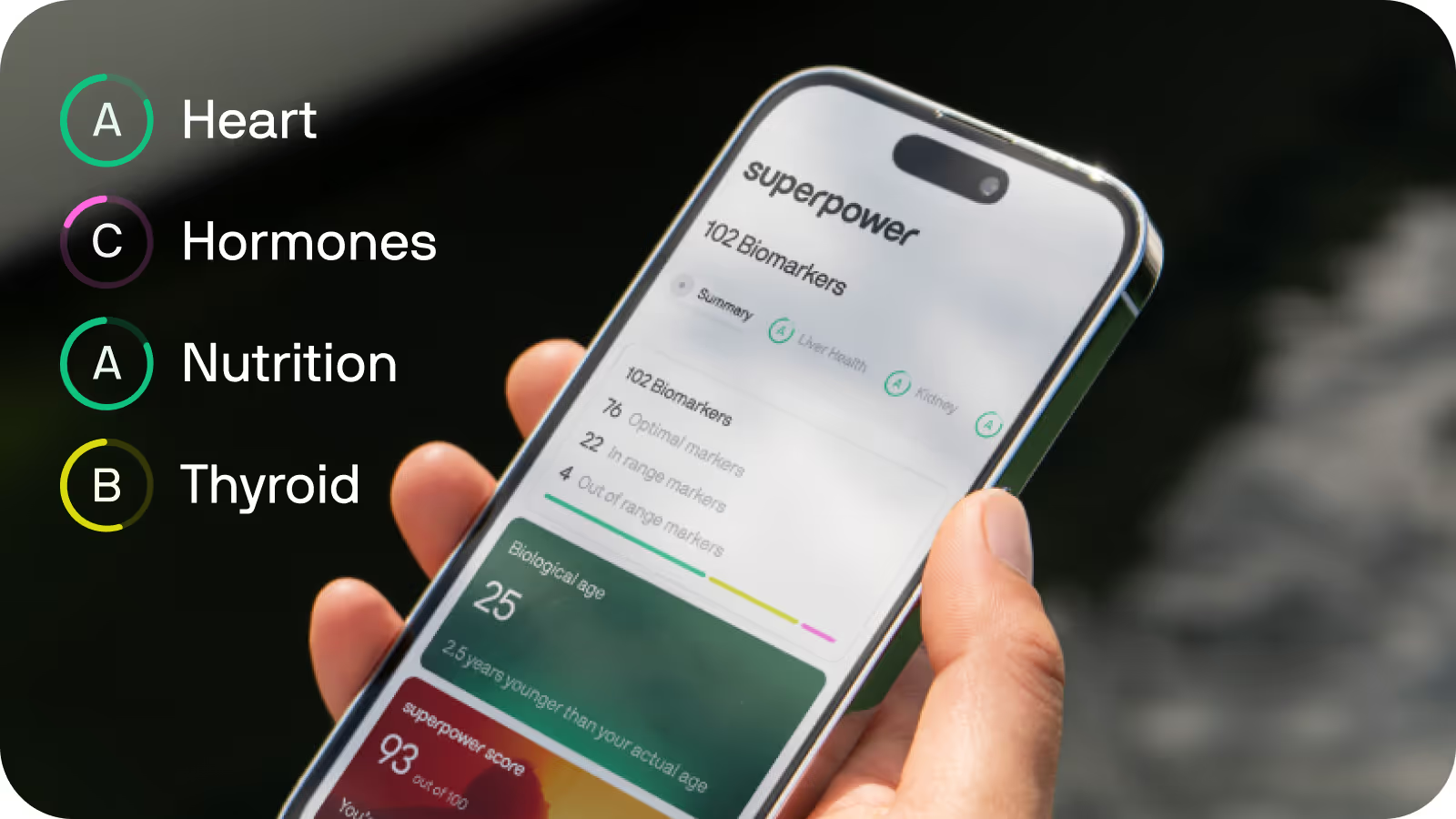
Superpower app on phone
Designed by world-class physicians

Get simple, free protocols for energy, heart health and more

Please enter a valid email address

Free protocols for

Improving energy with simple lifestyle changes

Reducing heart attack risk if you’re 30+

Slowing your pace of aging

Thanks for signing up!

Your health journey starts now. Watch your inbox for updates and smarter health insights – stay tuned.