


Understand what your skin conditions results really mean
See your biomarkers in context with a comprehensive panel.
- CLIA-certified labs
- HIPAA compliant
- Personalized health protocol
Atopic dermatitis: Skin inflammation you can read in blood
Atopic dermatitis is a skin disease driven by an overactive type 2 immune response that doesn’t stay only in the skin. Blood biomarkers capture these circulating signals, allowing clinicians to gauge the intensity and pattern of inflammation, allergy tendency, and barrier stress behind the rash and itch. Typical signals include allergy antibodies (IgE) and eosinophils, which reflect atopic load; skin-homing chemokines that track disease activity (TARC/CCL17, MDC/CCL22); proteins released with tissue stress and remodeling (periostin, LDH); and cytokines that power itch and inflammation (IL-4, IL-13, IL-31, IL-22). Together, these markers make the biology of eczema measurable: they help confirm that the disease is active and systemic, differentiate endotypes (e.g., IgE-high vs IgE-low), monitor control over time, anticipate flares, and align patients with targeted treatments that block the relevant pathways (such as IL-4/IL-13 inhibitors). In short, atopic dermatitis biomarkers translate what is happening in the skin into objective numbers in the blood, complementing the skin exam with a clearer readout of the underlying immune activity.
Why an atopic dermatitis blood panel matters
Blood tests for atopic dermatitis (AD) show how far a skin disease extends into whole‑body biology. They track allergic/type‑2 immune activity (eosinophils, often alongside total IgE) and general inflammatory tone (CRP). This helps explain itch, rash, and infections on the surface while also signaling risks in airways, sleep, and metabolic health beneath the surface. Eosinophils are normally a small slice of white cells, typically in the low single‑digit percent, with “healthier” patterns nearer the low end. CRP (a liver-made inflammation signal) is usually very low; the optimal pattern sits at the low end as well. In AD, CRP can stay normal even during flares because the disease is driven more by type‑2 cytokines than by CRP‑raising pathways; when it rises, it often hints at broader inflammation or infection. When values are low—eosinophils near the bottom of the reference interval and CRP very low—it reflects a quieter systemic immune state. AD in this setting often behaves as more skin‑limited dryness and itch with fewer infections. Children with lower eosinophils tend to have less “atopic march” toward asthma or allergic rhinitis. In pregnancy, CRP can run higher physiologically, so very low CRP is less common and results need context. Higher eosinophils point to active allergic circuitry and correlate with more intense itch, sleep disruption, and a tendency toward asthma, food sensitivity, and secondary skin infection. A clearly elevated CRP suggests superimposed infection or widespread inflammation; this is more often seen in severe adult disease. Big picture: these biomarkers connect the skin barrier to immune networks, microbiome shifts, and systemic inflammation. Tracking them alongside symptoms helps gauge disease burden, anticipate comorbid allergy and infection risk, and understand long‑term health impacts beyond the skin.
Test 150+ biomarkers
Two blood draws. A full picture of your health, explained in plain language.
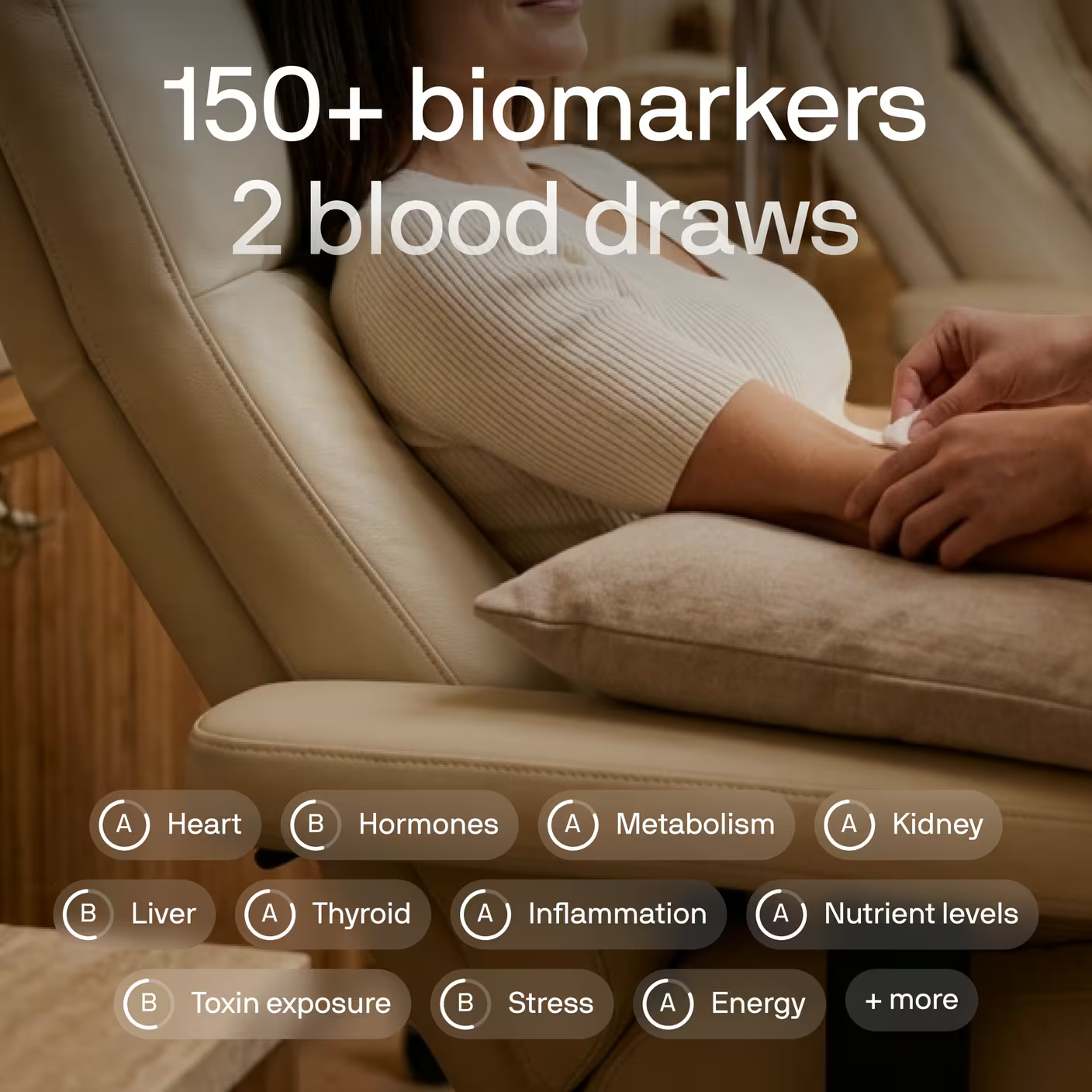
Test 150+ biomarkers
Two blood draws. A full picture of your health, explained in plain language.
What eczema bloodwork can and can't clarify
Blood testing for atopic dermatitis provides insight into how your immune system is functioning and how it may be contributing to skin inflammation. At a systems level, these tests help us understand the interplay between immunity, inflammation, and overall health—factors that can influence energy, resilience, and even cardiovascular risk. At Superpower, we focus on two key biomarkers: Eosinophils and C-reactive protein (CRP).Eosinophils are a type of white blood cell involved in allergic responses and defense against certain infections. In atopic dermatitis, eosinophil levels can be elevated, reflecting the immune system’s heightened activity and tendency toward allergic inflammation. CRP is a protein produced by the liver in response to inflammation anywhere in the body. While CRP is not specific to atopic dermatitis, higher levels can indicate ongoing systemic inflammation, which sometimes accompanies more severe or widespread skin disease. Stable, healthy levels of eosinophils suggest that the immune system is balanced and not overreacting to harmless triggers, which supports skin stability and reduces the risk of flare-ups. A normal CRP level indicates that inflammation is well-controlled, both in the skin and throughout the body, supporting overall health and resilience. Interpretation of these biomarkers can be influenced by factors such as recent infections, allergies, age, pregnancy, and certain medications. Laboratory methods and reference ranges may also vary, so results are best understood in the context of your overall health and medical history.
Frequently Asked Questions
References
- Weidinger S, Beck LA, Bieber T, Kabashima K, Irvine AD (2018). Atopic dermatitis. *Nature Reviews. Disease Primers*, *4*(1), 1. https://doi.org/10.1038/s41572-018-0001-z
- Kataoka Y (2025). Thymus and activation-regulated chemokine (CCL17) as a clinical biomarker in atopic dermatitis: Significance and limitations in the new treatment era. *Frontiers in Allergy*, *5*, 1473902. https://doi.org/10.3389/falgy.2024.1473902
- Hill DA, Spergel JM (2018). The atopic march: Critical evidence and clinical relevance. *Annals of Allergy, Asthma & Immunology*, *120*(2), 131-137. https://doi.org/10.1016/j.anai.2017.10.037
- Lambrecht BN, Hammad H (2015). The immunology of asthma. *Nature Immunology*, *16*(1), 45-56. https://doi.org/10.1038/ni.3049
- Hu Y, Liu S, Liu P, Mu Z, Zhang J (2020). Clinical relevance of eosinophils, basophils, serum total IgE level, allergen-specific IgE, and clinical features in atopic dermatitis. *Journal of Clinical Laboratory Analysis*, *34*(6), e23214. https://doi.org/10.1002/jcla.23214

























 Heart & Vascular Health
 Metabolic Health
 Energy
 Liver Health
 Kidney
 Sex Hormones
 Thyroid Health
 Nutrients
 Immune System
 Inflammation