Excellent 4.6 out of 5
Immune System

Blood Testing for Absolute Monocytes

Monocytes, Absolute (blood testing) measures the number of monocytes circulating in your bloodstream. Monocytes are a type of white blood cell (leukocyte) produced in the bone marrow (hematopoietic tissue). They travel in blood for a short time before moving into organs and tissues, where many mature into cleanup and sentinel cells called macrophages and dendritic cells. Available at 2,000+ lab locations and at-home (select states). See FAQs below

Absolute Monocytes Blood Test — Get the Superpower Panel
Cancel anytime
HSA/FSA eligible
Results in a week
Physician reviewed

Every result is checked

·
CLIA-certified labs

Federal standard for testing

·
HIPAA compliant

Your data is 100% secure

Key Benefits

  • Check the number of monocytes, white blood cells that fight infection.
  • Spot hidden infections or chronic inflammation when monocytes run high.
  • Clarify lingering fevers, fatigue, or weight loss by showing immune activation.
  • Flag blood or bone marrow disorders when counts are persistently very abnormal.
  • Guide next steps in autoimmune evaluation by indicating ongoing inflammatory activity.
  • Track recovery after infections, surgery, or chemotherapy as counts return toward baseline.
  • Support medication monitoring for immunosuppressants or steroids that affect white cells.
  • Best interpreted with a full CBC differential, CRP or ESR, and symptoms.

What is a Monocytes, Absolute blood test?

Monocytes, Absolute (blood testing) measures the number of monocytes circulating in your bloodstream. Monocytes are a type of white blood cell (leukocyte) produced in the bone marrow (hematopoietic tissue). They travel in blood for a short time before moving into organs and tissues, where many mature into cleanup and sentinel cells called macrophages and dendritic cells. The “absolute” part simply means it is a direct cell count rather than a percentage of all white cells; it captures the size of your circulating monocyte pool at the moment of the draw.

Monocytes are frontline players in the body’s innate immune defense. They patrol, recognize, and swallow microbes and debris (phagocytosis), release signaling proteins that coordinate inflammation and healing (cytokines and chemokines), and present pieces of invaders to teach the adaptive immune system what to target (antigen presentation). Because of these tasks, the absolute monocyte count reflects how actively your bone marrow is supplying these cells and how much demand there is in tissues for surveillance, cleanup, and repair. It serves as a concise snapshot of immune readiness and tissue-maintenance activity in real time.

Why is a Monocytes, Absolute blood test important?

Monocytes are mobile sentinels of innate immunity. Circulating in blood and migrating into tissues, they become macrophages and dendritic cells that kill microbes, clear debris, present antigens, and coordinate repair. An absolute monocyte count shows how prepared your immune system is and how much chronic inflammatory signaling is occurring across vessels, lungs, gut, liver, and spleen.

In adults, typical values fall roughly between 200 and 800, and the healthiest patterns sit near the middle—enough cells to patrol and heal without signaling persistent, system‑wide inflammation. Men and women have similar ranges. Children, especially infants, can run slightly higher; pregnancy can show a modest upward shift within the lab’s range.

When the count is lower than expected, it often reflects reduced production or increased consumption—bone‑marrow suppression, high corticosteroid exposure, or overwhelming infection. Fewer monocytes means less antigen presentation and slower cleanup, which can show up as recurrent infections, sluggish wound healing, mouth sores, or unusual fatigue. In kids, this may present as repeated ear or sinus infections.

When the count is higher, it signals sustained immune activation. This is common in chronic infections (such as tuberculosis), autoimmune and granulomatous diseases, inflammatory bowel disease, recovery after acute illness, or after splenectomy; smoking can contribute. Persistently high levels also occur in certain bone‑marrow disorders (for example, chronic myelomonocytic leukemia) and may accompany fevers, night sweats, weight loss, joint pain, or an enlarged spleen.

Big picture: monocytes sit at the crossroads of host defense, tissue repair, and vascular biology. Their absolute count, interpreted with the differential, CRP/ESR, and clinical context, maps the balance between protection and inflammation and is linked to long‑term risks like atherosclerosis and organ damage when chronically elevated.

What insights will I get?

A Monocytes, Absolute blood test measures the number of monocytes circulating in your blood. Monocytes are frontline innate immune cells that migrate into tissues to become macrophages and dendritic cells. They clear microbes and cellular debris, present antigens, and coordinate inflammation and repair. Because these functions shape inflammatory tone, this marker relates to infection defense, tissue healing, cardiovascular risk, insulin sensitivity, and overall metabolic resilience.

Low values usually reflect reduced marrow output or immune suppression (monocytopenia). This is seen with cytotoxic therapies, aplastic or infiltrative marrow disorders, severe acute infection or sepsis, and high-dose glucocorticoids or acute stress. System-level effects include blunted debris clearance and antigen presentation, which can increase susceptibility to certain infections and slow recovery from injury. Age matters: children normally have higher counts than adults, so a low value is more notable in pediatrics.

Being in range suggests balanced innate immune surveillance and steady marrow production. It implies adequate capacity for pathogen clearance and tissue repair without excessive inflammatory activation. For most healthy adults, values cluster around the middle of the reference interval; stability over time is reassuring and often tracks with lower chronic inflammatory burden.

High values usually reflect sustained immune activation (monocytosis). Common drivers include chronic or subacute infection, autoimmune or granulomatous disease, recovery after an acute infection, tissue injury or surgery, smoking, and absence of the spleen. Marked, persistent elevations raise concern for clonal marrow disorders such as chronic myelomonocytic leukemia. Systemically, higher counts correlate with heightened inflammatory signaling and atherosclerotic risk.

Notes: Interpretation is influenced by age, pregnancy (often mild leukocytosis), recent illness, vaccination, surgery, smoking, and medications (glucocorticoids lower counts). Absolute counts are more informative than percentages when total white cells are abnormal.


Superpower also tests for

See more blood diseases

Frequently Asked Questions About

What is Monocytes, Absolute testing?

It measures the absolute number of monocytes in your blood as part of a CBC with differential, offering insight into innate immune activity, inflammation, and recovery.

Why should I test my Monocytes, Absolute?

It helps you understand current immune status, detect shifts related to inflammation or infection, and track how lifestyle or medications may be influencing your white blood cells.

How often should I test Monocytes, Absolute?

Many people measure periodically to establish a baseline, then retest during recovery from illness, when starting or stopping medications that affect counts, or when tracking immune-related symptoms.

What can affect my Monocytes, Absolute?

Acute and chronic infections, chronic inflammation, smoking, stress, intense exercise, bone marrow function, and medications such as glucocorticoids or some chemotherapies.

Are there any preparations needed before Monocytes, Absolute testing?

No fasting is required. For consistent comparisons, test at a similar time of day and avoid unusually strenuous exercise just before the draw.

What states are Superpower’s at-home blood testing available in?

Superpower currently offers at-home blood testing in the following states: Alabama, Arizona, California, Colorado, Connecticut, Delaware, District of Columbia, Florida, Georgia, Idaho, Illinois, Indiana, Kansas, Maine, Maryland, Massachusetts, Michigan, Minnesota, Missouri, Montana, Nebraska, Nevada, New Hampshire, New Jersey, New Mexico, New York, North Carolina, Ohio, Oklahoma, Oregon, Pennsylvania, South Carolina, Tennessee, Texas, Utah, Vermont, Virginia, Washington, West Virginia, and Wisconsin.

We’re actively expanding nationwide, with new states being added regularly. If your state isn’t listed yet, stay tuned.

What happens if my Monocytes, Absolute is outside the optimal range?

Compare with prior results to confirm a trend and review related markers (WBC, differential counts, CRP, ferritin, B12/folate). Consider potential contributors such as infection, inflammation, smoking, medications, or nutrition.

Can lifestyle changes affect my Monocytes, Absolute?

Yes. Smoking status, sleep quality, stress management, physical training load, and nutrition can all influence monocyte counts over time.

How do I interpret my Monocytes, Absolute results?

Interpret in context with total WBC, neutrophils, lymphocytes, CRP/hs-CRP, ferritin, and your recent health events (illness, training, travel, medications). Trends provide more clarity than a single value.

Is Monocytes, Absolute testing right for me?

It is useful for anyone interested in monitoring immune activity, inflammation, recovery from illness, and the effects of lifestyle or medications on white blood cell dynamics.

How it works

1

Test your whole body

Get a comprehensive blood draw at one of our 2,000+ partner labs or from the comfort of your own home.

2

An Actionable Plan

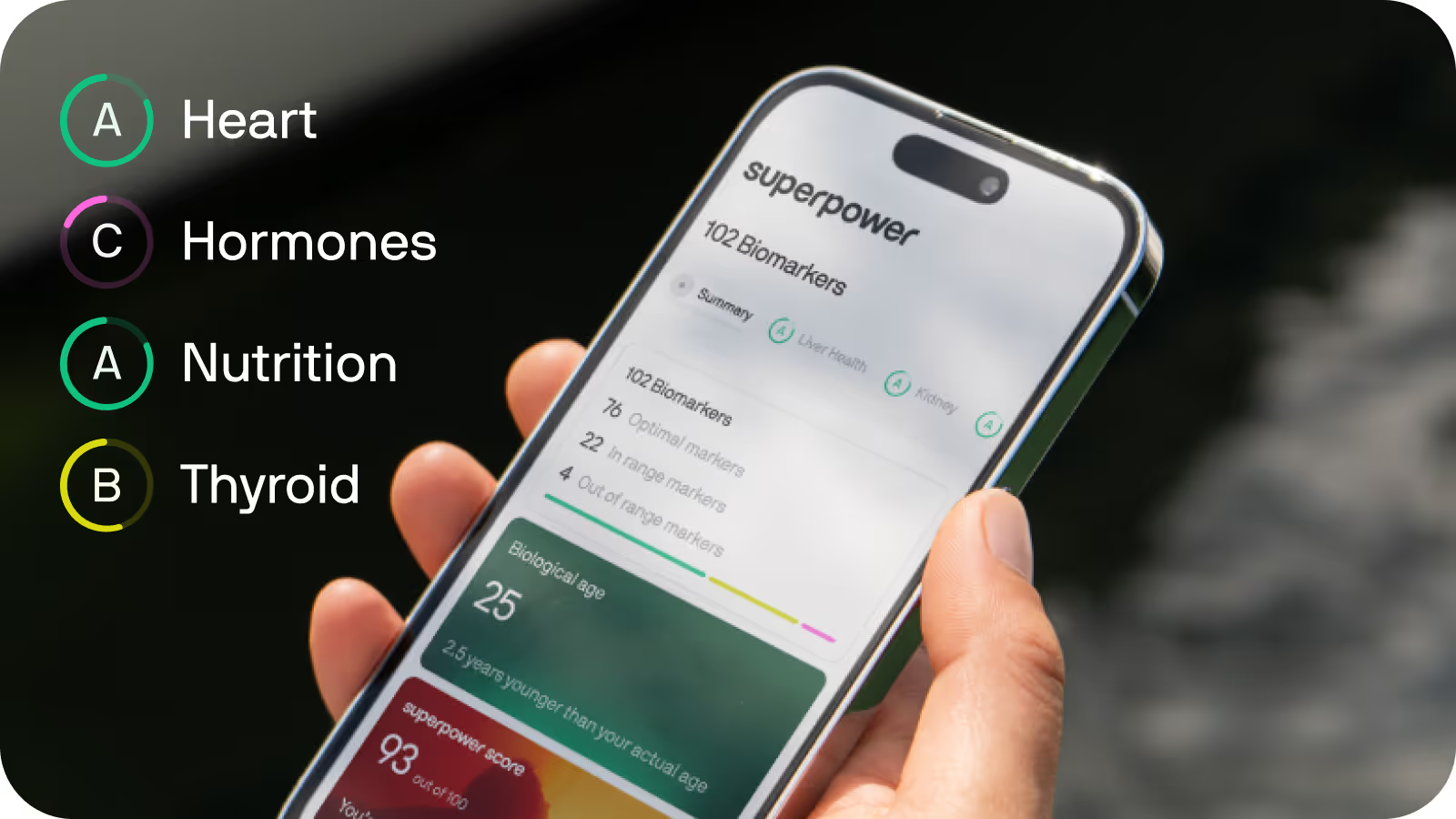
Easy to understand results & a clear action plan with tailored recommendations on diet, lifestyle changes, supplements and pharmaceuticals.

3

A Connected Ecosystem

You can book additional diagnostics, buy curated supplements for 20% off & pharmaceuticals within your Superpower dashboard.

Superpower tests more than 
100+ biomarkers & common symptoms

Developed by world-class medical professionals

Supported by the world’s top longevity clinicians and MDs.

Dr Anant Vinjamoori

Superpower Chief Longevity Officer, Harvard MD & MBA

A smiling woman wearing a white coat and stethoscope poses for a portrait.

Dr Leigh Erin Connealy

Clinician & Founder of The Centre for New Medicine

Man in a black medical scrub top smiling at the camera.

Dr Abe Malkin

Founder & Medical Director of Concierge MD

Dr Robert Lufkin

UCLA Medical Professor, NYT Bestselling Author

Your membership

Select your assessment level

Superpower provides the most advanced health check with a plan that works. Go far beyond your annual physical.

Panels designed by

world class clinicians

2,000+ lab locations

across the country

Baseline

$199/yr

100+ biomarker blood test

Performance

Recommended

$365/yr

115+ biomarker blood test

60 biomarker follow-up retest

Complete

$649/yr

115+ biomarker blood test

60 biomarker follow-up retest

Gut microbiome analysis

Organ age breakdown

Get started
Loading...
HSA/ FSA eligible · Secure checkout

Baseline

$199

per year

Covers your metabolic, hormonal and cardiovascular baseline. The best basis for a single snapshot of your overall health.

What's included

Test Breakdown

These are the panels offered in the tiers above

100+ biomarker blood test

Heart & Vascular Health

20 markers

ApoB, LDL-Cholesterol, Triglycerides

Sex Hormones

8 markers

Testosterone, Estradiol, DHEA-S, Cortisol

Metabolic Health

7 markers

Glucose, HbA1c

Thyroid Health

4 markers

TSH, T3 Uptake, Free T4, T4 Total

Liver Health

13 markers

ALT, AST, GGT, Bilirubin

Nutrients

12 markers

Vitamin D, Total Protein, Hemoglobin

Immune System

16 markers

White blood cells, Neutrophils, Lymphocytes

Energy

5 markers

Ferritin, Iron, Cortisol

Kidney Health

9 markers

Creatinine, eGFR, Potassium, Sodium

See full list →

+21 additional

Included with every assessment

17 health areas developed by world class clinicians

Personalized clinical protocol

On-demand messaging with your care team

20% off superpower marketplace

Member pricing on add-on tests, supplements & RX

Upload past labs & wearable data for tracking

Superpower AI — a world class system trained on you

Complete

$649

per year

Normally $703 (save 8%)

Adds gut microbiome analysis and organ age surfacing, what standard blood panels may miss across energy, digestion, and immunity.

What's included

Test Breakdown

These are the panels offered in the tiers above

115+ biomarker blood test

Heart & Vascular Health

20 markers

ApoB, LDL-Cholesterol, Triglycerides, Lipoprotein(a)

Sex Hormones

11 markers

Testosterone, Estradiol, DHEA-S, Cortisol, PSA, FSH, LH, AMH

Metabolic Health

7 markers

Glucose, HbA1c, Insulin

Thyroid Health

4 markers

TSH, T3 Uptake, Free T4, T4 Total

Liver Health

8 markers

ALT, AST, GGT, Bilirubin

Nutrients

12 markers

Vitamin D, Total Protein, Hemoglobin

Immune System

16 markers

White blood cells, Neutrophils, Lymphocytes

Energy

5 markers

Ferritin, Iron, Cortisol

Kidney Health

24 markers

Creatinine, eGFR, Potassium, Urinary pH, RBC Urine, Nitrites

DNA Health

3 markers

Homocysteine, B12, Folate

Inflammation

3 markers

hs-CRP, Systemic Immune-Inflammation Index

See full list →

+8 additional

60 biomarker follow-up retest

Retesting panel

100 markers

Complete second draw — 60 biomarkers retested for longitudinal tracking.
Most biomarkers can move significantly within 3–6 months if you're actively trying to fix them.

Gut microbiome analysis

$239

Gut microbiome

300+ data points

Profiles 300 bacterial strains in your gut to map your microbial balance.
Identifies dysbiosis that may be driving symptoms like bloating, irregular digestion, skin issues, and mood changes, with actionable guidance on diet and lifestyle shifts to help restore balance.

Organ age breakdown

$99

OrganAge is the most detailed biological age test available today. Rather than showing a single number, it reveals how old each of your body's nine key systems is

Organ age breakdown

10 key systems

Circulatory, digestive, genitourinary, infectious, mental, metabolic, musculoskeletal, nervous, respiratory and systemic ages based on cutting edge longevity research

Included with every assessment

17 health areas developed by world class clinicians

Personalized clinical protocol

On-demand messaging with your care team

20% off superpower marketplace

Member pricing on add-on tests, supplements & RX

Upload past labs & wearable data for tracking

Superpower AI — a world class system trained on you

Get started
Loading...
HSA/ FSA eligible · Secure checkout

Finally, healthcare that looks at the whole you