Excellent 4.6 out of 5
Immune System

Blood Testing for dsDNA antibody

Anti–double-stranded DNA antibodies are immune proteins that bind the body’s own DNA. They are autoantibodies (anti‑dsDNA) produced by B cells that have lost self‑tolerance, often after nuclear material from dying cells is exposed. These antibodies circulate in the blood and recognize native double‑stranded DNA (dsDNA) from the cell nucleus. Available at 2,000+ lab locations and at-home (select states). See FAQs below

dsDNA antibody Blood Test — Get the Superpower Panel
Cancel anytime
HSA/FSA eligible
Results in a week
Physician reviewed

Every result is checked

·
CLIA-certified labs

Federal standard for testing

·
HIPAA compliant

Your data is 100% secure

Key Benefits

  • Spot lupus-specific autoimmunity by measuring anti-double-stranded DNA antibodies.
  • Clarify unexplained rashes, joint pain, fatigue, or fevers with a lupus-focused marker.
  • Guide diagnosis after a positive ANA by providing high specificity for systemic lupus.
  • Flag kidney risk early, as rising levels often precede kidney inflammation flares.
  • Track disease activity over time to monitor flares and treatment response.
  • Guide medication choices by signaling when treatment needs to be stepped up.
  • Protect pregnancy by assessing flare and kidney risks before conception and during pregnancy.
  • Best interpreted with complement levels, urinalysis, ANA, and your symptoms over time.

What is a dsDNA antibody blood test?

Anti–double-stranded DNA antibodies are immune proteins that bind the body’s own DNA. They are autoantibodies (anti‑dsDNA) produced by B cells that have lost self‑tolerance, often after nuclear material from dying cells is exposed. These antibodies circulate in the blood and recognize native double‑stranded DNA (dsDNA) from the cell nucleus. They belong to the broader family of antinuclear antibodies (ANA). A dsDNA antibody blood test looks for these self‑directed antibodies in a blood sample.

In the body, anti‑dsDNA antibodies do not serve a normal protective role; they signal a misdirected immune response (loss of tolerance) against nuclear material. When they attach to DNA, they can form clusters with immune proteins (immune complexes) that trigger complement and inflammation, especially in the kidney’s filtering units (glomeruli). This pattern is a hallmark of systemic lupus erythematosus (SLE) and related autoimmune activity. Finding anti‑dsDNA in blood indicates that the immune system is targeting native DNA and that autoimmune inflammation driven by these complexes may be occurring. The test provides a direct window into this DNA‑targeting arm of autoimmunity.

Why is a dsDNA antibody blood test important?

Anti–double-stranded DNA (dsDNA) antibodies are immune proteins that mistakenly target your own DNA. They are a hallmark of systemic lupus erythematosus (SLE) and signal a breakdown in immune tolerance. When present, these antibodies form immune complexes that can inflame blood vessels and organs—especially the kidneys—so they matter across skin, joints, kidneys, brain, blood, and the cardiovascular system.

Most labs report results as negative, borderline, or positive; some use low, moderate, or high categories. In general, the healthiest “set point” is negative or undetectable, and trends over time are often more informative than a single value.

When values are negative or very low, they reflect intact immune tolerance—little to no immune targeting of native DNA. People typically have no dsDNA-related symptoms. In someone already diagnosed with SLE, low or falling levels often parallel quieter disease and a lower likelihood of kidney or systemic flare.

Higher values indicate active autoimmune targeting of DNA, immune-complex formation, and complement activation. This can drive fatigue, fevers, joint pain, photosensitive rashes, mouth ulcers, and—in the kidneys—protein in the urine, swelling, and rising blood pressure (lupus nephritis). Neurologic symptoms (headache, seizures), low blood counts, and vasculitic complications may appear. Women are affected more often than men; during pregnancy, higher levels tend to track more active lupus and greater risk of nephritis and pregnancy complications. Children and teens with SLE often show higher titers and more renal involvement.

Big picture: dsDNA antibodies connect to the ANA profile, anti-Sm antibodies, complement (C3/C4), and urinalysis. They aid diagnosis and, importantly, help monitor disease activity and long-term risks—especially kidney and cardiovascular outcomes driven by chronic inflammation.

What insights will I get?

The anti–double-stranded DNA (dsDNA) antibody blood test measures immune proteins that bind native DNA. It matters because such antibodies indicate loss of self-tolerance and immune complexes that inflame vessels and organs, especially kidneys. This inflammation can affect energy, cognition, skin and joints, and renal and vascular function.

Low values usually reflect little or no autoimmune targeting of DNA—what’s expected in healthy immune regulation. In people with known lupus, low or undetectable levels often align with quieter disease activity; across sexes, ages, and pregnancy, low values are typical and not linked to symptoms.

Being in range suggests stable immune tolerance with minimal immune-complex burden. For most labs the within reference ranges position is at the negative or very low end, and in established lupus it suggests controlled disease activity.

High values usually reflect active systemic autoimmunity, most specifically systemic lupus erythematosus (SLE). Levels often track with disease flares and kidney involvement (lupus nephritis) and may coincide with low complement (C3/C4), cytopenias, rashes, serositis, or neuropsychiatric symptoms. High titers are uncommon in drug-induced lupus and are rarely seen outside SLE, though children and pregnant individuals with SLE can also show rises during flares.

Notes: Interpretation varies by assay—ELISA is sensitive; Farr/Crithidia are more specific. Reference ranges differ; results fluctuate with disease activity. A negative test does not exclude SLE. Interpret with ANA, complement, and urinalysis; recent infections or biologics can transiently induce autoantibodies.


Superpower also tests for

See more blood diseases

Frequently Asked Questions About

What is a dsDNA antibody and why is it important in lupus diagnosis?

A dsDNA antibody, or anti–double-stranded DNA antibody, is an autoantibody produced by the immune system that mistakenly targets the body’s own double-stranded DNA. This antibody is a hallmark of systemic lupus erythematosus (SLE) and is rarely found in healthy individuals. Its presence helps confirm a diagnosis of lupus, especially when combined with other tests like antinuclear antibody (ANA) and complement levels. High levels of dsDNA antibodies are closely linked to lupus activity, particularly kidney involvement (lupus nephritis), and can help distinguish SLE from other autoimmune diseases.

How does the dsDNA antibody test help monitor lupus activity and flares?

The dsDNA antibody test measures the amount of antibodies targeting double-stranded DNA in the blood. Rising dsDNA levels often indicate increased lupus activity or an impending flare, while falling levels suggest disease remission or effective treatment. Tracking dsDNA titers over time, alongside complement levels (C3, C4) and symptoms, allows healthcare providers to adjust treatment intensity and monitor for organ involvement, especially in the kidneys, skin, and joints.

What symptoms or conditions might prompt a doctor to order a dsDNA antibody test?

Doctors may order a dsDNA antibody test when patients present with unexplained rashes, joint pain, fevers, fatigue, or other symptoms suggestive of systemic lupus erythematosus (SLE). The test is also used to clarify the cause of kidney problems, such as edema, foamy urine, or high blood pressure, and to investigate persistent inflammation or abnormal blood counts. It is especially useful when lupus is suspected but not yet confirmed.

How are dsDNA antibody results interpreted and what do different levels mean?

dsDNA antibody results are reported as negative, borderline, or positive, sometimes with a titer value. Low or negative results indicate no significant immune targeting of DNA and a low risk of lupus-related tissue injury. High or positive results suggest active autoimmunity, immune complex formation, and increased risk of organ inflammation, especially in the kidneys. Interpretation depends on the assay used, lab cutoffs, and clinical context, and results are best understood alongside ANA, complement levels, and urinalysis.

What is the relationship between dsDNA antibodies and lupus nephritis?

dsDNA antibodies are strongly associated with lupus nephritis, a serious kidney complication of systemic lupus erythematosus (SLE). These antibodies form immune complexes that deposit in kidney tissues, triggering complement activation and inflammation. High dsDNA titers often precede or accompany kidney symptoms such as swelling, proteinuria, and reduced kidney function. Monitoring dsDNA levels helps detect kidney involvement early and guide treatment to protect renal health.

What states are Superpower’s at-home blood testing available in?

Superpower currently offers at-home blood testing in the following states: Alabama, Arizona, California, Colorado, Connecticut, Delaware, District of Columbia, Florida, Georgia, Idaho, Illinois, Indiana, Kansas, Maine, Maryland, Massachusetts, Michigan, Minnesota, Missouri, Montana, Nebraska, Nevada, New Hampshire, New Jersey, New Mexico, New York, North Carolina, Ohio, Oklahoma, Oregon, Pennsylvania, South Carolina, Tennessee, Texas, Utah, Vermont, Virginia, Washington, West Virginia, and Wisconsin.

We’re actively expanding nationwide, with new states being added regularly. If your state isn’t listed yet, stay tuned.

How does the dsDNA antibody test compare to other lupus tests like ANA and anti-Sm?

The dsDNA antibody test is more specific for systemic lupus erythematosus (SLE) than the ANA test, which is sensitive but not specific. While ANA is positive in most lupus patients, dsDNA is particularly associated with active disease and kidney involvement. Anti-Sm antibodies are also specific for SLE but are less commonly found. Together, these tests, along with complement levels and urinalysis, provide a comprehensive assessment of lupus diagnosis and activity.

What factors can affect dsDNA antibody test results or cause false positives?

Several factors can influence dsDNA antibody test results. Acute infections, certain immunotherapies, and assay variability (ELISA, Farr, Crithidia) may cause transient changes or false positives. Low-level signals can sometimes be nonspecific or related to recent infections. However, true dsDNA positivity is uncommon in drug-induced lupus or other autoimmune diseases. Interpretation should always consider the clinical context and other laboratory findings.

Why is it important to monitor complement levels (C3, C4) with dsDNA antibodies in lupus?

Complement proteins C3 and C4 are consumed during immune complex–mediated inflammation, which is driven by dsDNA antibodies in lupus. Low complement levels, especially when paired with high dsDNA titers, indicate active disease and increased risk of organ damage, particularly in the kidneys. Monitoring both markers helps gauge lupus activity, predict flares, and guide treatment decisions for better long-term outcomes.

Are there common misconceptions about dsDNA antibodies and lupus diagnosis?

A common misconception is that a negative dsDNA antibody test rules out lupus. In reality, some lupus patients, especially in early or mild disease, may have negative or low dsDNA levels. Another misconception is that dsDNA antibodies are present in all autoimmune diseases; in fact, they are highly specific for SLE. It’s also important to note that not all positive results indicate active disease—interpretation must consider symptoms, other lab tests, and the overall clinical picture.

How it works

1

Test your whole body

Get a comprehensive blood draw at one of our 2,000+ partner labs or from the comfort of your own home.

2

An Actionable Plan

Easy to understand results & a clear action plan with tailored recommendations on diet, lifestyle changes, supplements and pharmaceuticals.

3

A Connected Ecosystem

You can book additional diagnostics, buy curated supplements for 20% off & pharmaceuticals within your Superpower dashboard.

Superpower tests more than 
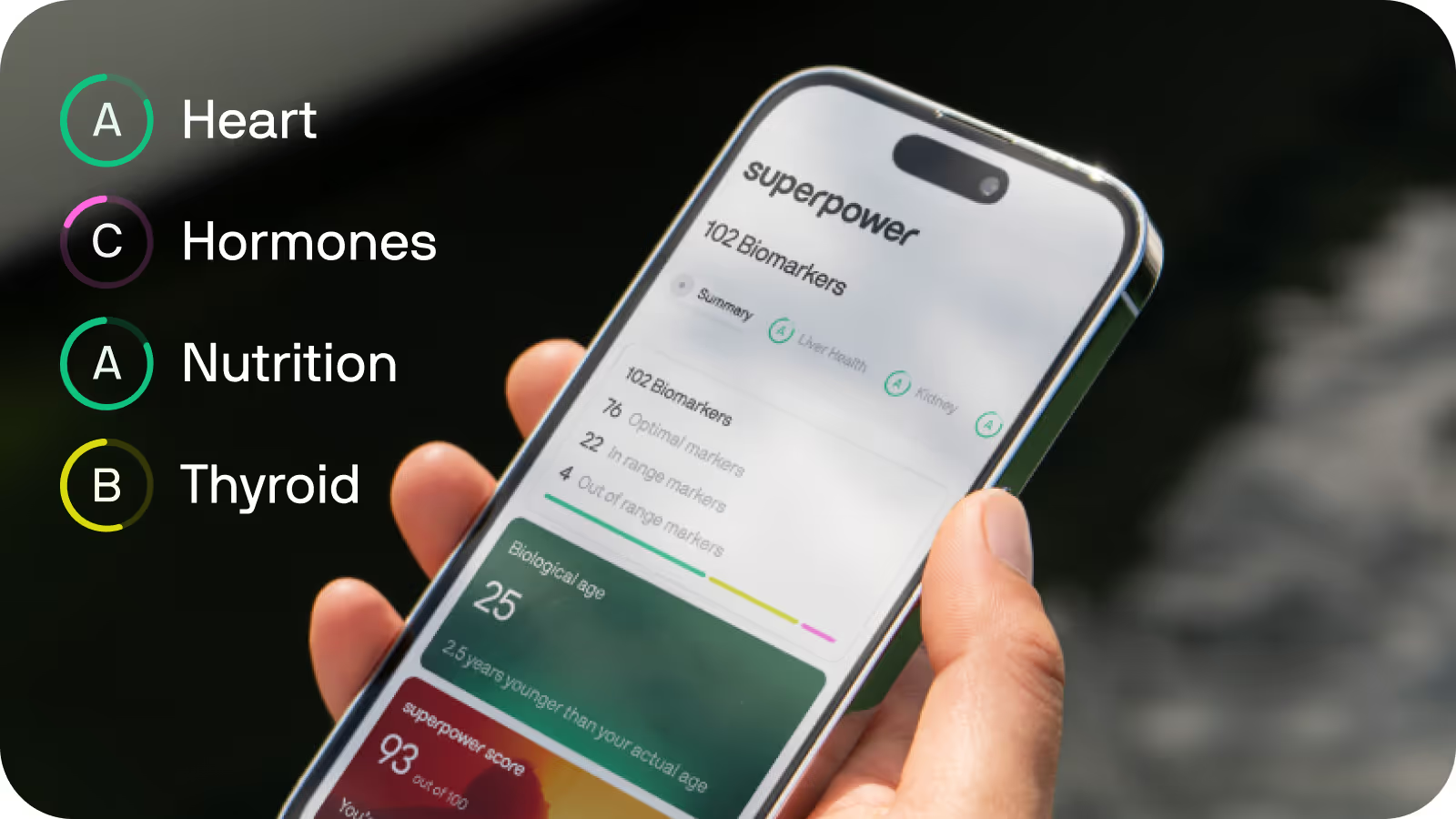
100+ biomarkers & common symptoms

Developed by world-class medical professionals

Supported by the world’s top longevity clinicians and MDs.

Dr Anant Vinjamoori

Superpower Chief Longevity Officer, Harvard MD & MBA

A smiling woman wearing a white coat and stethoscope poses for a portrait.

Dr Leigh Erin Connealy

Clinician & Founder of The Centre for New Medicine

Man in a black medical scrub top smiling at the camera.

Dr Abe Malkin

Founder & Medical Director of Concierge MD

Dr Robert Lufkin

UCLA Medical Professor, NYT Bestselling Author

Your membership

Select your assessment level

Superpower provides the most advanced health check with a plan that works. Go far beyond your annual physical.

Panels designed by

world class clinicians

2,000+ lab locations

across the country

Baseline

$199/yr

100+ biomarker blood test

Performance

Recommended

$365/yr

115+ biomarker blood test

60 biomarker follow-up retest

Complete

$649/yr

115+ biomarker blood test

60 biomarker follow-up retest

Gut microbiome analysis

Organ age breakdown

Get started
Loading...
HSA/ FSA eligible · Secure checkout

Baseline

$199

per year

Covers your metabolic, hormonal and cardiovascular baseline. The best basis for a single snapshot of your overall health.

What's included

Test Breakdown

These are the panels offered in the tiers above

100+ biomarker blood test

Heart & Vascular Health

20 markers

ApoB, LDL-Cholesterol, Triglycerides

Sex Hormones

8 markers

Testosterone, Estradiol, DHEA-S, Cortisol

Metabolic Health

7 markers

Glucose, HbA1c

Thyroid Health

4 markers

TSH, T3 Uptake, Free T4, T4 Total

Liver Health

13 markers

ALT, AST, GGT, Bilirubin

Nutrients

12 markers

Vitamin D, Total Protein, Hemoglobin

Immune System

16 markers

White blood cells, Neutrophils, Lymphocytes

Energy

5 markers

Ferritin, Iron, Cortisol

Kidney Health

9 markers

Creatinine, eGFR, Potassium, Sodium

See full list →

+21 additional

Included with every assessment

17 health areas developed by world class clinicians

Personalized clinical protocol

On-demand messaging with your care team

20% off superpower marketplace

Member pricing on add-on tests, supplements & RX

Upload past labs & wearable data for tracking

Superpower AI — a world class system trained on you

Complete

$649

per year

Normally $703 (save 8%)

Adds gut microbiome analysis and organ age surfacing, what standard blood panels may miss across energy, digestion, and immunity.

What's included

Test Breakdown

These are the panels offered in the tiers above

115+ biomarker blood test

Heart & Vascular Health

20 markers

ApoB, LDL-Cholesterol, Triglycerides, Lipoprotein(a)

Sex Hormones

11 markers

Testosterone, Estradiol, DHEA-S, Cortisol, PSA, FSH, LH, AMH

Metabolic Health

7 markers

Glucose, HbA1c, Insulin

Thyroid Health

4 markers

TSH, T3 Uptake, Free T4, T4 Total

Liver Health

8 markers

ALT, AST, GGT, Bilirubin

Nutrients

12 markers

Vitamin D, Total Protein, Hemoglobin

Immune System

16 markers

White blood cells, Neutrophils, Lymphocytes

Energy

5 markers

Ferritin, Iron, Cortisol

Kidney Health

24 markers

Creatinine, eGFR, Potassium, Urinary pH, RBC Urine, Nitrites

DNA Health

3 markers

Homocysteine, B12, Folate

Inflammation

3 markers

hs-CRP, Systemic Immune-Inflammation Index

See full list →

+8 additional

60 biomarker follow-up retest

Retesting panel

100 markers

Complete second draw — 60 biomarkers retested for longitudinal tracking.
Most biomarkers can move significantly within 3–6 months if you're actively trying to fix them.

Gut microbiome analysis

$239

Gut microbiome

300+ data points

Profiles 300 bacterial strains in your gut to map your microbial balance.
Identifies dysbiosis that may be driving symptoms like bloating, irregular digestion, skin issues, and mood changes, with actionable guidance on diet and lifestyle shifts to help restore balance.

Organ age breakdown

$99

OrganAge is the most detailed biological age test available today. Rather than showing a single number, it reveals how old each of your body's nine key systems is

Organ age breakdown

10 key systems

Circulatory, digestive, genitourinary, infectious, mental, metabolic, musculoskeletal, nervous, respiratory and systemic ages based on cutting edge longevity research

Included with every assessment

17 health areas developed by world class clinicians

Personalized clinical protocol

On-demand messaging with your care team

20% off superpower marketplace

Member pricing on add-on tests, supplements & RX

Upload past labs & wearable data for tracking

Superpower AI — a world class system trained on you

Get started
Loading...
HSA/ FSA eligible · Secure checkout

Finally, healthcare that looks at the whole you