.svg)

Biomarker testing is a laboratory analysis of genes, proteins, hormones, or other molecules in your blood or tissues to help assess your health, identify risk factors, or guide personalized care decisions. To learn more, read ourguides on biomarker testing.

All biomarkers
Try a different search term

Toxin Exposure
0
Biomarker
Included in
Mercury, Blood
Baseline
Mercury is a naturally occurring heavy metal with no beneficial role in human biology.
This is some text inside of a div block.
This is some text inside of a div block.
Method: Laboratory-developed test (LDT) validated under CLIA; not cleared or approved by the FDA. Results are interpreted by clinicians in context and are not a stand-alone diagnosis.
2,4-D
Baseline
2,4-Dichlorophenoxyacetic acid (2,4-D) is one of the most widely used herbicides, applied in agriculture and residential lawn treatments.
This is some text inside of a div block.
3-Phenoxybenzoic Acid
Baseline
3-Phenoxybenzoic acid (3-PBA) is the primary urinary metabolite of pyrethroid insecticides, a large family of pesticides found in over 1,500 commercial products for agricultural, residential, and veterinary use.
This is some text inside of a div block.
Method: LC-MS/MS (Liquid Chromatography/Tandem Mass Spectrometry) with creatinine normalization by Jaffe Reaction (CLIA 17D0919496); not cleared or approved by the FDA. Results reported in µg/g creatinine. Not a stand-alone diagnosis; should be interpreted in clinical context.
Aflatoxin M1
Baseline
Aflatoxin M1 is formed in the body after ingesting aflatoxin B1, a mycotoxin produced by Aspergillus species that commonly contaminate corn, peanuts, grains, and spices.
This is some text inside of a div block.
Method: LC-MS/MS (Liquid Chromatography/Tandem Mass Spectrometry) measuring free (unconjugated) mycotoxins in urine (CLIA 17D0919496); not cleared or approved by the FDA. Results in ng/g creatinine. Not a stand-alone diagnosis; should be interpreted in clinical context.
Aluminum (Al)
Baseline
Aluminum is a common environmental metal with no biological role in humans.
This is some text inside of a div block.
Method: ICP-MS (Inductively Coupled Plasma Mass Spectrometry) with creatinine normalization by Jaffe Reaction (CLIA 14D0646470); not cleared or approved by the FDA. Results in µg/g creatinine; reference intervals based on NHANES population data under non-provoked conditions. Not a stand-alone diagnosis; should be interpreted in clinical context.

Thyroid Health
0
Biomarker
Included in
Albumin
Baseline
Albumin is a protein made by the liver that has many functions in the body, such as maintaining fluid balance, transporting substances including hormones and vitamins, regulating blood pressure, preventing blood clotting, and providing nutrition¹².
This is some text inside of a div block.
This is some text inside of a div block.
Method: FDA-cleared clinical laboratory assay performed in CLIA-certified, CAP-accredited laboratories. Used to aid clinician-directed evaluation and monitoring. Not a stand-alone diagnosis.
DHEA-Sulfate (DHEA-S)
Baseline
DHEA-Sulfate (DHEA-S) is a steroid hormone that is made by the adrenal glands and converted into sex hormones such as estrogen and testosterone.
This is some text inside of a div block.
This is some text inside of a div block.
Method: FDA-cleared clinical laboratory assay performed in CLIA-certified, CAP-accredited laboratories. Used to aid clinician-directed evaluation and monitoring. Not a stand-alone diagnosis.
Triiodothyronine (T3)
Baseline
T4 and T3 are thyroid hormones that regulate the metabolism of the body.
This is some text inside of a div block.
This is some text inside of a div block.
Method: FDA-cleared clinical laboratory assay performed in CLIA-certified, CAP-accredited laboratories. Used to aid clinician-directed evaluation and monitoring. Not a stand-alone diagnosis.
Free Thyroxine Index
Baseline
The Free Thyroxine Index (FTI) is a calculated value that estimates the amount of unbound, biologically active thyroxine (free T4) circulating in your blood.
This is some text inside of a div block.
Method: Derived from FDA-cleared laboratory results. This ratio/index is not an FDA-cleared test. It aids clinician-directed risk assessment and monitoring and is not a stand-alone diagnosis.
Selenium
Baseline
Selenium is an essential trace mineral that the body incorporates into more than 25 proteins called selenoproteins.
This is some text inside of a div block.
This is some text inside of a div block.
Method: Laboratory-developed test (LDT) validated under CLIA; not cleared or approved by the FDA. Results are interpreted by clinicians in context and are not a stand-alone diagnosis.

Sex Hormones
0
Biomarker
Included in
17-Hydroxyprogesterone
Baseline
17-Hydroxyprogesterone (17-OHP) is a steroid hormone that acts as an intermediate step in the production of other hormones.
This is some text inside of a div block.
This is some text inside of a div block.
Method: Laboratory-developed test (LDT) validated under CLIA; not cleared or approved by the FDA. Results are interpreted by clinicians in context and are not a stand-alone diagnosis.
Albumin
Baseline
Albumin is a protein made by the liver that has many functions in the body, such as maintaining fluid balance, transporting substances including hormones and vitamins, regulating blood pressure, preventing blood clotting, and providing nutrition¹².
This is some text inside of a div block.
This is some text inside of a div block.
Method: FDA-cleared clinical laboratory assay performed in CLIA-certified, CAP-accredited laboratories. Used to aid clinician-directed evaluation and monitoring. Not a stand-alone diagnosis.
Dihydrotestosterone
Baseline
Dihydrotestosterone (DHT) is a potent androgen formed primarily through the conversion of testosterone by the enzyme 5-alpha-reductase.
This is some text inside of a div block.
This is some text inside of a div block.
DHEA-Sulfate (DHEA-S)
Baseline
DHEA-Sulfate (DHEA-S) is a steroid hormone that is made by the adrenal glands and converted into sex hormones such as estrogen and testosterone.
This is some text inside of a div block.
This is some text inside of a div block.
Method: FDA-cleared clinical laboratory assay performed in CLIA-certified, CAP-accredited laboratories. Used to aid clinician-directed evaluation and monitoring. Not a stand-alone diagnosis.
Estradiol
Baseline
Estradiol is the most potent form of estrogen, a hormone produced by both males and females, albeit in different amounts.
This is some text inside of a div block.
This is some text inside of a div block.
Method: Laboratory-developed test (LDT) validated under CLIA; not cleared or approved by the FDA. Results are interpreted by clinicians in context and are not a stand-alone diagnosis.

Nutrients
0
Biomarker
Included in
Vitamin D
Baseline
Vitamin D is an essential and multifunctional micronutrient.
This is some text inside of a div block.
This is some text inside of a div block.
Method: Usually performed by FDA-cleared immunoassay in CLIA-certified, CAP-accredited laboratories. If an LC/MS method is used at the performing site, the assay is a laboratory-developed test (LDT) validated under CLIA and not cleared or approved by the FDA. Results support clinician interpretation and are not a stand-alone diagnosis.
Vitamin C
Baseline
Vitamin C (also called L-ascorbic acid) is a water-soluble vitamin that you must obtain from diet, since unlike most animals we cannot make it ourselves.
This is some text inside of a div block.
This is some text inside of a div block.
Method: Laboratory-developed test (LDT) validated under CLIA; not cleared or approved by the FDA. Results are interpreted by clinicians in context and are not a stand-alone diagnosis.
Aspartate Aminotransferase (AST)
Baseline
Aspartate aminotransferase (AST) is an enzyme that helps break down amino acids and is found in various tissues, such as the liver, heart, muscles, kidneys, and brain.
This is some text inside of a div block.
This is some text inside of a div block.
Method: FDA-cleared clinical laboratory assay performed in CLIA-certified, CAP-accredited laboratories. Used to aid clinician-directed evaluation and monitoring. Not a stand-alone diagnosis.
Calcium
Baseline
Calcium is one of the most important and common minerals in your body.
This is some text inside of a div block.
This is some text inside of a div block.
Method: FDA-cleared clinical laboratory assay performed in CLIA-certified, CAP-accredited laboratories. Used to aid clinician-directed evaluation and monitoring. Not a stand-alone diagnosis.
Vitamin B12
Baseline
Vitamin B12 (cobalamin) is a water-soluble vitamin that plays a central role in energy production, DNA synthesis, red blood cell formation, and nervous system health.
This is some text inside of a div block.
This is some text inside of a div block.
Method: FDA-cleared clinical laboratory assay performed in CLIA-certified, CAP-accredited laboratories. Used to aid clinician-directed evaluation and monitoring. Not a stand-alone diagnosis.

Metabolic Health
0
Biomarker
Included in
Adiponectin
Baseline
Adiponectin is a protein hormone (also called an adipokine) that is mainly secreted by fat cells, but it is also produced in smaller amounts by muscle and the lining of blood vessels.
This is some text inside of a div block.
Method: Laboratory-developed test (LDT) validated under CLIA; not cleared or approved by the FDA. Results are interpreted by clinicians in context and are not a stand-alone diagnosis.
Alanine Aminotransferase (ALT)
Baseline
ALT is an enzyme that is mainly found in the liver cells and helps break down proteins and amino acids.
This is some text inside of a div block.
This is some text inside of a div block.
Method: FDA-cleared clinical laboratory assay performed in CLIA-certified, CAP-accredited laboratories. Used to aid clinician-directed evaluation and monitoring. Not a stand-alone diagnosis.
Apolipoprotein B
Baseline
Apolipoprotein B (ApoB) is a protein that has many functions in the body, such as transporting lipids (fats), regulating cholesterol metabolism, maintaining blood vessel integrity, and modulating immune responses¹.
This is some text inside of a div block.
This is some text inside of a div block.
Method: FDA-cleared clinical laboratory assay performed in CLIA-certified, CAP-accredited laboratories. Used to aid clinician-directed evaluation and monitoring. Not a stand-alone diagnosis.
Aspartate Aminotransferase (AST)
Baseline
Aspartate aminotransferase (AST) is an enzyme that helps break down amino acids and is found in various tissues, such as the liver, heart, muscles, kidneys, and brain.
This is some text inside of a div block.
This is some text inside of a div block.
Method: FDA-cleared clinical laboratory assay performed in CLIA-certified, CAP-accredited laboratories. Used to aid clinician-directed evaluation and monitoring. Not a stand-alone diagnosis.
Atherogenic Coefficient
Baseline
The Atherogenic Coefficient (AC) is a simple ratio that shows how much of your total cholesterol is made up of potentially harmful types - specifically, all cholesterol except HDL, the “good” cholesterol.
This is some text inside of a div block.
This is some text inside of a div block.
Method: Derived from FDA-cleared laboratory results. This ratio/index is not an FDA-cleared test. It aids clinician-directed risk assessment and monitoring and is not a stand-alone diagnosis. Inputs: Total-C, HDL-C.
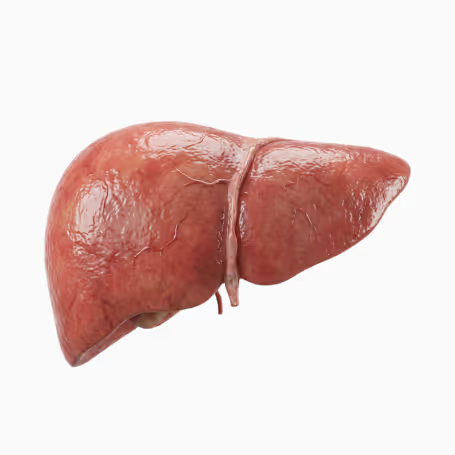
Liver Health
0
Biomarker
Included in
Albumin/Globulin Ratio
Baseline
Globulin is a type of protein that is made by the liver and the immune system.
This is some text inside of a div block.
This is some text inside of a div block.
Method: Derived from FDA-cleared laboratory results. This ratio/index is not an FDA-cleared test. It aids clinician-directed risk assessment and monitoring and is not a stand-alone diagnosis. Inputs: albumin, globulin.
Albumin
Baseline
Albumin is a protein made by the liver that has many functions in the body, such as maintaining fluid balance, transporting substances including hormones and vitamins, regulating blood pressure, preventing blood clotting, and providing nutrition¹².
This is some text inside of a div block.
This is some text inside of a div block.
Method: FDA-cleared clinical laboratory assay performed in CLIA-certified, CAP-accredited laboratories. Used to aid clinician-directed evaluation and monitoring. Not a stand-alone diagnosis.
Alkaline Phosphatase (ALP)
Baseline
ALP is an enzyme that is found in various tissues, mainly in the liver and bone.
This is some text inside of a div block.
This is some text inside of a div block.
Method: FDA-cleared clinical laboratory assay performed in CLIA-certified, CAP-accredited laboratories. Used to aid clinician-directed evaluation and monitoring. Not a stand-alone diagnosis.
Alanine Aminotransferase (ALT)
Baseline
ALT is an enzyme that is mainly found in the liver cells and helps break down proteins and amino acids.
This is some text inside of a div block.
This is some text inside of a div block.
Method: FDA-cleared clinical laboratory assay performed in CLIA-certified, CAP-accredited laboratories. Used to aid clinician-directed evaluation and monitoring. Not a stand-alone diagnosis.
Aspartate Aminotransferase (AST)
Baseline
Aspartate aminotransferase (AST) is an enzyme that helps break down amino acids and is found in various tissues, such as the liver, heart, muscles, kidneys, and brain.
This is some text inside of a div block.
This is some text inside of a div block.
Method: FDA-cleared clinical laboratory assay performed in CLIA-certified, CAP-accredited laboratories. Used to aid clinician-directed evaluation and monitoring. Not a stand-alone diagnosis.
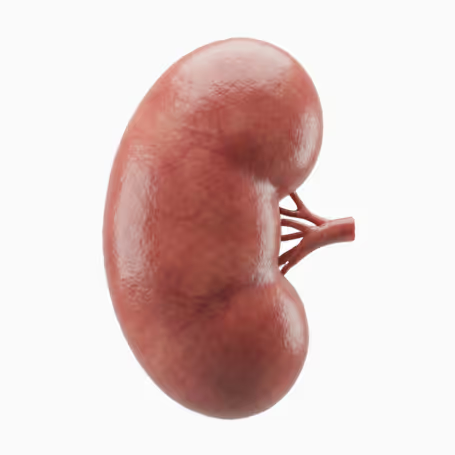
Kidney Health
0
Biomarker
Included in
Albumin
Baseline
Albumin is a protein made by the liver that has many functions in the body, such as maintaining fluid balance, transporting substances including hormones and vitamins, regulating blood pressure, preventing blood clotting, and providing nutrition¹².
This is some text inside of a div block.
This is some text inside of a div block.
Method: FDA-cleared clinical laboratory assay performed in CLIA-certified, CAP-accredited laboratories. Used to aid clinician-directed evaluation and monitoring. Not a stand-alone diagnosis.
Appearance (Urine)
Baseline
Urine appearance describes the visual clarity of urine and reflects the presence or absence of suspended particles such as cells, bacteria, proteins, crystals, or mucus.
This is some text inside of a div block.
Bacteria (Urine)
Baseline
Bacteria in urine sediment is measured by automated urinalysis, counting the number of bacteria per high power field.
This is some text inside of a div block.
Bacteria (Urine) (2)
Baseline
Bacteria in urine sediment is checked by examining a urine sample under a microscope.
This is some text inside of a div block.
Bilirubin (Urine)
Baseline
Urine bilirubin measures the presence of bilirubin, a yellow pigment produced from the breakdown of red blood cells, in the urine.
This is some text inside of a div block.

Inflammation
0
Biomarker
Included in
High-sensitivity CRP
Baseline
High-sensitivity CRP is a blood test that measures very subtle levels of inflammation in the body.
This is some text inside of a div block.
This is some text inside of a div block.
hsCRP-to-Albumin Ratio (CAR)
Baseline
The CRP-to-Albumin Ratio (CAR) integrates inflammation (CRP) with nutritional/hepatic reserve (albumin).
This is some text inside of a div block.
This is some text inside of a div block.
Erythrocyte Sedimentation Rate
Baseline
Erythrocyte sedimentation rate (ESR), or sedimentation rate measures how quickly erythrocytes (red blood cells) settle at the bottom of a test tube over a period of one hour.
This is some text inside of a div block.
This is some text inside of a div block.
Method: FDA-cleared clinical laboratory assay performed in CLIA-certified, CAP-accredited laboratories. Used to aid clinician-directed evaluation and monitoring. Not a stand-alone diagnosis.
Ferritin
Baseline
Ferritin is a blood protein that contains iron¹².
This is some text inside of a div block.
This is some text inside of a div block.
Method: FDA-cleared clinical laboratory assay performed in CLIA-certified, CAP-accredited laboratories. Used to aid clinician-directed evaluation and monitoring. Not a stand-alone diagnosis.
Ferritin-to-Albumin Ratio
.svg)
Derived Biomarker
Baseline
The Ferritin-to-Albumin Ratio (FAR) integrates inflammation (ferritin) and nutritional status (albumin).
This is some text inside of a div block.
This is some text inside of a div block.
Method: Derived from FDA-cleared laboratory results. This ratio/index is not an FDA-cleared test. It aids clinician-directed risk assessment and monitoring and is not a stand-alone diagnosis. Inputs: ferritin, albumin.
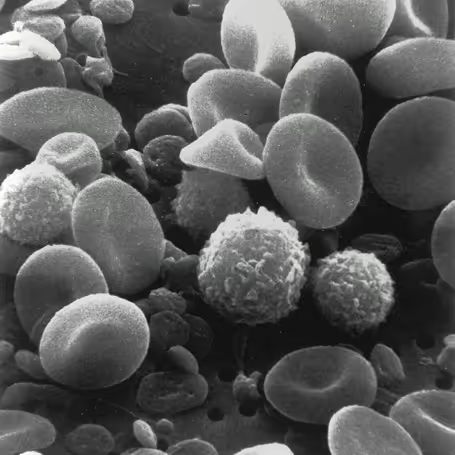
Immune System
0
Biomarker
Included in
Alternaria alternata (m6) IgE
Baseline
Alternaria alternata IgE measures your immune system's specific allergic antibody response to spores produced by Alternaria alternata, one of the most common outdoor molds worldwide.
This is some text inside of a div block.
This is some text inside of a div block.
Aspergillus fumigatus (m3) IgE
Baseline
Aspergillus fumigatus IgE measures your immune system's specific allergic antibody response to spores produced by Aspergillus fumigatus, a common environmental mold found in soil, decaying organic matter, compost, and indoor environments with moisture problems.
This is some text inside of a div block.
This is some text inside of a div block.
D. farinae (d2) IgE
Baseline
Dermatophagoides farinae IgE measures your immune system's specific allergic antibody response to proteins produced by the American house dust mite.
This is some text inside of a div block.
This is some text inside of a div block.
Bands
Baseline
Bands (or band neutrophils) are immature white blood cells that develop into fully functional neutrophils - key players in the body’s innate immune system, which serves as the first line of defense against infection.
This is some text inside of a div block.
Basophils
Baseline
Basophils are a type of white blood cell that the bone marrow makes.
This is some text inside of a div block.
This is some text inside of a div block.
Method: FDA-cleared clinical laboratory assay performed in CLIA-certified, CAP-accredited laboratories. Used to aid clinician-directed evaluation and monitoring. Not a stand-alone diagnosis.

Heart & Vascular Health
0
Biomarker
Included in
Apolipoprotein B
Baseline
Apolipoprotein B (ApoB) is a protein that has many functions in the body, such as transporting lipids (fats), regulating cholesterol metabolism, maintaining blood vessel integrity, and modulating immune responses¹.
This is some text inside of a div block.
This is some text inside of a div block.
Method: FDA-cleared clinical laboratory assay performed in CLIA-certified, CAP-accredited laboratories. Used to aid clinician-directed evaluation and monitoring. Not a stand-alone diagnosis.
Atherogenic Coefficient
Baseline
The Atherogenic Coefficient (AC) is a simple ratio that shows how much of your total cholesterol is made up of potentially harmful types - specifically, all cholesterol except HDL, the “good” cholesterol.
This is some text inside of a div block.
This is some text inside of a div block.
Method: Derived from FDA-cleared laboratory results. This ratio/index is not an FDA-cleared test. It aids clinician-directed risk assessment and monitoring and is not a stand-alone diagnosis. Inputs: Total-C, HDL-C.
Atherogenic Index of Plasma
Baseline
The Atherogenic Index of Plasma (AIP) is calculated as the logarithm of the ratio between triglycerides and HDL cholesterol.
This is some text inside of a div block.
This is some text inside of a div block.
Method: Derived from FDA-cleared laboratory results. This ratio/index is not an FDA-cleared test. It aids clinician-directed risk assessment and monitoring and is not a stand-alone diagnosis. Inputs: TG, HDL-C.
Castelli Risk Index I
Derived Biomarker
Baseline
The Castelli Risk Index I (CRI-I) is a cardiovascular risk marker calculated by dividing total cholesterol by HDL cholesterol.
This is some text inside of a div block.
This is some text inside of a div block.
Castelli Risk Index II
Baseline
The Castelli Risk Index II (CRI-II) is a lipid ratio calculated by dividing LDL cholesterol (“bad” cholesterol) by HDL cholesterol (“good” cholesterol).
This is some text inside of a div block.
This is some text inside of a div block.

Gut Health
0
Biomarker
Included in
Albumin/Globulin Ratio
Baseline
Globulin is a type of protein that is made by the liver and the immune system.
This is some text inside of a div block.
This is some text inside of a div block.
Method: Derived from FDA-cleared laboratory results. This ratio/index is not an FDA-cleared test. It aids clinician-directed risk assessment and monitoring and is not a stand-alone diagnosis. Inputs: albumin, globulin.
Albumin
Baseline
Albumin is a protein made by the liver that has many functions in the body, such as maintaining fluid balance, transporting substances including hormones and vitamins, regulating blood pressure, preventing blood clotting, and providing nutrition¹².
This is some text inside of a div block.
This is some text inside of a div block.
Method: FDA-cleared clinical laboratory assay performed in CLIA-certified, CAP-accredited laboratories. Used to aid clinician-directed evaluation and monitoring. Not a stand-alone diagnosis.
Bilirubin-to-Albumin Ratio
Baseline
The Bilirubin-to-Albumin Ratio (B/A Ratio) integrates bilirubin production and albumin-bound clearance.
This is some text inside of a div block.
This is some text inside of a div block.
Globulin, Total
Baseline
Globulin is a type of protein that is made by the liver and the immune system.
This is some text inside of a div block.
This is some text inside of a div block.
Protein, Total
Baseline
Total Protein measures the total amount of two classes of proteins found in the plasma: albumin and globulin.
This is some text inside of a div block.
This is some text inside of a div block.
Method: FDA-cleared clinical laboratory assay performed in CLIA-certified, CAP-accredited laboratories. Used to aid clinician-directed evaluation and monitoring. Not a stand-alone diagnosis.

Energy
0
Biomarker
Included in
Aspartate Aminotransferase (AST)
Baseline
Aspartate aminotransferase (AST) is an enzyme that helps break down amino acids and is found in various tissues, such as the liver, heart, muscles, kidneys, and brain.
This is some text inside of a div block.
This is some text inside of a div block.
Method: FDA-cleared clinical laboratory assay performed in CLIA-certified, CAP-accredited laboratories. Used to aid clinician-directed evaluation and monitoring. Not a stand-alone diagnosis.
Carbon Dioxide, Total
Baseline
Total carbon dioxide (CO2) is a measure of the amount of carbon dioxide in your blood.
This is some text inside of a div block.
This is some text inside of a div block.
Method: FDA-cleared clinical laboratory assay performed in CLIA-certified, CAP-accredited laboratories. Used to aid clinician-directed evaluation and monitoring. Not a stand-alone diagnosis.
Cortisol (2)
Baseline
Cortisol is a hormone made by the adrenal glands that helps you respond to stress and regulate various bodily functions.
This is some text inside of a div block.
This is some text inside of a div block.
Method: FDA-cleared clinical laboratory assay performed in CLIA-certified, CAP-accredited laboratories. Used to aid clinician-directed evaluation and monitoring. Not a stand-alone diagnosis.
DHEA-Sulfate (DHEA-S)
Baseline
DHEA-Sulfate (DHEA-S) is a steroid hormone that is made by the adrenal glands and converted into sex hormones such as estrogen and testosterone.
This is some text inside of a div block.
This is some text inside of a div block.
Method: FDA-cleared clinical laboratory assay performed in CLIA-certified, CAP-accredited laboratories. Used to aid clinician-directed evaluation and monitoring. Not a stand-alone diagnosis.
Insulin-like Growth Factor 1 (IGF-1)
Baseline
Insulin-like Growth Factor-1 (IGF-1) is a hormone similar in molecular structure to insulin¹.
This is some text inside of a div block.
This is some text inside of a div block.
Method: Laboratory-developed test (LDT) validated under CLIA; not cleared or approved by the FDA. Results are interpreted by clinicians in context and are not a stand-alone diagnosis.
DNA Health
0
Biomarker
Included in
Vitamin B12
Baseline
Vitamin B12 (cobalamin) is a water-soluble vitamin that plays a central role in energy production, DNA synthesis, red blood cell formation, and nervous system health.
This is some text inside of a div block.
This is some text inside of a div block.
Method: FDA-cleared clinical laboratory assay performed in CLIA-certified, CAP-accredited laboratories. Used to aid clinician-directed evaluation and monitoring. Not a stand-alone diagnosis.
Ferritin
Baseline
Ferritin is a blood protein that contains iron¹².
This is some text inside of a div block.
This is some text inside of a div block.
Method: FDA-cleared clinical laboratory assay performed in CLIA-certified, CAP-accredited laboratories. Used to aid clinician-directed evaluation and monitoring. Not a stand-alone diagnosis.
Folate (Folic Acid)
Baseline
Folate is a type of vitamin B that is essential for the production and maintenance of new cells, especially during periods of rapid growth, such as pregnancy, infancy, and adolescence.
This is some text inside of a div block.
This is some text inside of a div block.
Method: FDA-cleared clinical laboratory assay performed in CLIA-certified, CAP-accredited laboratories. Used to aid clinician-directed evaluation and monitoring. Not a stand-alone diagnosis.
RBC Folate
Baseline
Red blood cell folate measures the concentration of folate stored inside red blood cells.
This is some text inside of a div block.
Method: FDA-cleared clinical laboratory assay performed in CLIA-certified, CAP-accredited laboratories. Used to aid clinician-directed evaluation and monitoring. Not a stand-alone diagnosis.
Homocysteine
Baseline
Homocysteine is an amino acid, which is a molecule that your body uses to make proteins.
This is some text inside of a div block.
This is some text inside of a div block.
Method: FDA-cleared clinical laboratory assay performed in CLIA-certified, CAP-accredited laboratories. Used to aid clinician-directed evaluation and monitoring. Not a stand-alone diagnosis.

Brain Health
0
Biomarker
Included in
Vitamin D
Baseline
Vitamin D is an essential and multifunctional micronutrient.
This is some text inside of a div block.
This is some text inside of a div block.
Method: Usually performed by FDA-cleared immunoassay in CLIA-certified, CAP-accredited laboratories. If an LC/MS method is used at the performing site, the assay is a laboratory-developed test (LDT) validated under CLIA and not cleared or approved by the FDA. Results support clinician interpretation and are not a stand-alone diagnosis.
Vitamin B12
Baseline
Vitamin B12 (cobalamin) is a water-soluble vitamin that plays a central role in energy production, DNA synthesis, red blood cell formation, and nervous system health.
This is some text inside of a div block.
This is some text inside of a div block.
Method: FDA-cleared clinical laboratory assay performed in CLIA-certified, CAP-accredited laboratories. Used to aid clinician-directed evaluation and monitoring. Not a stand-alone diagnosis.
Cortisol (2)
Baseline
Cortisol is a hormone made by the adrenal glands that helps you respond to stress and regulate various bodily functions.
This is some text inside of a div block.
This is some text inside of a div block.
Method: FDA-cleared clinical laboratory assay performed in CLIA-certified, CAP-accredited laboratories. Used to aid clinician-directed evaluation and monitoring. Not a stand-alone diagnosis.
High-sensitivity CRP
Baseline
High-sensitivity CRP is a blood test that measures very subtle levels of inflammation in the body.
This is some text inside of a div block.
This is some text inside of a div block.
Estradiol
Baseline
Estradiol is the most potent form of estrogen, a hormone produced by both males and females, albeit in different amounts.
This is some text inside of a div block.
This is some text inside of a div block.
Method: Laboratory-developed test (LDT) validated under CLIA; not cleared or approved by the FDA. Results are interpreted by clinicians in context and are not a stand-alone diagnosis.
Derived Biomarkers
Like all comprehensive health platforms, Superpower provides derived biomarkers. Derived biomarkers are standard clinical tools used by healthcare providers worldwide.
A derived biomarker is a value that is calculated from other directly measured biomarkers rather than being measured directly in the lab.
A derived biomarker is a value that is calculated from other directly measured biomarkers rather than being measured directly in the lab.
The following biomarkers Progesterone, Vitamin K, ADMA/SDMA, IGF-1, Thyroid Peroxidase, Lipoprotein Fractionation, NMR and Thyroglobulin Antibody are not currently offered for Superpower members residing in New York/New Jersey. Some methods are laboratory-developed tests (LDTs) validated under CLIA but not cleared or approved by the U.S. FDA. Public claims mirror the performing laboratory’s intended-use language. Clinicians interpret results in context and may order confirmatory testing where appropriate.
Lab testing you can trust
Medical-grade labs trusted by leading clinicians. No unreliable blood draws.


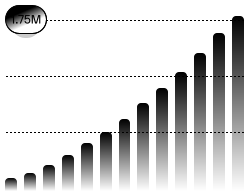
1.75M+
Results delivered to Superpower members
4.6 out of 5 stars
On
Trustpilot

What is biomarker testing?
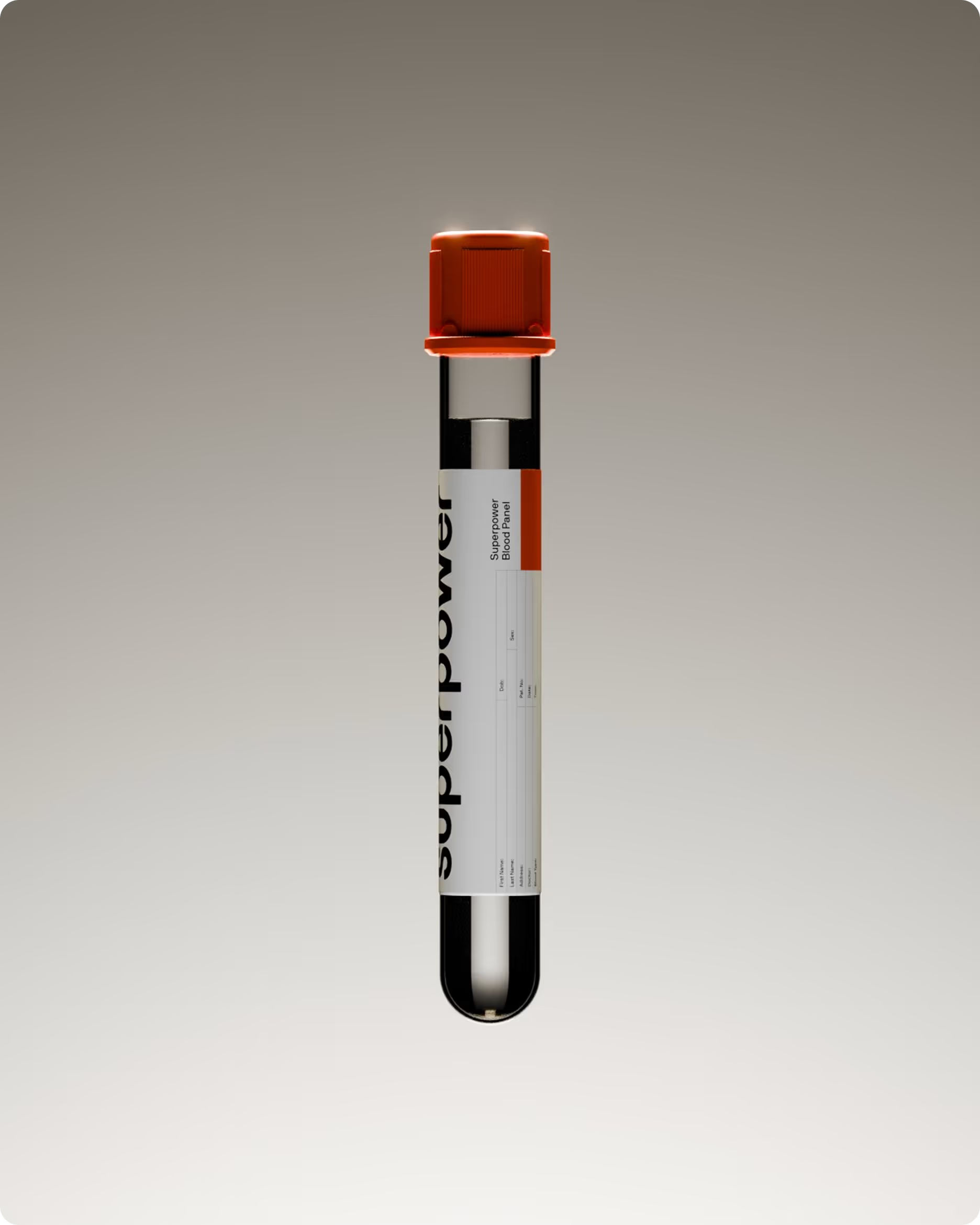
At Superpower, biomarker testing is the foundation of everything we do. It’s not about guesswork, quick fixes, or “one-size-fits-all” health advice. It’s about data.
Biomarker testing measures the actual molecules in your blood, saliva, or other samples that reflect how your body is working at the deepest level.
These results are then mapped against optimal ranges so you can see where you stand — today, not years later when problems surface.
Why testing matters
- Detect early signs of conditions including cardiovascular disease, metabolic dysfunction, and hormonal imbalance to increase the chance for intervention and potential outcomes.
- Understand your health baseline to improve your energy, metabolism, and longevity, particularly by tracking related biomarkers over time.
- Monitor health changes in response to new diet, exercise, or supplement regimens, helping to objectively measure the impact of lifestyle adjustments.
- Personalize your health decisions, including assessing your risks and protocol options, rather than relying on average population data or standard guidelines alone.
FAQs
Biomarker testing can identify hidden health risks, nutritional deficiencies, hormone levels, or early signs of disease — allowing for targeted lifestyle or medical interventions before symptoms develop. To learn more, read our guides on specificillnesses and diseasesthat biomarker testing can assist with.
People interested in optimizing health, longevity, or athletic performance, men and women monitoring hormone status (including testosterone), or those with specific health concerns (like heart, thyroid, or metabolic health) all benefit from biomarker testing.
Our biomarker tests at Superpower require a simple blood draw — either at home or in a clinic. Some other tests use additional samples like urine or saliva, depending on what is being measured.
Yes, certain biomarkers are linked to risks for cardiovascular disease, diabetes, hormone imbalances, metabolic syndrome, and even some cancers, enabling early and personalized prevention strategies.
For most people, testing every 6–12 months is recommended for ongoing monitoring and tracking changes in health or the effectiveness of interventions, though frequency can vary based on goals and medical advice.
.avif)
.avif)


.jpg)
.avif)
.avif)
.jpg)
.avif)