

Understand what your liver function testing results really mean
See your biomarkers in context with a comprehensive panel.
- CLIA-certified labs
- HIPAA compliant
- Personalized health protocol
Direct bilirubin: A plain definition of the marker
Direct bilirubin is the conjugated form of bilirubin — the liver-processed version of a pigment your body makes when it recycles old red blood cells. Inside hepatocytes, enzymes attach two sugar tags to bilirubin, making it water-soluble and ready to drain through bile into the intestine. When this value rises, it means that water-soluble, conjugated bilirubin is backing up into the blood instead of flowing out smoothly — a signal of slowdown or blockage somewhere along the bile pathway.
How direct bilirubin tracks bile flow
Picture a recycling line. Old red blood cells break down, releasing heme. Heme turns into bilirubin, a golden pigment that hitches a ride on albumin to the liver. Inside hepatocytes, enzymes add two glucuronic acid tags so bilirubin becomes water-soluble — that process is conjugation, and its product is direct (conjugated) bilirubin. From there, bilirubin is pumped into tiny bile channels, joins bile acids, and flows into the gut, where microbes convert it to urobilinogen and stercobilin. That is what colors stool brown.
Now imagine a traffic jam. If the bile highway is narrowed or blocked — gallstones, swollen bile ducts, drug-related cholestasis, or inflamed liver cells — conjugated bilirubin leaks back into the bloodstream. Because it is water-soluble, the kidneys can spill it into urine, making urine darker. If less reaches the intestine, stools can look pale.
Several factors change the traffic. A large fatty meal pushes bile to flow. Certain medications can inhibit the export pumps that move conjugated bilirubin into bile channels — antibiotics, hormone therapies, anabolic agents, and some psychotropics are documented examples. Viral hepatitis swells liver cells and slows transport. Pancreatitis can compress the common bile duct from the outside. After an obstruction is relieved, levels may fall slowly because a portion of conjugated bilirubin forms a tight bond with albumin (delta bilirubin), which clears more gradually than free conjugated bilirubin.
One important distinction: direct bilirubin does not measure hepatocellular injury directly — ALT and AST measure that. Direct bilirubin measures bile flow. A rising direct bilirubin with modest ALT points toward cholestasis; a dominant ALT rise with only modest direct bilirubin elevation points toward hepatocellular injury. Keeping that distinction clear shapes the entire clinical workup.
Stable, low direct fractions suggest bile is moving well. Persistent elevations hint at friction in the system — from gallstones to medication effects to chronic cholestatic diseases — which can impair digestion of fats, absorption of fat-soluble vitamins (A, D, E, and K), and, over time, bone health and energy. Metabolic health plays a role here too: fatty liver can disrupt liver architecture and bile flow, making the system less resilient under stress.
You may have heard that higher bilirubin is protective. That story concerns unconjugated bilirubin and its antioxidant properties, often in people with Gilbert syndrome. It does not apply to elevated direct bilirubin, and it does not mean chasing bilirubin is a strategy. What matters is a liver that handles traffic efficiently day in and day out.
Reading your direct bilirubin number in context
Reference ranges are built from a lab's local population, instruments, and assay method. For direct bilirubin, most labs report a reference ceiling around 0.3 mg/dL for adults, but ranges differ by site and method — diazo-based assays measure a mix of conjugated and albumin-bound delta bilirubin, while enzymatic assays are more specific to conjugated bilirubin, and the two can give different absolute values. Your lab may report both the absolute direct value and its percentage of total bilirubin; that proportion helps distinguish conjugated (direct, cholestatic) from unconjugated (indirect, hemolytic or Gilbert) patterns. Newborns follow entirely separate rules: most early jaundice in infants is unconjugated, and an elevated direct fraction in a newborn is a red flag requiring prompt evaluation, not a normal variant. Adults in pregnancy also follow different rules, where bile acids are often the more sensitive test for intrahepatic cholestasis of pregnancy.
For adults, medicine does not define a specific "optimal" target beyond stable and low without cholestatic signs. Use the number as a conversation starter, not a verdict.
When levels are normal
A direct bilirubin at or below the lab's reference ceiling, with a small direct fraction relative to total bilirubin and no symptoms, is reassuring. Small fluctuations between draws often reflect assay variation rather than physiology. Because diazo and enzymatic methods give different absolute values, comparing results is most meaningful when the same lab and same assay method are used over time. The target is not a specific number to chase but a pattern that stays stable and low.
When levels run high
An elevated direct bilirubin usually means conjugated pigment is backing up. Common causes include stones blocking the common bile duct, inflammatory swelling in or around the duct system, medication-induced cholestasis, and viral or autoimmune liver diseases that slow bile export. In these settings, other bile-related enzymes often rise alongside — alkaline phosphatase (ALP) and gamma-glutamyl transferase (GGT) are the classic pair. Urine may darken, stools can lighten, and itching can appear as bile acids accumulate. These findings warrant evaluation.
Acute infections, sepsis, and pancreatitis can compress the ducts or overwhelm transport pumps. Total parenteral nutrition and some hormones can create a cholestatic pattern. Certain antibiotics, anabolic steroids, and herbal products have well-described links to cholestasis and warrant review with a clinician. There are also rare inherited conditions — Dubin-Johnson and Rotor syndromes — that elevate direct bilirubin with relatively calm enzymes and minimal symptoms; these also warrant evaluation to confirm the diagnosis. If the elevation persists after an obstruction is relieved, delta bilirubin bound to albumin can keep levels elevated for weeks even after bile flow is restored.
When levels run low
A low direct bilirubin is usually unremarkable. It often mirrors a low total bilirubin or sits below the lab's reporting threshold. Minor differences from one draw to the next typically reflect assay variation rather than physiology. If total bilirubin is normal and the direct fraction is low, most clinicians do not pursue it further. A practical caveat: hemolysis in the sample tube, lipemia, delayed processing, and certain lab methods can interfere with direct measurements, producing spurious shifts. Context and lab quality control matter when a result does not fit the clinical picture.
Factors that move direct bilirubin levels
Direct bilirubin reflects bile flow, and several structural, pharmacological, and metabolic factors can shift it.
Structural and disease drivers are the most potent. Gallstones obstructing the common bile duct, pancreatitis compressing it from outside, viral hepatitis (hepatitis A, B, C) inflaming liver cells, autoimmune liver diseases such as primary biliary cholangitis and primary sclerosing cholangitis, and sepsis overwhelming transport pumps can all raise direct bilirubin — sometimes within days in acute settings, over weeks to months in chronic disease.
Medications are a frequently overlooked driver. Certain antibiotics, hormone therapies (including oral contraceptives and anabolic agents), and some psychotropics can inhibit the bile export pumps in hepatocytes or inflame bile ducts, raising direct bilirubin. Reviewing the full medication and supplement list with a clinician is essential when direct bilirubin is unexpectedly elevated.
Herbal and supplement products marketed for liver support vary widely in quality and evidence; some are themselves linked to drug-induced liver injury. Any product should be reviewed with a clinician before assuming it is beneficial.
Alcohol strains hepatocytes and disrupts bile export. Lower alcohol exposure generally supports bile flow, particularly in people with underlying liver vulnerability.
Liver fat and metabolic health influence the system over months, not days. Fatty liver can disrupt liver architecture and reduce the resilience of bile transport. Dietary patterns that reduce liver fat — adequate protein, unsaturated fats, fiber, and limited excess calories — support bile formation indirectly. Choline is a key nutrient for assembling the lipoproteins that carry fat out of the liver; inadequate choline can promote fatty liver in susceptible individuals. Omega-3 fats have evidence for reducing liver fat in nonalcoholic fatty liver disease. These are mechanisms, not prescriptions, and their effect on direct bilirubin operates through liver fat reduction over time.
Dietary fat triggers bile flow acutely; a large fatty meal stimulates bile release. This is a normal physiological response and not a concern in a healthy biliary system.
Cholestasis in pregnancy is a specific context where bile acids are the more sensitive and appropriate test; direct bilirubin can be normal early in intrahepatic cholestasis of pregnancy even when bile acids are already elevated.
Assay and sample quality affect the number itself. Hemolysis in the sample tube, lipemia, and delayed processing can all skew direct bilirubin results. Diazo and enzymatic methods give different absolute values. If a result does not fit the clinical picture, a repeat draw with careful sample handling or a different assay method is reasonable before acting on the number.
Test 150+ biomarkers
Two blood draws. A full picture of your health, explained in plain language.
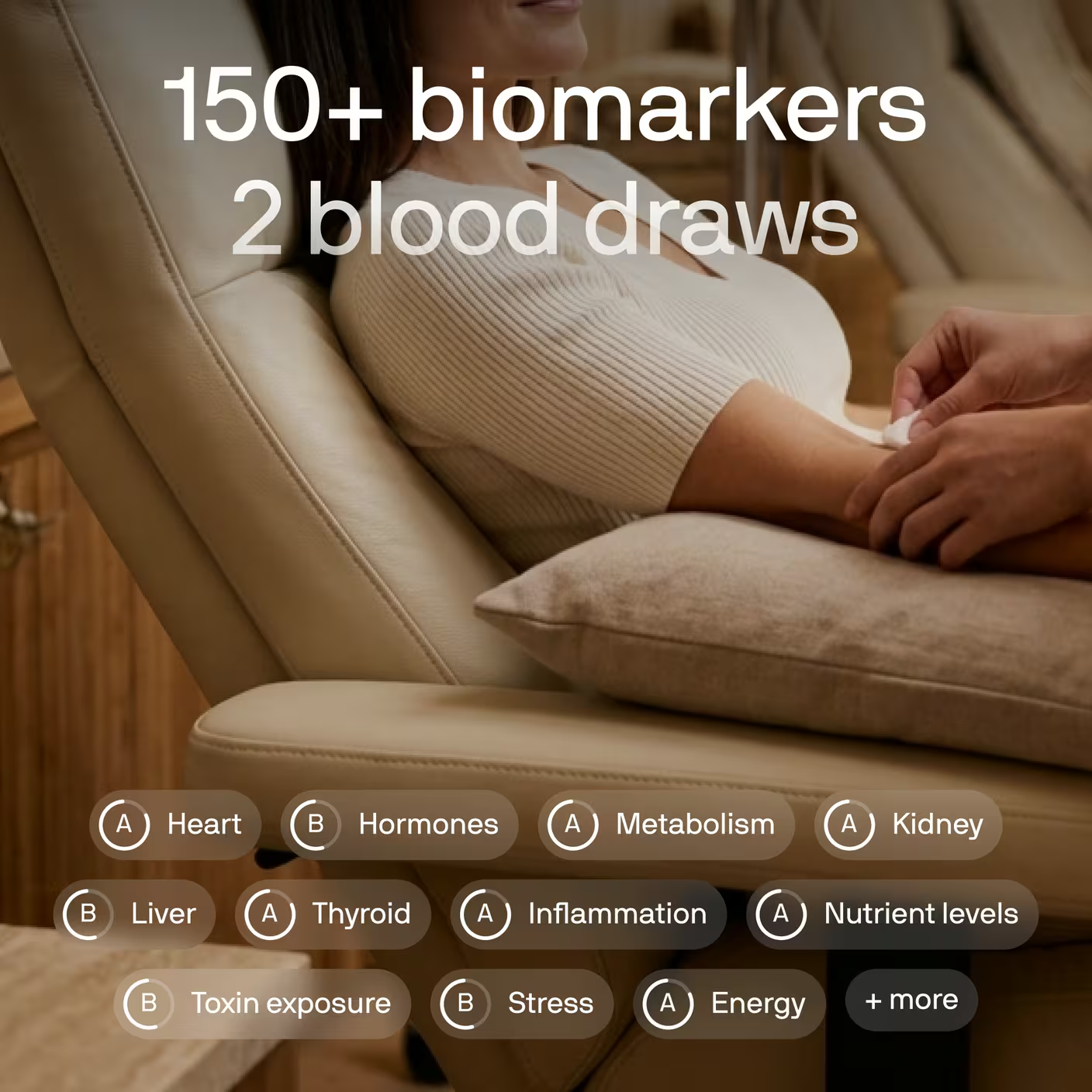
Test 150+ biomarkers
Two blood draws. A full picture of your health, explained in plain language.
Markers that read direct bilirubin in context
Direct bilirubin rarely tells the whole story alone. These markers sharpen the picture:
- Alkaline phosphatase (ALP) — ALP is the hallmark enzyme of cholestasis; when ALP and direct bilirubin rise together, bile duct obstruction or cholestatic liver disease is the most likely source.
- Gamma-glutamyl transferase (GGT) — GGT rises alongside ALP in bile duct stress; GGT, ALP, and direct bilirubin elevated together is the classic cholestatic triad.
- Alanine aminotransferase (ALT) — ALT clarifies whether an elevation is cholestatic (ALP/GGT dominant) or hepatocellular (ALT/AST dominant); a rising direct bilirubin with modest ALT suggests cholestasis over primary hepatocellular injury.
- Total bilirubin — total bilirubin provides the denominator; the direct fraction as a proportion of total helps distinguish conjugated (direct, cholestatic) from unconjugated (indirect, hemolytic or Gilbert) patterns.
- Albumin — albumin reflects liver synthetic capacity; if direct bilirubin is elevated and albumin is falling, the liver's functional reserve is compromised — a more serious signal than elevated bilirubin with normal albumin.
When labs point toward obstruction, imaging — ultrasound first, sometimes MRCP — maps the anatomy. The power is in the pattern, not any single number.
When to retest your direct bilirubin
How quickly direct bilirubin changes depends on the underlying cause. Acute cholestasis from a gallstone or a drug reaction can shift levels within days; chronic liver and bile duct conditions move over weeks to months. These different timescales call for different retesting approaches.
A single elevated result in an acute setting — new symptoms, a recent medication change, a suspected obstruction — warrants prompt clinical review rather than a scheduled retest at a fixed interval. The priority is identifying and addressing the cause, not waiting for the next routine draw.
In stable, chronic hepatobiliary disease being monitored over time, a 6–12 month cadence is a reasonable starting point for routine checks. More frequent assessment is appropriate if symptoms change, other markers shift, or a new medication is introduced.
After an obstruction is relieved, direct bilirubin can normalize slowly. Delta bilirubin — conjugated bilirubin that has bonded to albumin — stays elevated for weeks even after bile flow is restored, so a persistently elevated result in the recovery period does not necessarily mean the obstruction has returned.
For meaningful trend comparison, use the same laboratory and the same assay method over time. Diazo and enzymatic methods give different absolute values; switching platforms mid-monitoring can create apparent changes that reflect method differences rather than physiology.
When direct bilirubin results warrant hepatology follow-up
Trending direct bilirubin turns a static snapshot into a story arc. A single blip after a brief illness may resolve on its own; a steady rise alongside ALP and GGT signals real friction in the bile system. Catching those changes early can prevent complications, shorten time to effective treatment, and align decisions with what the body is actually doing.
Prompt evaluation is warranted when direct bilirubin is elevated alongside rising ALP and GGT, when symptoms such as dark urine, pale stools, jaundice, or itching are present, when albumin is falling alongside a bilirubin rise, or when a new medication or supplement has recently been introduced. In newborns, an elevated direct fraction is never physiologic and requires immediate evaluation. In pregnancy, itching with any bilirubin elevation should prompt bile acid testing.
When labs point toward obstruction, imaging — ultrasound first, sometimes MRCP — maps the anatomy. A clinician review of the full medication and supplement list is essential before attributing an elevation to disease alone.
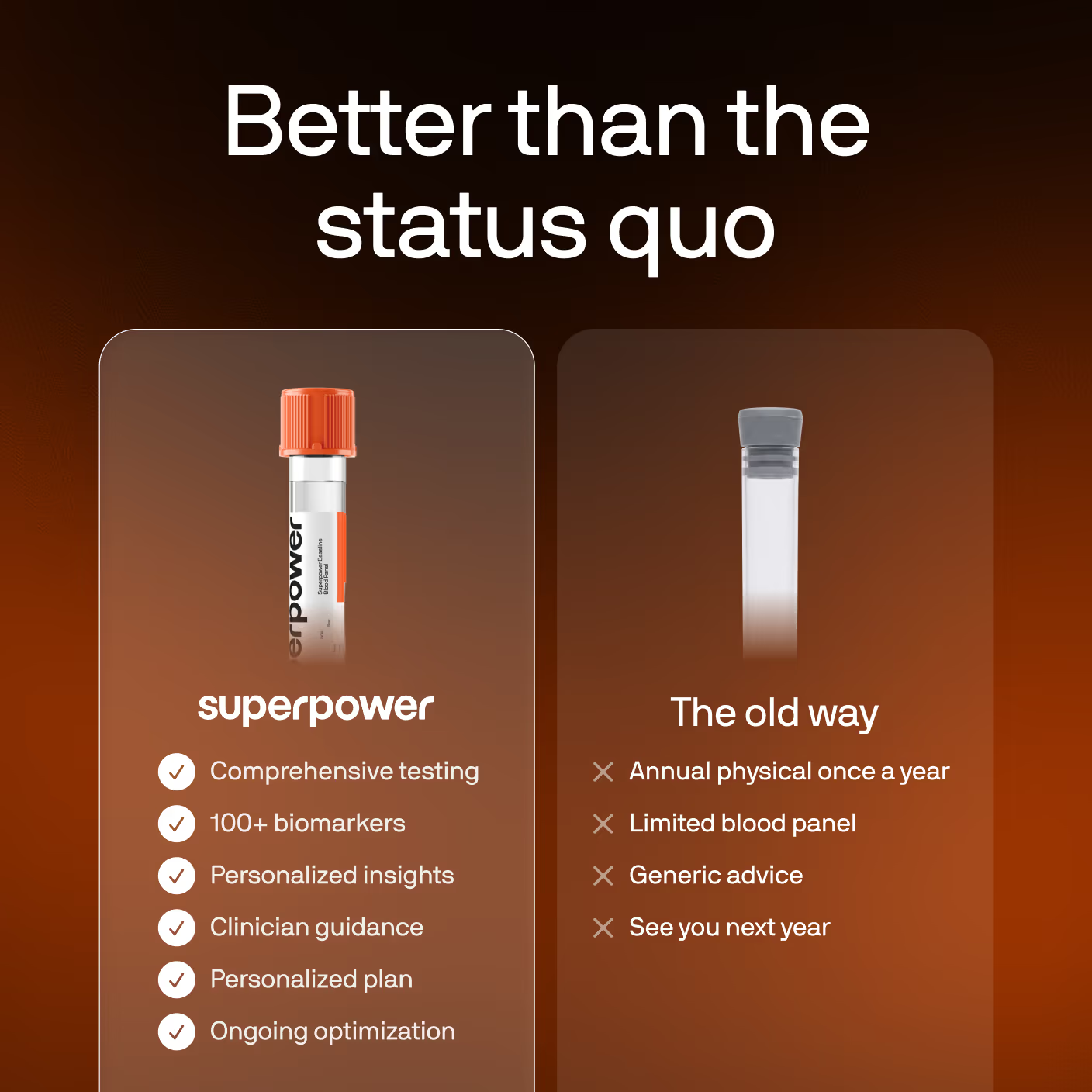
Superpower's approach to biomarker testing puts direct bilirubin in context alongside liver cell health, bile flow markers, protein synthesis, and metabolic resilience — so you can see how they move together over time and move from averages to personalized, evidence-guided decisions. Learn more at superpower.com or read about the approach.
Frequently Asked Questions
References
- Bjornsson ES, Devarbhavi HC (2025). Drug-induced cholestatic liver diseases. *Hepatology*, *82*(4), 996-1015. https://doi.org/10.1097/HEP.0000000000001052
- Ovadia C, Seed PT, Sklavounos A, Geenes V, Di Ilio C, Chambers J, Kohari K, Bacq Y, Bozkurt N, Brun-Furrer R, Bull L, Estiú MC, Grymowicz M, Gunaydin B, Hague WM, Haslinger C, Hu Y, Kawakita T, Kebapcilar AG, ... Williamson C (2019). Association of adverse perinatal outcomes of intrahepatic cholestasis of pregnancy with biochemical markers: results of aggregate and individual patient data meta-analyses. *Lancet*, *393*(10174), 899-909. https://doi.org/10.1016/S0140-6736(18)31877-4
- Lee CH, Fu Y, Yang SJ, Chi CC (2020). Effects of Omega-3 Polyunsaturated Fatty Acid Supplementation on Non-Alcoholic Fatty Liver: A Systematic Review and Meta-Analysis. *Nutrients*, *12*(9). https://doi.org/10.3390/nu12092769
- Bonkovsky HL, Kleiner DE, Gu J, Odin JA, Russo MW, Navarro VM, Fontana RJ, Ghabril MS, Barnhart H, Hoofnagle JH, U.S. Drug Induced Liver Injury Network Investigators (2017). Clinical presentations and outcomes of bile duct loss caused by drugs and herbal and dietary supplements. *Hepatology*, *65*(4), 1267-1277. https://doi.org/10.1002/hep.28967
- Schwertner HA, Vítek L (2008). Gilbert syndrome, UGT1A1*28 allele, and cardiovascular disease risk: possible protective effects and therapeutic applications of bilirubin. *Atherosclerosis*, *198*(1), 1-11. https://doi.org/10.1016/j.atherosclerosis.2008.01.001





















 Heart & Vascular Health
 Metabolic Health
 Energy
 Liver Health
 Kidney
 Sex Hormones
 Thyroid Health
 Nutrients
 Immune System
 Inflammation