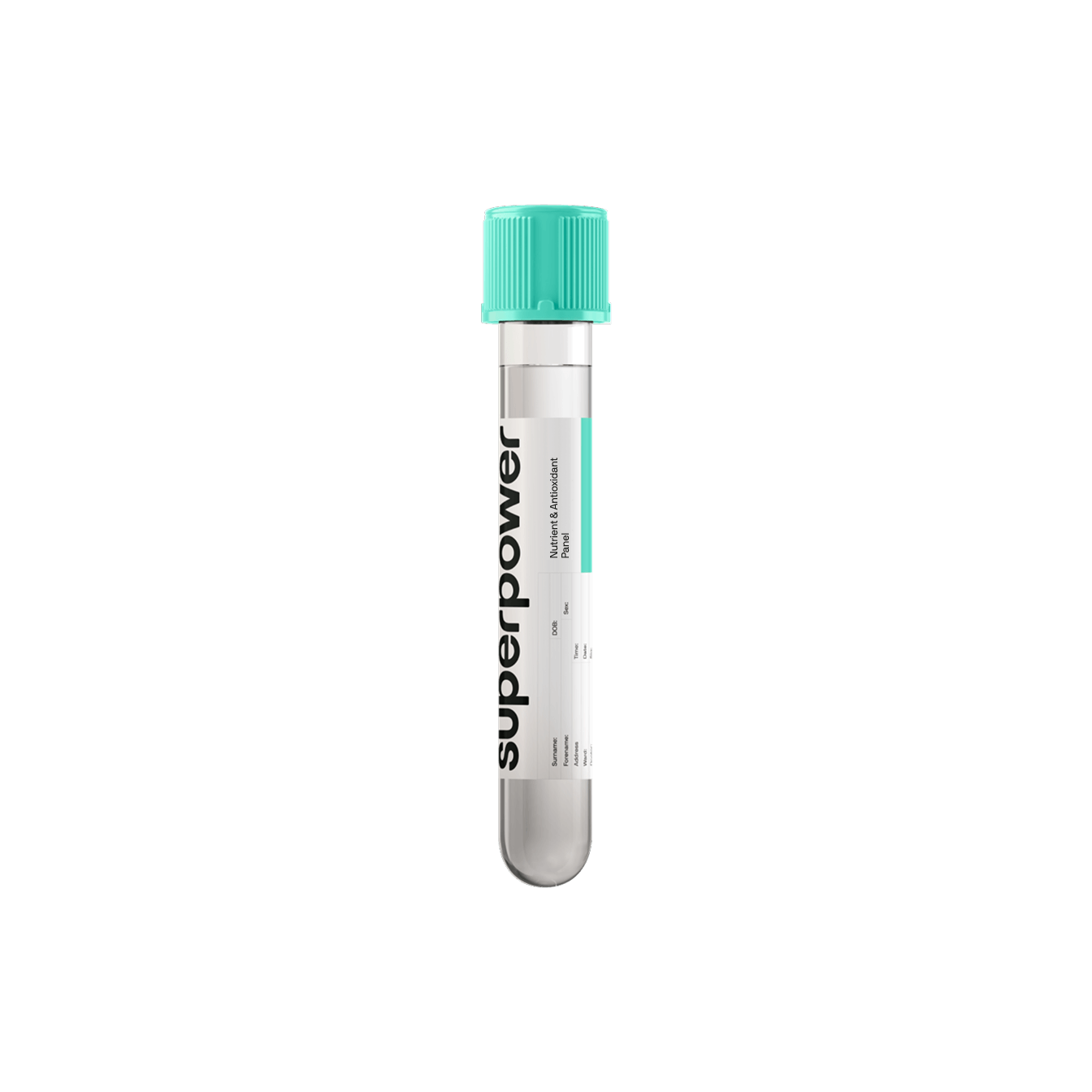
Test details
- Sample type:
- Single blood draw (blood only)
- Location:
- In-person at local lab / At-home phlebotomist visit (+$119)
- Availability:
- Available in 39 states and Washington, D.C.
- Preparation:
- Stop high-dose vitamin supplements before your drawStop supplements containing BiotinContinue prescribed medications; stay well hydrated
About the Vitamin Levels Panel
Standard blood panels rarely test vitamins in any detail. This add-on measures vitamins that play outsized roles in immune function, energy, and brain health, and that standard bloodwork almost never includes.
These are not obscure deficiencies. Vitamin C insufficiency is more common than most people realize, especially under chronic stress. B12 and folate drive methylation, the process behind DNA repair, neurotransmitter production, and sustained energy. Most people do not know they are low until symptoms stack up.
This panel gives you a baseline from a single blood draw. It is a focused screen, not a broad nutrient panel. It does not include vitamin D (covered in the Baseline Panel) or vitamin A. For broader coverage including minerals, the Nutrition Bundle add-on pairs well with this one.
What's tested and why it matters
Vitamin C (ascorbate)
Vitamin C is an antioxidant involved in immune function, collagen synthesis, and wound healing. Low vitamin C levels are associated with fatigue, easy bruising, slow wound healing, and susceptibility to infection. People who smoke, live under chronic stress, or have limited fruit and vegetable intake are at higher risk of low levels. Unlike many other vitamins, vitamin C is rarely included in standard blood panels.
Vitamin B12 (cobalamin)
B12 is essential for nerve function, red blood cell formation, DNA synthesis, and the methylation process that drives energy production and neurotransmitter balance. Low B12 is associated with fatigue, numbness or tingling in the hands and feet, memory difficulties, and mood changes. Vegans, vegetarians, older adults, and people taking proton pump inhibitors or metformin long-term are at elevated risk.
Folate (vitamin B9)
Folate works closely with B12 in cell division, DNA synthesis, and methylation. Low folate is associated with fatigue, cognitive changes, and megaloblastic anemia. It is particularly relevant for women of childbearing age and people with alcohol use or malabsorption conditions.
Reference ranges vary by lab and individual. Your provider will interpret your results in context.
Symptoms that may be worth investigating
Vitamin deficiencies rarely produce obvious, isolated symptoms. The following are commonly associated with low levels of one or more of the vitamins in this panel.
- Persistent fatigue or low energy (B12, folate, vitamin C)
- Numbness, tingling, or weakness in the hands or feet (B12)
- Easy bruising or slow wound healing (vitamin C)
- Frequent illness or slow recovery from infections (vitamin C)
- Memory difficulties, difficulty concentrating, or mood changes (B12, folate)
- Pale skin or changes in tongue appearance (B12, folate)
Who benefits from testing
- Vegans and vegetarians, who have limited dietary sources of B12 and may also have lower folate intake depending on diet composition.
- Adults 40 and older, as B12 absorption decreases with age due to changes in stomach acid production.
- People taking proton pump inhibitors, metformin, or certain other medications that interfere with vitamin absorption.
- Anyone with a digestive condition (celiac disease, Crohn's disease, or other malabsorption issues) that may limit nutrient uptake.
- People who smoke, as smoking accelerates vitamin C depletion.
- Anyone taking supplements who wants to verify that their levels are actually where they expect them to be.
- Anyone experiencing symptoms from the list above without a clear explanation.
Whichever describes you, your Superpower care team can help you interpret your vitamin levels and decide what to adjust.
How to prepare
For the most accurate results:
- Stop taking high-dose vitamin supplements, including vitamin C, B-complex, and multivitamins, before your blood draw. Standard dietary intake of vitamins does not need to change.
- Stop supplements containing biotin (found in many hair, skin, and nail vitamins) before testing, as biotin can interfere with certain assay methods.
- Continue taking all prescribed medications as normal. Do not change or stop any medication without consulting your provider.
- Stay well hydrated in the 24 hours before your draw.
How it works
- Add the panel to your Superpower order.
- Schedule a blood draw at a local clinic or book an optional at-home visit from a trained phlebotomist (+$119).
- Prepare by stopping high-dose supplements in advance (see instructions above).
- Review your results with your Superpower care team or bring your vitamin levels to your own provider.
Frequently asked questions
Biomarkers tested
Vitamin C (also called L-ascorbic acid) is a water-soluble vitamin that you must obtain from diet, since unlike most animals we cannot make it ourselves.
Learn moreMethod: Laboratory-developed test (LDT) validated under CLIA; not cleared or approved by the FDA. Results are interpreted by clinicians in context and are not a stand-alone diagnosis.


























 Heart & Vascular Health
 Metabolic Health
 Energy
 Liver Health
 Kidney
 Sex Hormones
 Thyroid Health
 Nutrients
 Immune System
 Inflammation