Test details
- Sample type:
- Single blood draw (blood only)
- Location:
- In-person at local lab / At-home phlebotomist visit (+$119)
- Availability:
- Available in 40 states
- Turnaround:
- Results processed within 10 days
- Preparation:
- About 10-hour food fast recommended (water is fine)Consider pausing relevant supplements 48 to 72 hours before your draw
About the Vitamins and Minerals Panel
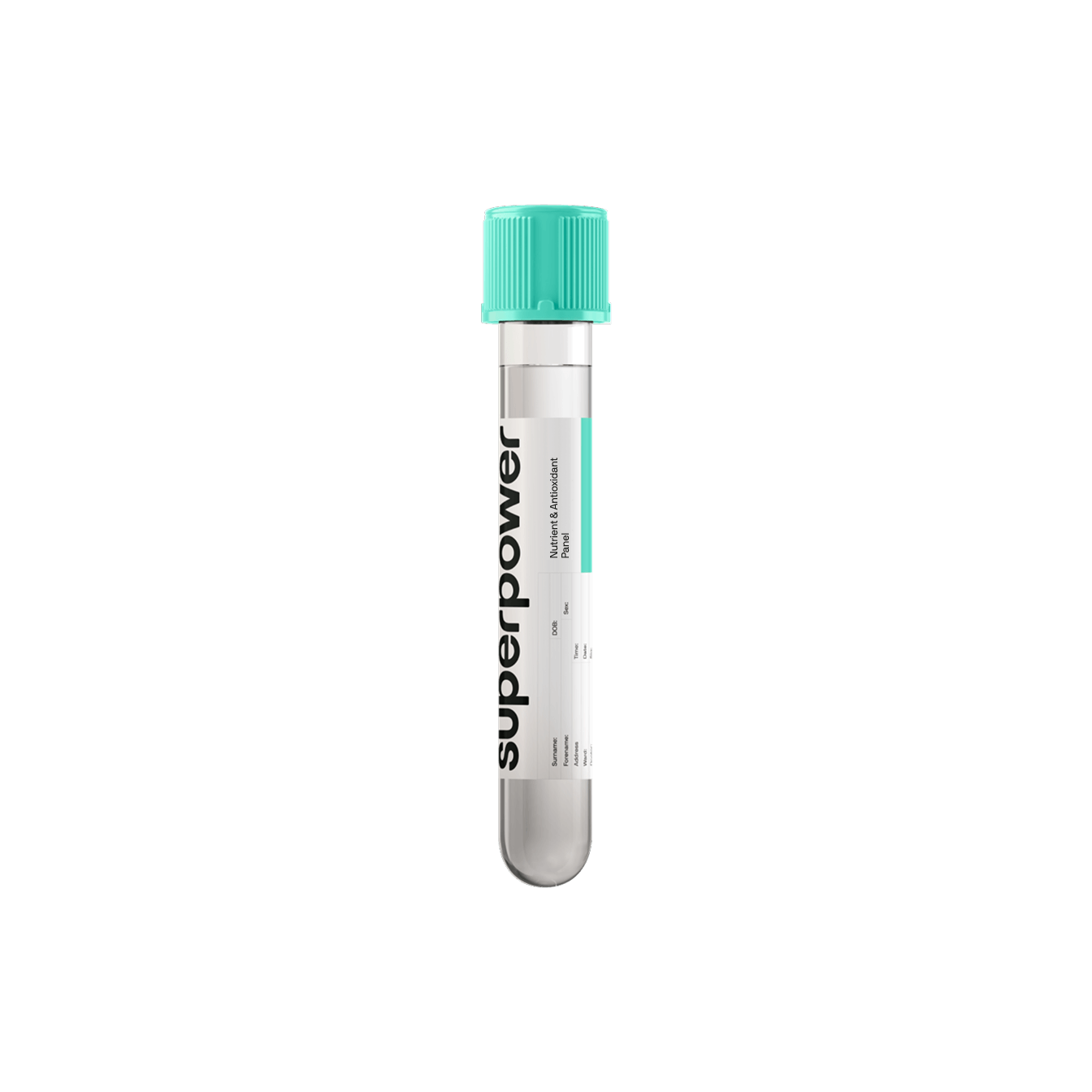
Micronutrient deficiencies are remarkably common: most US adults fall short of the recommended intake for at least one essential vitamin or mineral. And they do not always produce obvious symptoms. Low levels often show up as fatigue, poor sleep, weak immunity, slow recovery, brain fog, or mood changes that get attributed to aging, stress, or "just life." The Vitamins and Minerals Panel is a clinical blood test measuring 8 nutrients that are hardest to get from diet alone and most impactful when low. It goes beyond standard bloodwork by measuring intracellular RBC magnesium rather than serum magnesium. Results are available within 10 days, with the Superpower care team available to review them.
Why testing matters even with a healthy diet
Eating well does not guarantee adequate blood levels. Absorption varies from person to person and is shaped by gut health, age, and medications. Proton pump inhibitors can reduce B12 absorption, and other common medications interfere with specific nutrients. The nutrient content of whole foods also varies with soil and geography, so selenium and magnesium levels in the same food can differ by region. Heat-sensitive nutrients like Vitamin C and folate are partly lost in cooking and processing. And deficiency can be meaningfully present before it produces symptoms or shows up on a standard panel. Most people supplement based on general recommendations or guesswork. Testing replaces guesswork with actual data about what is happening in your body.
Symptoms that may warrant testing
These symptoms have many potential causes, and low nutrient levels are just one pattern worth investigating before attributing them to lifestyle or stress.
| Symptom | May be associated with low levels of |
|---|---|
| Persistent fatigue or low energy | B12, Folate, Magnesium |
| Brain fog or difficulty concentrating | B12, Folate, Magnesium |
| Muscle cramps or weakness | Magnesium |
| Easy bruising or slow wound healing | Vitamin C, Vitamin K |
| Tingling or numbness in hands or feet | B12 |
| Hair thinning or brittle nails | Selenium, B12 |
| Mood changes (low mood, anxiety) | B12, Folate, Magnesium |
| Poor immune response or frequent illness | Vitamin C, Selenium |
| Skin changes or dryness | Vitamin C, Selenium, Vitamin E |
These symptoms have many potential causes. This panel helps determine whether nutrient levels are a contributing factor.
What this test measures
This panel measures 8 essential nutrients from a single blood draw. Results reflect current circulating levels and, for magnesium, intracellular stores measured in red blood cells rather than serum.
| Biomarker | What it measures | What low levels may indicate |
|---|---|---|
| Vitamin C (Ascorbate) | Circulating ascorbic acid | Reduced antioxidant capacity; impaired collagen synthesis; slower wound healing |
| Vitamin B12 (Cobalamin) | Serum cobalamin | Associated with anemia; neurological changes; elevated homocysteine |
| Folate | Serum folate | Impaired DNA synthesis; elevated homocysteine; relevant in pregnancy planning |
| Magnesium (RBC) | Intracellular magnesium in red blood cells, a more accurate reflection of tissue stores than serum magnesium | Muscle cramping; poor sleep; may be relevant to blood pressure regulation |
| Selenium | Serum selenium | Reduced thyroid conversion efficiency; impaired antioxidant defense |
| Vitamin E (Alpha-Tocopherol) | Serum alpha-tocopherol | Reduced fat-soluble antioxidant activity |
| Vitamin E (Beta & Gamma) | Additional tocopherol forms | Broader antioxidant status assessment |
| Vitamin K | Circulating vitamin K | Coagulation changes; reduced bone mineral support |
Why we measure RBC magnesium, not serum magnesium
The kidneys tightly regulate serum magnesium, so it can appear normal even when intracellular stores are meaningfully low. RBC magnesium reflects how much magnesium is actually inside your cells, a more accurate picture of functional magnesium status. It is the measurement used in a substantial body of clinical research on magnesium and cardiovascular, metabolic, and neurological health. Most standard panels measure serum magnesium only, which can miss a developing shortfall.
Who benefits from testing
- You're taking supplements and want to know if they're actually working
- You have fatigue, poor sleep, frequent illness, or slow recovery from exercise
- You're on a restricted diet (vegan, vegetarian, low-carb, or elimination diets)
- You want to stop guessing about what your body needs and start knowing
- You are over 40, when B12 absorption declines with age and subclinical deficiencies become more common
- You take medications that affect nutrient absorption, such as proton pump inhibitors, metformin, or statins
No doctor's visit required: order directly through Superpower.
What you will learn
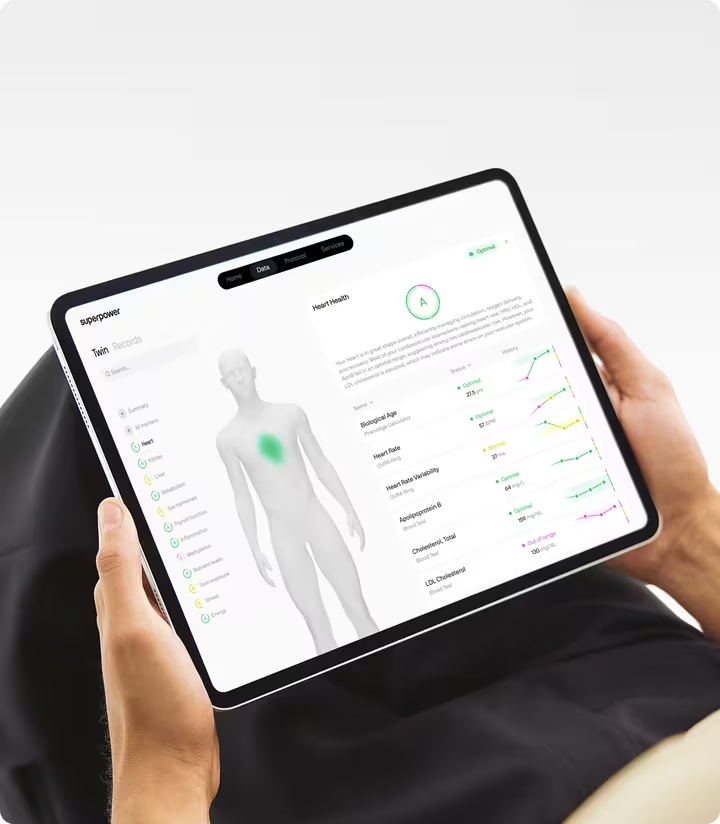
Which nutrients you are deficient in, which are adequate, and which you may be over-supplementing. Over-supplementation can be as problematic as deficiency. This turns a generic supplement routine into a targeted approach based on your actual blood levels, and can reveal whether symptoms you have attributed to other causes might be driven by a simple, correctable shortfall. For magnesium, RBC testing shows your intracellular stores specifically. Your results are information, not a prescription. The Superpower care team is available to walk through what your levels mean.
How it works
Getting tested is straightforward and does not require a doctor's visit:
- Order online
- Schedule a blood draw at a local clinic, or book an optional at-home phlebotomist (+$119)
- No kit to collect: it is a standard blood draw
- Results are processed within 10 days
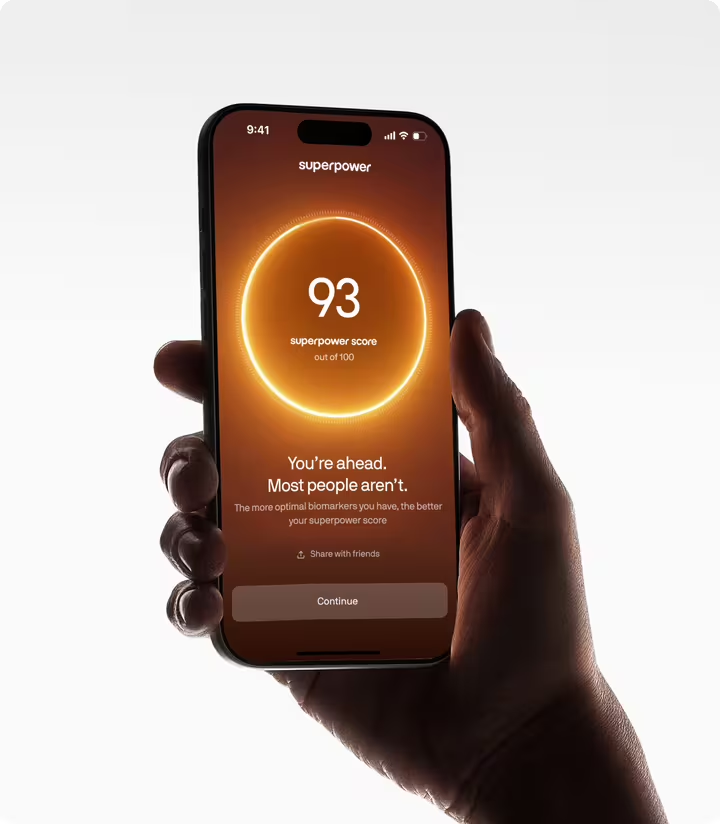
- Receive your results through Superpower, with the care team available to discuss findings
Frequently asked questions
Biomarkers tested
Vitamin C (also called L-ascorbic acid) is a water-soluble vitamin that you must obtain from diet, since unlike most animals we cannot make it ourselves.
Learn moreMethod: Laboratory-developed test (LDT) validated under CLIA; not cleared or approved by the FDA. Results are interpreted by clinicians in context and are not a stand-alone diagnosis.