


Understand what your supplement basics results really mean
See your biomarkers in context with a comprehensive panel.
- CLIA-certified labs
- HIPAA compliant
- Personalized health protocol
How psyllium husk works in the body
The gel-forming mechanism
Psyllium husk's primary active fraction is a water-soluble polysaccharide called arabinoxylan, which absorbs water at approximately 40 times its own weight and forms a viscous gel in the gut. This gel physically slows the transit of digestive contents through the small intestine, which has several downstream effects: it reduces the rate of glucose absorption (attenuating post-meal blood sugar spikes), it binds bile acids and prevents their reabsorption, and it increases stool bulk and water retention in the colon, supporting regularity. The gel is not digested by human enzymes but is partially fermented by gut bacteria in the colon, producing short-chain fatty acids that contribute to colonic health.
LDL cholesterol and bile acid binding
The bile acid binding mechanism is the primary explanation for psyllium's effects on LDL cholesterol. Bile acids are synthesized in the liver from cholesterol and released into the intestine to aid fat digestion. Under normal circumstances, 95% of bile acids are reabsorbed at the terminal ileum and returned to the liver. Psyllium's gel traps bile acids in the intestinal lumen, preventing their reabsorption and forcing the liver to synthesize new bile acids from circulating cholesterol. This process reduces hepatic cholesterol availability, which upregulates LDL receptor activity and increases clearance of LDL particles from the blood. Meta-analyses of randomized controlled trials consistently show reductions in LDL cholesterol of approximately 5–10% with psyllium supplementation in hypercholesterolemic adults, with the effect most pronounced in those with higher baseline LDL. hs-CRP alongside lipid markers provides a more complete picture of cardiovascular risk than cholesterol alone.
Blood sugar regulation
By slowing gastric emptying and glucose absorption, psyllium attenuates the post-meal glycemic response. Multiple trials in individuals with type 2 diabetes and in healthy adults have demonstrated reductions in postprandial blood glucose and, with consistent use, modest reductions in HbA1c. The effect is most consistent when psyllium is consumed with meals rather than between them. HbA1c and fasting glucose are the standard markers for assessing blood sugar status and tracking changes over time.
Bowel regularity and constipation
Psyllium is the most evidence-supported fiber supplement for managing constipation. By increasing stool bulk, water content, and transit consistency, it promotes more regular and comfortable bowel movements without the cramping associated with stimulant laxatives. It is also used for diarrhea management — the same gel-forming property that adds bulk in constipation can absorb excess water in loose stools, normalizing stool consistency in either direction. For this reason, psyllium is sometimes described as a stool normalizer rather than simply a laxative.
Appetite and satiety
The viscous gel formed by psyllium slows gastric emptying and may prolong the sensation of fullness after eating. Several trials have reported reduced caloric intake and improved satiety scores with psyllium supplementation before meals, though effect sizes vary between studies and are generally modest. This property may be useful as part of a dietary strategy for weight management but should not be expected to produce meaningful changes on its own.
Dosage and practical use
Most clinical trials have used 5–15g of psyllium husk per day, typically divided across 2–3 doses taken with meals and accompanied by adequate water (at least 240 ml per dose). The FDA's qualified health claim threshold for LDL cholesterol effects is 7g of soluble fiber daily from psyllium, which corresponds to approximately 10–12g of psyllium husk (since not all of its mass is soluble fiber). Starting at lower doses and increasing gradually reduces the likelihood of bloating and flatulence as the gut adapts to increased fiber. Psyllium must be consumed with sufficient fluid to prevent it from forming a thick mass before reaching the stomach; inadequate hydration is the primary safety consideration.
Reference ranges for the cholesterol and blood sugar markers associated with psyllium's effects vary by laboratory and individual; results should be interpreted by a qualified provider in clinical context.
Test 150+ biomarkers
Two blood draws. A full picture of your health, explained in plain language.
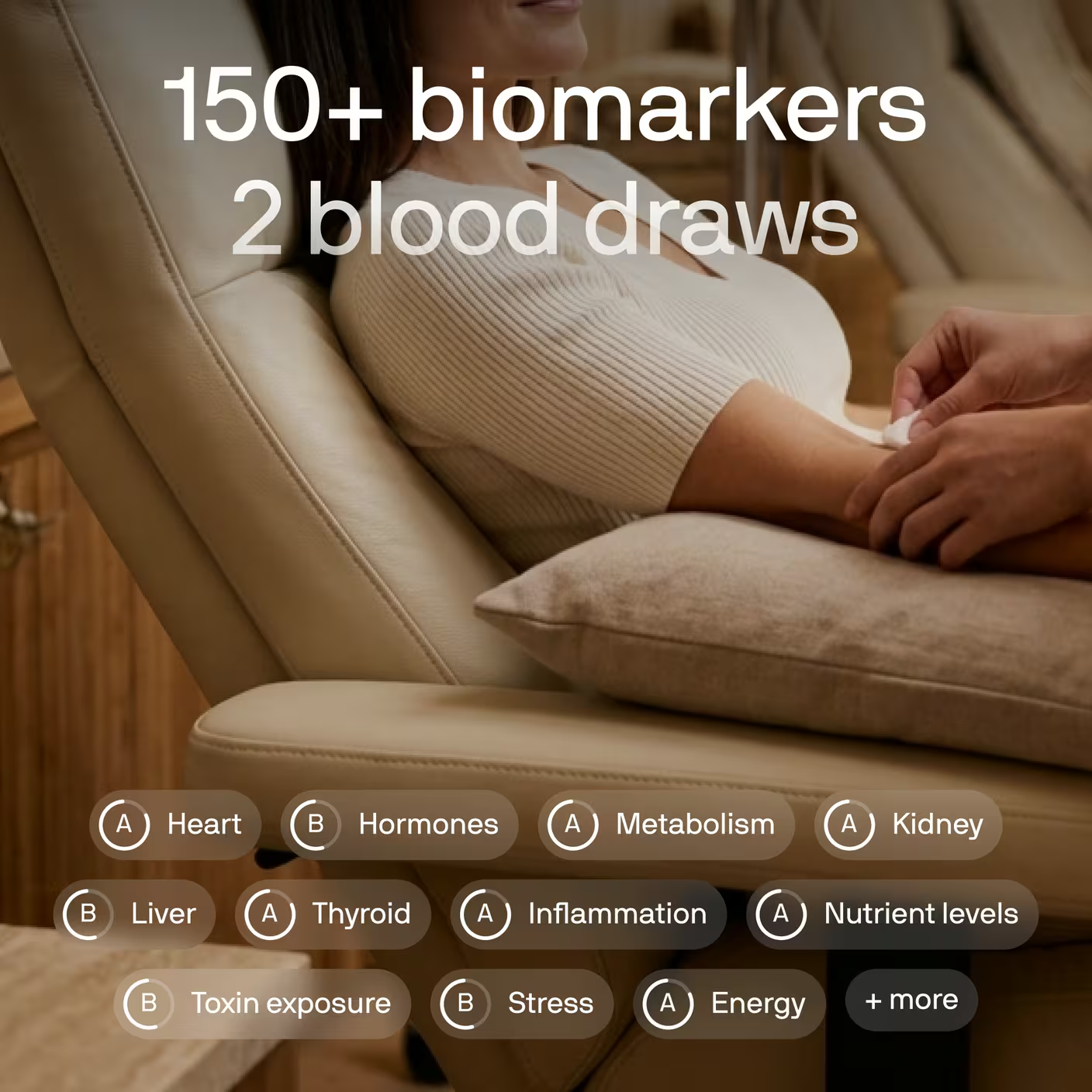
Test 150+ biomarkers
Two blood draws. A full picture of your health, explained in plain language.
Which biomarkers provide context for psyllium husk use?
- LDL cholesterol — primary target of psyllium's bile acid binding mechanism
- Total cholesterol — Broader lipid context
- HbA1c — 3-month blood sugar average; reflects glycemic response improvements
- Fasting glucose — baseline blood sugar level
- hs-CRP — systemic inflammation; broader cardiovascular risk context
Superpower's Baseline Blood Panel includes LDL cholesterol, total cholesterol, HbA1c, fasting glucose, and hs-CRP, providing a baseline for the markers most relevant to psyllium's clinical effects.
This article is for informational purposes only and does not constitute medical advice. Always consult a qualified healthcare provider before making changes to your health routine. Dosage information reflects published clinical research and is not a personal recommendation.
Frequently Asked Questions
References
- Zhu R, Lei Y, Wang S, Zhang J, Mengjiao Lv, Jiang R, Zhou J, Li T, Guo L (2024). Plantago consumption significantly reduces total cholesterol and low-density lipoprotein cholesterol in adults: A systematic review and meta-analysis. *Nutrition research (New York, N.Y.)*, *126*, 123-137. https://doi.org/10.1016/j.nutres.2024.03.013
- Gibb RD, McRorie JW, Russell DA, Hasselblad V, D'Alessio DA (2015). Psyllium fiber improves glycemic control proportional to loss of glycemic control: a meta-analysis of data in euglycemic subjects, patients at risk of type 2 diabetes mellitus, and patients being treated for type 2 diabetes mellitus. *The American journal of clinical nutrition*, *102*(6), 1604-14. https://doi.org/10.3945/ajcn.115.106989
- van der Schoot A, Drysdale C, Whelan K, Dimidi E (2022). The Effect of Fiber Supplementation on Chronic Constipation in Adults: An Updated Systematic Review and Meta-Analysis of Randomized Controlled Trials. *The American journal of clinical nutrition*, *116*(4), 953-969. https://doi.org/10.1093/ajcn/nqac184
- Xiao Z, Chen H, Zhang Y, Deng H, Wang K, Bhagavathula AS, Almuhairi SJ, Ryan PM, Rahmani J, Dang M, Kontogiannis V, Vick A, Wei Y (2020). The effect of psyllium consumption on weight, body mass index, lipid profile, and glucose metabolism in diabetic patients: A systematic review and dose-response meta-analysis of randomized controlled trials. *Phytotherapy research : PTR*, *34*(6), 1237-1247. https://doi.org/10.1002/ptr.6609
- Jovanovski E, Yashpal S, Komishon A, Zurbau A, Blanco Mejia S, Ho HVT, Li D, Sievenpiper J, Duvnjak L, Vuksan V (2018). Effect of psyllium (Plantago ovata) fiber on LDL cholesterol and alternative lipid targets, non-HDL cholesterol and apolipoprotein B: a systematic review and meta-analysis of randomized controlled trials. *The American journal of clinical nutrition*, *108*(5), 922-932. https://doi.org/10.1093/ajcn/nqy115
- Rigaud D, Paycha F, Meulemans A, Merrouche M, Mignon M (1998). Effect of psyllium on gastric emptying, hunger feeling and food intake in normal volunteers: a double blind study. *European journal of clinical nutrition*, *52*(4), 239-45. https://doi.org/10.1038/sj.ejcn.1600518
- Lacy BE, Pimentel M, Brenner DM, Chey WD, Keefer LA, Long MD, Moshiree B (2021). ACG Clinical Guideline: Management of Irritable Bowel Syndrome. *The American journal of gastroenterology*, *116*(1), 17-44. https://doi.org/10.14309/ajg.0000000000001036
























 Heart & Vascular Health
 Metabolic Health
 Energy
 Liver Health
 Kidney
 Sex Hormones
 Thyroid Health
 Nutrients
 Immune System
 Inflammation