


Understand what your supplement basics results really mean
See your biomarkers in context with a comprehensive panel.
- CLIA-certified labs
- HIPAA compliant
- Personalized health protocol
Dosage: How much psyllium husk to take
Standard doses used in research
Most clinical trials examining psyllium's effects on cholesterol and blood glucose use total daily doses of 10 to 15 grams of psyllium fiber, typically split across two to three doses. Gastrointestinal regularity benefits have been demonstrated at lower doses — 5 to 10 grams per day is often sufficient for constipation and stool normalization. The FDA has authorized a specific health claim for psyllium and reduced heart disease risk at a minimum daily dose of 7 grams of soluble fiber from psyllium husk. Reference the specific product label for fiber content per serving, as this varies between husks, powder, and capsule forms.
Starting dose and titration
Beginning at the full therapeutic dose often produces more bloating, gas, and cramping than is necessary. Starting at half the target dose — approximately 3 to 5 grams per day — and increasing over one to two weeks allows the gastrointestinal tract to adapt to increased fermentable fiber exposure. This is the single most practical step to improve tolerability for first-time psyllium users. Many people who discontinue psyllium due to initial bloating would have tolerated it well with a slower introduction.
Capsule vs. powder vs. husk forms
Psyllium is available as whole husks, ground powder, and capsules. All forms deliver the same active compound. Powder typically dissolves more readily than husks in water (husks can clump if added to water without immediate stirring). Capsules provide the most convenient dosing but require a higher number of capsules per dose (typically 4 to 6 capsules to equal one teaspoon of powder) and necessitate drinking extra water separately. Powder and whole husk forms are more economical for daily use at higher doses.
Water: The non-negotiable variable
Every source discussing psyllium husk use includes a water requirement, and it is not merely advisory. Psyllium absorbs water and expands significantly in volume — this is the property that makes it effective. Without adequate water, this expansion can cause the gel to compact in the esophagus or intestines, producing obstruction. The minimum recommended fluid per dose is 240 mL (8 ounces / one full glass) of water or other liquid taken immediately with or directly after the psyllium.
Additionally, total daily fluid intake matters. Psyllium draws water into the stool, which requires adequate body-wide hydration to avoid constipation worsening rather than improving. For individuals with lower baseline fluid intake, increasing water consumption alongside starting psyllium is important.
Practical note: mix psyllium into water and drink it immediately. Psyllium gel forms rapidly and becomes difficult to drink after a few minutes of sitting.
Timing: When to take psyllium husk
For digestive regularity
Timing for bowel regularity is flexible — consistency matters more than the specific time of day. Many individuals find that taking psyllium in the morning with breakfast or at bedtime establishes the most regular bowel schedule. Psyllium taken at a consistent time daily produces more reliable outcomes than intermittent use.
For cholesterol support
For its effects on bile acid binding and LDL-C reduction, psyllium is most effective when taken with meals — particularly the meals that contain the most fat, as bile acid secretion is stimulated by dietary fat intake. Taking psyllium with breakfast and dinner covers the two largest meal-related bile acid secretion events for most people. This meal-timed approach aligns with the mechanism by which psyllium exerts its lipid-modifying effects.
For blood glucose management
When the goal is attenuating postprandial glucose elevation, psyllium should be taken immediately before or with carbohydrate-containing meals. The gel formed in the stomach and small intestine slows glucose absorption and reduces the rate of rise in blood glucose after eating. Research has documented modest but reproducible reductions in postprandial glucose and insulin levels with pre-meal psyllium supplementation. The clinical significance of this effect in individuals with normal glucose metabolism is modest; the benefit is most meaningful in those with impaired fasting glucose, insulin resistance, or type 2 diabetes, where provider guidance should accompany any supplementation.
Timing around medications
Psyllium's gel-forming property can reduce the absorption rate of certain medications taken simultaneously. This is most relevant for medications where absorption timing is clinically significant — including levothyroxine, metformin, lithium, digoxin, and warfarin. As a general rule, separate psyllium from any medication by at least two hours. This is the most clinically important timing consideration for psyllium users who take regular medications.
Test 150+ biomarkers
Two blood draws. A full picture of your health, explained in plain language.
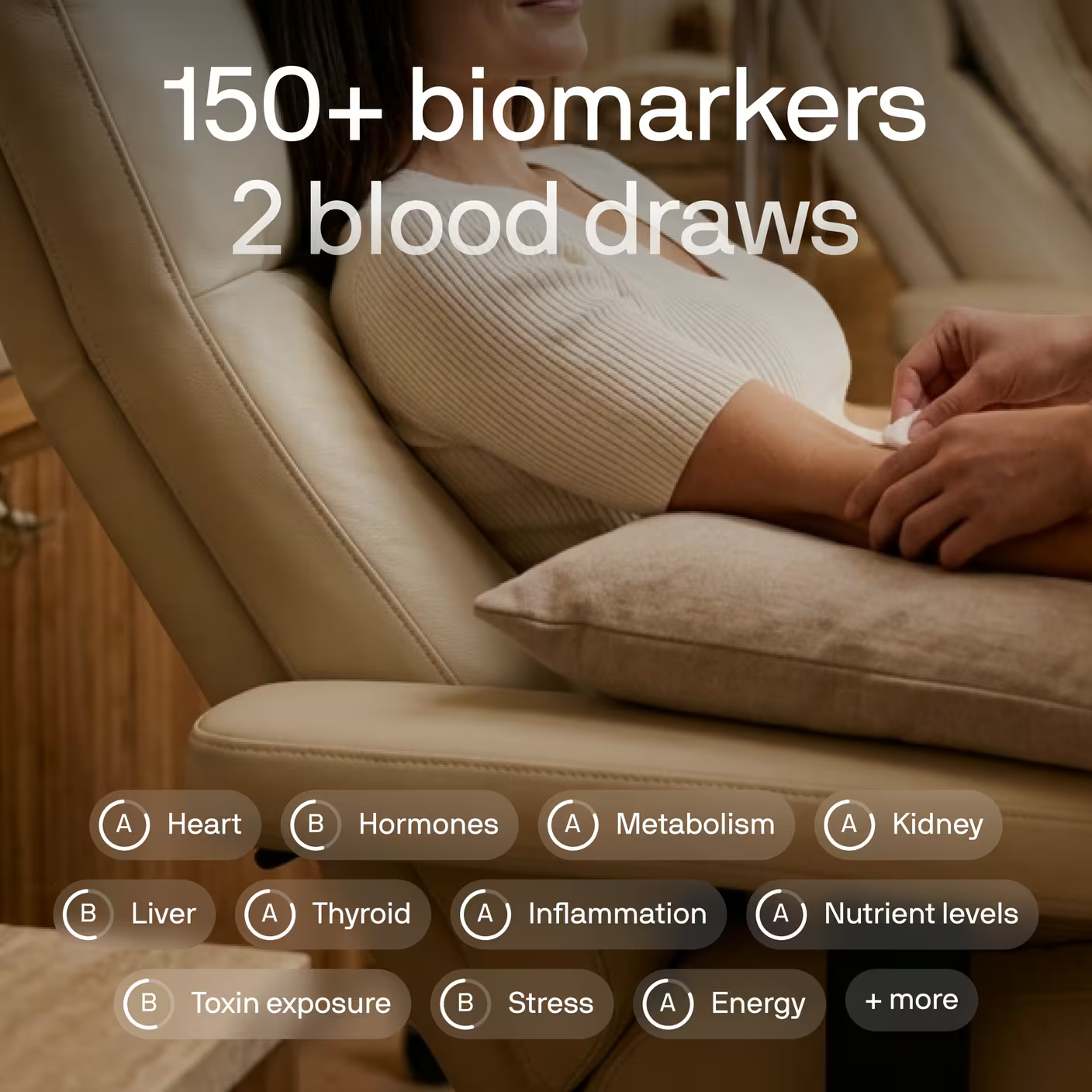
Test 150+ biomarkers
Two blood draws. A full picture of your health, explained in plain language.
Common side effects and how to manage them
Initial bloating and gas
The most common reason people stop psyllium supplementation is initial gastrointestinal discomfort. This reflects the gut microbiome's response to increased fermentable substrate and the colon's adaptation to increased fiber load. Starting low and slow (see dosage section above) is the most effective mitigation. Symptoms typically improve within two to four weeks as the microbiome adapts.
Worsening constipation
Psyllium requires water to work properly. If taken with inadequate fluid or in the setting of insufficient overall hydration, psyllium can worsen rather than improve constipation. If symptoms worsen after starting psyllium, increasing fluid intake is the first intervention before reducing the dose.
Allergic reactions
Psyllium allergy is rare but documented, particularly among healthcare workers who handle psyllium-containing products frequently (occupational sensitization). Symptoms of psyllium allergy include nasal symptoms, asthma-like respiratory symptoms, and in rare cases, anaphylaxis. Individuals with known grass or plantain allergies may have cross-reactivity. If any respiratory or allergic symptoms occur after taking psyllium, discontinue use and consult a provider.
Tracking the effects of psyllium husk through biomarkers
Psyllium's meaningful clinical effects — on LDL cholesterol, fasting glucose, and insulin sensitivity — are detectable through laboratory testing. For anyone using psyllium as part of a deliberate effort to support metabolic or cardiovascular health, baseline and follow-up testing provides a concrete measure of effect beyond subjective symptom improvement.
- LDL cholesterol — Reduced via bile acid binding; consistent evidence at 10–15g/day
- Triglycerides — May show modest improvement with consistent use
- Fasting glucose — Modest attenuation of postprandial glucose over time
- HbA1c — Longer-term glycemic control marker
- Fasting insulin — Early insulin sensitivity indicator
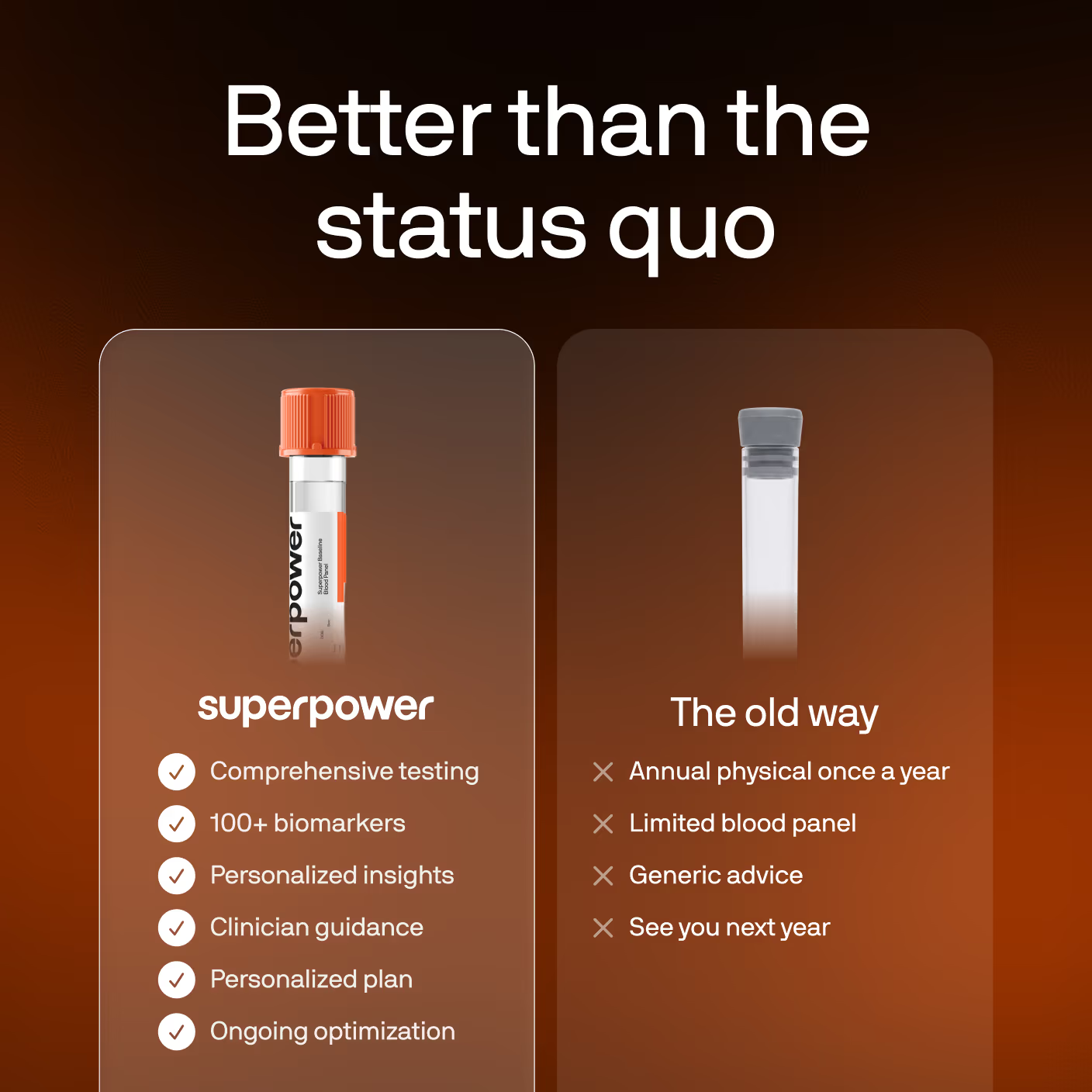
Superpower's Baseline Blood Panel includes LDL cholesterol, triglycerides, fasting glucose, HbA1c, and insulin alongside a comprehensive metabolic and lipid panel — well-suited for establishing a pre-supplementation baseline and monitoring response over time.
This article is for informational purposes only and does not constitute medical advice. Always consult a qualified healthcare provider before making changes to your supplement routine. Superpower offers blood panels that include the biomarkers discussed in this article. Links to individual tests are provided for informational context.
Frequently Asked Questions
References
- Jovanovski E, Yashpal S, Komishon A, Zurbau A, Blanco Mejia S, Ho HVT, Li D, Sievenpiper J, Duvnjak L, Vuksan V (2018). Effect of psyllium (Plantago ovata) fiber on LDL cholesterol and alternative lipid targets, non-HDL cholesterol and apolipoprotein B: a systematic review and meta-analysis of randomized controlled trials. *The American journal of clinical nutrition*, *108*(5), 922-932. https://doi.org/10.1093/ajcn/nqy115
- Gibb RD, McRorie JW, Russell DA, Hasselblad V, D'Alessio DA (2015). Psyllium fiber improves glycemic control proportional to loss of glycemic control: a meta-analysis of data in euglycemic subjects, patients at risk of type 2 diabetes mellitus, and patients being treated for type 2 diabetes mellitus. *The American journal of clinical nutrition*, *102*(6), 1604-14. https://doi.org/10.3945/ajcn.115.106989
- McRorie JW, McKeown NM (2017). Understanding the Physics of Functional Fibers in the Gastrointestinal Tract: An Evidence-Based Approach to Resolving Enduring Misconceptions about Insoluble and Soluble Fiber. *Journal of the Academy of Nutrition and Dietetics*, *117*(2), 251-264. https://doi.org/10.1016/j.jand.2016.09.021
- Brum JM, Gibb RD, Peters JC, Mattes RD (2016). Satiety effects of psyllium in healthy volunteers. *Appetite*, *105*, 27-36. https://doi.org/10.1016/j.appet.2016.04.041
- Chiu AC, Sherman SI (1998). Effects of pharmacological fiber supplements on levothyroxine absorption. *Thyroid : official journal of the American Thyroid Association*, *8*(8), 667-71. https://doi.org/10.1089/thy.1998.8.667





















 Heart & Vascular Health
 Metabolic Health
 Energy
 Liver Health
 Kidney
 Sex Hormones
 Thyroid Health
 Nutrients
 Immune System
 Inflammation