


Protect your skin outside, and know what's inside
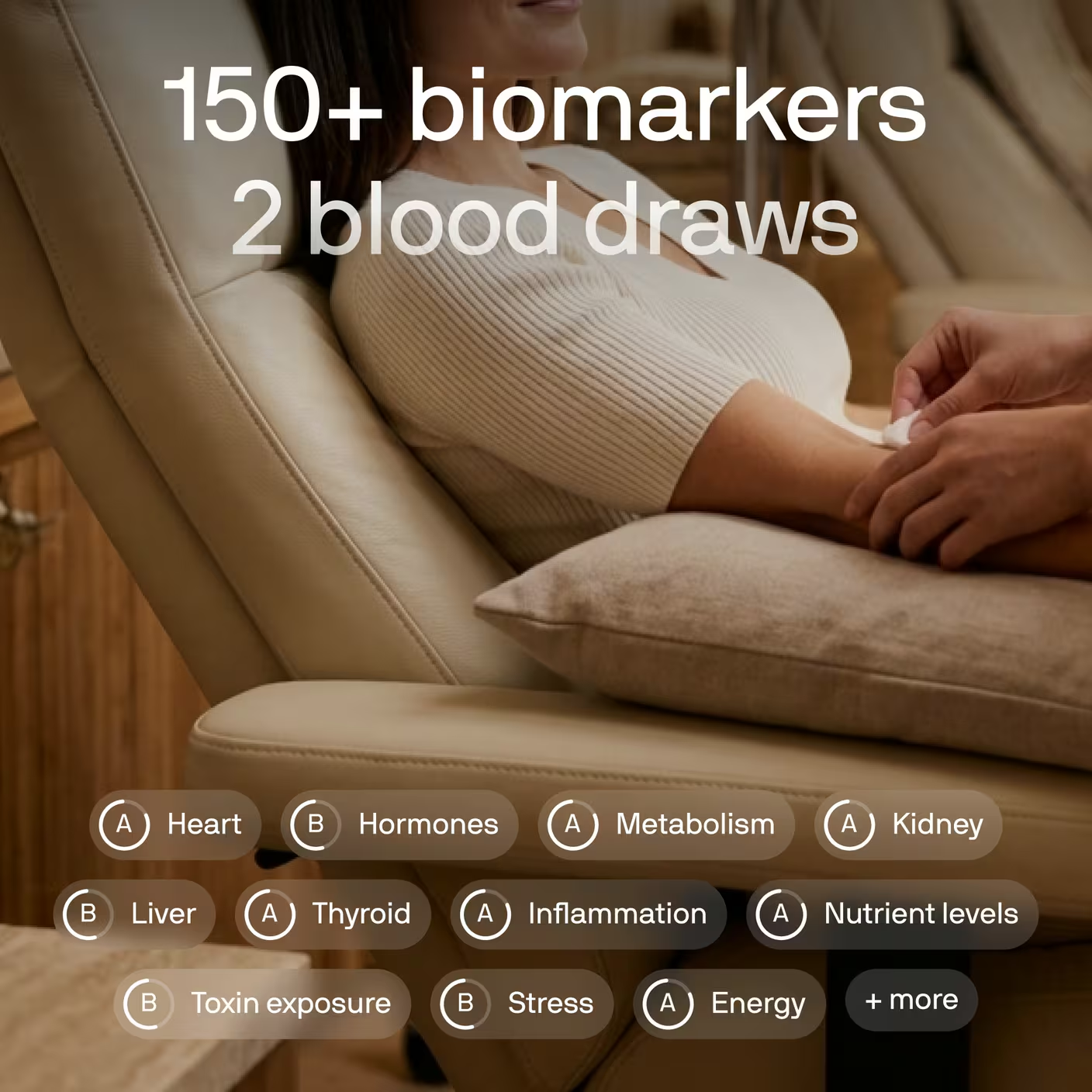
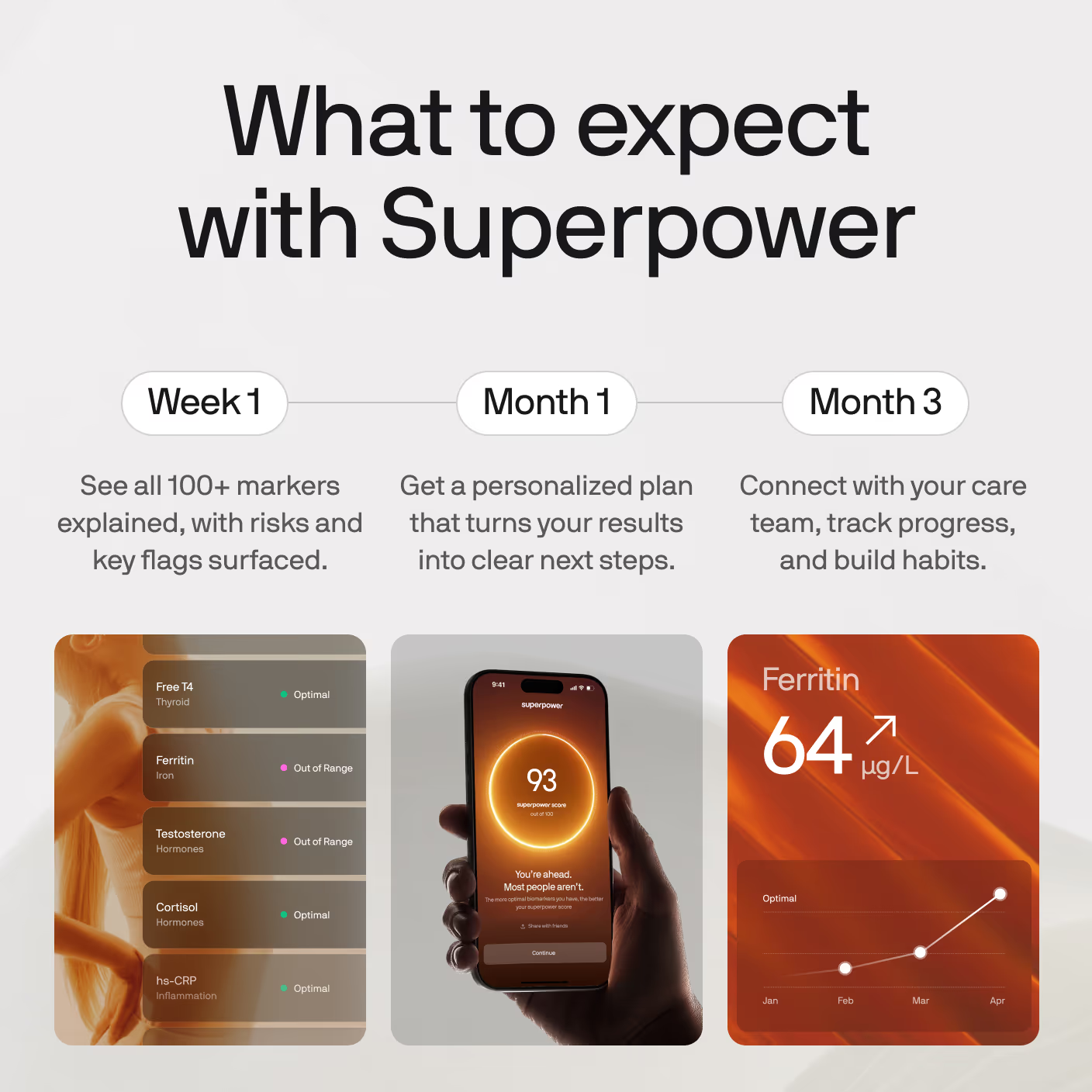
Check inflammation, hormone, and metabolic markers with one blood draw.
- CLIA-certified labs
- HIPAA compliant
- Personalized health protocol
At a glance
- Zinc oxide is a mineral (inorganic) UV filter that sits on the skin and blocks both UVA and UVB light.
- It gives broad-spectrum coverage from a single ingredient, which is why it is common in "mineral" or "physical" sunscreens.
- It rarely irritates skin or triggers allergy, so it suits sensitive, reactive, and post-procedure skin.
- A high percentage on the label does not always equal a high measured SPF, so the finished product still matters.
- Evidence strength: Strong, backed by decades of dermatology use and published UV-filter reviews.
What is zinc oxide?
Zinc oxide is a white mineral powder used as an active sunscreen ingredient. According to a PubMed-indexed review of inorganic UV filters, zinc oxide and titanium dioxide are the two main inorganic filters, and zinc oxide has a broad UVA to UVB absorption curve that few single ingredients match. In modern sunscreens it is often milled into very small particles (under 100 nm) so the finish looks less chalky while keeping its protective range. Older descriptions called it a physical blocker that reflects light, but it mainly absorbs UV and converts it to a small amount of heat, with some scattering.
What skin type is zinc oxide best for?
Zinc oxide works for most skin types, and it is a strong choice for sensitive or easily irritated skin. A dermatology review of sunscreen side effects reports that neither zinc oxide nor titanium dioxide has meaningful irritant or sensitizing potential, with adverse reactions appearing only in rare case reports. That track record makes it a common pick for people with rosacea, eczema-prone skin, or skin recovering from a procedure, and it is widely used on children for the same reason. The main trade-off is cosmetic, since higher concentrations can leave a white cast that is more visible on deeper skin tones.
What does zinc oxide protect against?
Zinc oxide protects against ultraviolet radiation, the main driver of sunburn, photoaging, and skin cancer. Because it covers both UVB, the burning and DNA-damaging range, and UVA, the deeper aging range, one well-made zinc oxide sunscreen can provide broad-spectrum defense. A review of sunscreens notes that inorganic filters such as zinc oxide have a wide spectral range compared with many single organic filters. It does not treat existing pigmentation or wrinkles directly, but by limiting daily UV exposure it helps prevent new sun damage from forming.
How do you know if zinc oxide can help your skin?
If you spend time outdoors, want daily sun protection, or react to fragranced or chemical-filter sunscreens, zinc oxide is worth trying. It is especially useful if other sunscreens sting your eyes or cause breakouts, since mineral filters stay largely on the surface. Signs it is a fit include a history of sensitive skin, a preference for simple formulas, or a dermatologist's advice to avoid organic filters. If a white cast is a dealbreaker, look for tinted versions, which blend better across skin tones.
How do you use zinc oxide?
Apply zinc oxide sunscreen as the last step of your morning routine, using about a quarter teaspoon for the face and neck and roughly a shot glass worth for the body so you reach the protection on the label. Let it settle for a few minutes before makeup. Reapply every two hours during sun exposure, and sooner after swimming, sweating, or towel drying. On low-sun indoor days one morning application is usually enough, but use it daily so protection is already in place whenever you step outside.
What should you look for in a zinc oxide product?
Check three things: SPF, spectrum, and finish. Choose SPF 30 or higher and confirm the label says broad-spectrum. Be aware that concentration alone is not a guarantee of strength, because a brief review found that high-concentration zinc oxide formulas can test lower than their labeled SPF under some standard methods, so the finished, tested product matters more than the percentage. For texture, tinted iron-oxide versions reduce white cast and add visible-light protection, while lightweight fluids suit oily skin.
What should you use with zinc oxide?
Zinc oxide pairs well with antioxidant serums such as vitamin C in the morning, since sunscreen and antioxidants protect against different parts of sun damage. It layers cleanly over most moisturizers and treatment products, so apply it as the last step of your daytime routine and reapply through the day. It can be combined with organic (chemical) filters in the same product to improve cosmetic feel, and some formulas pair it with organic filters to raise overall SPF.
Evidence strength
Strong. Zinc oxide is one of the best-established sunscreen ingredients, supported by dermatology reviews describing its broad UV coverage and low irritation risk. The main open questions are about measurement, such as how labeled SPF compares with tested SPF, and cosmetic finish, not whether it protects skin. Real-world results depend on the specific product, how much you apply, and how often you reapply.
References
- Schneider SL, Lim HW. A review of inorganic UV filters zinc oxide and titanium dioxide. Photodermatology, Photoimmunology & Photomedicine. 2019;35(6):442-446. doi:10.1111/phpp.12439
- Ludriksone L, Elsner P. Adverse Reactions to Sunscreens. Current Problems in Dermatology. 2021:223-235. doi:10.1159/000517634
- Maier T, Korting HC. Sunscreens – Which and What for? Skin Pharmacology and Physiology. 2005;18(6):253-262. doi:10.1159/000087606
- Osterwalder U, Hubaud JC, Perroux-David E, Moraine T, van den Bosch J. Sun-protection factor of zinc-oxide sunscreens: SPFin vitro too low compared to SPFin vivo—a brief review. Photochemical & Photobiological Sciences. 2024;23(10):1999-2009. doi:10.1007/s43630-024-00644-0























 Heart & Vascular Health
 Metabolic Health
 Energy
 Liver Health
 Kidney
 Sex Hormones
 Thyroid Health
 Nutrients
 Immune System
 Inflammation