


Understand what your menopause hrt results really mean
See your biomarkers in context with a comprehensive panel.
- CLIA-certified labs
- HIPAA compliant
- Personalized health protocol
You've done everything right. You're eating less, moving more, and the scale barely budges. Meanwhile, your waistline expands despite your best efforts. This isn't a failure of willpower. After menopause, your body operates under a different set of metabolic rules, driven by hormonal shifts that change how you store fat, build muscle, and burn calories. The question isn't whether post menopause weight loss is achievable. It's whether you're working with your body's new physiology or against it.
What happens to your body after menopause
Estrogen decline triggers a fundamental shift in fat storage patterns. Fat that once accumulated in hips and thighs now deposits around internal organs as visceral fat. This isn't subcutaneous fat you can pinch. It's metabolically active tissue that secretes inflammatory compounds and disrupts insulin signaling.
Muscle mass declines at an accelerated rate, typically 3 to 8% per decade after age 30, with losses intensifying after menopause. This creates a compounding problem: less muscle means slower metabolism, which makes weight loss harder, which often leads to further muscle loss if calorie restriction isn't paired with resistance training.
How hormonal changes affect metabolism, appetite, and fat storage
Metabolic rate and energy expenditure
Resting metabolic rate drops as estrogen levels fall, with research indicating a decline of approximately 100 kcal/day attributable to menopause itself, independent of the aging process, and muscle mass also decreases, though estimates vary depending on the study methodology. This means the calorie intake that maintained your weight at 45 now causes gradual weight gain at 55.
Insulin sensitivity and blood sugar regulation
Estrogen helps regulate insulin sensitivity, so its absence makes cells less responsive to insulin's signals. This shift makes blood sugar control more difficult and increases the risk of developing type 2 diabetes.
Appetite regulation and hunger hormones
Ghrelin, the hunger hormone, increases while leptin , the satiety hormone, becomes less effective at signaling fullness. The result: you feel hungrier more often and less satisfied after eating, even when consuming adequate calories.
What drives weight gain after menopause
Hormonal changes are the primary driver, but they don't act alone. Aging itself reduces muscle mass and slows metabolic rate, independent of menopause. Physical activity often decreases with age due to joint pain, fatigue, or lifestyle changes. Sleep quality deteriorates, partly due to night sweats and hot flashes, which disrupt circadian rhythms and increase cortisol, a stress hormone that promotes abdominal fat storage while increasing appetite and cravings for high-calorie foods.
Chronic stress compounds these effects. Elevated cortisol not only promotes visceral fat accumulation but also interferes with thyroid function, further slowing metabolism. Many women also experience changes in gut microbiome composition after menopause, which can affect nutrient absorption, inflammation, and even appetite regulation.
Why weight loss after 50 varies between women
Genetics determine baseline metabolic rate, fat storage patterns, and how aggressively muscle mass declines with age. Some women maintain higher estrogen levels from peripheral conversion in fat tissue, which provides partial metabolic protection. Others experience more dramatic drops. Genetic variants in genes like FTO and MC4R influence appetite regulation and fat storage efficiency.
Muscle mass at menopause onset is a critical variable. Women who enter menopause with more muscle mass have a metabolic advantage because muscle tissue is metabolically expensive to maintain, burning calories even at rest. Strength training history before menopause predicts better body composition outcomes after, while women who have never done resistance training face steeper challenges because they're starting from a lower baseline.
Thyroid function also varies. Subclinical hypothyroidism becomes more common with age and can slow metabolism without causing obvious symptoms. TSH, free T4, and free T3 levels should be monitored, as even mild thyroid dysfunction can make weight loss significantly harder.
Sleep quality and stress resilience differ widely. Women who maintain good sleep hygiene and manage stress effectively show better metabolic outcomes. Poor sleep increases ghrelin, decreases leptin , and impairs glucose metabolism, creating a hormonal environment that favors weight gain.
Test 150+ biomarkers
Two blood draws. A full picture of your health, explained in plain language.
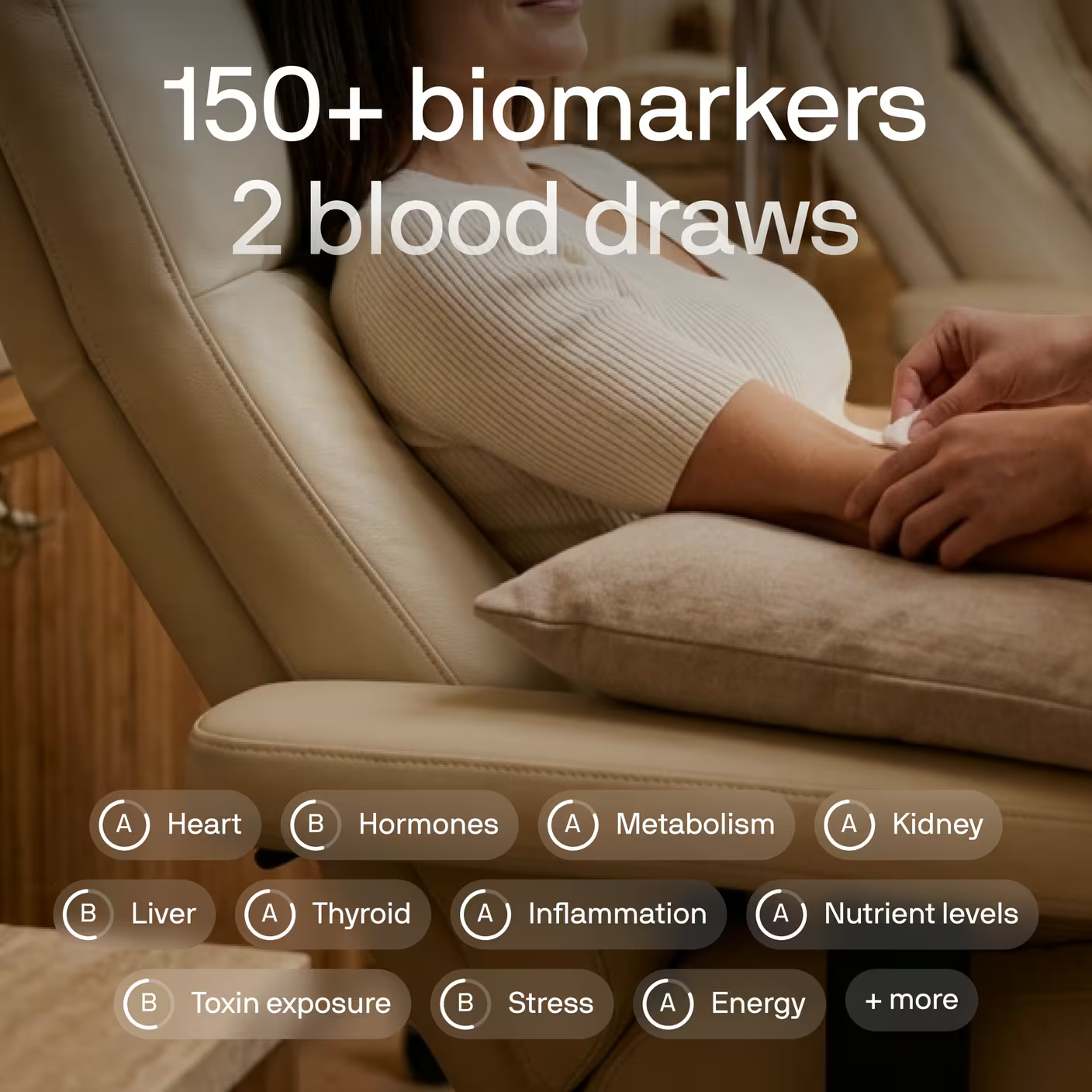
Test 150+ biomarkers
Two blood draws. A full picture of your health, explained in plain language.
Strategies that work for post menopause weight loss
The best weight loss for menopause isn't about eating less. It's about eating differently and moving strategically.
Protein intake and distribution
Protein becomes non-negotiable, with 25-30 grams per meal needed to stimulate muscle protein synthesis. This isn't just about total daily protein. Distribution matters because spreading protein across meals maintains muscle mass more effectively than consuming most protein at dinner.
Resistance training for metabolic rate
Strength training two to three times per week builds and preserves muscle tissue, which burns calories at rest and improves insulin sensitivity. Even modest increases in muscle mass translate to meaningful increases in daily calorie expenditure.
Carbohydrate quality and timing
Prioritizing complex carbohydrates with fiber slows glucose absorption and reduces insulin spikes. Pairing carbohydrates with protein and fat further blunts blood sugar responses. Some women benefit from reducing overall carbohydrate intake, particularly refined carbohydrates, to improve insulin sensitivity.
Aerobic exercise remains important for cardiovascular health and calorie expenditure, but it doesn't prevent muscle loss the way resistance training does. The most effective approach combines both: strength training to build muscle and moderate-intensity cardio to improve insulin sensitivity and burn calories.
Tracking body composition, not just scale weight, provides more accurate feedback. Losing fat while maintaining or gaining muscle is success, even if the scale doesn't move dramatically. Hemoglobin A1c, fasting insulin, and triglyceride-glucose index offer insight into metabolic health independent of weight. Improving these markers indicates metabolic improvement, even without significant weight loss.
Monitoring trends over time is more valuable than single measurements. Ferritin, vitamin D, and magnesium levels can affect energy levels and exercise performance. Optimizing these supports the physical activity needed for weight loss. High-sensitivity C-reactive protein tracks inflammation, which often decreases as visceral fat is lost.
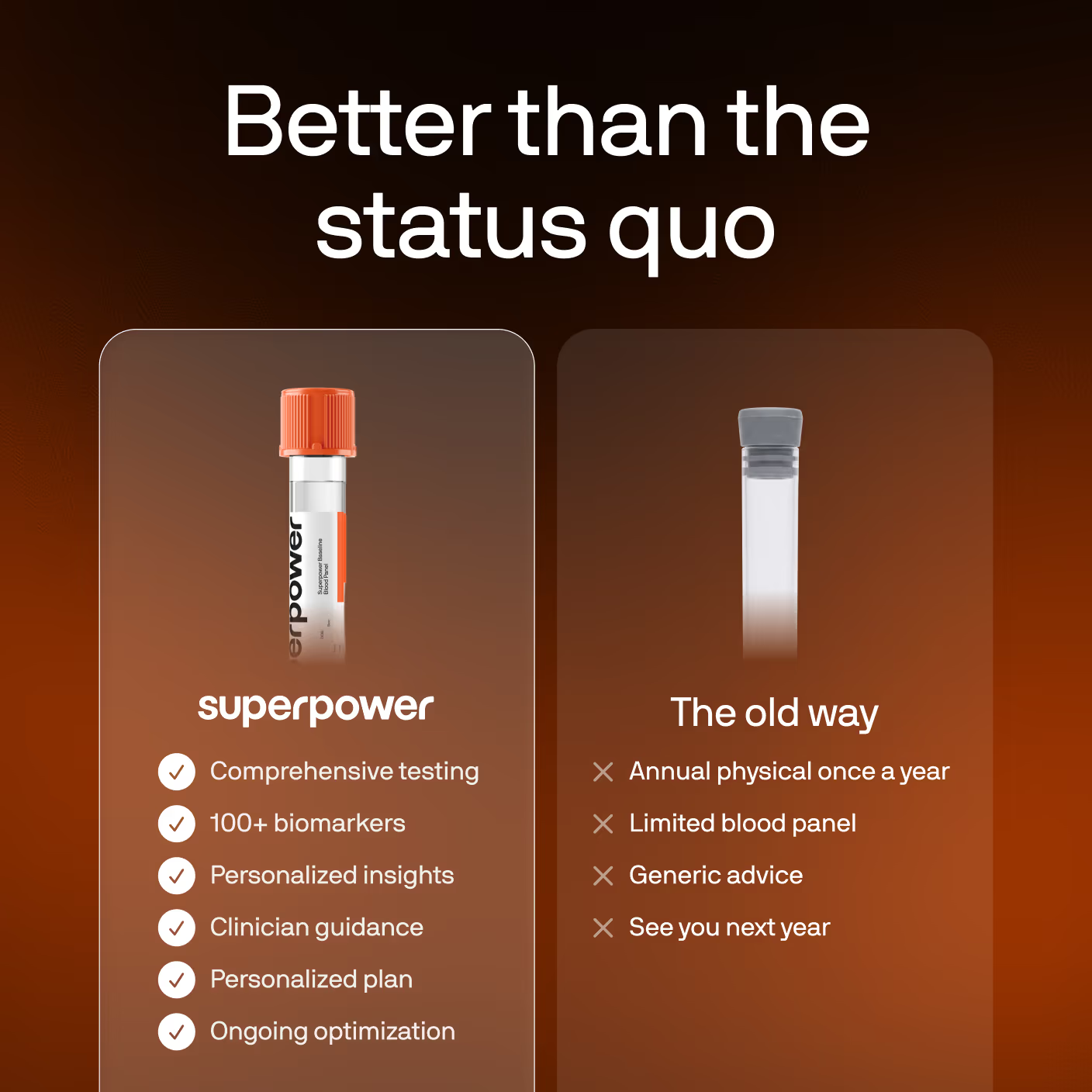
Weight loss after 50 is possible, but it requires working with your body's new hormonal reality. Superpower's 150+ biomarker panel shows you exactly where your metabolism, insulin sensitivity, and inflammation stand, so you can adjust your approach based on data, not guesswork.
Frequently Asked Questions
References
- Larsson L, Degens H, Li M, Salviati L, Lee YI, Thompson W, Kirkland JL, Sandri M (2019). Sarcopenia: Aging-Related Loss of Muscle Mass and Function. *Physiological reviews*, *99*(1), 427-511. https://doi.org/10.1152/physrev.00061.2017
- Volpi E, Nazemi R, Fujita S (2004). Muscle tissue changes with aging. *Current opinion in clinical nutrition and metabolic care*, *7*(4), 405-10. https://doi.org/10.1097/01.mco.0000134362.76653.b2
- Lin J, Jiang Y, Wang G, Meng M, Zhu Q, Mei H, Liu S, Jiang F (2020). Associations of short sleep duration with appetite-regulating hormones and adipokines: A systematic review and meta-analysis. *Obesity reviews : an official journal of the International Association for the Study of Obesity*, *21*(11), e13051. https://doi.org/10.1111/obr.13051
- Spiegel K, Tasali E, Penev P, Van Cauter E (2004). Brief communication: Sleep curtailment in healthy young men is associated with decreased leptin levels, elevated ghrelin levels, and increased hunger and appetite. *Annals of internal medicine*, *141*(11), 846-50. https://doi.org/10.7326/0003-4819-141-11-200412070-00008
- Liao CD, Tsauo JY, Wu YT, Cheng CP, Chen HC, Huang YC, Chen HC, Liou TH (2017). Effects of protein supplementation combined with resistance exercise on body composition and physical function in older adults: A systematic review and meta-analysis. *The American Journal of Clinical Nutrition*, *106*(4), 1078-1091. https://doi.org/10.3945/ajcn.116.143594























 Heart & Vascular Health
 Metabolic Health
 Energy
 Liver Health
 Kidney
 Sex Hormones
 Thyroid Health
 Nutrients
 Immune System
 Inflammation