


Understand what your cancer tumor marker testing results really mean
See your biomarkers in context with a comprehensive panel.
- CLIA-certified labs
- HIPAA compliant
- Personalized health protocol
What PSA test actually measures
PSA is a protein enzyme your prostate produces to help liquefy semen. Think of it as your prostate's signature molecule, healthy prostate tissue makes some, but damaged or rapidly growing tissue makes more.
Your blood contains two forms: bound PSA (attached to other proteins) and free PSA (floating unattached). Total PSA measures both types combined. This distinction matters because different prostate conditions produce different ratios of free to total PSA.
The biomarker test helps detect nanograms per milliliter (ng/mL) in your bloodstream. Even tiny amounts reflect what's happening in your prostate because PSA doesn't normally leak into blood circulation in large quantities.
Why do people look this up? Usually because their doctor mentioned screening, they received results they don't understand, or they're experiencing urinary symptoms. The PSA biomarker test became controversial because early detection doesn't always improve outcomes, but the biomarker itself provides valuable health information when interpreted correctly.
Normal versus optimal PSA test levels
Traditional PSA reference ranges use age-based cutoffs: under 2.5 ng/mL for men in their 40s, under 3.5 ng/mL for men in their 50s, under 4.5 ng/mL for men in their 60s, and under 6.5 ng/mL for men over 70.
But "normal" doesn't mean optimal. Your PSA naturally rises with age as your prostate grows, but rapid increases deserve attention.
The free PSA percentage adds crucial context. When total PSA is elevated, free PSA above 25% suggests benign causes, while a lower percentage may warrant further evaluation by a healthcare provider. This ratio helps distinguish between prostate enlargement and more serious conditions.
Individual trends trump population averages. A jump from 1.2 to 2.4 ng/mL over two years matters more than a stable 3.8 ng/mL reading. PSA velocity, how fast your levels rise, can predict outcomes alongside absolute numbers.
What high PSA test levels can mean
Elevated PSA doesn't automatically mean cancer. Benign prostatic hyperplasia (BPH), normal prostate enlargement, is a common cause of moderately high PSA levels. Prostate volume rises steadily with age, and more tissue produces more PSA.
Prostatitis (prostate inflammation) can spike PSA, sometimes substantially. Bacterial infections, chronic inflammation, or even vigorous cycling can trigger temporary elevations that resolve with treatment or time.
Recent ejaculation, prostate massage, or catheter insertion can artificially raise PSA for 24-48 hours. Even intense exercise like cycling or horseback riding affects results.
Cancer is associated with higher PSA levels, but the relationship isn't straightforward. In one large trial, about 15% of men with PSA under 4.0 ng/mL had prostate cancer on biopsy, and in the PSA 4-10 range most men with a benign exam do not have cancer. This is why free PSA percentage, PSA velocity, and additional testing matter for accurate interpretation.
What low PSA test levels can mean
Very low PSA levels (under 0.5 ng/mL) are generally reassuring, suggesting minimal prostate inflammation or rapid growth. However, context matters here too.
5-alpha reductase inhibitors like finasteride (Propecia, Proscar) or dutasteride (Avodart) can cut PSA levels in half within six months. If you're taking these medications for hair loss or prostate enlargement, your doctor should double your PSA reading for accurate cancer screening.
Obesity can dilute PSA levels through increased blood volume, potentially masking early prostate problems. Extremely low levels might also reflect previous prostate surgery or treatment that removed PSA-producing tissue.
Some men naturally have very low PSA production, which isn't concerning by itself. The key is establishing your personal baseline and monitoring changes rather than worrying about being "too low" compared to population averages.
How PSA test is tested
PSA biomarker testing requires a simple blood draw from your arm, no special preparation needed. However, timing matters for accuracy.
Avoid ejaculation for 48 hours before testing, as this can temporarily raise PSA. Skip intense lower-body exercise like cycling, squats, or long runs for 24 hours beforehand. If you've had a prostate exam, catheter, or cystoscopy, wait at least a week.
The blood sample goes to a laboratory where immunoassay technology measures both total and free PSA concentrations. Results typically return within 24-48 hours.
For screening, most guidelines recommend discussing PSA testing with men at average risk starting at age 50, and earlier for higher-risk groups. However, if you're tracking prostate health optimization rather than just cancer screening, testing every 6-12 months reveals helpful patterns about inflammation, treatment responses, and aging progression.
What can change PSA test
Multiple evidence-based factors can shift your PSA levels, making trend tracking more valuable than isolated measurements.
Medications have the biggest impact. 5-alpha reductase inhibitors can halve PSA levels within months. Thiazide diuretics might slightly lower PSA, while some prostate supplements containing saw palmetto can affect results unpredictably.
Infections and inflammation can elevate PSA. Urinary tract infections or prostatitis can raise levels for weeks.
Physical activity affects results short-term. Ejaculation, bike riding, or digital rectal exams can raise PSA for 24-48 hours.
Age and genetics drive long-term changes. PSA naturally rises about 3% annually after 50. African American men typically have higher baseline PSA levels than white men.
Test 150+ biomarkers
Two blood draws. A full picture of your health, explained in plain language.
Test 150+ biomarkers
Two blood draws. A full picture of your health, explained in plain language.
Connecting PSA to related biomarkers
PSA interpretation improves when viewed alongside related markers that reveal broader patterns of prostate and hormonal health.
Free PSA percentage transforms PSA interpretation. When total PSA is elevated, free PSA above 25% suggests benign enlargement, while a lower percentage may warrant further evaluation by a healthcare provider. This ratio helps distinguish between different causes of PSA elevation.
Testosterone levels provide important context since prostate tissue depends on androgens for growth. Very low testosterone might mask prostate problems by reducing PSA production, while testosterone replacement therapy can increase PSA levels.
Inflammatory markers like C-reactive protein (CRP) help identify systemic inflammation that might be affecting prostate health. Elevated CRP with high PSA suggests inflammatory rather than malignant causes.
DHT (dihydrotestosterone) levels reveal how actively your body converts testosterone to the more potent hormone that drives prostate growth. High DHT with rising PSA might indicate accelerated prostate enlargement.
Why testing PSA is worth it
PSA biomarker testing provides early detection capabilities that symptoms alone can't match. By the time urinary changes become noticeable, prostate enlargement is usually significant, and cancer, if present, may have progressed.
The biomarker reveals treatment responses that physical exams miss. If you're using medications, supplements, or lifestyle changes to support prostate health, PSA levels show whether your interventions are working months before symptoms improve.
PSA velocity, how your levels change over time, adds prognostic information beyond single measurements. Men with PSA rising faster than 0.75 ng/mL per year were more likely to have prostate cancer in the original longitudinal study.
Beyond cancer screening, PSA tracking helps optimize aging. Rising levels prompt earlier intervention with proven treatments for benign prostate enlargement, potentially helping reduce the risk of years of urinary symptoms and sleep disruption.
The biomarker test also guides medication decisions. Men considering 5-alpha reductase inhibitors for hair loss need baseline PSA levels to ensure proper cancer screening during treatment, since these drugs lower PSA readings.
Track your prostate health with precision testing
Understanding your PSA levels is just the beginning, the real insight comes from tracking both total and free PSA over time, along with related hormonal and inflammatory markers that affect prostate health.
Testosterone, DHT, and inflammatory markers add context that helps interpret your results in full. You'll understand not just your current prostate health, but how to optimize it going forward.
Frequently Asked Questions
References
- Oesterling JE, Jacobsen SJ, Chute CG, Guess HA, Girman CJ, Panser LA, Lieber MM (1993). Serum prostate-specific antigen in a community-based population of healthy men. Establishment of age-specific reference ranges. *JAMA*, *270*(7), 860-4. https://pubmed.ncbi.nlm.nih.gov/7688054/
- Catalona WJ, Partin AW, Slawin KM, Brawer MK, Flanigan RC, Patel A, Richie JP, deKernion JB, Walsh PC, Scardino PT, Lange PH, Subong EN, Parson RE, Gasior GH, Loveland KG, Southwick PC (1998). Use of the percentage of free prostate-specific antigen to enhance differentiation of prostate cancer from benign prostatic disease: a prospective multicenter clinical trial. *JAMA*, *279*(19), 1542-7. https://doi.org/10.1001/jama.279.19.1542
- D'Amico AV, Chen MH, Roehl KA, Catalona WJ (2004). Preoperative PSA velocity and the risk of death from prostate cancer after radical prostatectomy. *The New England journal of medicine*, *351*(2), 125-35. https://doi.org/10.1056/NEJMoa032975
- Nadler RB, Humphrey PA, Smith DS, Catalona WJ, Ratliff TL (1995). Effect of inflammation and benign prostatic hyperplasia on elevated serum prostate specific antigen levels. *The Journal of urology*, *154*(2 Pt 1), 407-13. https://doi.org/10.1097/00005392-199508000-00023
- Tchetgen MB, Oesterling JE (1997). The effect of prostatitis, urinary retention, ejaculation, and ambulation on the serum prostate-specific antigen concentration. *The Urologic clinics of North America*, *24*(2), 283-291. https://doi.org/10.1016/s0094-0143(05)70374-8
- Heger Z, Gumulec J, Ondrak A, Skoda J, Zitka Z, Cernei N, Masarik M, Zitka O, Adam V (2016). Influence of Long-Distance Bicycle Riding on Serum/Urinary Biomarkers of Prostate Cancer. *International journal of molecular sciences*, *17*(3), 377. https://doi.org/10.3390/ijms17030377
- Thompson IM, Pauler DK, Goodman PJ, Tangen CM, Lucia MS, Parnes HL, Minasian LM, Ford LG, Lippman SM, Crawford ED, Crowley JJ, Coltman CA (2004). Prevalence of prostate cancer among men with a prostate-specific antigen level < or =4.0 ng per milliliter. *The New England journal of medicine*, *350*(22), 2239-46. https://doi.org/10.1056/NEJMoa031918
- Andriole GL, Kirby R (2003). Safety and tolerability of the dual 5alpha-reductase inhibitor dutasteride in the treatment of benign prostatic hyperplasia. *European urology*, *44*(1), 82-8. https://doi.org/10.1016/s0302-2838(03)00198-2
- Bañez LL, Hamilton RJ, Partin AW, Vollmer RT, Sun L, Rodriguez C, Wang Y, Terris MK, Aronson WJ, Presti JC, Kane CJ, Amling CL, Moul JW, Freedland SJ (2007). Obesity-related plasma hemodilution and PSA concentration among men with prostate cancer. *JAMA*, *298*(19), 2275-80. https://doi.org/10.1001/jama.298.19.2275
- Wolf AM, Wender RC, Etzioni RB, Thompson IM, D'Amico AV, Volk RJ, Brooks DD, Dash C, Guessous I, Andrews K, DeSantis C, Smith RA, American Cancer Society Prostate Cancer Advisory Committee (2010). American Cancer Society guideline for the early detection of prostate cancer: update 2010. *CA: a cancer journal for clinicians*, *60*(2), 70-98. https://doi.org/10.3322/caac.20066
- Preston DM, Levin LI, Jacobson DJ, Jacobsen SJ, Rubertone M, Holmes E, Murphy GP, Moul JW (2000). Prostate-specific antigen levels in young white and black men 20 to 45 years old. *Urology*, *56*(5), 812-6. https://doi.org/10.1016/s0090-4295(00)00764-0
- Cui Y, Zong H, Yan H, Zhang Y (2014). The effect of testosterone replacement therapy on prostate cancer: a systematic review and meta-analysis. *Prostate cancer and prostatic diseases*, *17*(2), 132-43. https://doi.org/10.1038/pcan.2013.60
- Carter HB, Pearson JD, Metter EJ, Brant LJ, Chan DW, Andres R, Fozard JL, Walsh PC (1992). Longitudinal evaluation of prostate-specific antigen levels in men with and without prostate disease. *JAMA*, *267*(16), 2215-20. https://pubmed.ncbi.nlm.nih.gov/1372942/














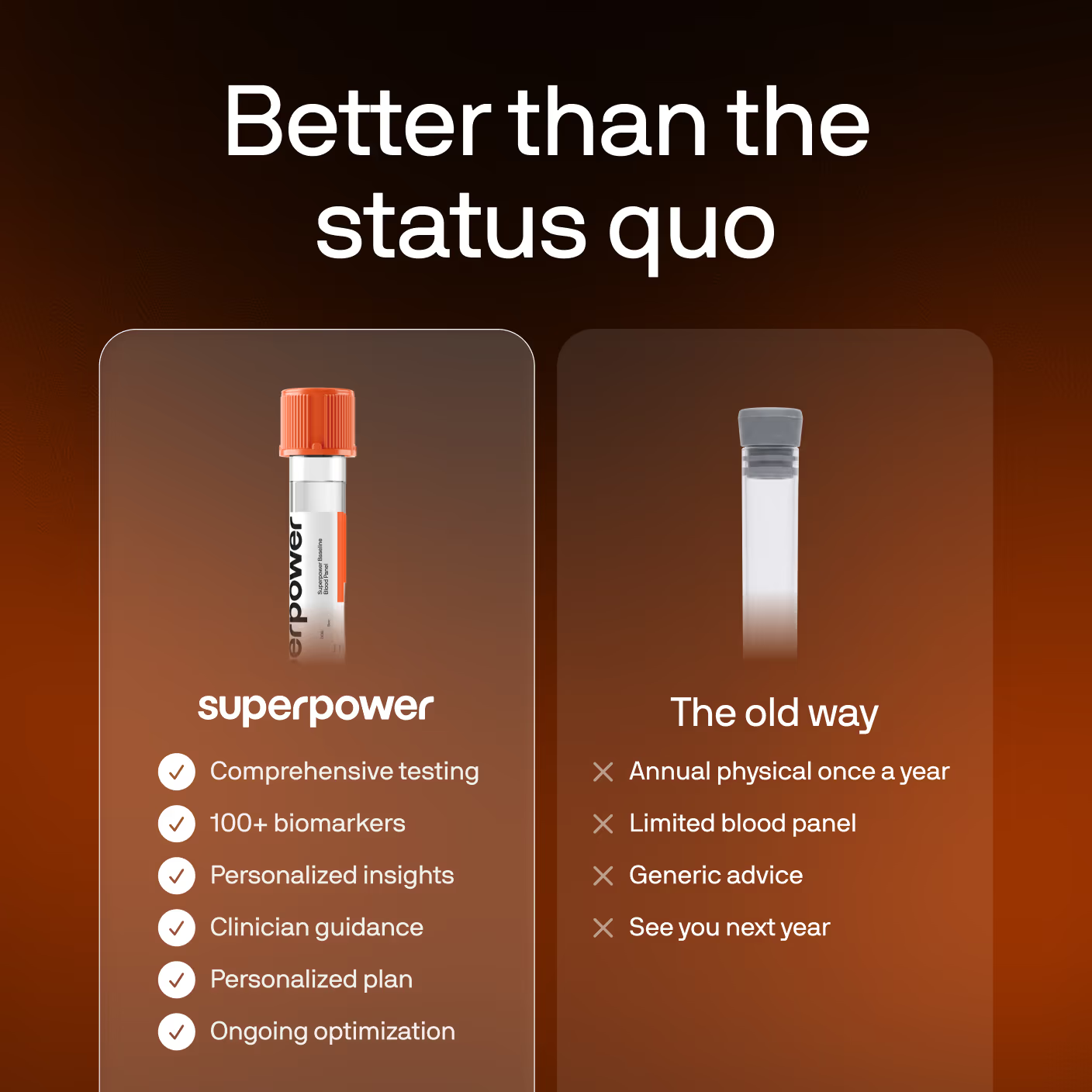
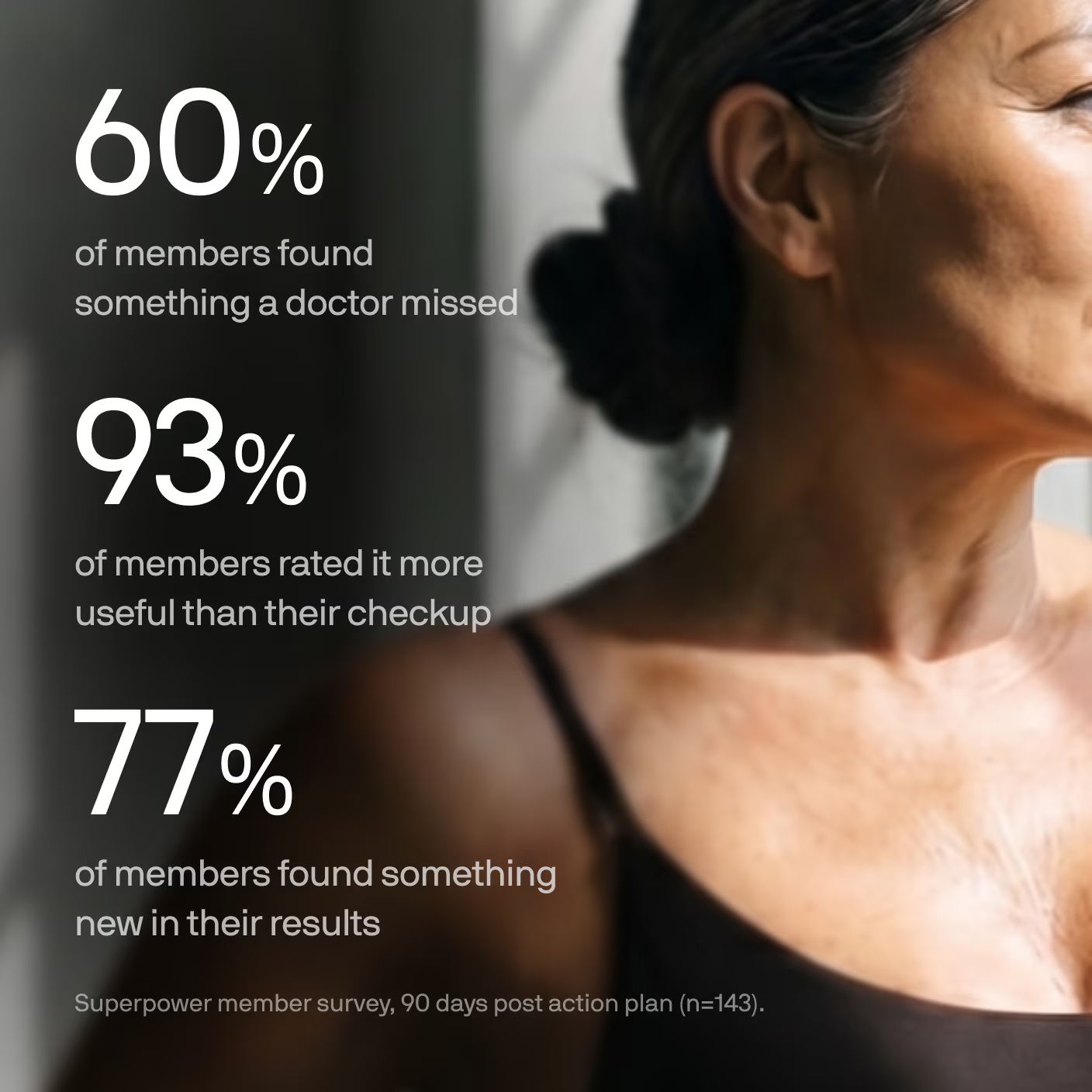










 Heart & Vascular Health
 Metabolic Health
 Energy
 Liver Health
 Kidney
 Sex Hormones
 Thyroid Health
 Nutrients
 Immune System
 Inflammation