


Understand what your sleep health results really mean
See your biomarkers in context with a comprehensive panel.
- CLIA-certified labs
- HIPAA compliant
- Personalized health protocol
How sleep affects the hair growth cycle
Understanding the three phases
Hair grows in a cycle with three main phases. The anagen phase (active growth) lasts 2 to 7 years. The catagen phase (transition) lasts about 2 weeks. The telogen phase (resting and shedding) lasts about 3 months. At any given time, roughly 85 to 90% of your hair should be in the anagen phase.
Sleep plays a supporting role in maintaining this balance. During deep sleep, growth hormone surges, cell repair accelerates, and the body directs resources toward regeneration, including to hair follicles. When sleep is consistently short or fragmented, these processes get shortchanged.
Growth hormone and hair follicle health
The majority of daily growth hormone is secreted during slow-wave (deep) sleep. Growth hormone stimulates cell division in hair follicles and supports the dermal papilla, the structure at the base of each follicle that controls hair growth. Chronic sleep deprivation reduces growth hormone output, potentially slowing hair replacement and weakening new growth.
Does lack of sleep cause hair loss directly?
The evidence is indirect but compelling
No study has proven that sleep deprivation alone causes baldness. Hair loss is multifactorial, with genetics, hormones, nutrition, and medical conditions all playing roles. However, sleep deprivation creates conditions that accelerate several known hair loss pathways.
A study in the American Journal of Pathology demonstrated that psychological stress (which sleep deprivation both causes and amplifies) shifted mouse hair follicles prematurely from the growth phase to the resting phase. While animal studies do not translate directly to humans, the hormonal mechanisms are conserved across species.
Telogen effluvium: The stress-shedding connection
Telogen effluvium is a condition where a significant percentage of hair follicles are pushed into the telogen (resting and shedding) phase simultaneously. Common triggers include surgery, illness, emotional stress, and nutritional deficiency. Chronic sleep deprivation acts as a physiological stressor that can trigger or worsen this condition.
The hallmark of telogen effluvium is diffuse thinning rather than patchy bald spots. You notice more hair in the drain, on your pillow, and in your brush. The good news: telogen effluvium is typically reversible once the stressor is removed.
The cortisol and hair loss connection
How stress hormones damage follicles
Cortisol, the body's primary stress hormone, rises with sleep deprivation. A study in Sleep showed that even partial sleep restriction elevated evening cortisol significantly. Chronically elevated cortisol damages hair follicles in several ways:
- Pushes follicles out of the growth phase prematurely
- Reduces blood flow to the scalp
- Depletes nutrients that hair follicles need (particularly zinc and B vitamins)
- Disrupts the hormonal balance that supports hair retention
The cortisol-inflammation loop
Elevated cortisol also increases systemic inflammation, measured by markers like CRP and IL-6. Inflammation around hair follicles (perifollicular inflammation) is increasingly recognized as a contributor to several types of hair loss, including androgenetic alopecia. Other inflammatory symptoms of poor sleep often accompany hair changes, serving as early warning signs.
Can sleep apnea cause hair loss?
The oxygen deprivation pathway
Can sleep apnea cause hair loss? Evidence is emerging that it can. Obstructive sleep apnea causes repeated drops in blood oxygen levels throughout the night. Hair follicles, like all cells, depend on adequate oxygen delivery. Chronic intermittent hypoxia may impair follicle function and contribute to thinning.
A cross-sectional study found a correlation between sleep apnea severity and hair loss in women, though more research is needed to establish causation. The mechanism likely involves a combination of oxidative stress, hormonal disruption (sleep apnea affects testosterone and cortisol), and systemic inflammation.
Sleep apnea disrupts hormones that hair needs
Sleep apnea causes metabolic and hormonal changes that extend well beyond weight. In men, untreated sleep apnea is associated with altered testosterone levels. In women, it can disrupt estrogen and progesterone balance. Both of these hormonal shifts can affect hair growth and retention.
Is hair loss from lack of sleep reversible?
Telogen effluvium is usually temporary
Is hair loss from lack of sleep reversible? In most cases, yes. Telogen effluvium triggered by sleep deprivation typically resolves within 6 to 12 months after the stressor is removed and sleep improves. New hair growth begins during the recovery period, though it takes time for density to fully return.
Early intervention matters
The sooner you address sleep deprivation and associated nutritional deficiencies, the better the outcome. Prolonged cortisol elevation can cause more lasting damage to hair follicles. If hair loss persists despite improved sleep and nutrition for more than a year, other factors (genetic hair loss, thyroid disease, autoimmune conditions) may be involved.
Reversibility depends on the type of hair loss
Sleep deprivation can worsen genetic hair loss (androgenetic alopecia) by amplifying the hormonal and inflammatory factors that drive it. While improving sleep may slow the progression, genetic hair loss itself is not reversible without specific treatment. Distinguishing between stress-related shedding and genetic thinning requires a proper evaluation.
Nutrients that support hair and sleep
Ferritin (stored iron)
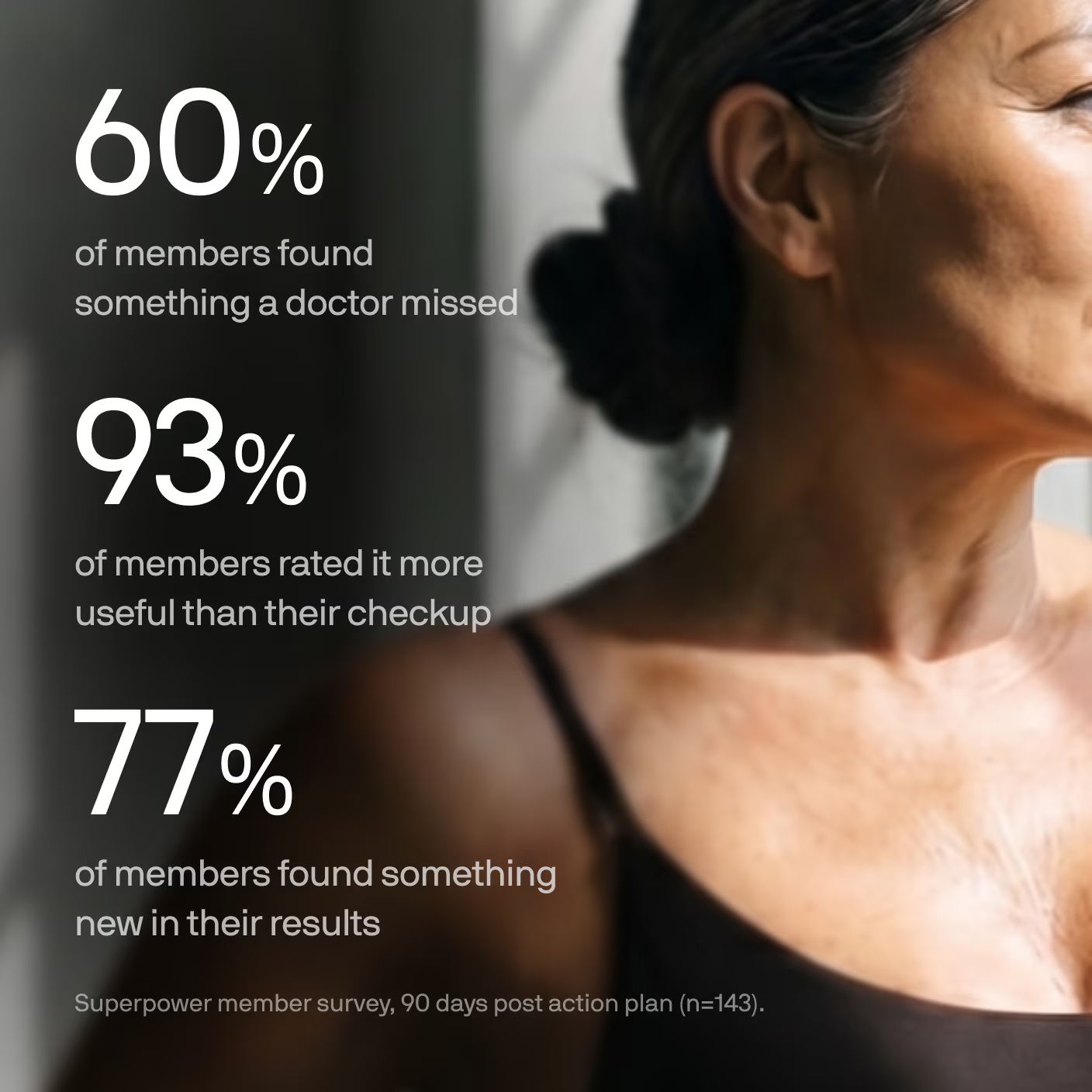
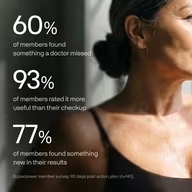
Ferritin below 30 ng/mL is associated with hair shedding even when hemoglobin is normal. Sleep deprivation and chronic stress deplete iron stores. A comprehensive blood panel that includes ferritin is essential for anyone experiencing both poor sleep and hair loss. Gaps like that are common: 60% of members said Superpower identified something previously missed or overlooked by a doctor.
Zinc
Zinc supports hair follicle structure and function. Deficiency is linked to telogen effluvium and diffuse hair loss. Stress and poor diet (both common with sleep deprivation) can lower zinc levels. Foods rich in zinc include oysters, red meat, pumpkin seeds, and lentils.
Vitamin D
Vitamin D receptors are present on hair follicles and play a role in the hair growth cycle. A study in Dermatology Practical and Conceptual found that women with telogen effluvium had significantly lower vitamin D levels than controls. Sleep supports overall metabolic function, including the pathways that convert and utilize vitamin D.
Thyroid hormones
Both hypothyroidism and hyperthyroidism cause hair loss. Sleep deprivation can disrupt thyroid function, and thyroid dysfunction can disrupt sleep. If you are losing hair and sleeping poorly, checking your thyroid panel (TSH, free T3, free T4) is a high-yield step.
Test 150+ biomarkers
Two blood draws. A full picture of your health, explained in plain language.
Test 150+ biomarkers
Two blood draws. A full picture of your health, explained in plain language.
How to protect your hair through better sleep
Prioritize sleep quantity and quality
Aim for 7 to 9 hours of sleep per night. Protect your deep sleep and REM sleep by maintaining consistent sleep and wake times. Both stages support the hormonal and regenerative processes that hair follicles depend on.
Manage stress to lower cortisol
Chronic stress is the bridge between poor sleep and hair loss. Incorporate daily stress management:
- Exercise regularly (morning or early afternoon is best)
- Practice mindfulness or deep breathing for 10 minutes daily
- Limit caffeine, especially after noon
- Set boundaries around work and screens in the evening
Optimize your sleep environment
- Keep the bedroom dark, cool (65 to 68 degrees), and quiet
- Use a silk or satin pillowcase to reduce friction on hair
- Avoid tight hairstyles at night that pull on follicles
- Go to bed earlier to maximize deep sleep, which occurs predominantly in the first half of the night
Eat for both sleep and hair
Nutrient-dense meals support both objectives. Focus on foods rich in iron, zinc, vitamin D, omega-3 fatty acids, and B vitamins. Certain foods support better sleep, and many of the same nutrients that promote sleep quality also support healthy hair growth. Tart cherry juice provides natural melatonin and anti-inflammatory compounds.
When to see a doctor about hair loss
Warning signs that need attention
See a dermatologist or your primary care provider if you experience:
- Sudden or rapid hair loss (losing clumps rather than gradual thinning)
- Patchy bald spots (which may indicate alopecia areata)
- Hair loss accompanied by fatigue, weight changes, or cold intolerance (thyroid symptoms)
- No improvement after 6 months of better sleep and nutrition
- Scalp itching, redness, or scaling
Tests your doctor may order
A thorough hair loss evaluation includes blood work for ferritin, zinc, vitamin D, thyroid panel (TSH, free T3, free T4), cortisol, testosterone (including DHEA-S), and inflammatory markers. If sleep apnea is suspected, a sleep study may also be recommended.
Get the data behind your hair changes
Hair loss from lack of sleep is frustrating, but it is also frequently reversible once you identify and address the root causes. The challenge is knowing which causes to target. Is it cortisol? Ferritin? Thyroid? Vitamin D? Without testing, you are guessing.
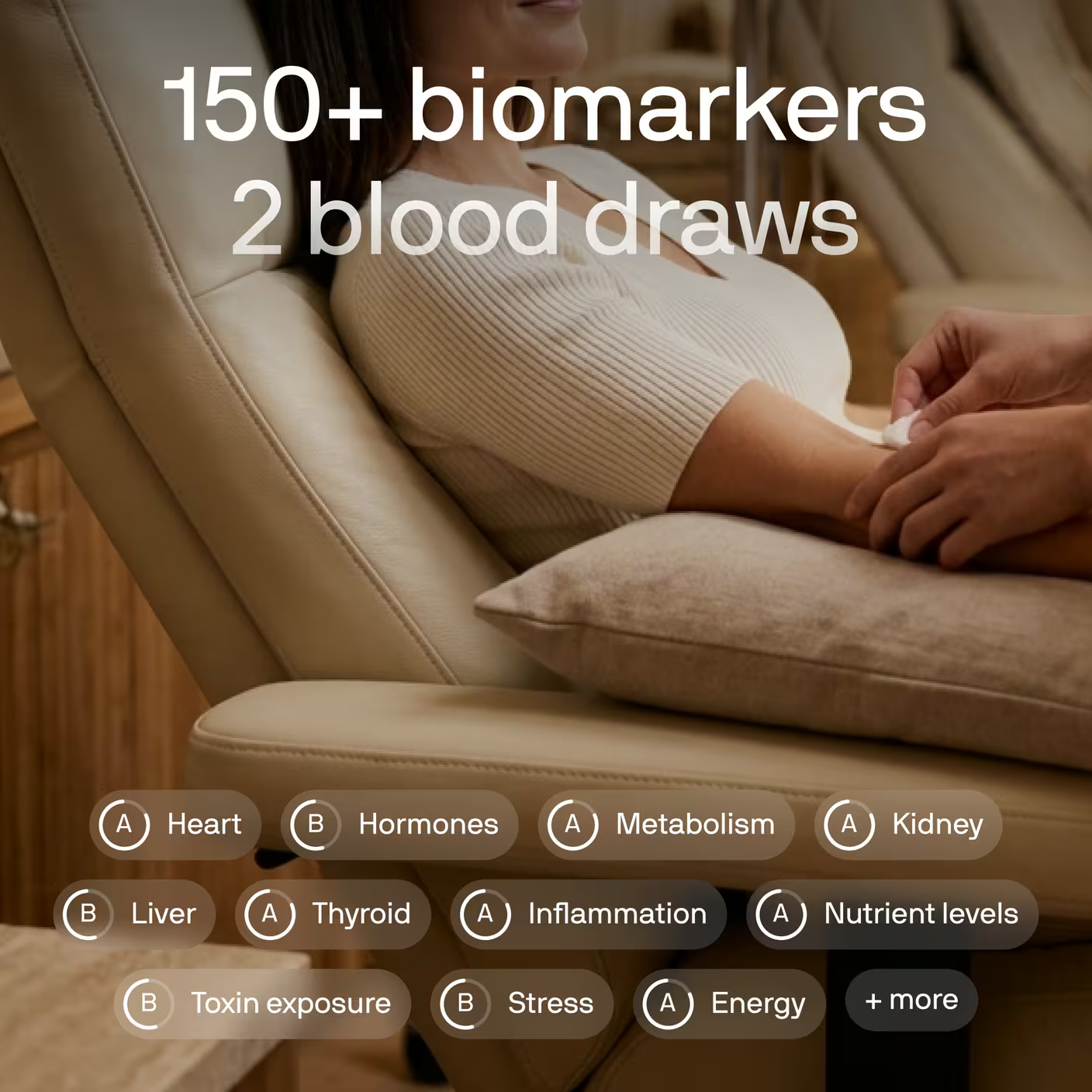
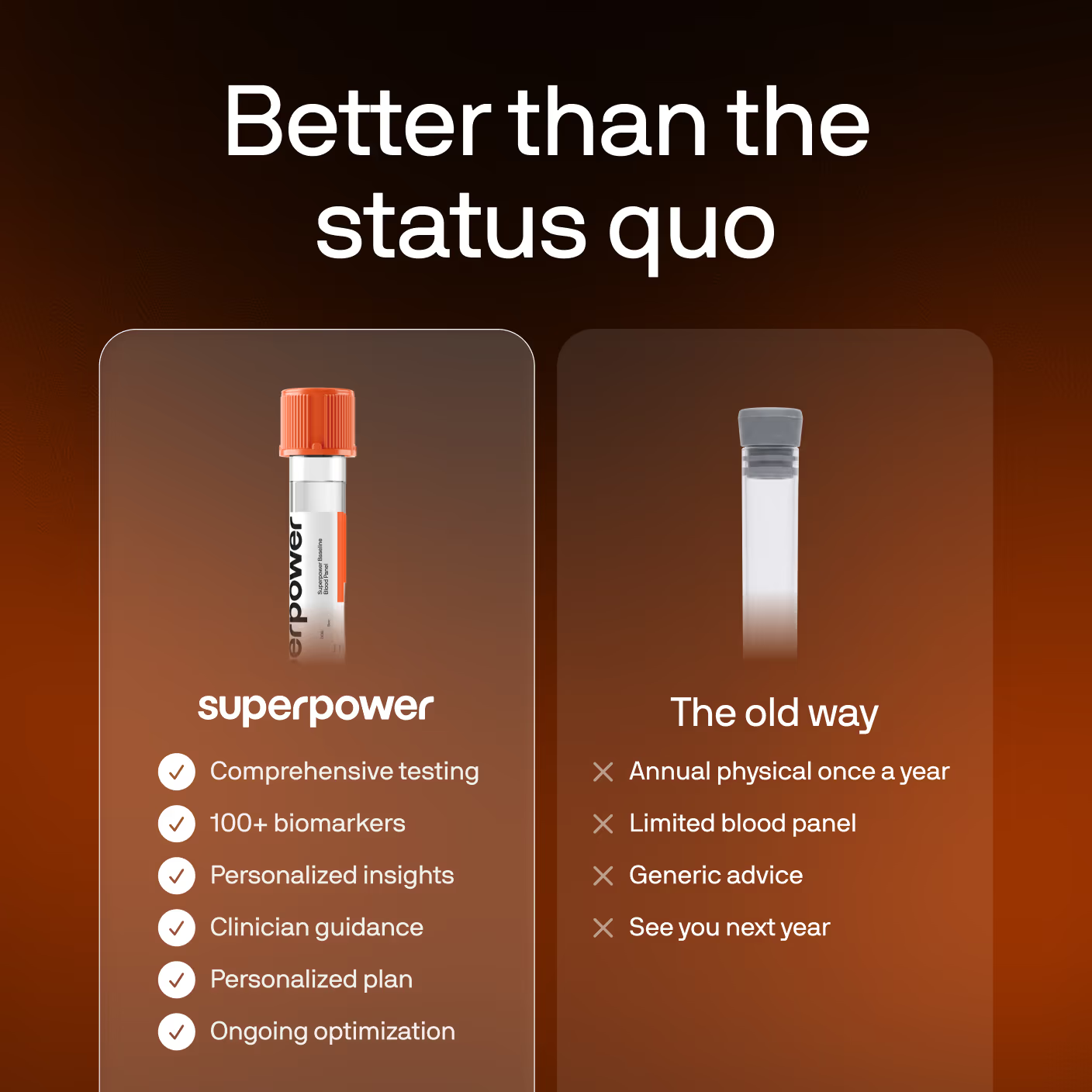
Superpower's at-home blood testing panel covers over 150 biomarkers, including every marker relevant to both sleep quality and hair health. Get clear answers, personalized protocols, and the ability to track your progress over time. Start your Superpower membership today and give your body (and your hair) what it actually needs.
Frequently Asked Questions
References
- Van Cauter E, Plat L (1996). Physiology of growth hormone secretion during sleep. *The Journal of pediatrics*, *128*(5 Pt 2), S32-7. https://doi.org/10.1016/s0022-3476(96)70008-2
- Choi S, Zhang B, Ma S, Gonzalez-Celeiro M, Stein D, Jin X, Kim ST, Kang YL, Besnard A, Rezza A, Grisanti L, Buenrostro JD, Rendl M, Nahrendorf M, Sahay A, Hsu YC (2021). Corticosterone inhibits GAS6 to govern hair follicle stem-cell quiescence. *Nature*, *592*(7854), 428-432. https://doi.org/10.1038/s41586-021-03417-2
- Leproult R, Copinschi G, Buxton O, Van Cauter E (1997). Sleep loss results in an elevation of cortisol levels the next evening. *Sleep*, *20*(10), 865-70. https://pubmed.ncbi.nlm.nih.gov/9415946/
- Baik I, Lee S, Thomas RJ, Shin C (2019). Obstructive sleep apnea, low transferrin saturation levels, and male-pattern baldness. *International journal of dermatology*, *58*(1), 67-74. https://doi.org/10.1111/ijd.14193
- Kanti V, Messenger A, Dobos G, Reygagne P, Finner A, Blumeyer A, Trakatelli M, Tosti A, Del Marmol V, Piraccini BM, Nast A, Blume-Peytavi U (2018). Evidence-based (S3) guideline for the treatment of androgenetic alopecia in women and in men - short version. *Journal of the European Academy of Dermatology and Venereology : JEADV*, *32*(1), 11-22. https://doi.org/10.1111/jdv.14624
- Liebert A, Tkotz K, Herrler J, Linz P, Mennecke A, German A, Liebig P, Gumbrecht R, Schmidt M, Doerfler A, Uder M, Zaiss M, Nagel AM (2021). Whole-brain quantitative CEST MRI at 7T using parallel transmission methods and. *Magnetic resonance in medicine*, *86*(1), 346-362. https://doi.org/10.1002/mrm.28745
























 Heart & Vascular Health
 Metabolic Health
 Energy
 Liver Health
 Kidney
 Sex Hormones
 Thyroid Health
 Nutrients
 Immune System
 Inflammation