

Know your glucose and A1C numbers
Glucose and hemoglobin A1c, measured by a lab from one blood draw
- CLIA-certified labs
- HIPAA compliant
- Personalized health protocol
How a diabetes test at home works
Yes, a diabetes test at home can screen for high blood sugar using a finger-prick test or a glucose meter. A home diabetes test cannot confirm diabetes, so a lab test checks any high result.
Many people with diabetes do not know it. In 2021, 8.7 million US adults had undiagnosed diabetes, 22.8% of adults with diabetes. More than one in three adults had prediabetes.
The right home test depends on what you want to measure.
Diabetes tests you can do at home
At-home diabetes tests read blood sugar, urine sugar, or type 1 antibodies.
- Home A1C kit: a mailed finger-prick sample measuring average blood sugar, though dried spots match lab draws less closely than capillary tubes
- Blood glucose meter: a meter and strip reading one drop of blood, in mg/dL (milligrams per deciliter)
- Continuous glucose monitor: a sensor under the skin tracking glucose, with one sold without a prescription
- Urine glucose strip: a dipstick for sugar in urine, largely replaced by blood tests
- Type 1 autoantibody test: free for relatives of people with type 1, and predictive, since 69.7% of at-risk children with two or more autoantibodies developed type 1 within 10 years
No smartwatch or smart ring is FDA-authorized to measure blood glucose, so testing still takes a finger prick or a skin sensor.
How to check your blood sugar with a glucose meter
A glucose meter (glucometer) checks blood sugar from one fingertip drop, ideally after at least 8 hours with no calories. A home blood sugar check takes six steps:
- Wash and dry your hands, skipping the alcohol swab
- Insert a fresh test strip
- Prick a fingertip with the lancet
- Place the drop of blood on the strip
- Read the number on the screen
- Retest with a new strip if the number surprises you
Keep the meter and lancet to yourself, since sharing them can spread bloodborne infections. A reading means little without the right cutoffs.
What a home result means for diabetes screening
Home A1C and fasting glucose results land in one of three ranges, set for nonpregnant adults. Normal is a population cutoff, not an optimal target, so a result near its top still deserves attention. A random glucose reading counts only when very high and paired with symptoms like heavy thirst.
| Test | Normal | Prediabetes | Diabetes range |
|---|---|---|---|
| A1C (%) | Below 5.7% | 5.7% to 6.4% | 6.5% or higher |
| Fasting glucose (mg/dL) | 99 or lower | 100 to 125 | 126 or higher |
| Random glucose (mg/dL) | No screening cutoff | No screening cutoff | 200 or higher, with symptoms |
The A1C cutoff assumes a lab using a certified method, so a high home result is where lab confirmation begins.
Why a home test cannot confirm diabetes
Confirming diabetes takes two abnormal lab results, from different tests or days, unless blood sugar is unmistakably high.
Home meters can read about 15% off a lab value, and some miss even that. Severe dehydration, anemia, vitamin C, and badly stored strips skew meters. An A1C can shift with kidney failure, pregnancy, and some hemoglobin variants.
A very high reading with vomiting, fruity breath, trouble breathing, or confusion can signal diabetic ketoacidosis (DKA). DKA is a medical emergency and sometimes the first sign of type 1, so call 911 or go to the emergency room. Outside an emergency, everyday symptoms and risk factors prompt most testing.
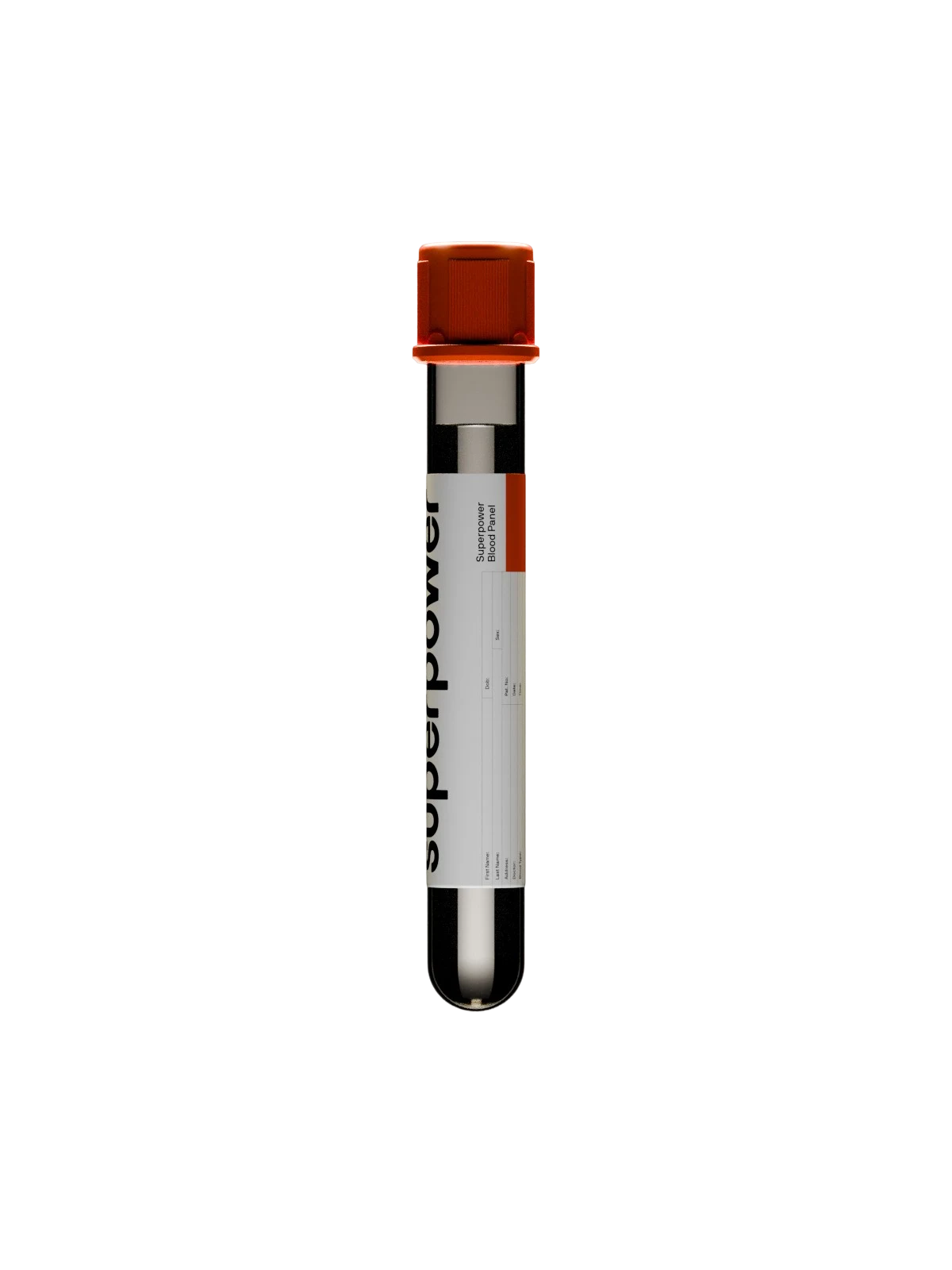
Get 100+ biomarkers tested
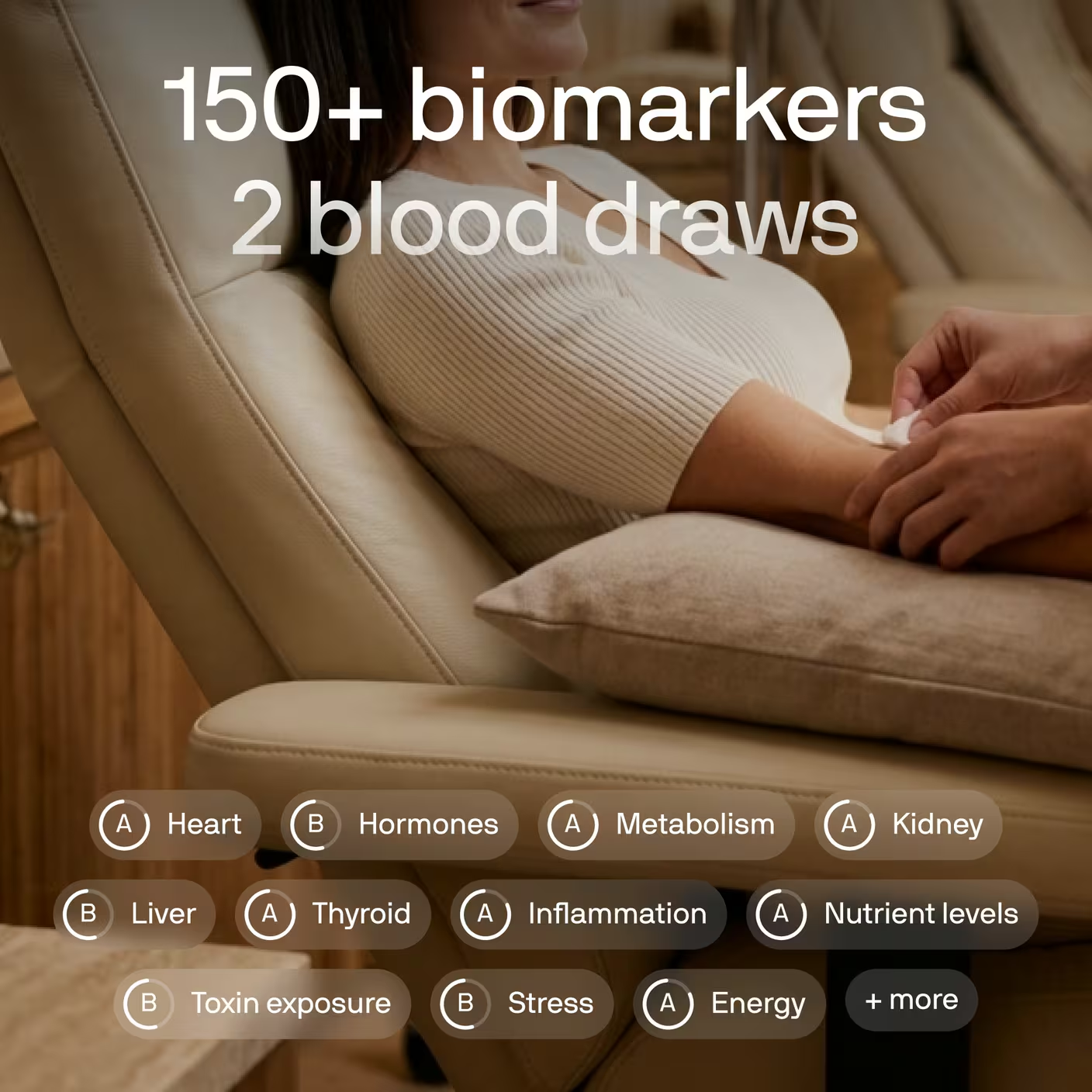
One blood draw a year. A full picture of your health, explained in plain language.
Get 100+ biomarkers tested
One blood draw a year. A full picture of your health, explained in plain language.
Symptoms and risk factors that call for testing
Symptoms of high blood sugar are a reason to test, and so is turning 35. Common symptoms include:
- Peeing more often
- Feeling very thirsty
- Feeling hungry even after eating
- Blurred vision
- Fatigue
- Sores that do not heal
Type 1 diabetes can also cause unexplained weight loss.
Type 2 diabetes often goes undiagnosed for years, since early high blood sugar can cause no symptoms. Overweight plus a risk factor, such as a parent with diabetes, moves screening earlier. A narrower recommendation covers adults 35 to 70 with overweight or obesity. Either way, screening means a blood test.
Understand your blood sugar markers with Superpower
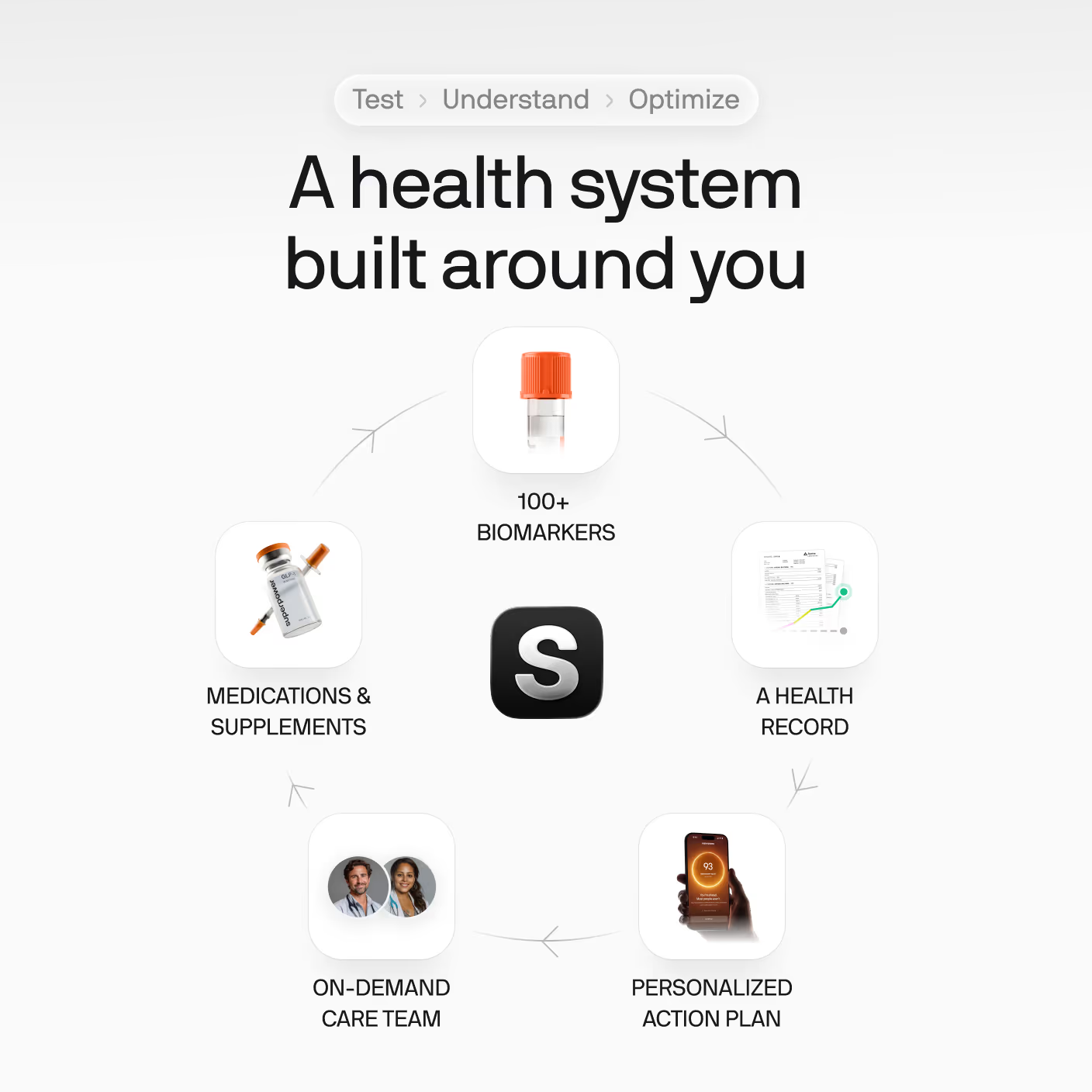
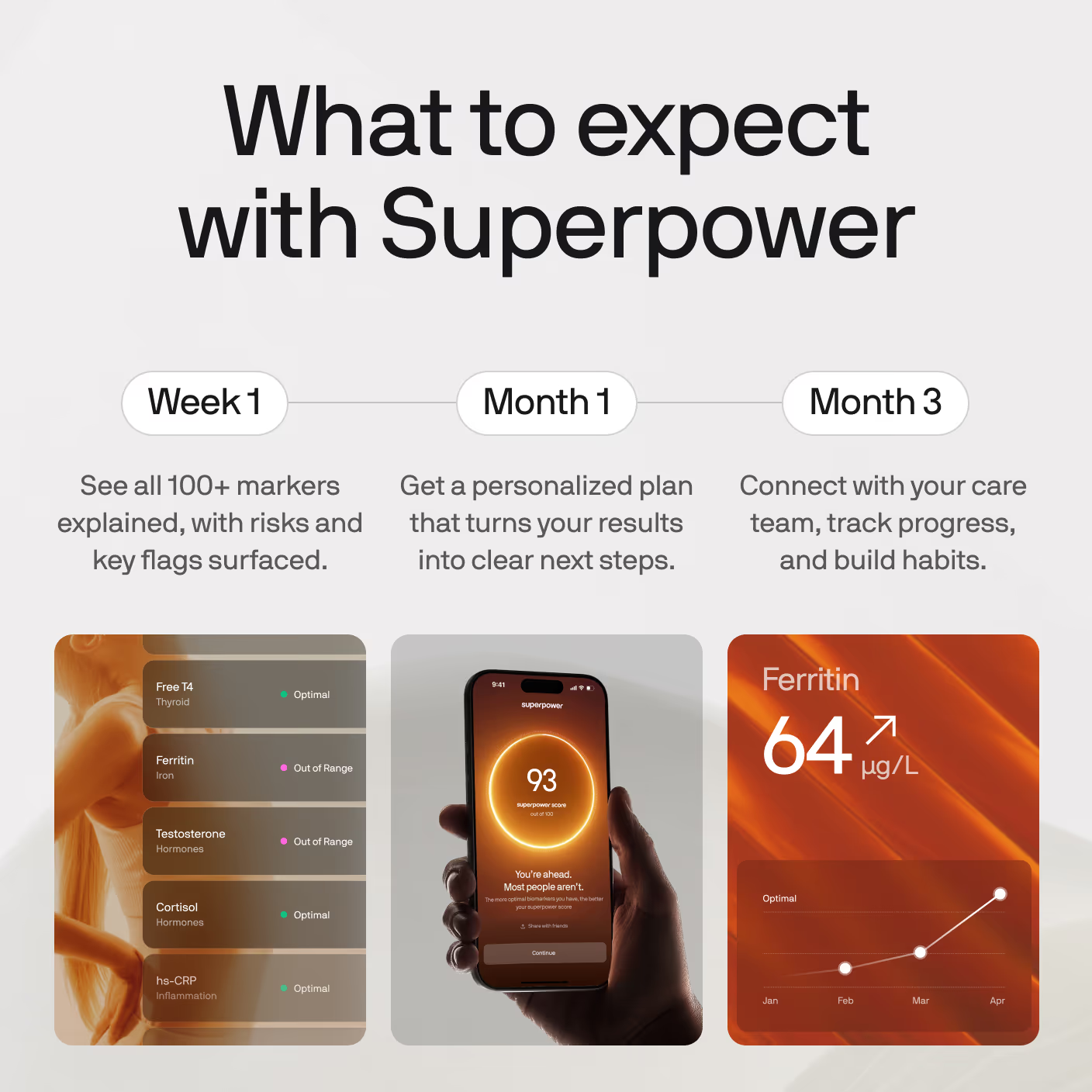
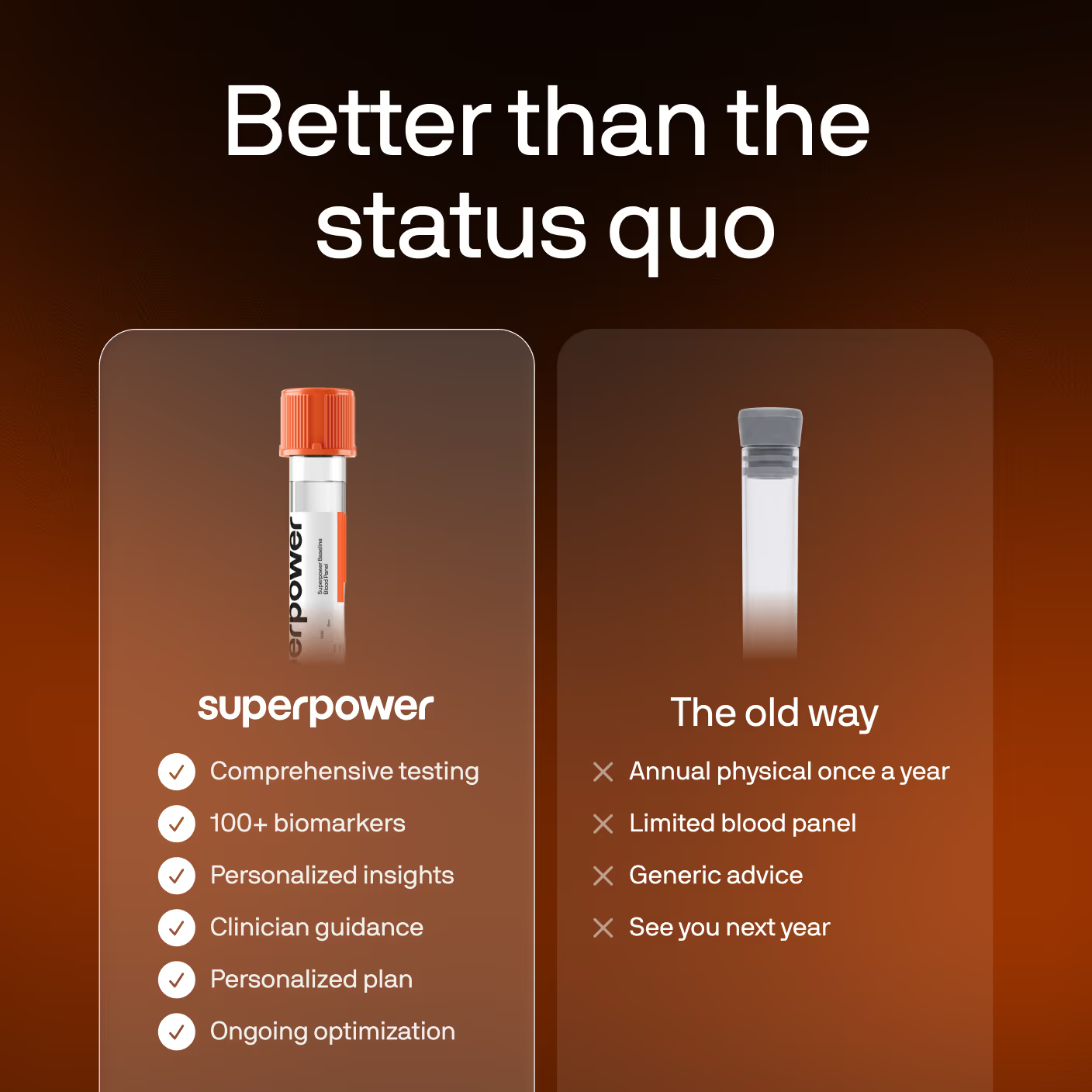
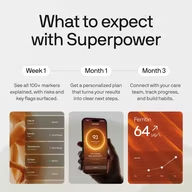
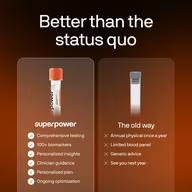
A diabetes test at home can flag a high number, but a comprehensive lab blood test gives the glucose and A1C results screening cutoffs rely on. A Superpower membership includes 100+ biomarkers in a single draw, with glucose and hemoglobin A1c among them. Superpower is a home for your health, measuring your markers and building a personalized plan to improve them.
Know where your blood sugar stands. Start your Superpower membership and get your baseline in one draw.
References
- National Institute of Diabetes and Digestive and Kidney Diseases (2022). *Diabetes tests & diagnosis*. National Institutes of Health.
- National Institute of Diabetes and Digestive and Kidney Diseases (2024). *Diabetes statistics*. National Institutes of Health.
- Colley J, Dambha-Miller H, Stuart B, Bartholomew J, Benton M, Baykoca J, Price H (2023). Home monitoring of haemoglobin A1c in diabetes: A systematic review and narrative synthesis on accuracy, reliability and patient acceptability. *Diabetic Medicine*, *40*(4), e15033. https://doi.org/10.1111/dme.15033
- U.S. Food and Drug Administration (2024). *Blood glucose monitoring devices*. U.S. Department of Health and Human Services.
- National Institute of Diabetes and Digestive and Kidney Diseases (2023). *Continuous glucose monitoring*. National Institutes of Health.
- U.S. Food and Drug Administration (2024). *FDA clears first over-the-counter continuous glucose monitor*. FDA News Release.
- A.D.A.M. Medical Encyclopedia (2026). *Glucose urine test*. MedlinePlus, National Library of Medicine.
- Ziegler AG, Rewers M, Simell O, Simell T, Lempainen J, Steck A, Winkler C, Ilonen J, Veijola R, Knip M, Bonifacio E, Eisenbarth GS (2013). Seroconversion to multiple islet autoantibodies and risk of progression to diabetes in children. *JAMA*, *309*(23), 2473–2479. https://doi.org/10.1001/jama.2013.6285
- U.S. Food and Drug Administration (2024). *Do not use smartwatches or smart rings to measure blood glucose levels: FDA safety communication*. U.S. Department of Health and Human Services.
- American Diabetes Association Professional Practice Committee for Diabetes (2026). 2. Diagnosis and classification of diabetes: Standards of Care in Diabetes—2026. *Diabetes Care*, *49*(Suppl 1), S27–S49. https://doi.org/10.2337/dc26-S002
- A.D.A.M. Medical Encyclopedia (2026). *Home blood sugar testing*. MedlinePlus, National Library of Medicine.
- Pleus S, Baumstark A, Jendrike N, Mende J, Link M, Zschornack E, Haug C, Freckmann G (2020). System accuracy evaluation of 18 CE-marked current-generation blood glucose monitoring systems based on EN ISO 15197:2015. *BMJ Open Diabetes Research & Care*, *8*(1), e001067. https://doi.org/10.1136/bmjdrc-2019-001067
- A.D.A.M. Medical Encyclopedia (2025). *Diabetic ketoacidosis*. MedlinePlus, National Library of Medicine.
- National Institute of Diabetes and Digestive and Kidney Diseases (2024). *Symptoms & causes of diabetes*. National Institutes of Health.
- US Preventive Services Task Force, Davidson KW, Barry MJ, Mangione CM, et al (2021). Screening for prediabetes and type 2 diabetes: US Preventive Services Task Force recommendation statement. *JAMA*, *326*(8), 736–743. https://doi.org/10.1001/jama.2021.12531









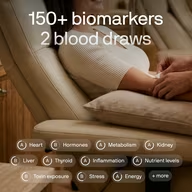

 Heart & Vascular Health
 Metabolic Health
 Energy
 Liver Health
 Kidney
 Sex Hormones
 Thyroid Health
 Nutrients
 Immune System
 Inflammation